Artwork
Painting and Drawing
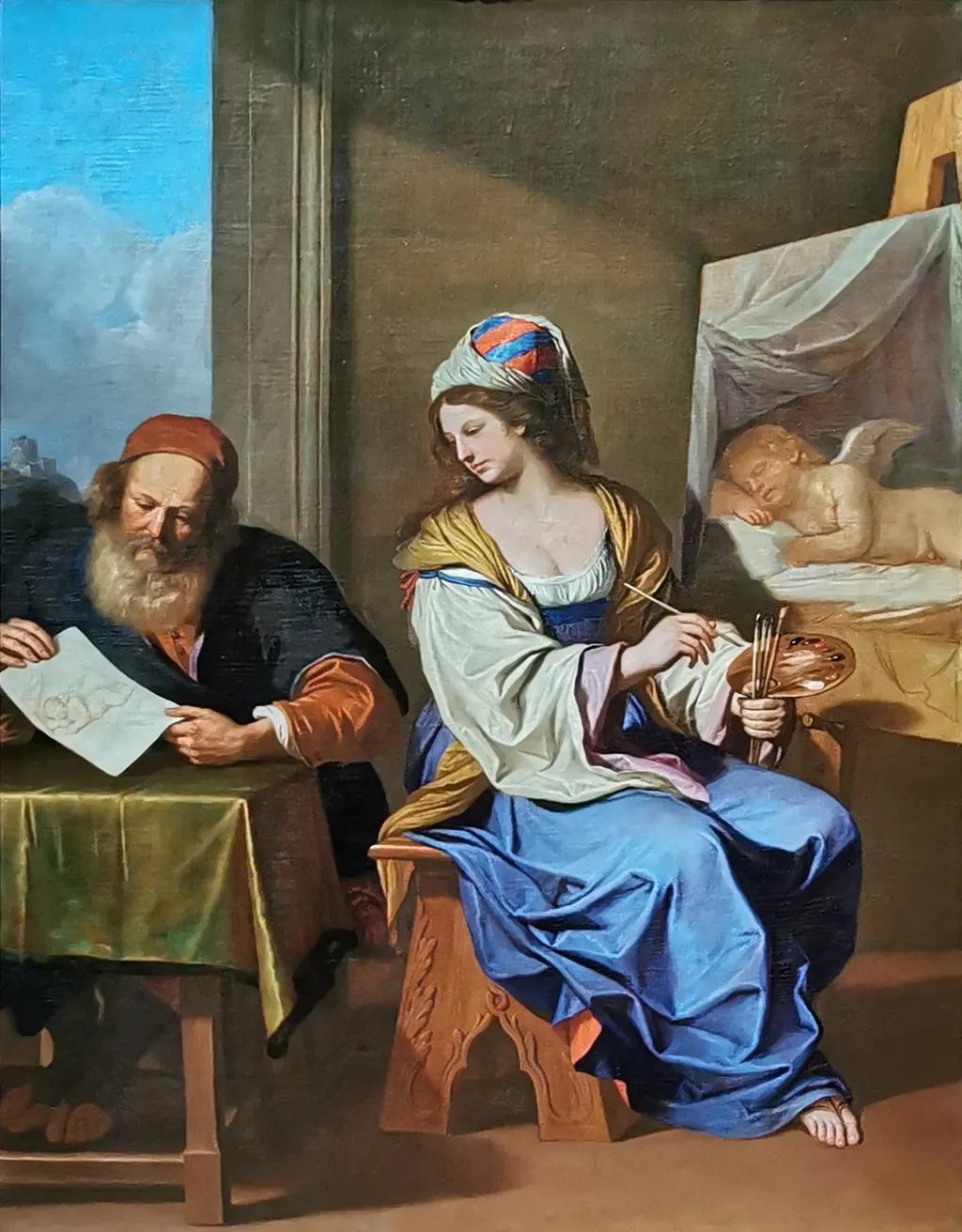
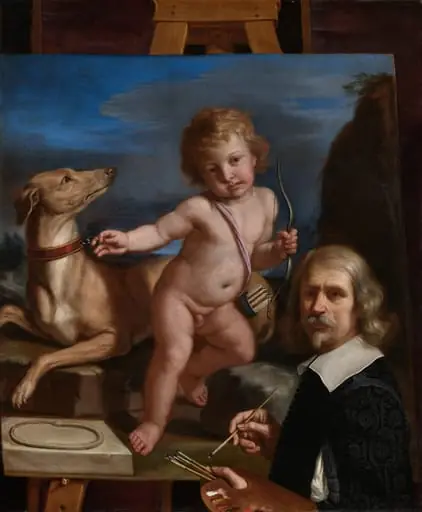
Painting and Drawing is an oil painting by the Early Baroque Italian artist Guercino. It dates from 1656 and is held in the collection of the Staatliche Kunstsammlungen Dresden.
About this work
Overview
Created in 1656, this oil painting by Giovanni Francesco Barbieri, known as Guercino, presents an allegorical representation of the visual arts.
Created in 1656, this oil painting by Giovanni Francesco Barbieri, known as Guercino, presents an allegorical representation of the visual arts. It depicts two figures engaged in the acts of drawing and painting, embodying the disciplines rather than portraying specific individuals. The work reflects Guercino’s mature style, marked by a refined balance between natural observation and classical composure, developed after his earlier, more dynamic phase.
Subject & Meaning
The painting personifies the arts through two figures: a woman holding brushes and a palette, symbolizing painting, and an older man with a drawing, representing drawing. Their focused expressions and quiet interaction suggest contemplation and discipline as essential to artistic creation. The presence of a sleeping infant sculpture in the background may allude to the nascent or enduring nature of artistic inspiration, reinforcing the theme of creative continuity.
Technique & Style
Guercino employs oil paint with a restrained palette and soft modeling to achieve a sense of quiet dignity. The figures are rendered with careful attention to texture—fabric folds, paper grain, and stone sculpture—while the lighting is gentle and diffused, avoiding dramatic contrasts. His brushwork is precise yet fluid, reflecting his lifelong mastery of draftsmanship and his late shift toward classical harmony over Baroque intensity.
History & Provenance
The painting was completed in the final decade of Guercino’s life, during his time in Bologna, where he was highly regarded as both painter and teacher. It entered the Gemäldegalerie Alte Meister collection in Dresden in the 18th century, likely through the acquisition of works from Italian collections by Saxon patrons. Its preservation in a major European museum underscores its recognized significance in Baroque art history.
Context
In mid-17th-century Italy, allegories of the arts were common among academies and patrons seeking to elevate the status of visual creation. Guercino’s work aligns with this tradition, yet distinguishes itself through its intimate, untheatrical tone. Unlike more ornate Roman or Venetian examples, this painting emphasizes quiet labor over spectacle, reflecting the intellectual climate of Bolognese artistic circles at the time.
Legacy
Though less widely known than his earlier dramatic works, this painting exemplifies Guercino’s evolution into a more reflective and structured mode of expression. It influenced later artists interested in the philosophy of artistic practice, particularly in Northern Europe, where allegorical themes were cultivated in academies. Its presence in Dresden’s collection has ensured its continued study as a quiet testament to artistic discipline.
Own this work as a print
Artist & collection
Artist
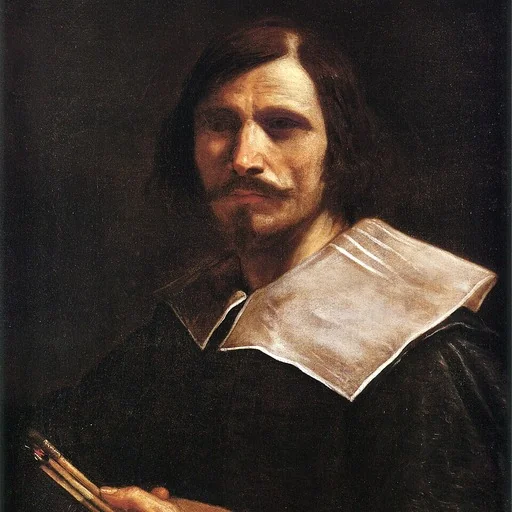
Giovanni Francesco Barbieri (8 February 1591 – 22 December 1666), better known as (il) Guercino (Italian pronunciation: ), was an Italian Baroque painter and draftsman from Cento in the Emilia region, who was active in Rome and Bologna.

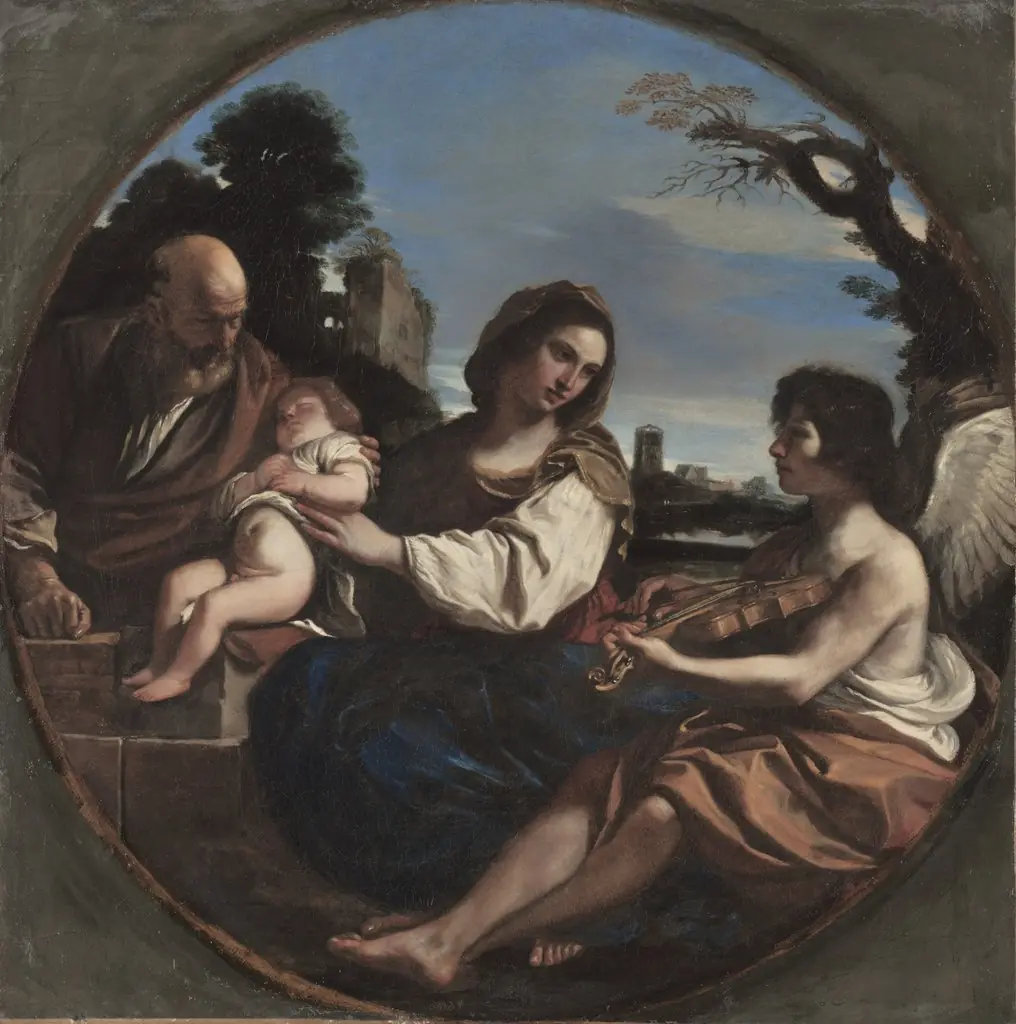
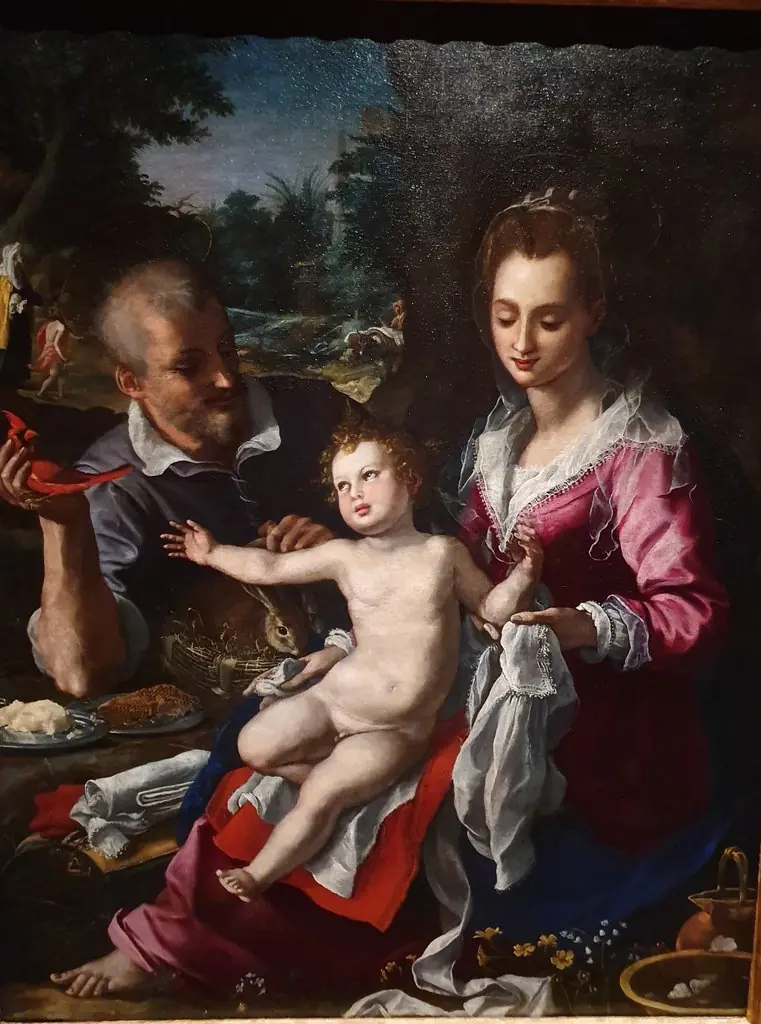 The Holy Family
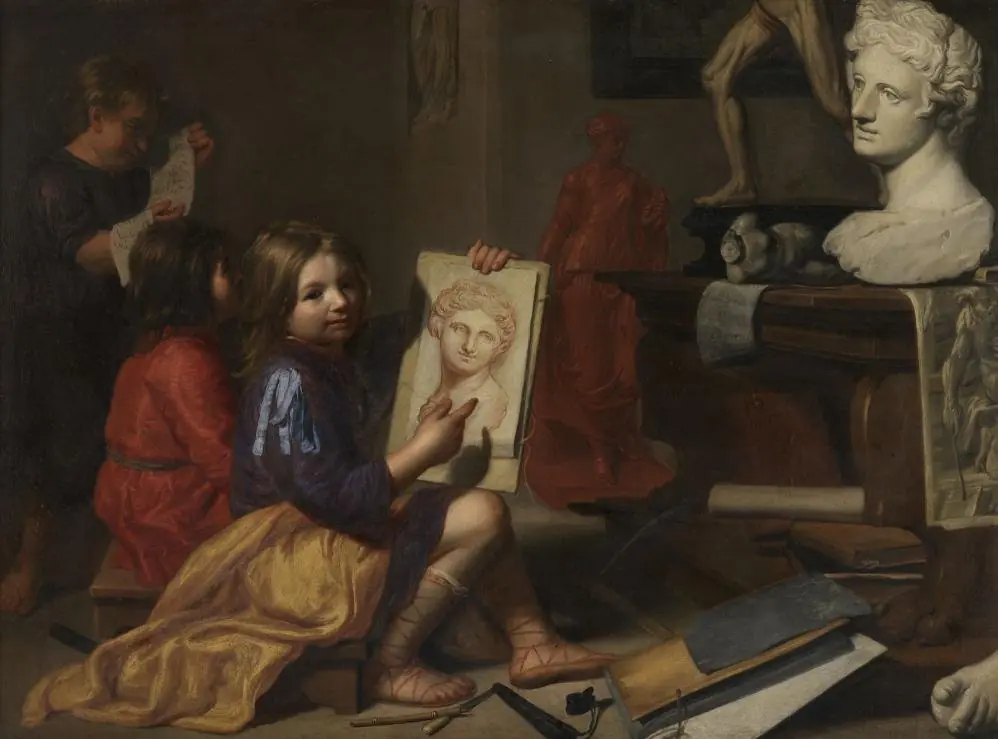 The artist's Studio
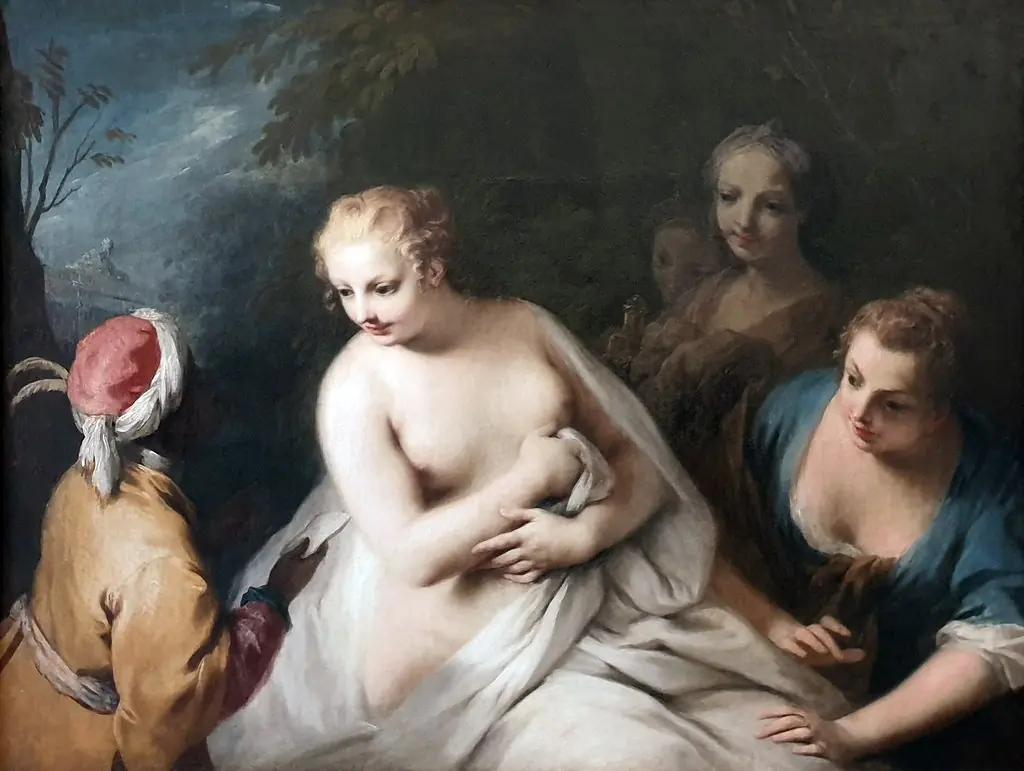 Bathseba at her bath receives the message of David
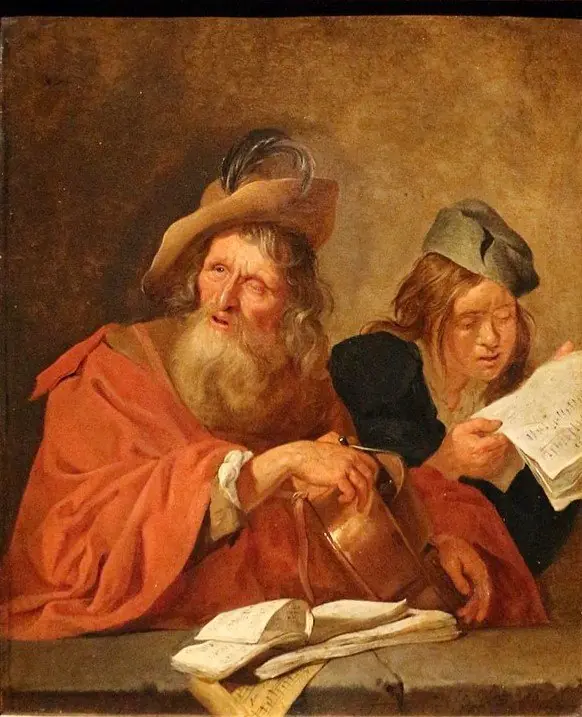 Hurdy-gurdy player
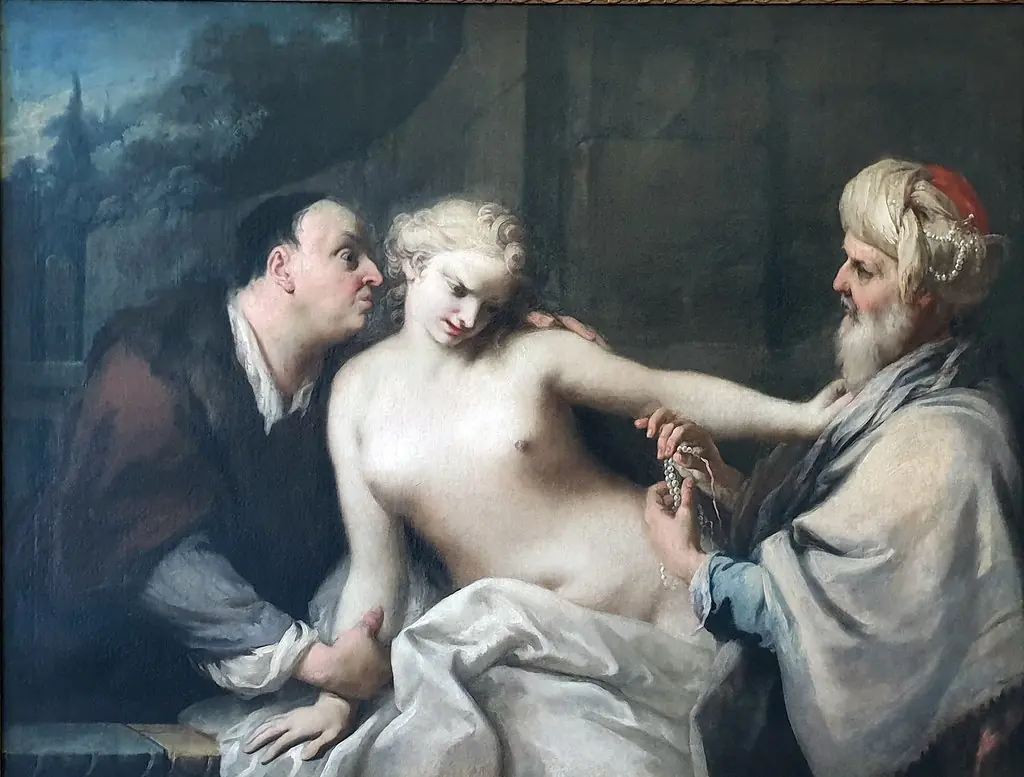 Susanna and the Elders
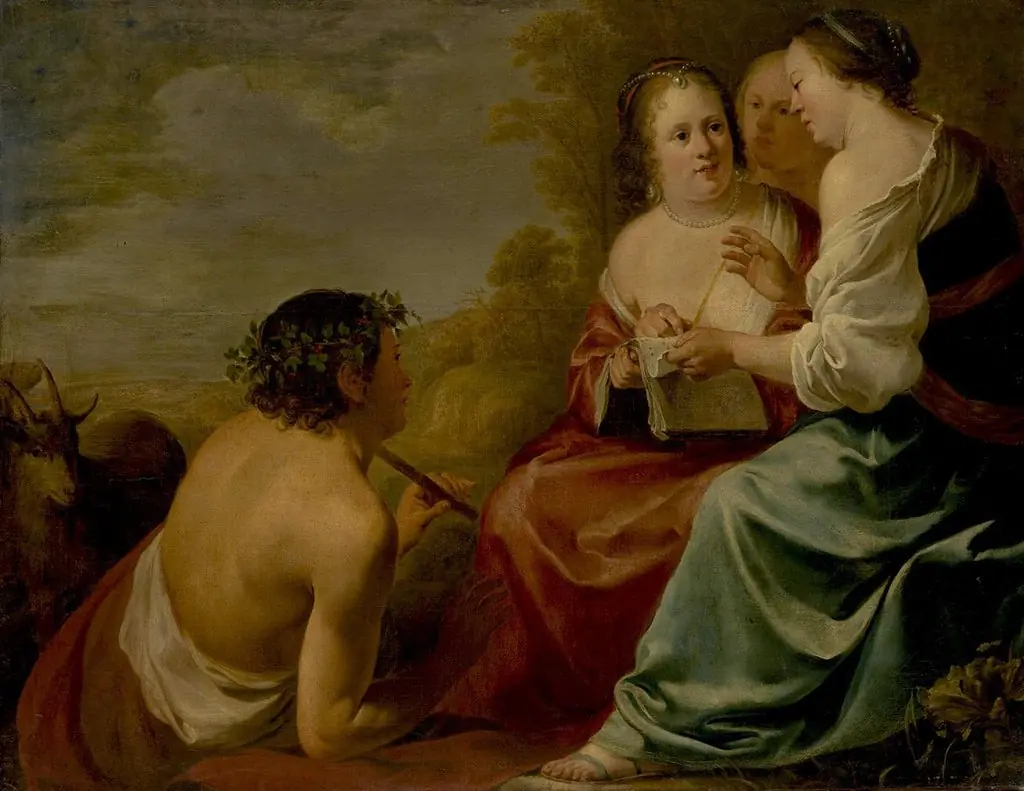 A Shepherd's Concert
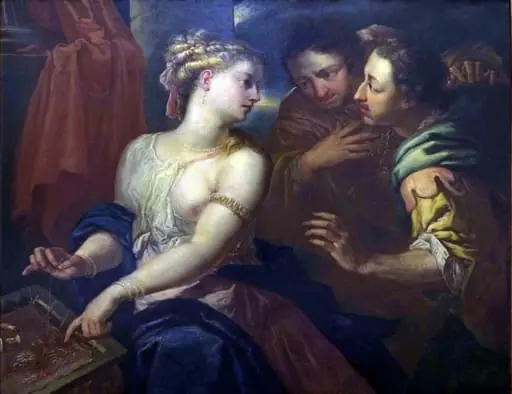 Penelopa și doi pretendenți
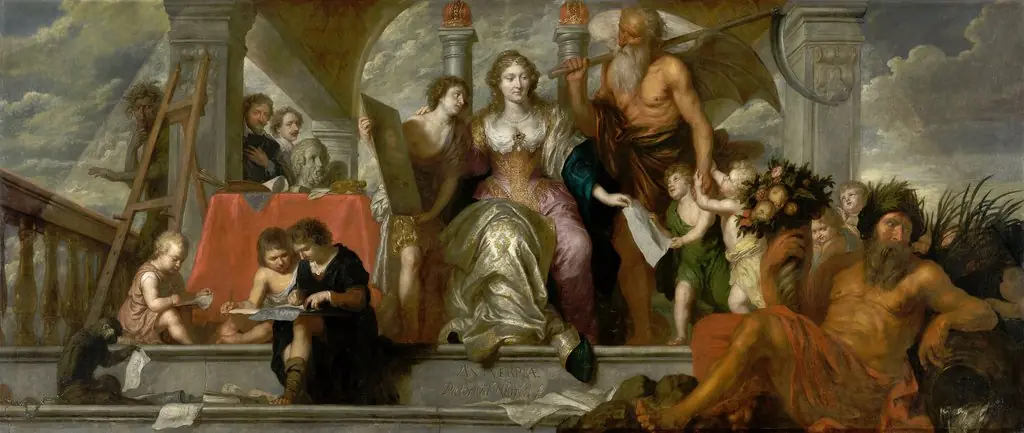 Antwerp, Nourishing the Painters
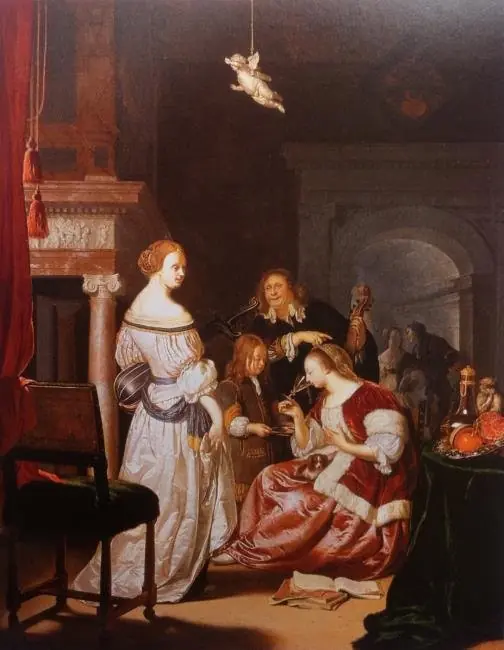 An Elegant Company in an Interior
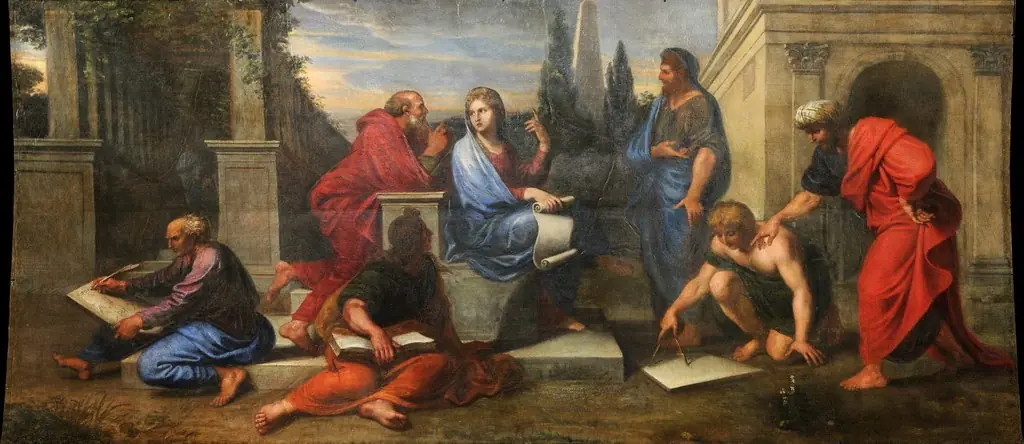 Aspasia surrounded by Greek philosophers
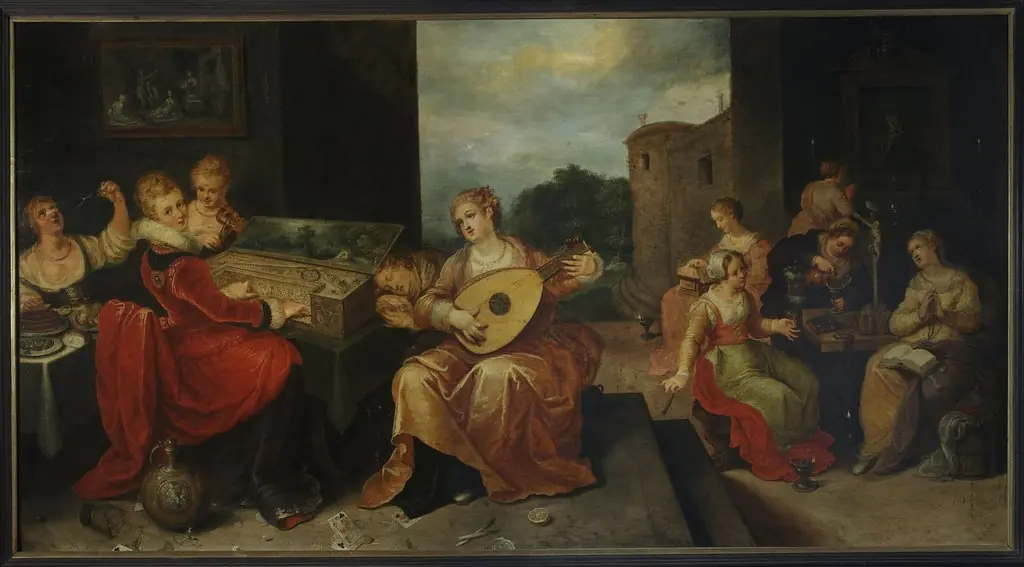 Wise virgins and foolish virgins (Matthew 25:1-13)
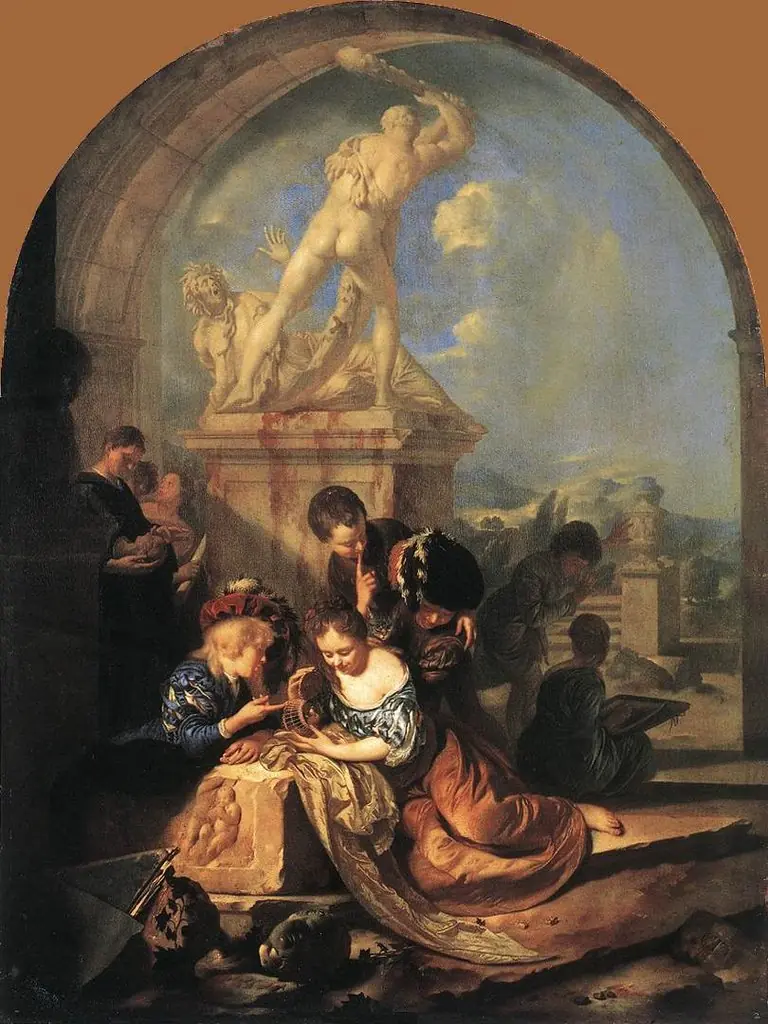 Children Playing before a Hercules Group