Artwork
The Holy Family
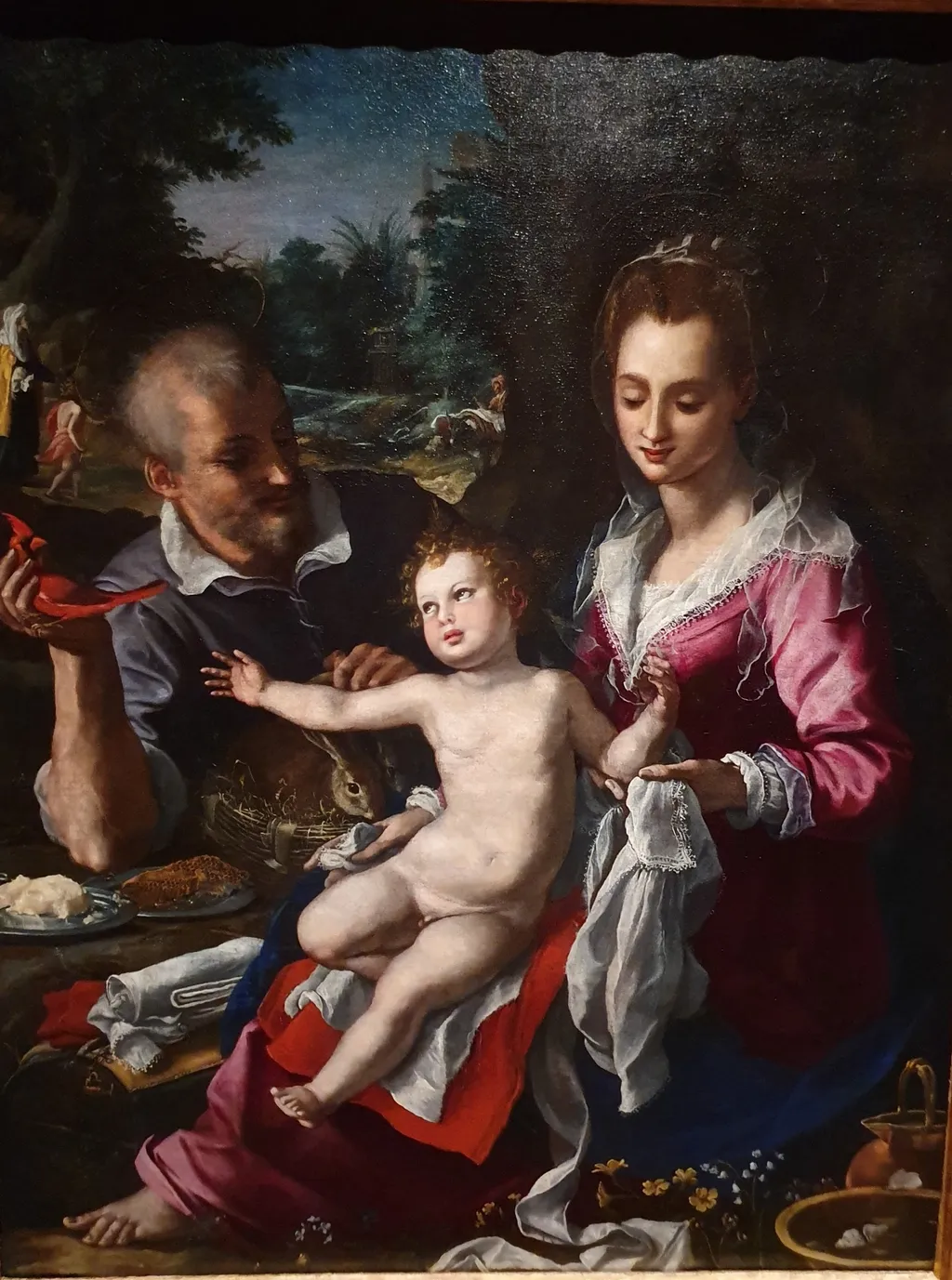
The Holy Family is an oil painting by the Mannerist artist Alessandro Allori. It dates from 1602 and is held in the collection of the National Museum of Ancient Art.
About this work
Overview
The composition centers on maternal and paternal attention toward the Christ Child, framed against a muted, shadowed background.
Painted in 1602 by Alessandro Allori, this oil-on-panel work presents a quiet domestic moment of the Holy Family. Executed in the final years of the artist’s career, it reflects the lingering influence of Florentine Mannerism, blending spiritual subject matter with intimate, humanized gestures. The composition centers on maternal and paternal attention toward the Christ Child, framed against a muted, shadowed background.
Subject & Meaning
The scene captures Mary and Joseph with the infant Jesus during the Flight into Egypt, a moment of rest rather than flight. The child’s outstretched hand toward Joseph suggests a bond of nurture and protection, while the presence of food on the table implies sustenance amid journeying. The quiet gaze exchanged between the figures conveys tenderness, transforming a biblical narrative into a relatable family tableau.
Technique & Style
Allori employs smooth, controlled brushwork characteristic of his training under Bronzino, with delicate modeling of flesh and fabric. The pink garments of Mary and Joseph contrast subtly against the dark background, drawing focus to the central figures. Light falls softly on the child’s body, enhancing its sculptural presence, while the still-life elements—plates, vessels—are rendered with restrained precision, grounding the sacred in the everyday.
History & Provenance
The painting remained within Italian collections after its completion and entered the National Museum of Ancient Art in Lisbon through the collection of the Portuguese royal family. Its presence in Portugal reflects the broader dissemination of Italian Renaissance and Mannerist works through aristocratic patronage in the early modern period.
Context
Created at the turn of the 17th century, the work emerges as Mannerism gave way to Baroque naturalism. Allori’s adherence to refined composition and emotional restraint contrasts with the emerging dynamism of Caravaggio’s followers. Yet his focus on intimate emotion anticipates the devotional realism that would dominate Catholic art in the Counter-Reformation era.
Legacy
Allori’s *Holy Family* exemplifies the quiet endurance of Florentine Mannerist ideals beyond their peak. Though overshadowed by contemporaneous innovations, the painting preserves a refined, introspective mode of religious representation, valued for its emotional subtlety and technical discipline rather than dramatic intensity.
Own this work as a print
Artist & collection

Artist
Alessandro di Cristofano di Lorenzo del Bronzino Allori (Florence, 31 May 1535 – 22 September 1607) was an Italian painter of the late Mannerist Florentine school.

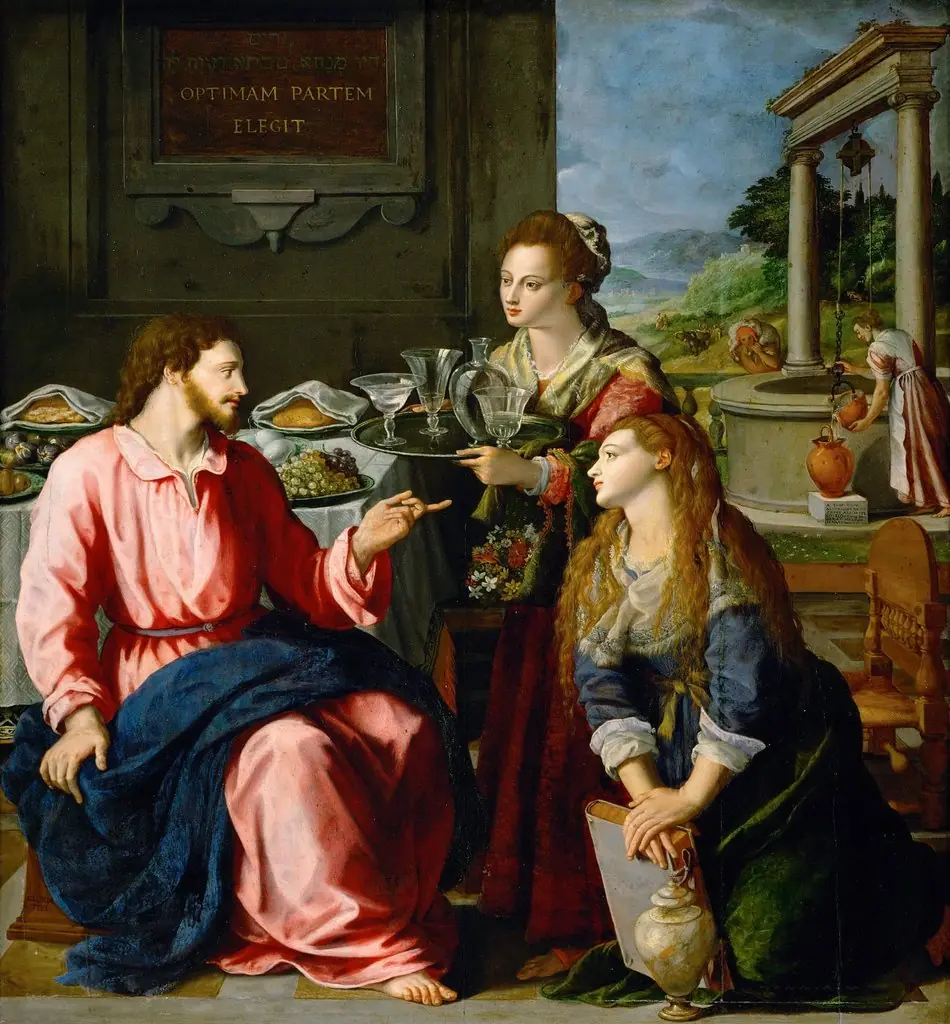
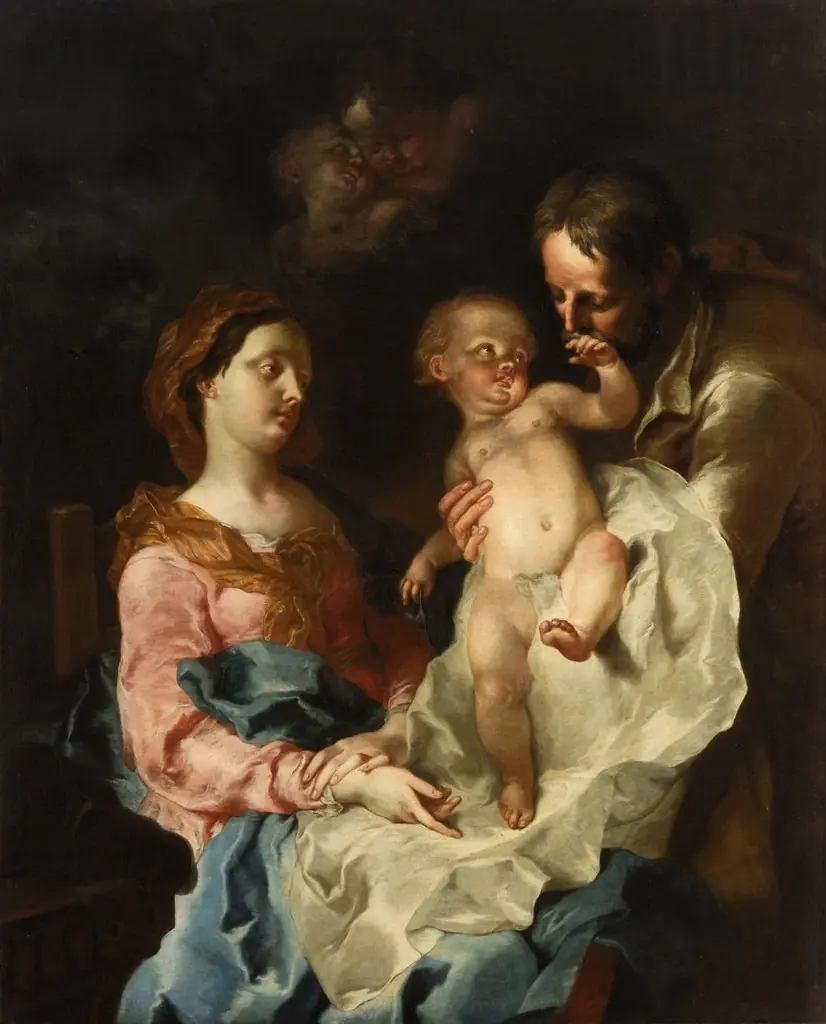 The Holy Family
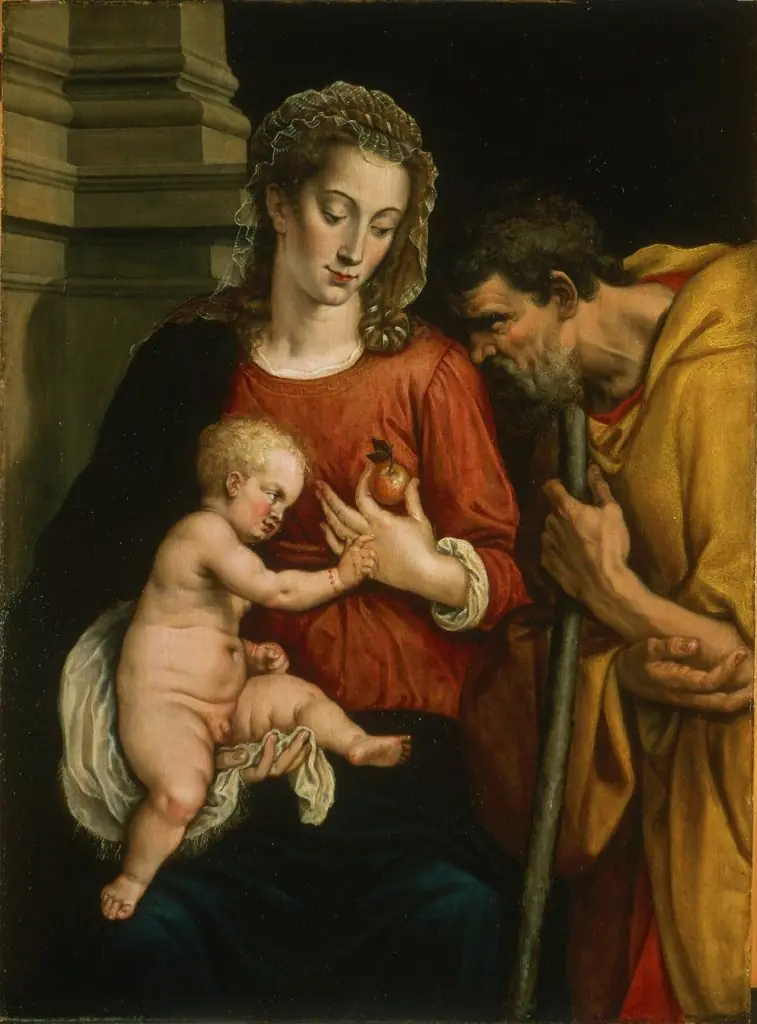 The Holy Family
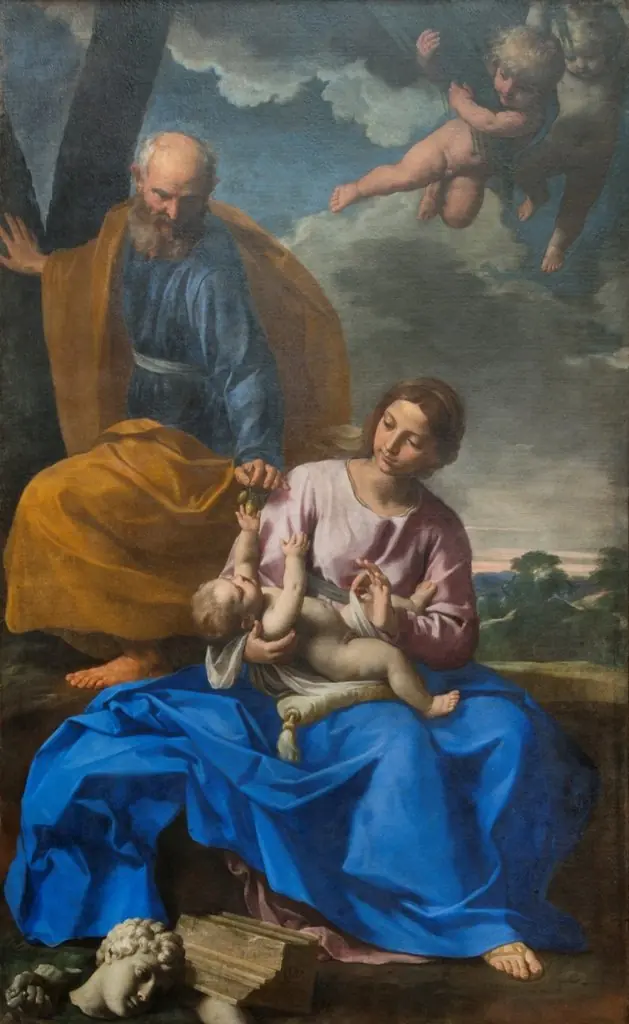 The Rest on The Flight into Egypt
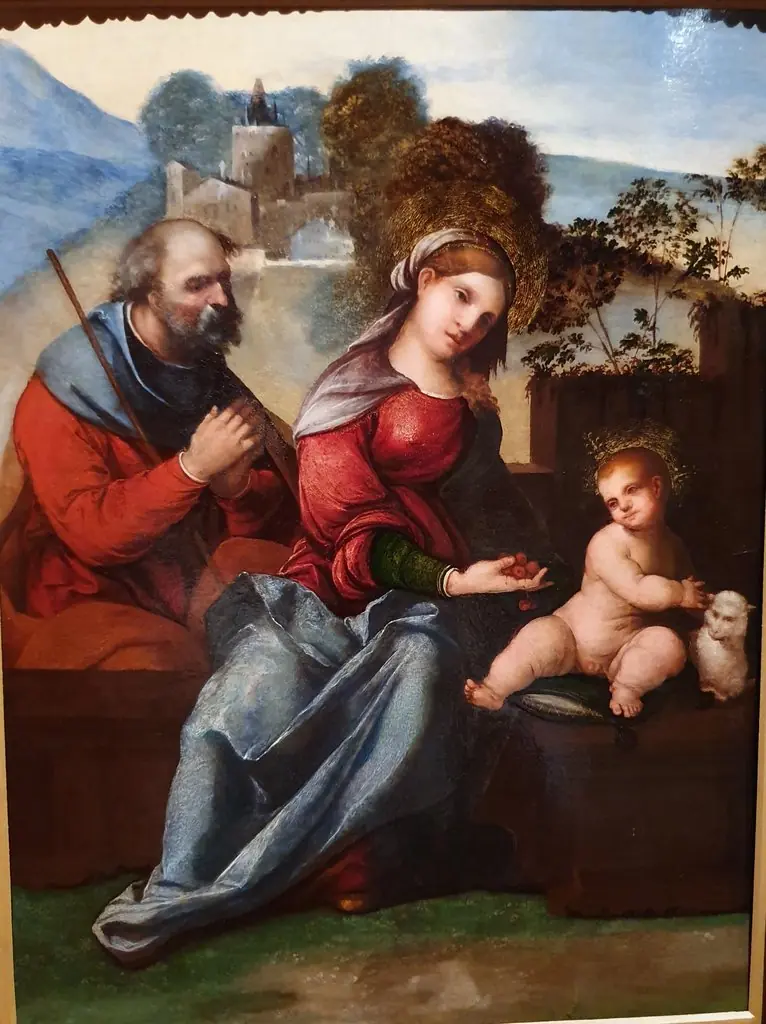 Sagrada Familia
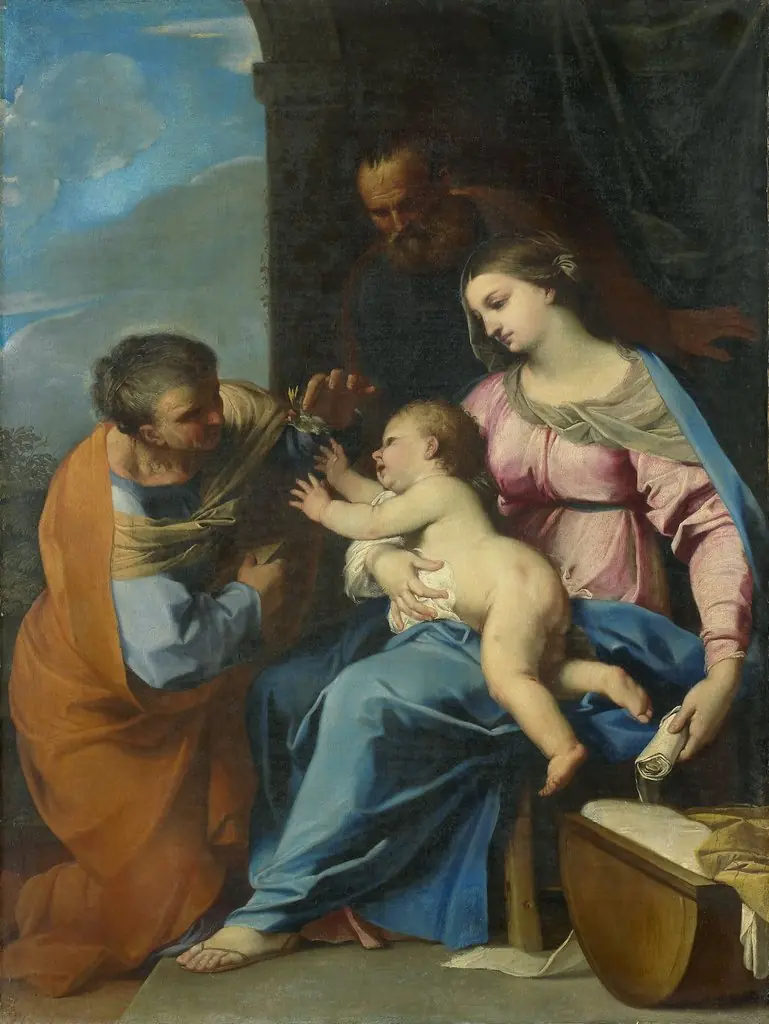 Holy Family
 Neitsyt Maria, Jeesus-lapsi, Johannes Kastaja ja Pyhä Antonius Apotti
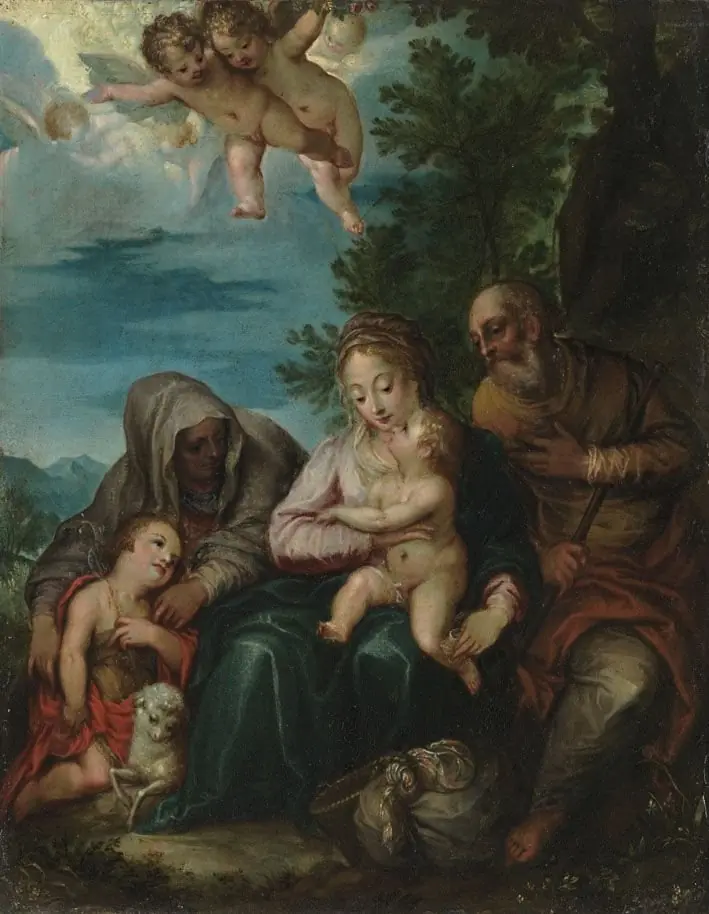 Heilige Familie
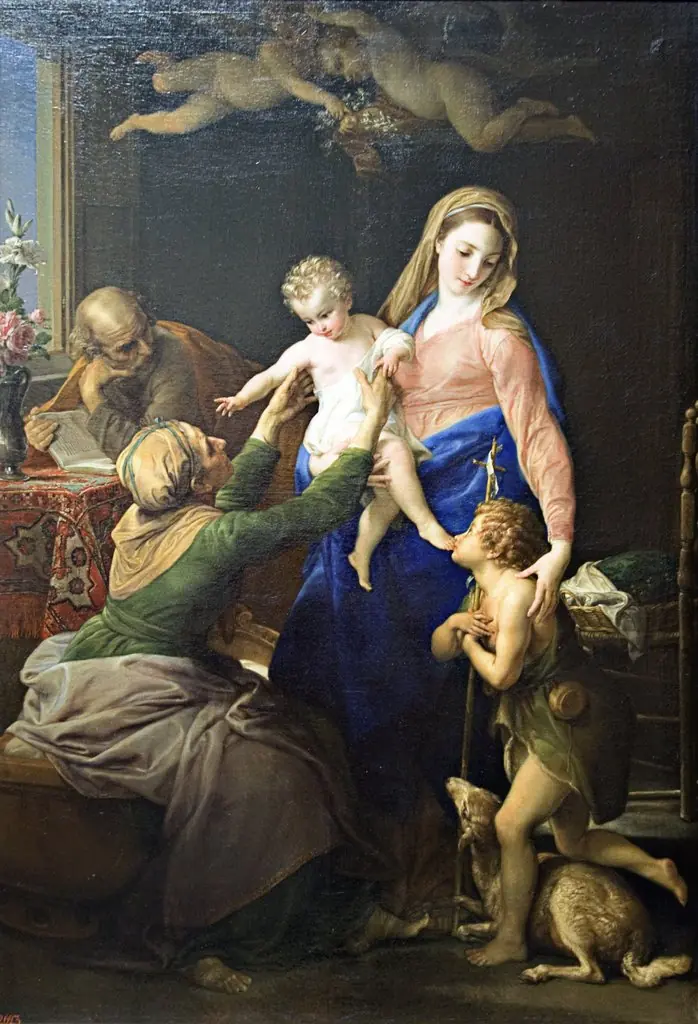 Holy Family with Sts Elizabeth and John the Baptist
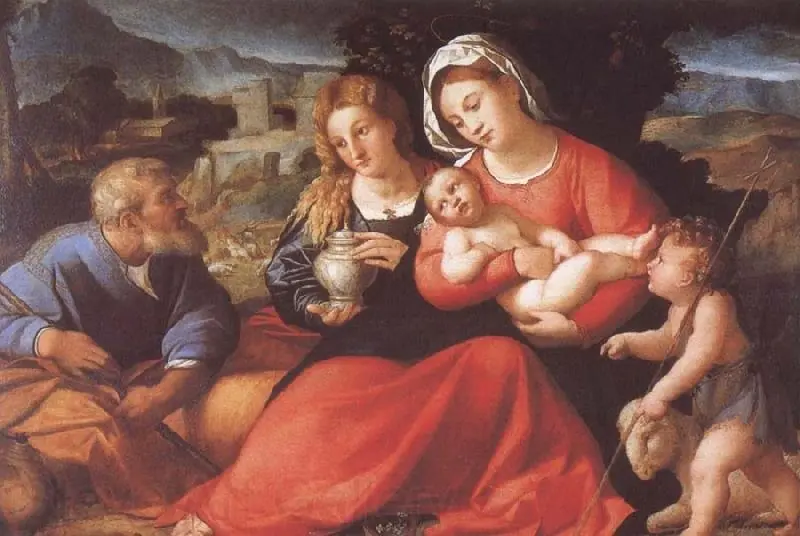 Holy Family with St. John and Mary Magdalene
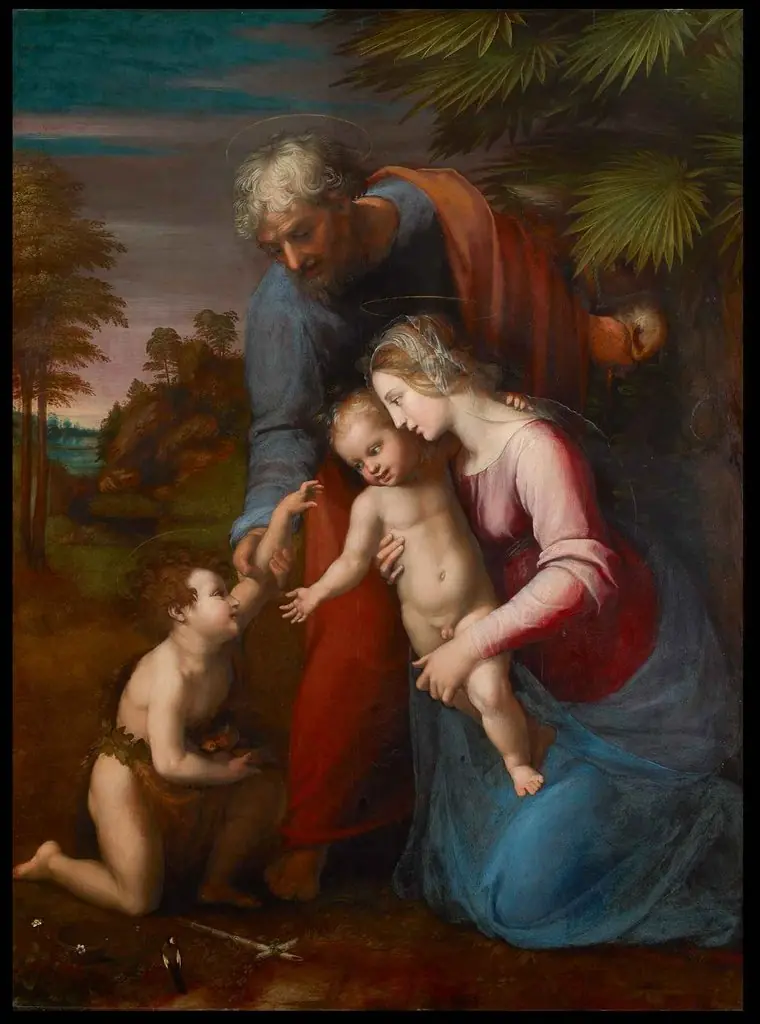 The Holy Family with Saint John the Baptist
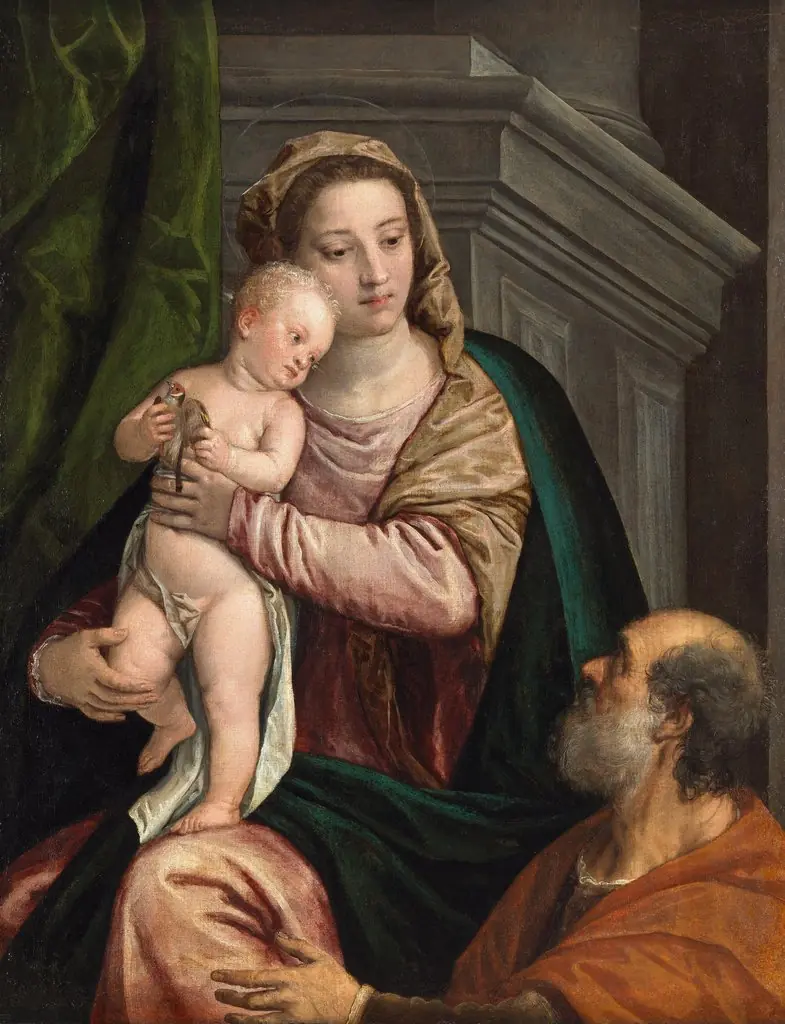 Die Heilige Familie
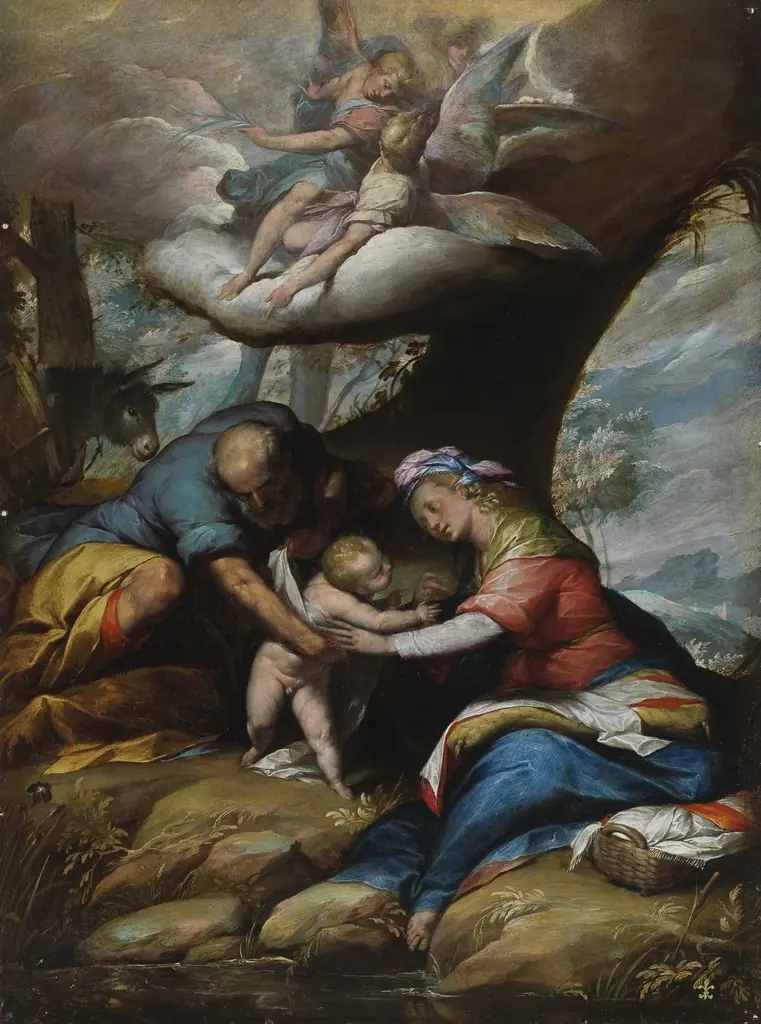 Rest on the Flight into Egypt