Artwork
Antwerp, Nourishing the Painters
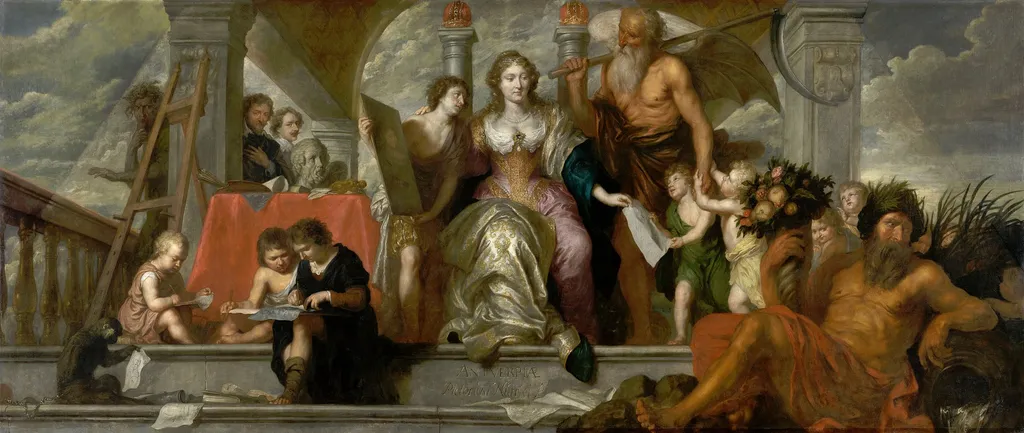
Antwerp, Nourishing the Painters is an oil painting by the Flemish Baroque painting artist Theodoor Boeyermans. It dates from 1655 and is held in the collection of the Royal Museum of Fine Arts Antwerp.
About this work
Overview
Painted in 1655 by Theodoor Boeyermans, *Antwerp, Nourishing the Painters* is an oil-on-canvas allegory from the Flemish Baroque period. It reflects the artistic culture of Antwerp during a time when the city remained a vital center for painting. The work was commissioned to honor the local artistic community and is now part of the Royal Museum of Fine Arts Antwerp’s permanent collection.
Subject & Meaning
The painting personifies Antwerp as a matronly figure, centrally positioned and draped in flowing fabric, symbolizing the city’s role as a patron of the arts.
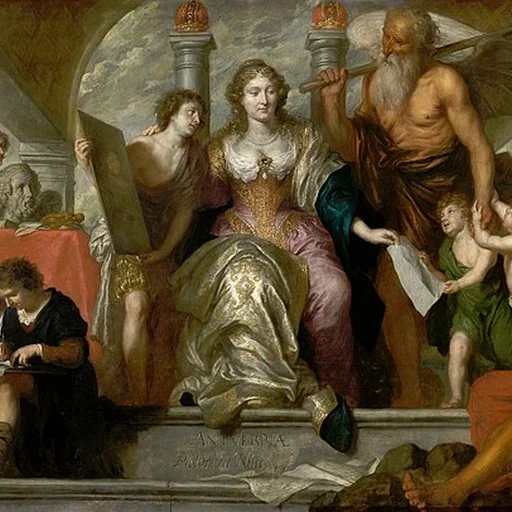
The painting personifies Antwerp as a matronly figure, centrally positioned and draped in flowing fabric, symbolizing the city’s role as a patron of the arts. Surrounding her are artists, apprentices, and observers of varying ages, engaged in sketching, holding tools, or standing in contemplation. The scene suggests a collective reverence for artistic tradition and the city’s enduring support of its creative practitioners.
Technique & Style
Boeyermans employed rich coloration and layered brushwork characteristic of Flemish Baroque painting. The figures are rendered with attention to texture in fabric and skin, while the architectural backdrop of columns and atmospheric sky creates spatial depth. Movement is suggested through dynamic poses and directional glances, aligning the composition with the theatricality of Rubens’s influence without direct imitation.
History & Provenance
Commissioned during a period of cultural renewal in Antwerp, the painting was likely intended for public or institutional display to celebrate the city’s artistic legacy. It remained in local hands for centuries before entering the Royal Museum of Fine Arts Antwerp’s collection, where it has been preserved as a key example of mid-17th-century civic portraiture in paint.
Context
In mid-17th-century Antwerp, guilds and civic leaders actively promoted painting as a pillar of urban identity. Boeyermans’s work emerged alongside other allegorical commissions that linked civic pride with artistic production. While Rubens had died two decades prior, his legacy shaped the visual language of such works, and Boeyermans adapted that language to honor local, rather than mythological, subjects.
Legacy
The painting stands as a rare example of a city personified as a benefactor of artists, rather than a deity or ruler. It offers insight into how Antwerp’s artistic community viewed its own institutional support. Though less known than contemporaries, Boeyermans’s work contributes to the broader understanding of how regional identity was visually constructed in Baroque Flanders.
Artist & collection
Artist
Theodoor Boeyermans, Theodor Boeyermans or Theodor Boeijermans (10 November 1620 – January 1678) was a Flemish painter active in Antwerp who painted Baroque history paintings and group portraits informed by the…

 Apotheosis of the Dutch East India Company (Allegory of the Amsterdam Chamber of Commerce of the VOC)
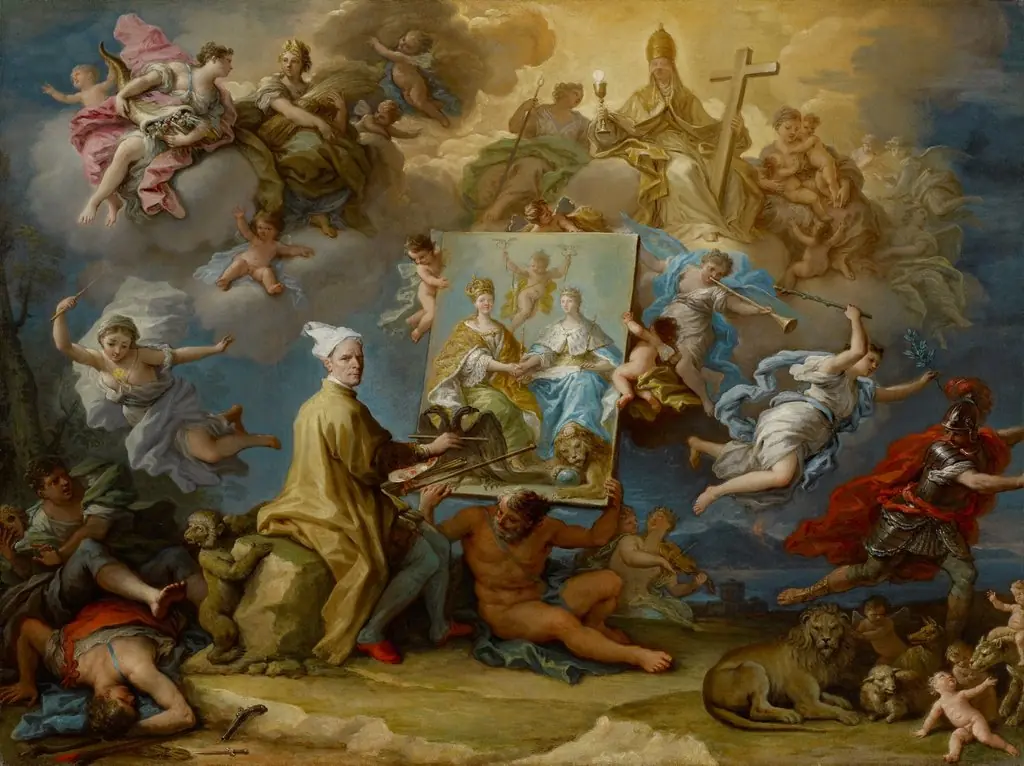 Allegory of the Consequences of the Peace of Utrecht
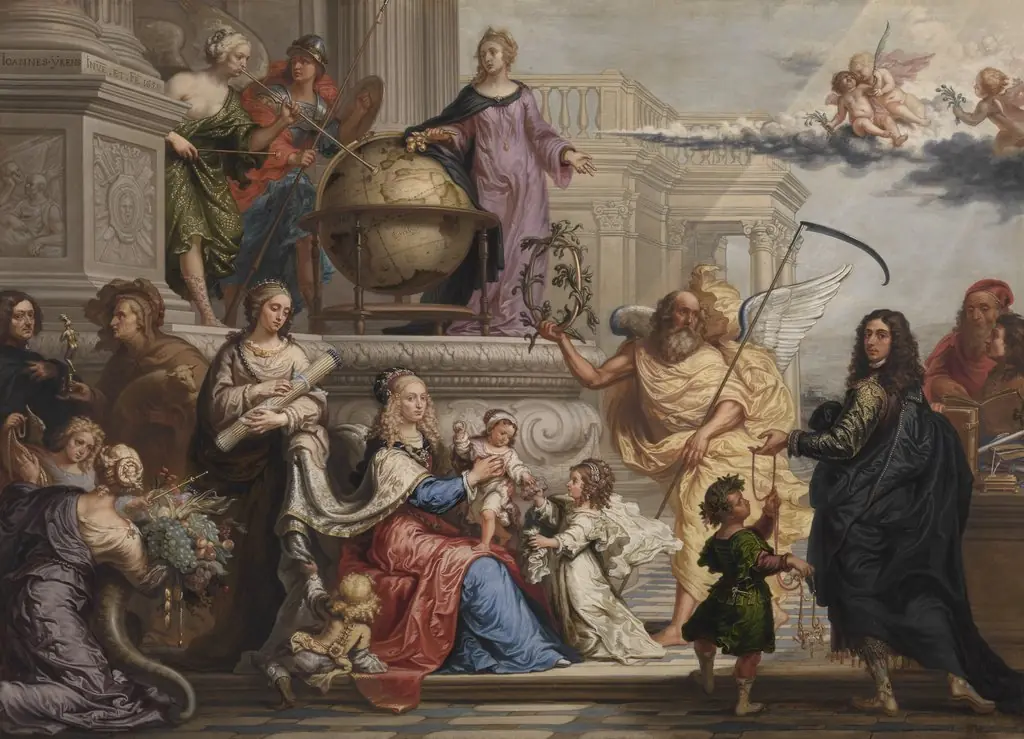 Allegorical Adoration of the Birth of a Prince
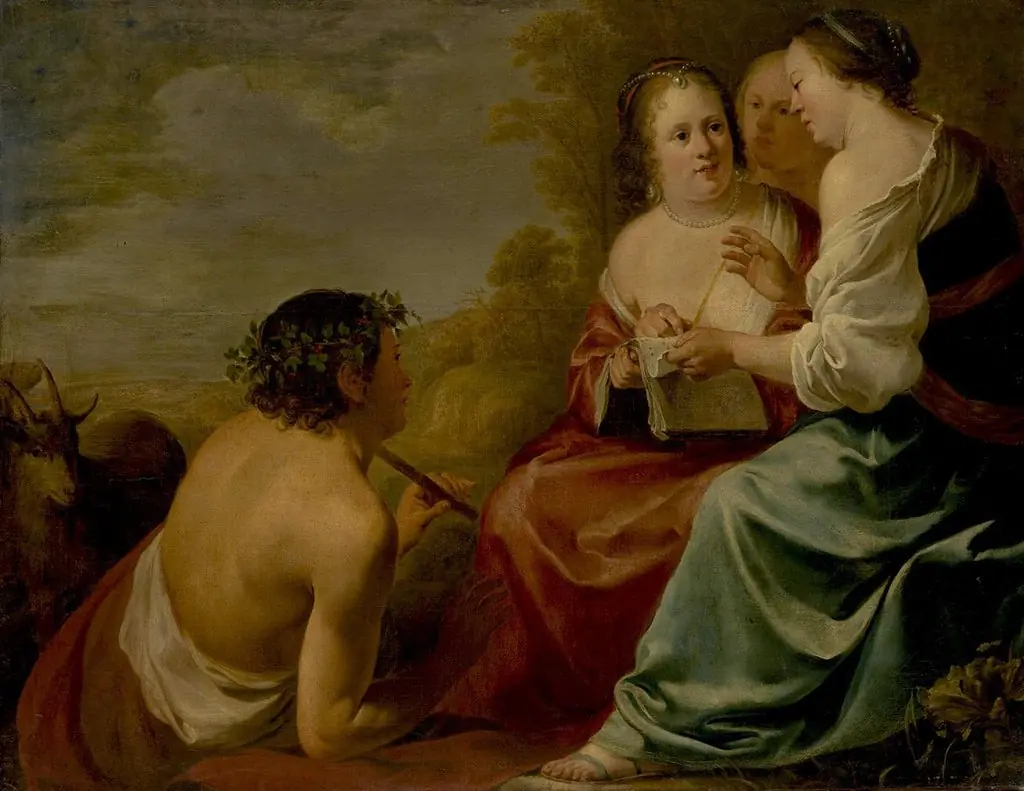 A Shepherd's Concert
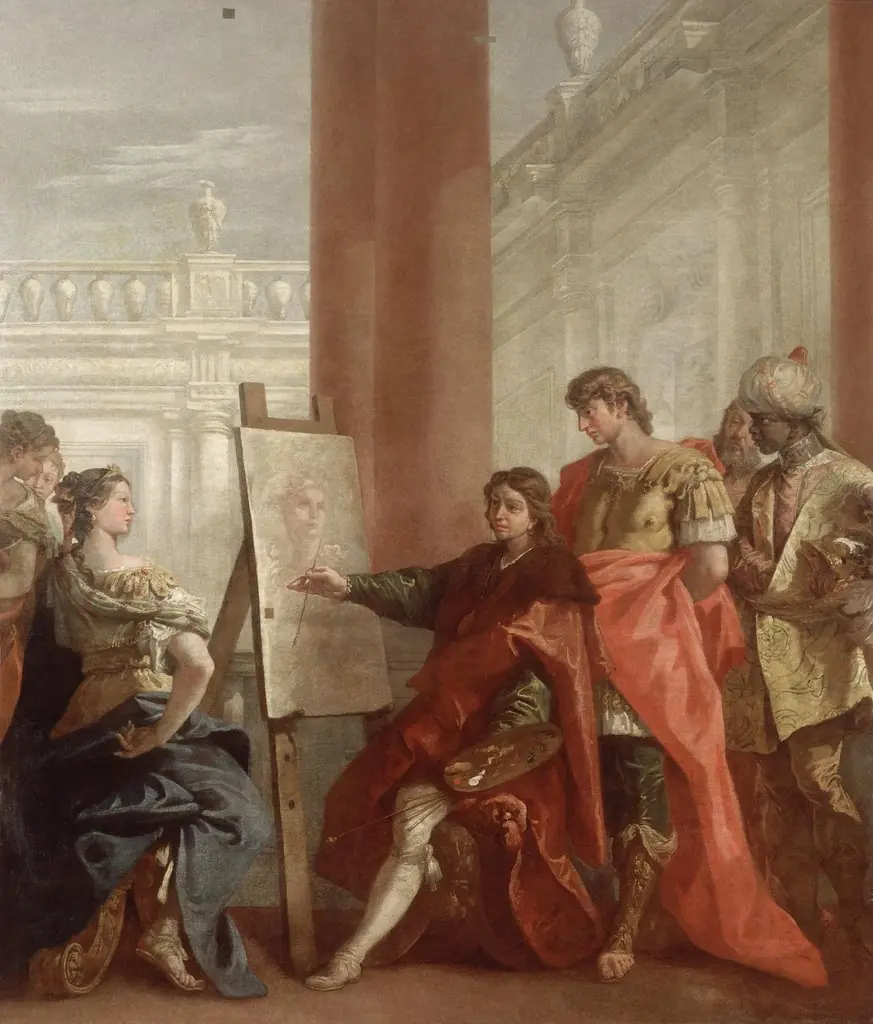 Apelles Paints Campaspa
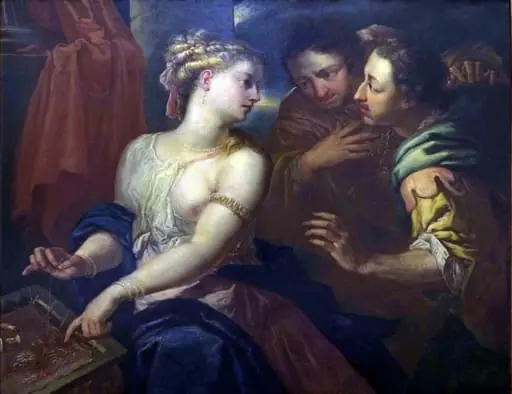 Penelopa și doi pretendenți
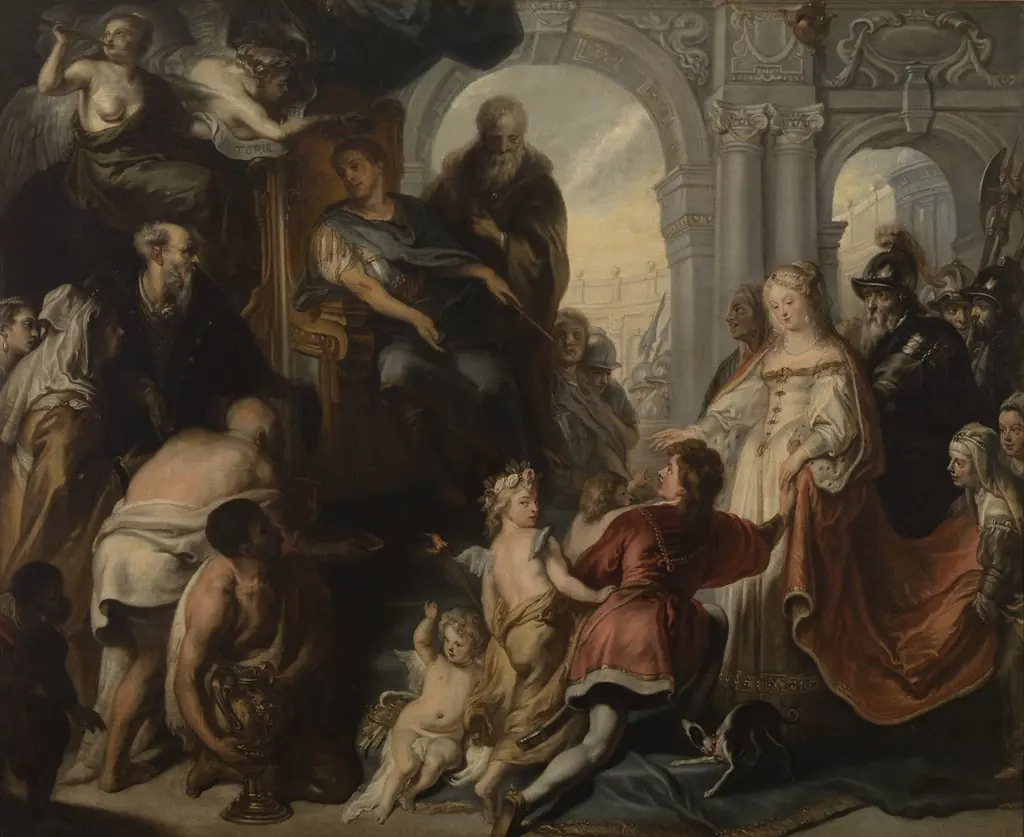 The Continence of Scipio Africanus
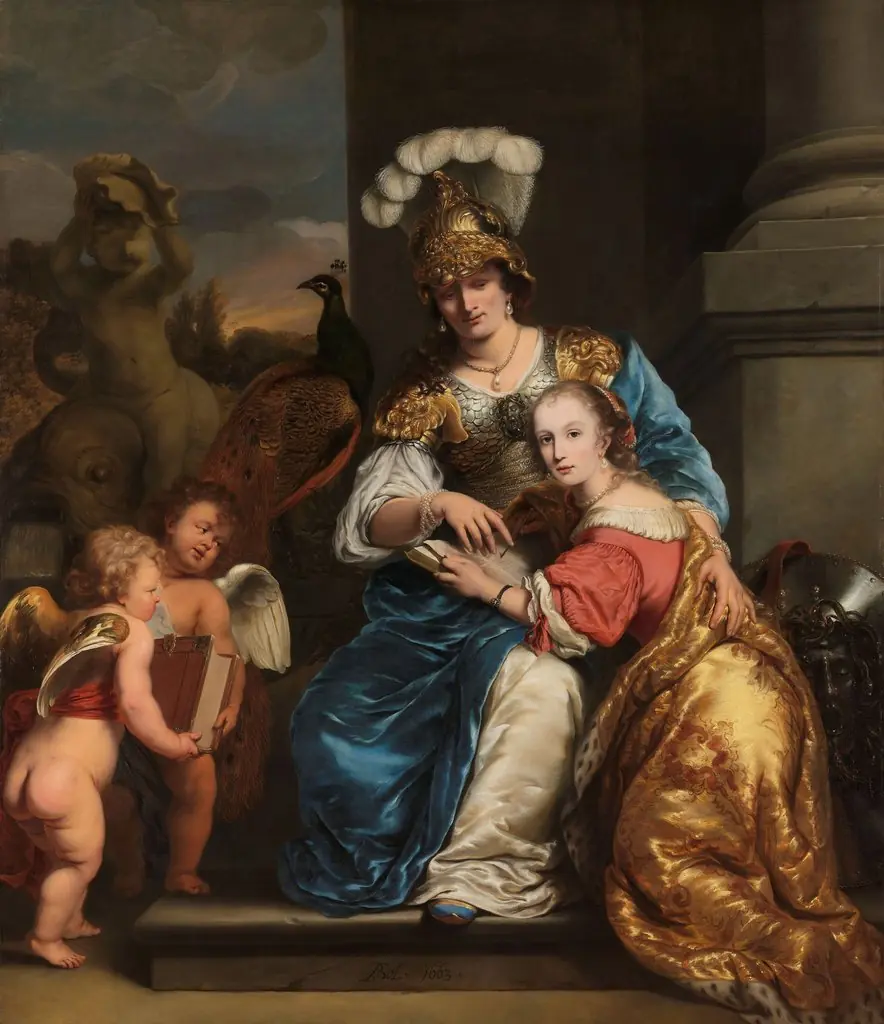 Margarita Trip as Minerva, Instructing her Sister Anna Maria Trip
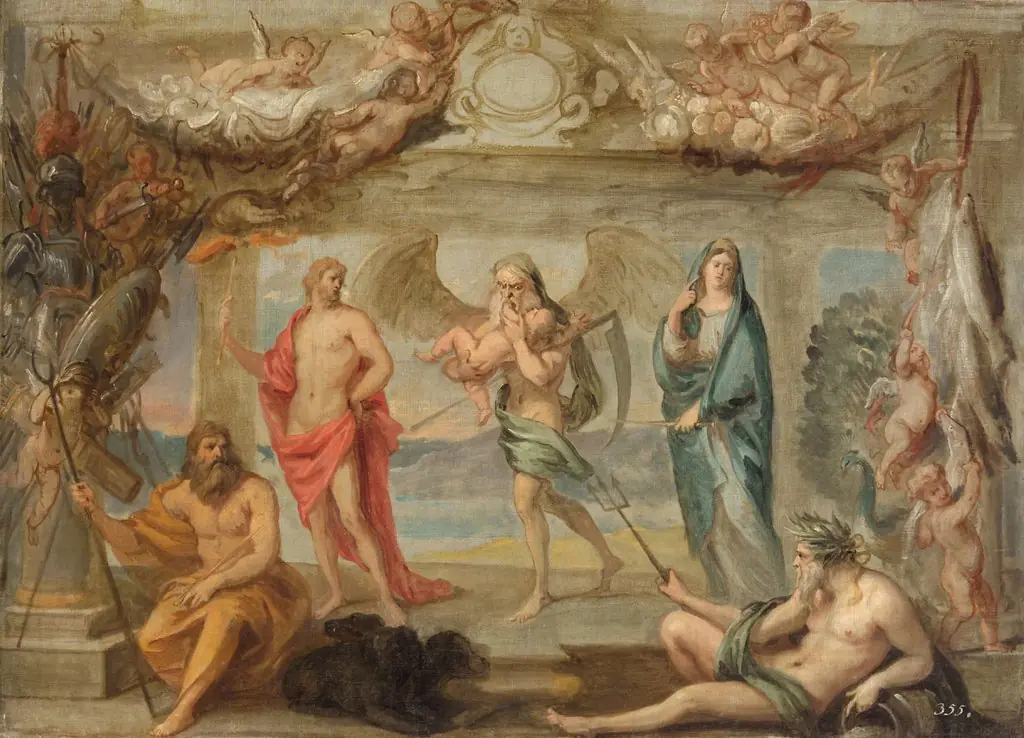 Die Elemente und die Zeit
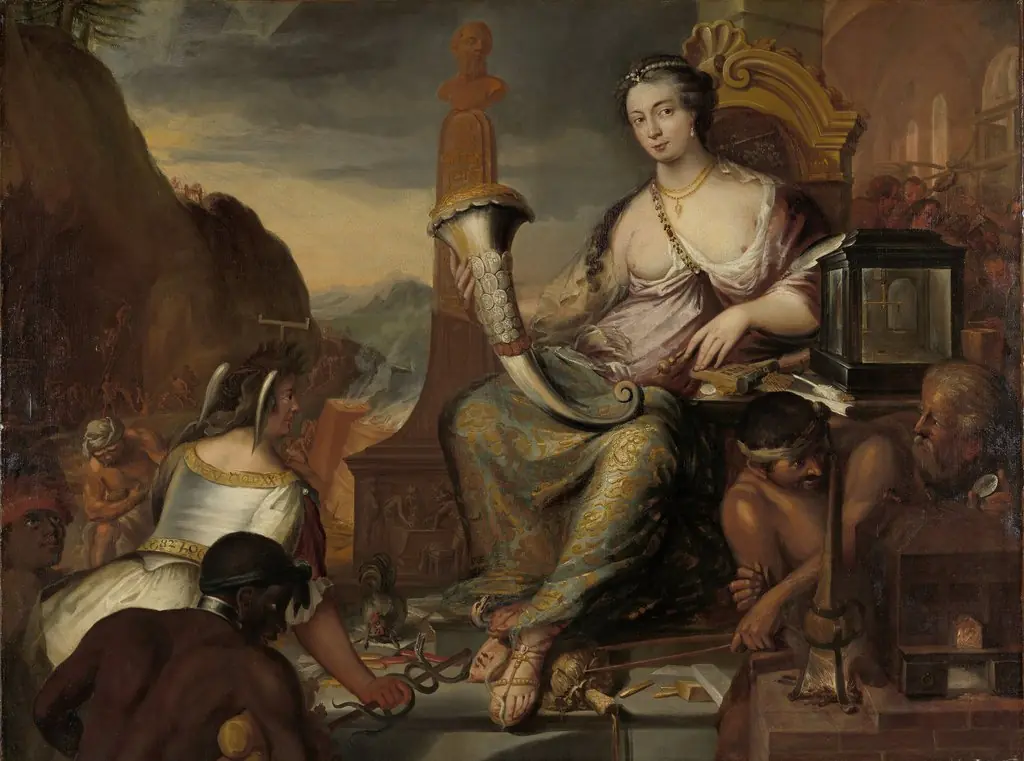 Allegory of coinage
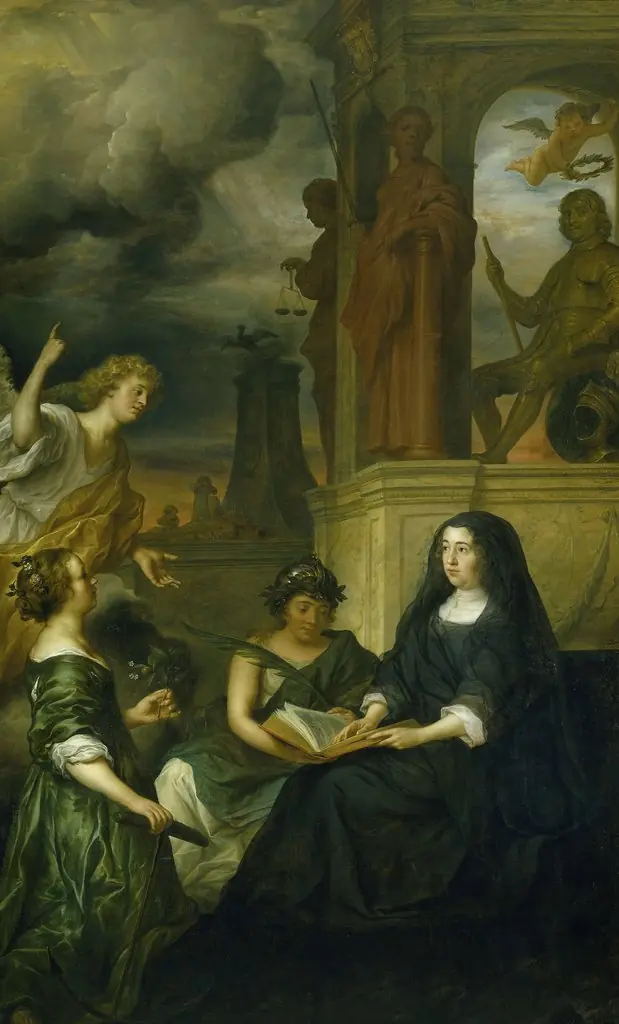 Allegory on the memory of Frederik Hendrik (1584-1647), prince of Orange, with the portrait of his widow Amalia van Solms
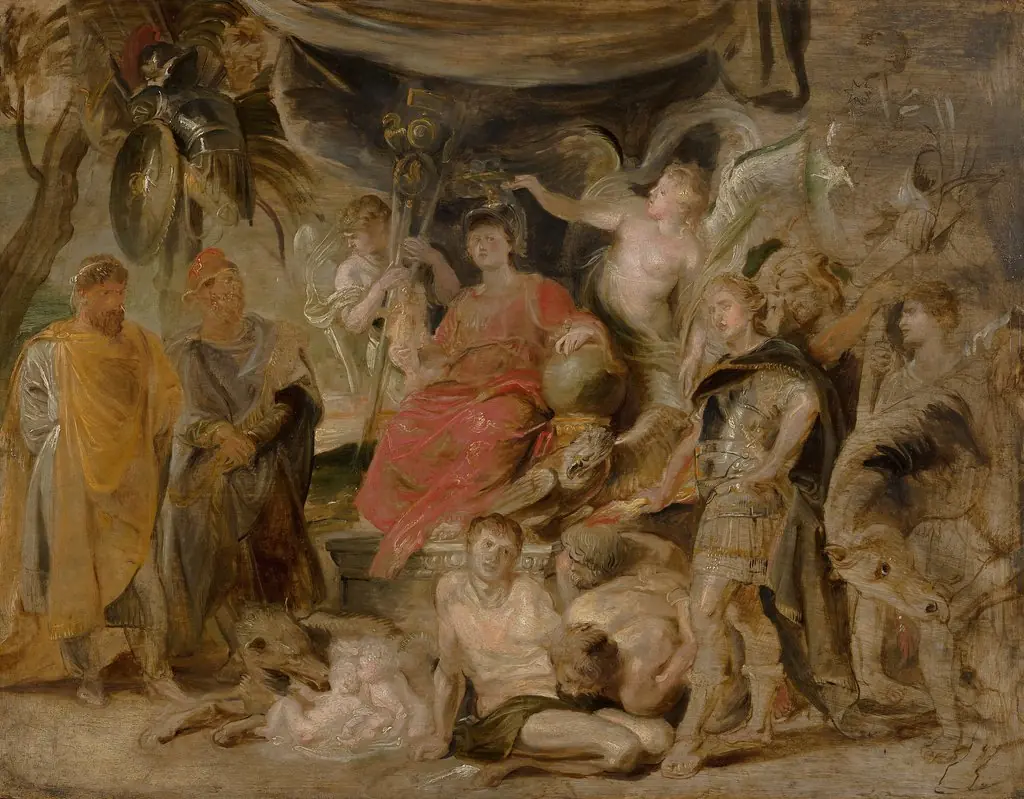 The Triumph of Rome: The Youthful Emperor Constantine Honouring Rome