Artwork
Saint John the Baptist
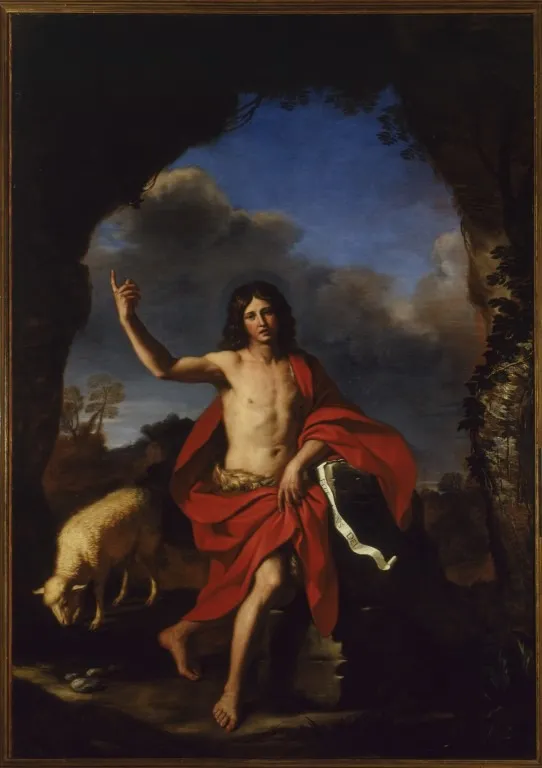
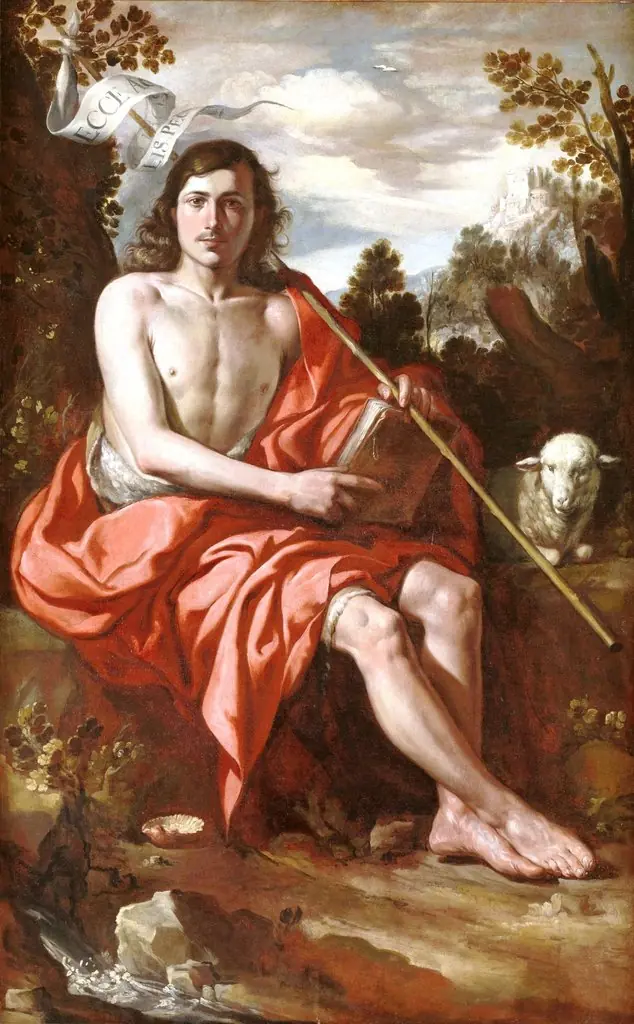
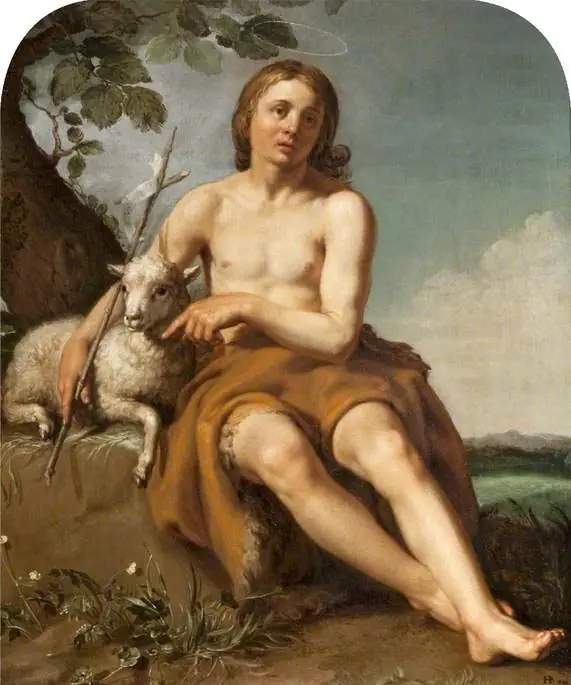
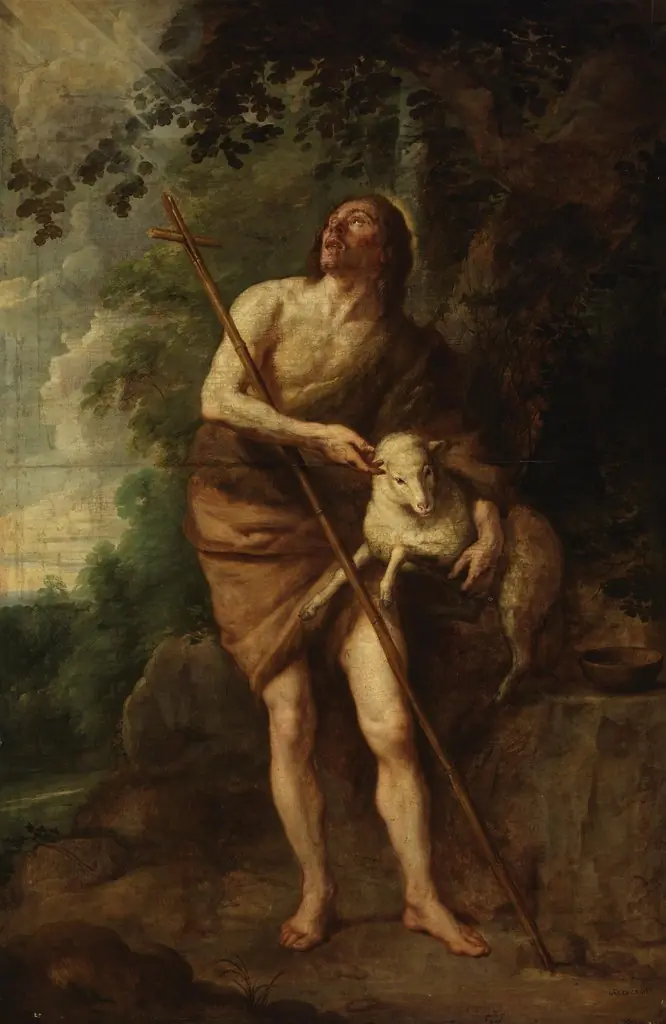
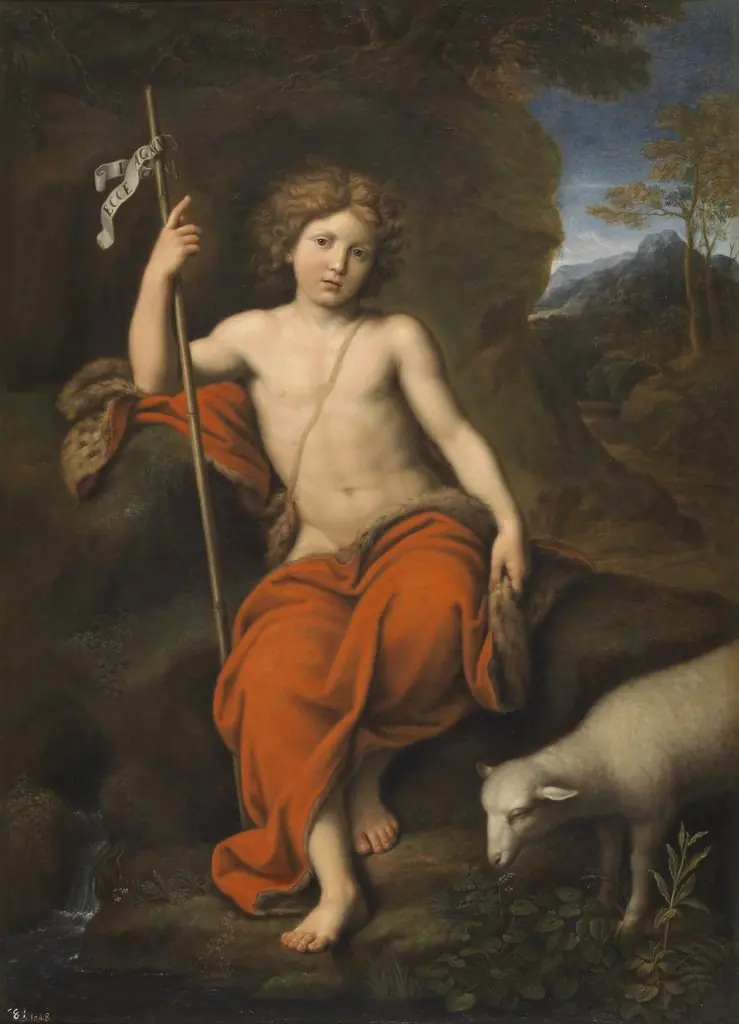
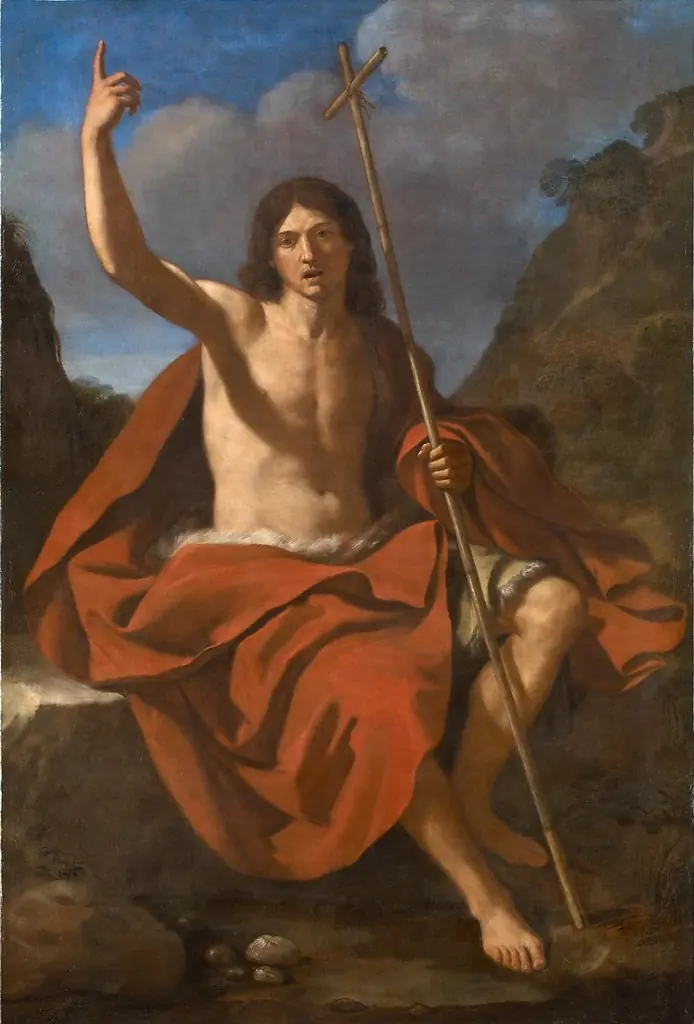
Saint John the Baptist is an oil painting by the Baroque artist Guercino. It dates from 1653 and is held in the collection of the Pinacoteca Civica di Forlì. Created in 1653, this oil on canvas presents a youthful figure identified as John the Baptist within a stark, outdoor setting.
About this work
Overview
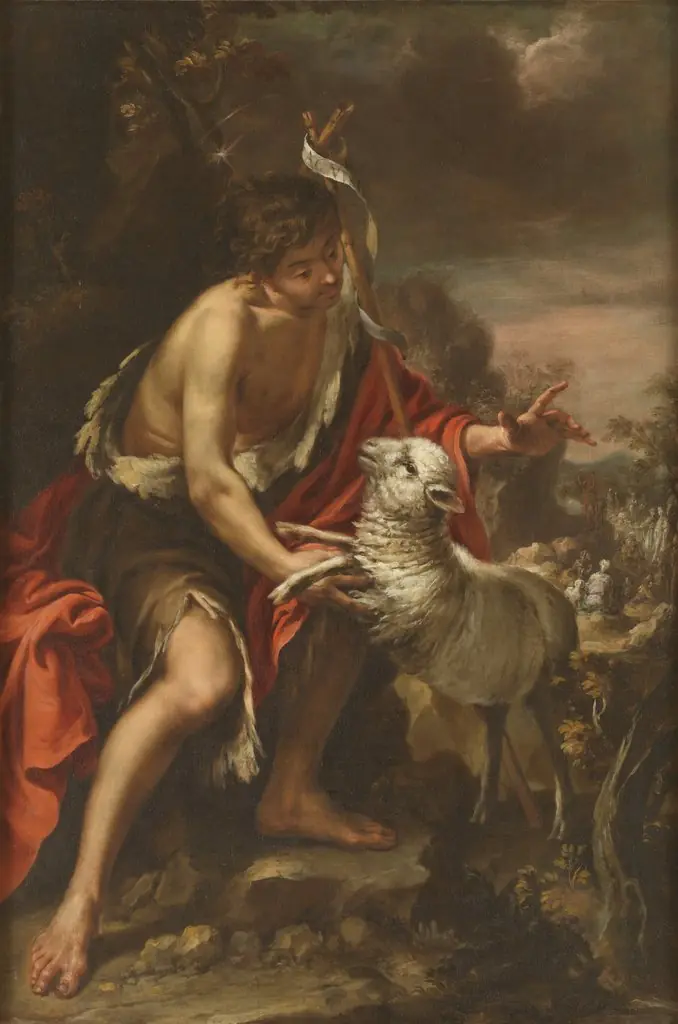
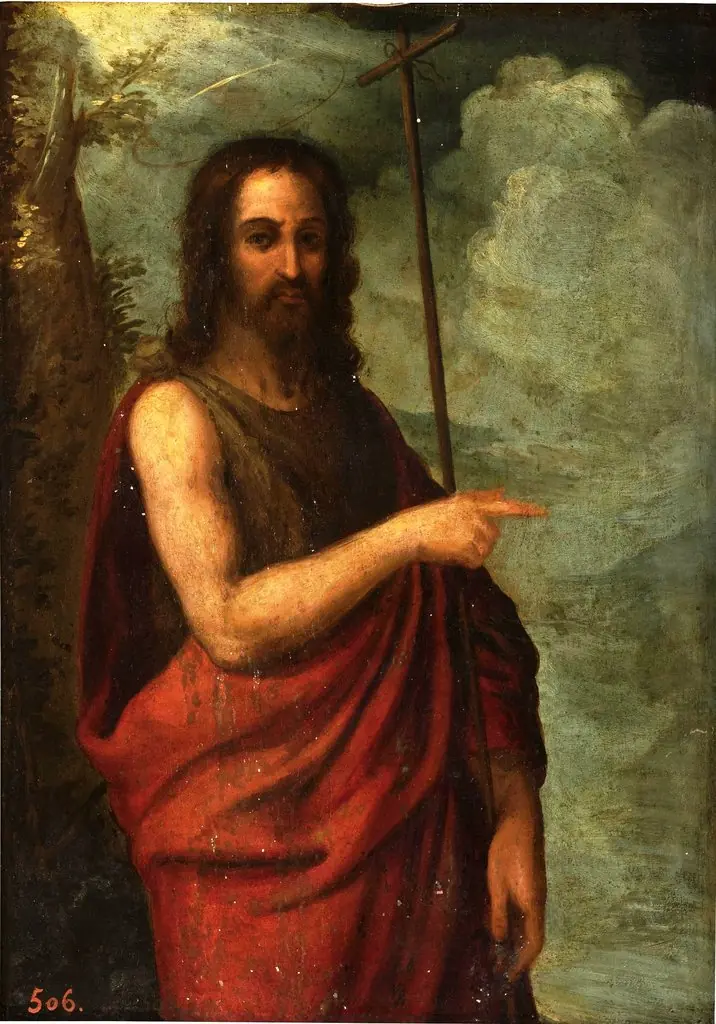
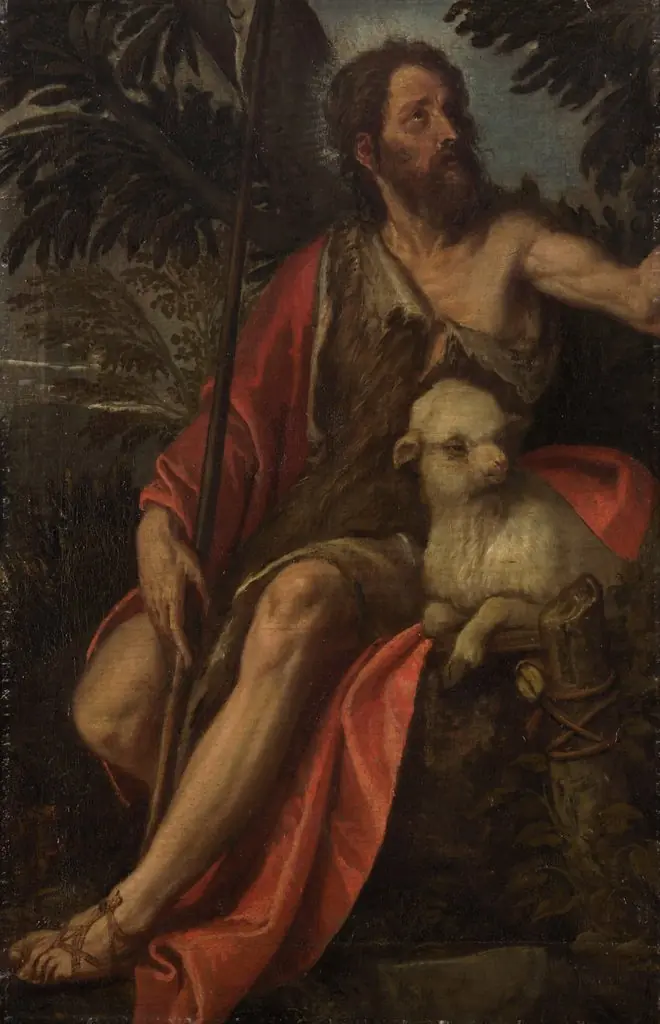
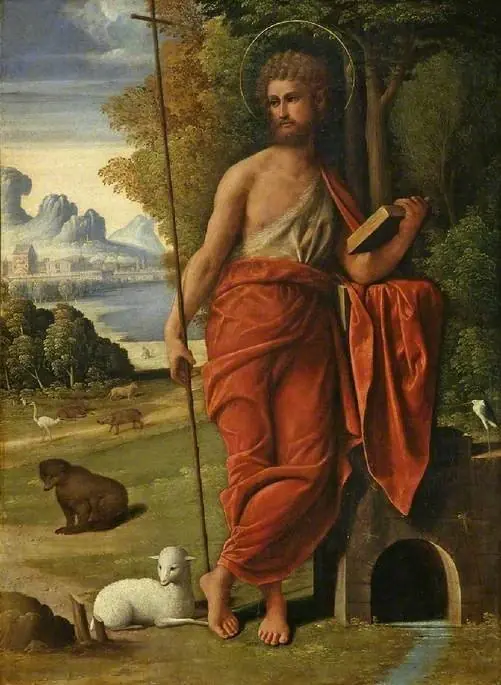
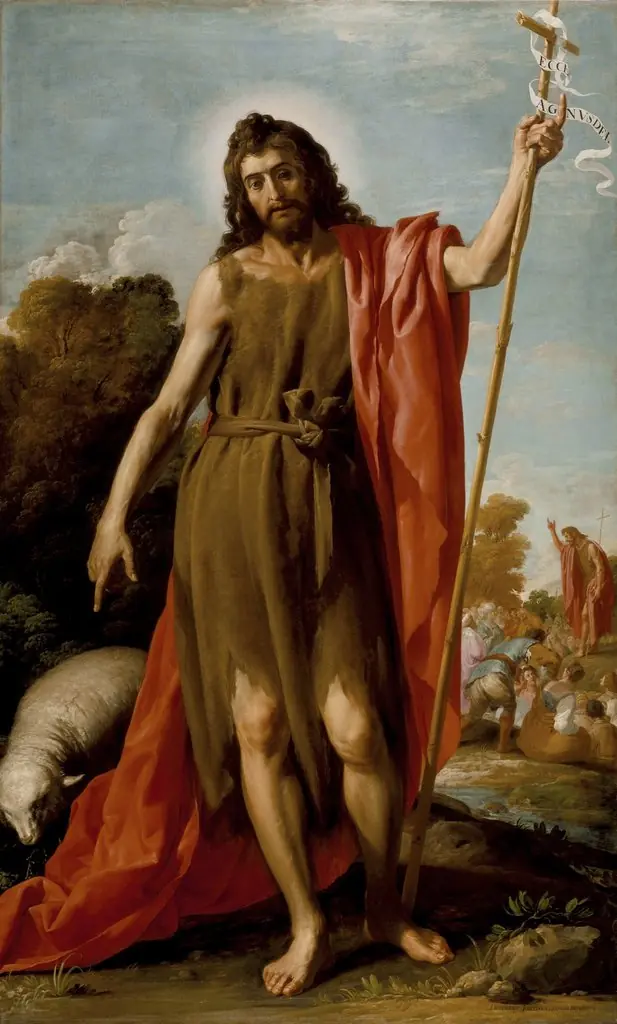
Created in 1653, this oil on canvas presents a youthful figure identified as John the Baptist within a stark, outdoor setting. He stands on a level ground, one arm raised, a red mantle draped over his shoulder, while the other hand cradles a white lamb. Dark, turbulent clouds dominate the sky behind him, and a rocky outcrop rises on the right, framing the scene.
Subject & Meaning
The composition alludes to the biblical prophet’s role as the forerunner of Christ, symbolized by the lamb he holds, an emblem of innocence and sacrifice. The raised arm suggests a gesture of proclamation or blessing, reinforcing John’s function as a herald. The barren landscape and solitary figure convey the ascetic, wilderness context traditionally associated with his life.
Technique & Style
The contrast heightens the three‑dimensionality of the figure and directs attention to his gesture and the lamb.
Executed in the early Baroque idiom, the work employs pronounced chiaroscuro: a concentrated light source illuminates the saint’s face and forearm, while the surrounding environment recedes into shadow. The contrast heightens the three‑dimensionality of the figure and directs attention to his gesture and the lamb. Brushwork balances naturalistic detail with a measured compositional harmony characteristic of the period.
History & Provenance
The painting is attributed to Giovanni Francesco Barbieri, known as Guercino (1591–1666), a leading Italian Baroque painter from Cento who spent significant periods in Rome and Bologna. After changing hands over the centuries, the canvas entered the collection of Milan’s Pinacoteca di Brera, where it remains on public display.
Context
By the mid‑17th century Guercino’s style had evolved from the vigorous naturalism of his early output toward a more restrained, classical equilibrium. This work reflects that transitional phase, merging dynamic lighting with a composed, balanced arrangement. It exemplifies the broader Baroque interest in dramatic narrative, emotional engagement, and the interplay of light and darkness.
Artist & collection
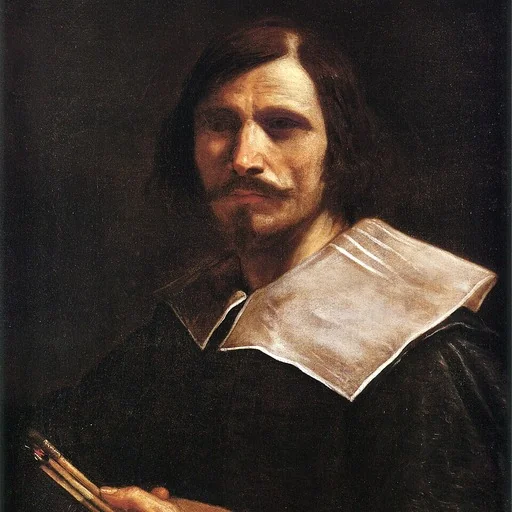
Artist
Giovanni Francesco Barbieri (8 February 1591 – 22 December 1666), better known as (il) Guercino (Italian pronunciation: ), was an Italian Baroque painter and draftsman from Cento in the Emilia region, who was active in Rome and Bologna.