Artwork
Saint John the Baptist
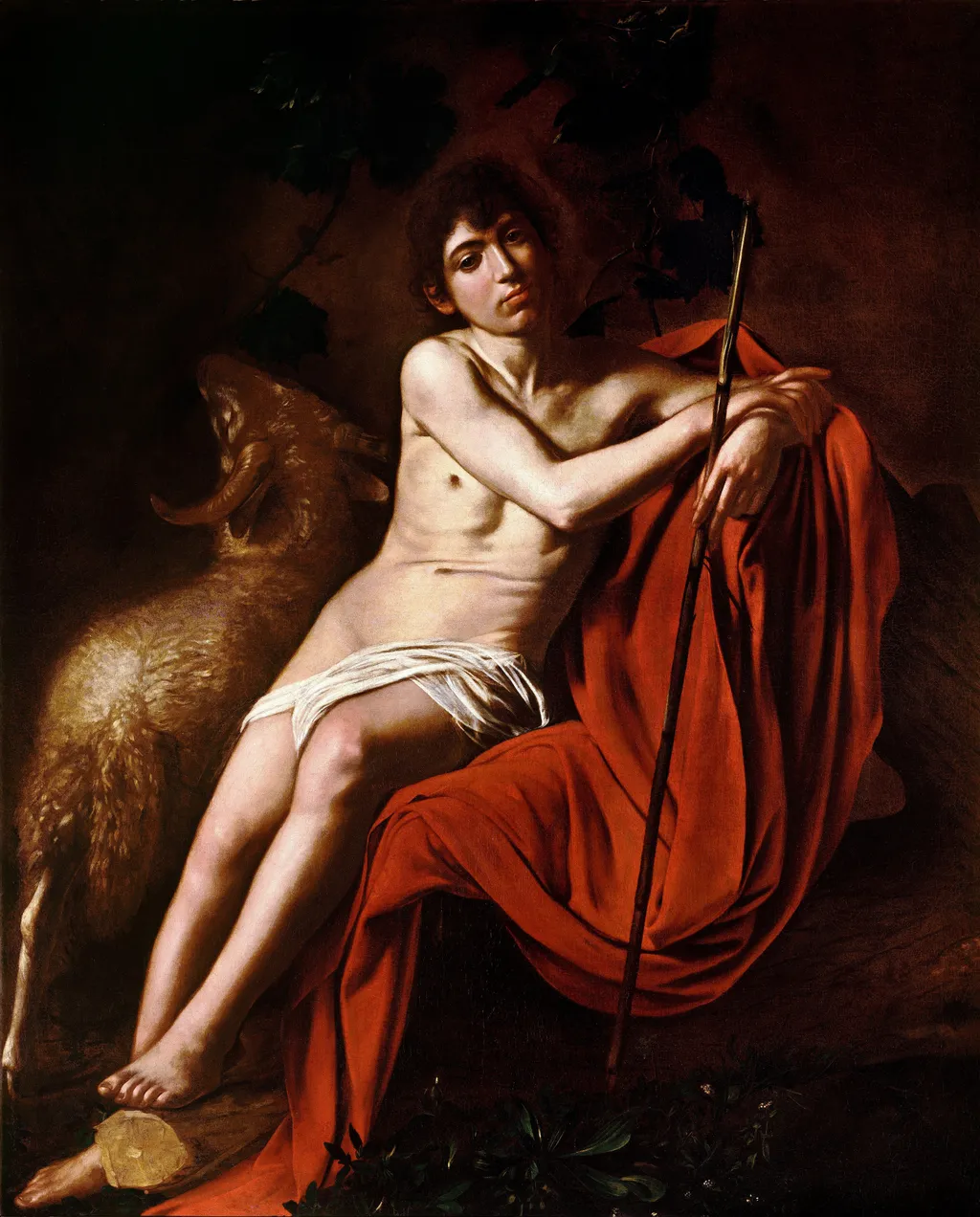
Saint John the Baptist is an oil painting by the Baroque artist Caravaggio. It dates from 1610 and is held in the collection of the Borghese Collection.
About this work
Overview
Painted in 1610, this oil work by Michelangelo Merisi da Caravaggio portrays Saint John the Baptist in a moment of quiet contemplation. Executed near the end of the artist’s life, the painting reflects his mature approach to religious subjects—grounded in physical presence and emotional restraint. It resides today in the Galleria Borghese in Rome, where it has remained since its creation.
Subject & Meaning
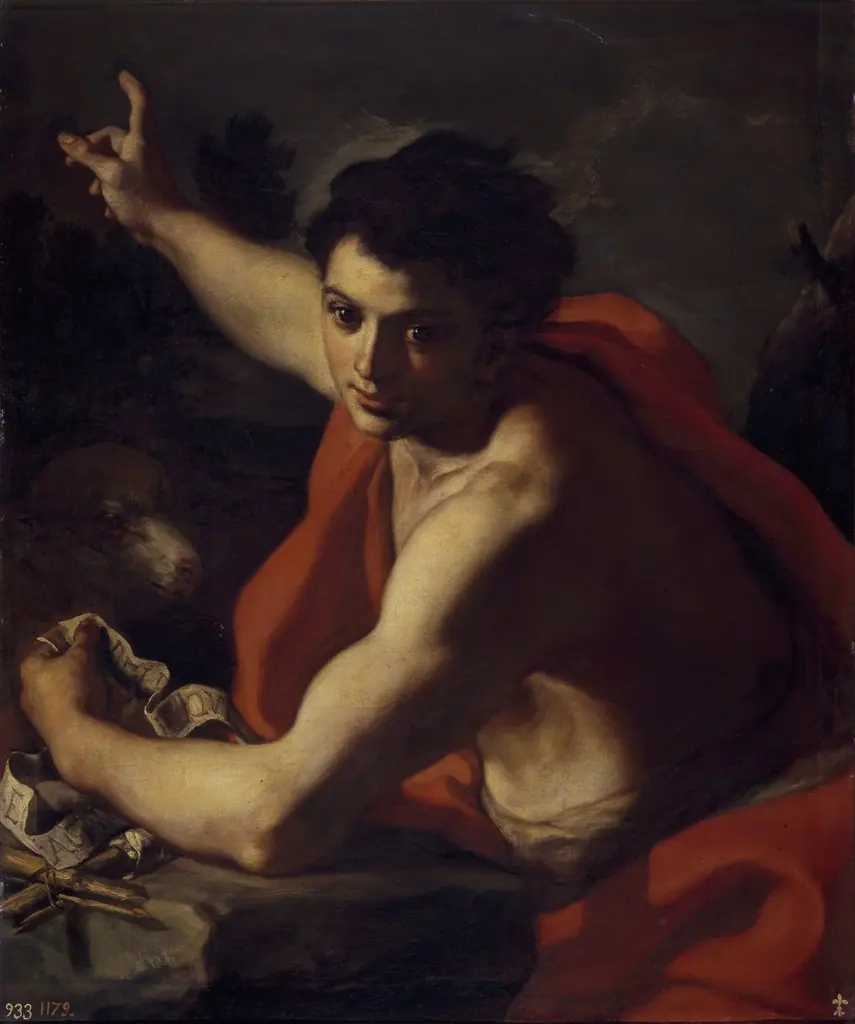
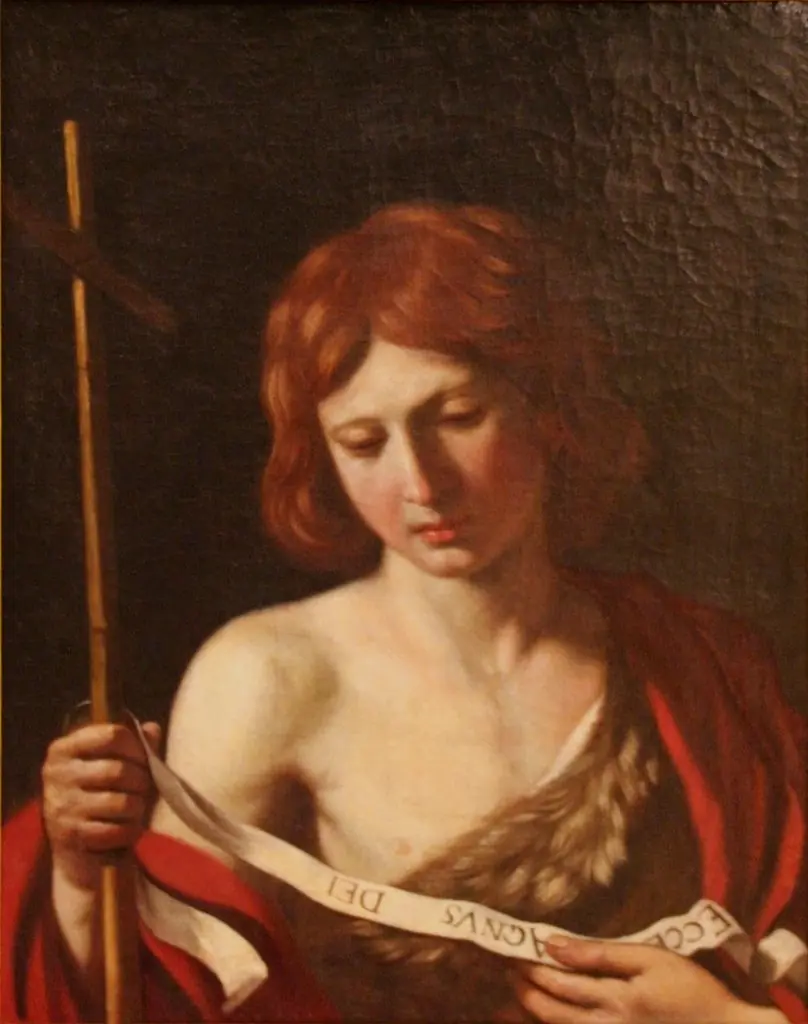
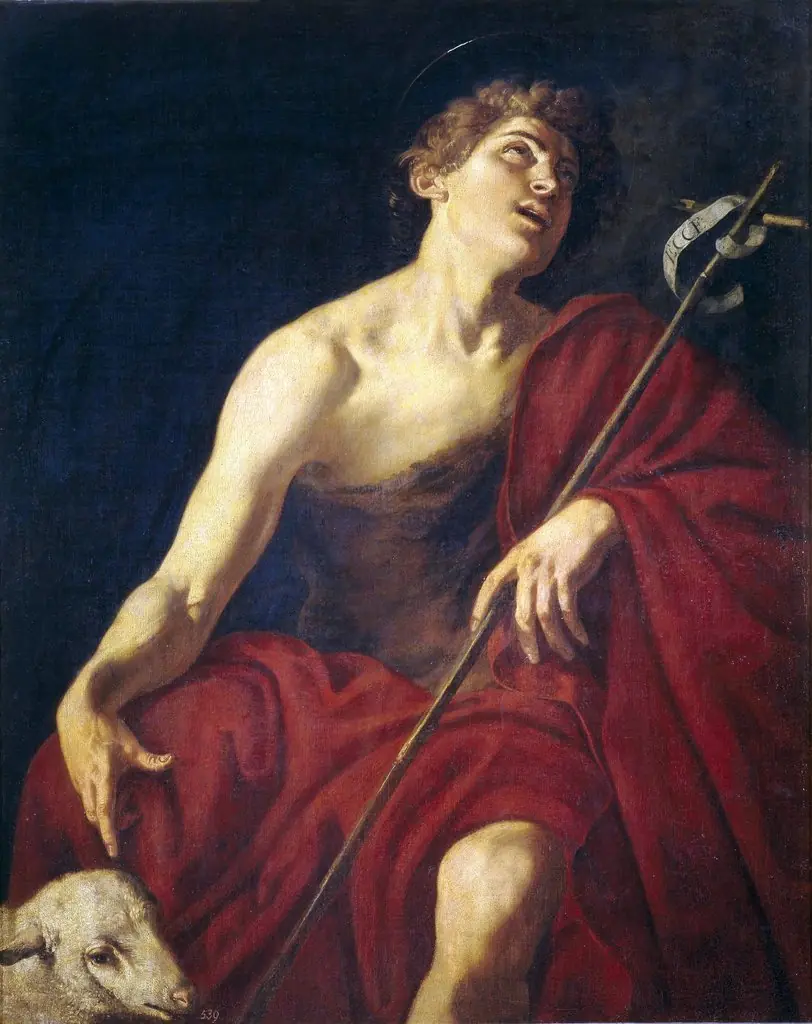
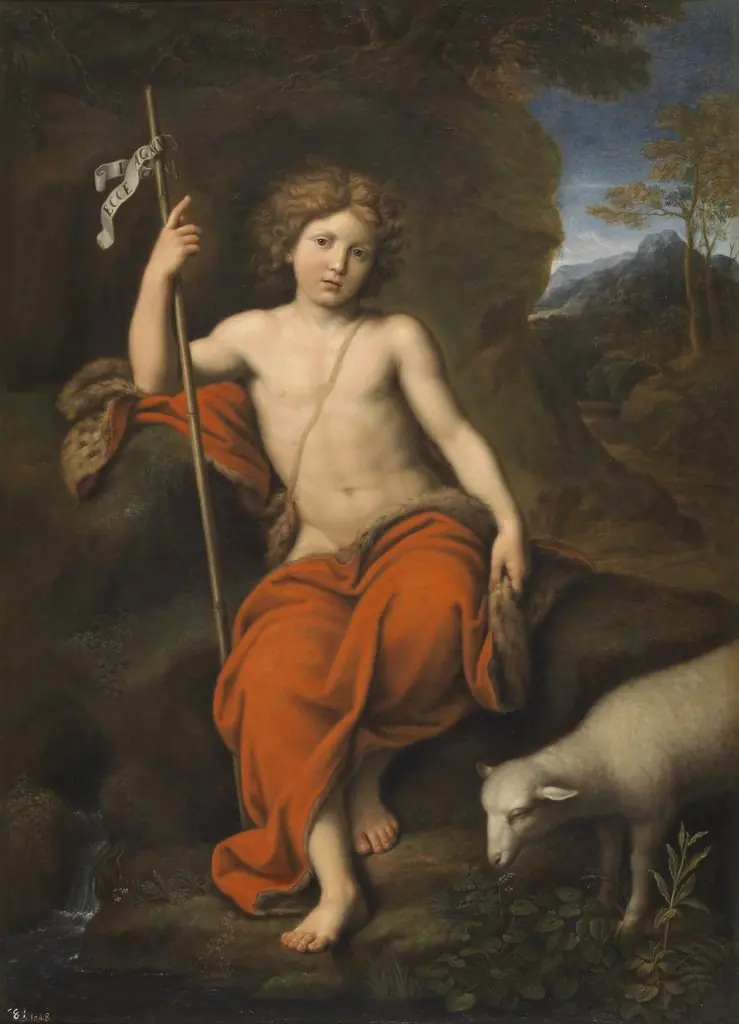
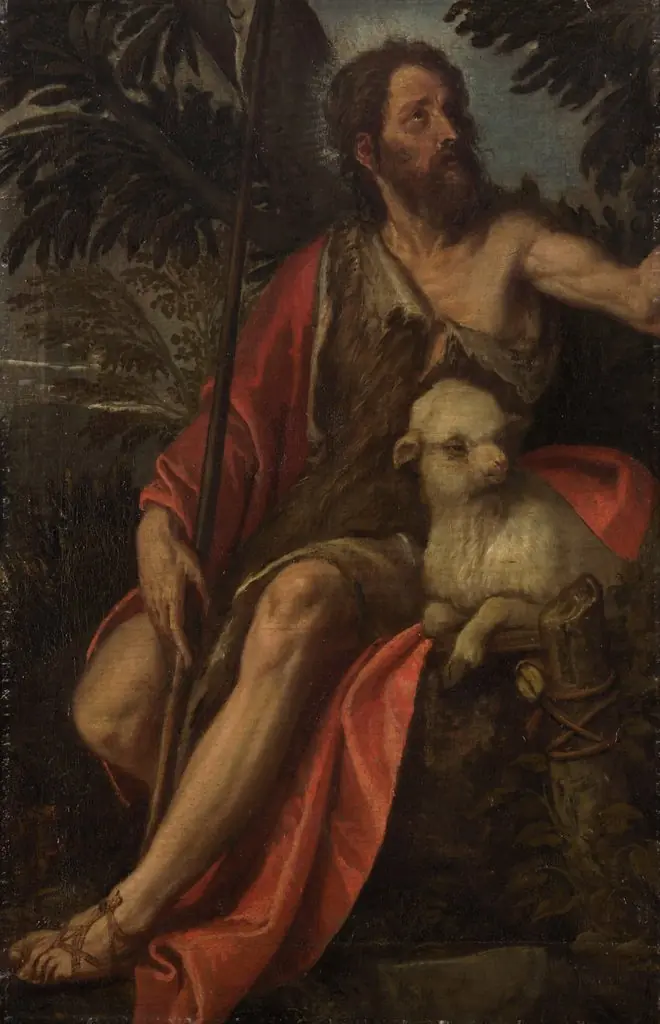
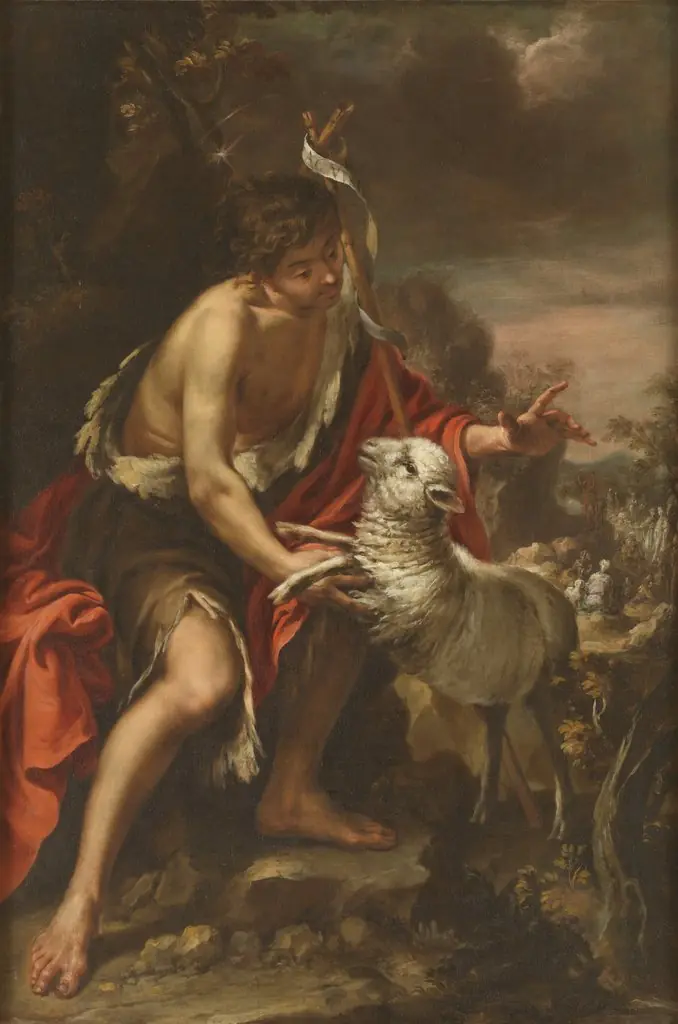
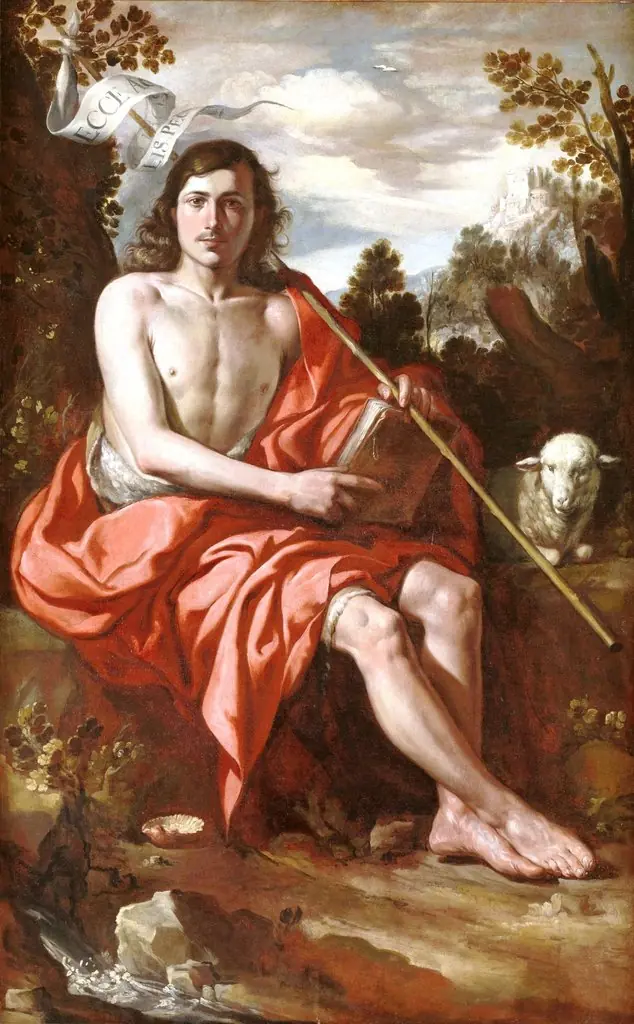
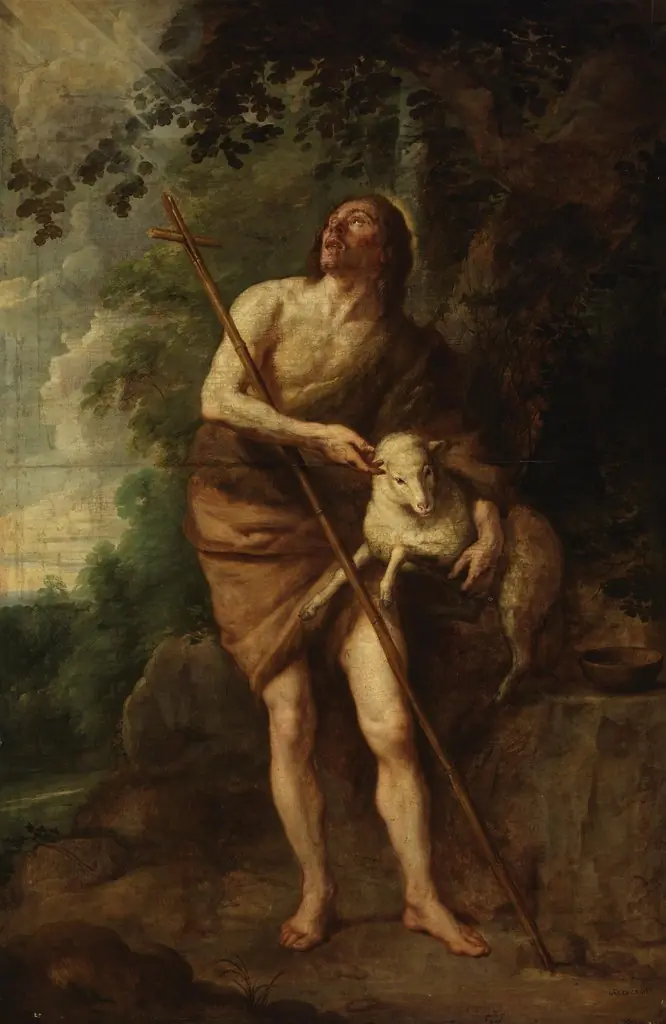
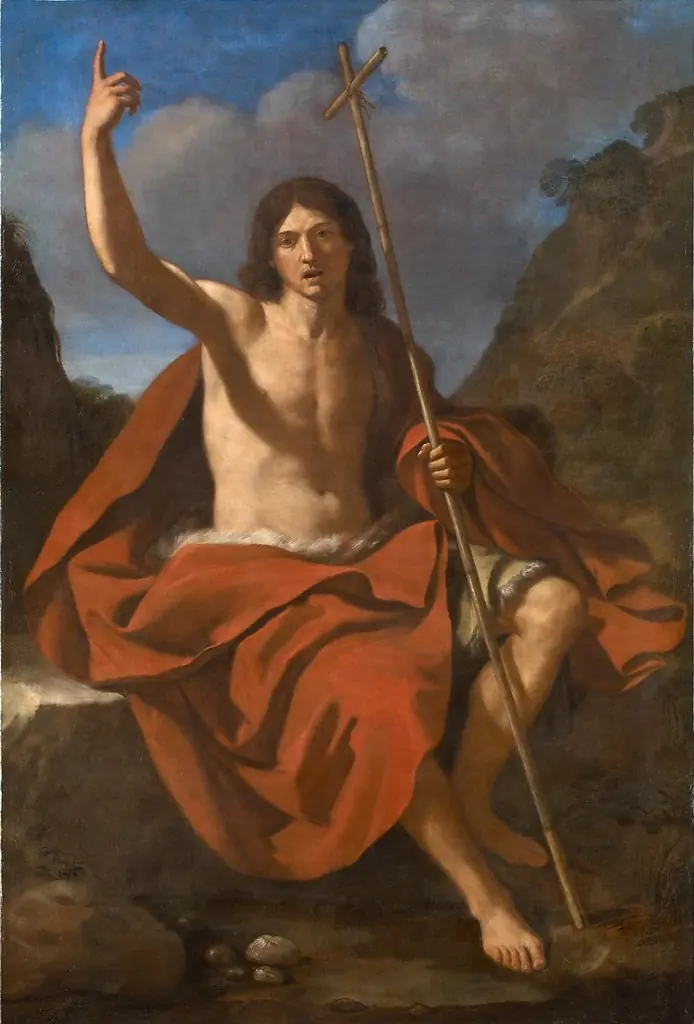
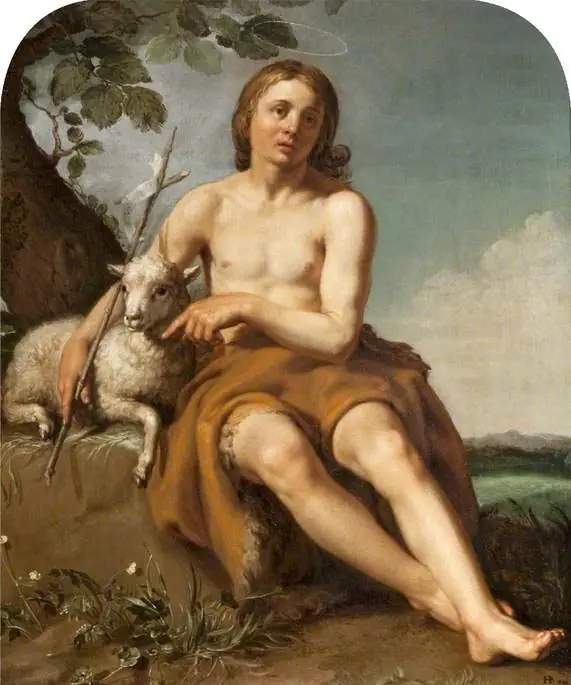
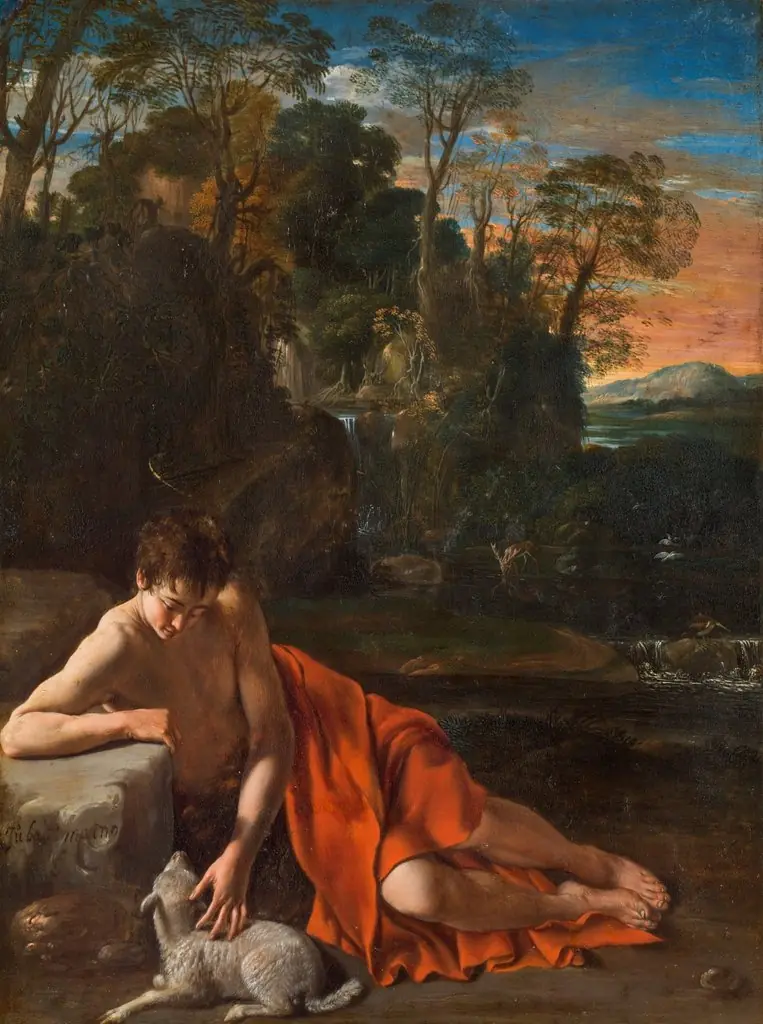
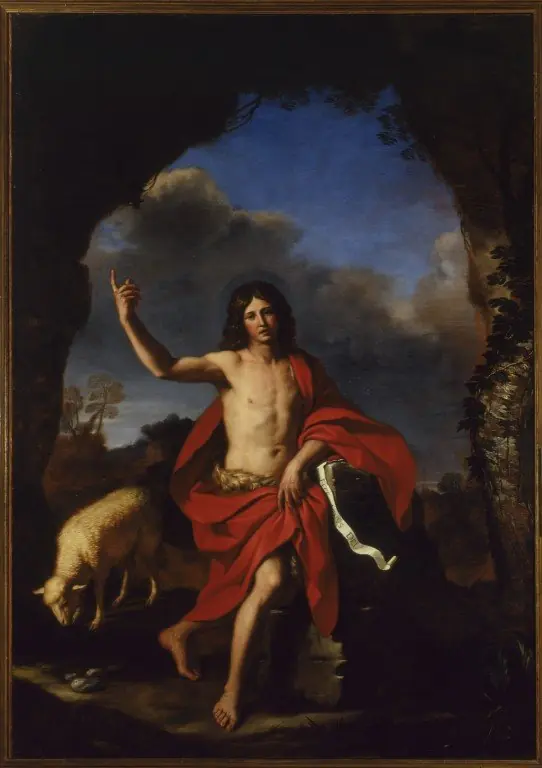
The figure is identified as John the Baptist through traditional iconography: the ram, symbolizing Christ’s future sacrifice, and the reed cross he holds.
The figure is identified as John the Baptist through traditional iconography: the ram, symbolizing Christ’s future sacrifice, and the reed cross he holds. Dressed in a simple loincloth and draped red cloak, he appears as a solitary desert ascetic, neither preaching nor performing miracles, but pausing in introspection. His gaze, directed away from the viewer, suggests inner reflection rather than divine proclamation.
Technique & Style
Caravaggio employs chiaroscuro with striking precision, isolating the figure in a narrow band of light that falls from the left, casting deep shadows across the rocky ground and surrounding darkness. The texture of skin, fabric, and wool is rendered with unidealized detail, emphasizing tactile realism. The ram, partially illuminated, anchors the composition without distracting from the central figure’s stillness.
History & Provenance
Commissioned by Cardinal Scipione Borghese, the painting entered the family collection shortly after its completion. It remained in the Borghese holdings through centuries of political change, avoiding dispersal or sale. Its continuous presence in the same collection provides rare continuity, offering insight into early 17th-century patronage and the cardinal’s preference for Caravaggio’s intense naturalism.
Context
Created during Caravaggio’s final years, the painting emerged amid his exile and legal troubles, a period marked by personal instability. Despite this, his work retained its psychological depth and formal rigor. The subdued tone and solitary figure reflect a shift from earlier dramatic narratives toward more intimate, meditative depictions of sacred figures, aligning with Counter-Reformation ideals of personal devotion.
Legacy
This painting exemplifies Caravaggio’s enduring influence on Baroque painting through its unadorned humanity and controlled lighting. Later artists adopted his method of using darkness to heighten emotional focus, though few matched his ability to convey spiritual stillness through physical realism. It remains a key reference in studies of religious imagery and the evolution of naturalism in early modern art.
Own this work as a print
Artist & collection
Artist
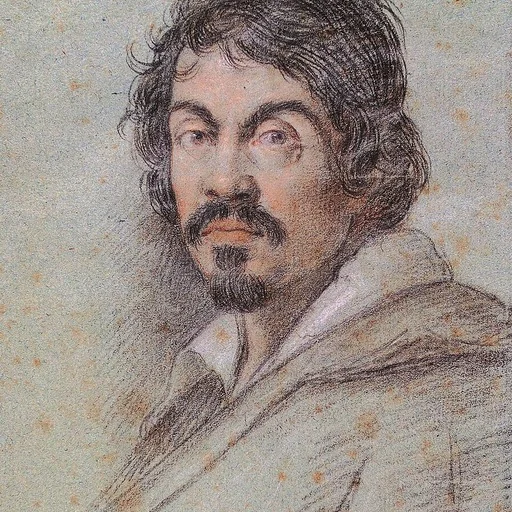
Michelangelo Merisi da Caravaggio (also Michele Angelo Merigi or Amerighi da Caravaggio; 29 September 1571 – 18 July 1610), known mononymously as Caravaggio, was an Italian painter active in Rome for most of his artistic life.