Artwork
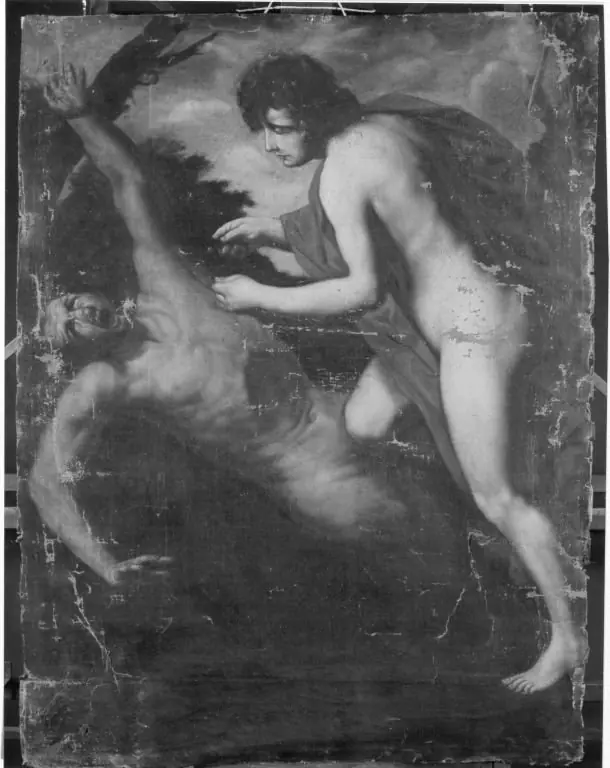
Apoll schindet Marsyas
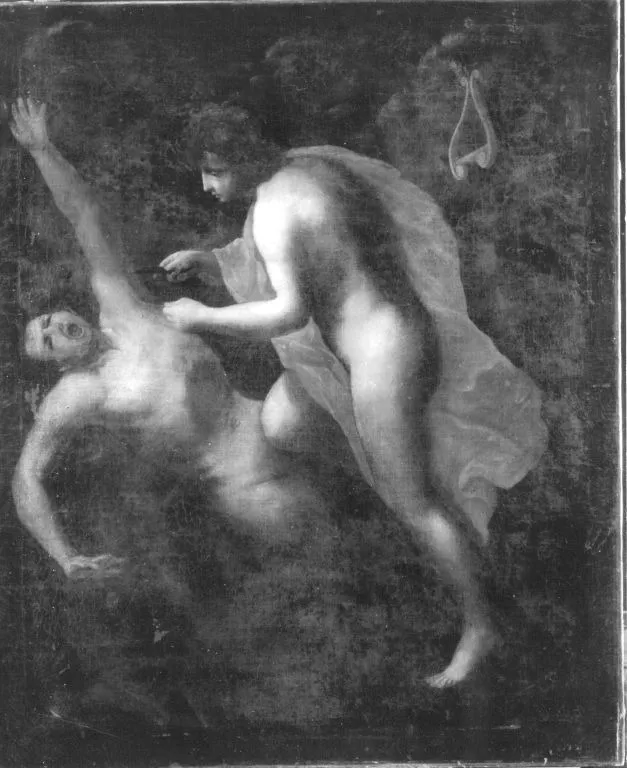
Apoll schindet Marsyas is an unspecified painting by the Early Baroque Italian artist Guido Reni. It dates from 1608 and is held in the collection of the Bavarian State Painting Collections.
About this work
Overview
The painting reflects the Counter-Reformation interest in martyrdom and physical suffering, translating the classical myth into a powerful religious allegory.
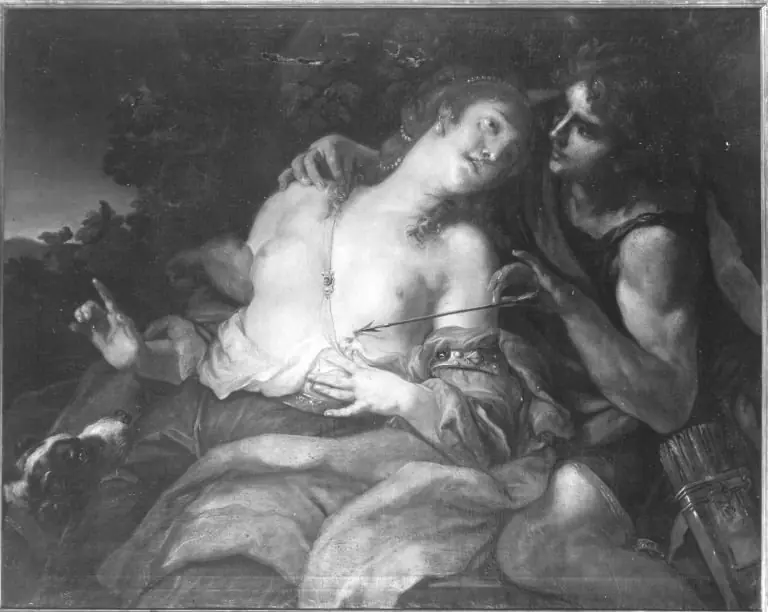
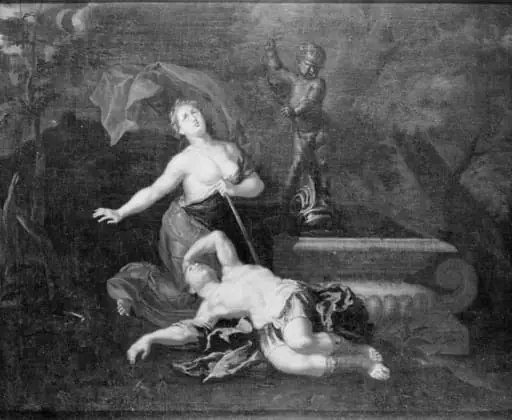
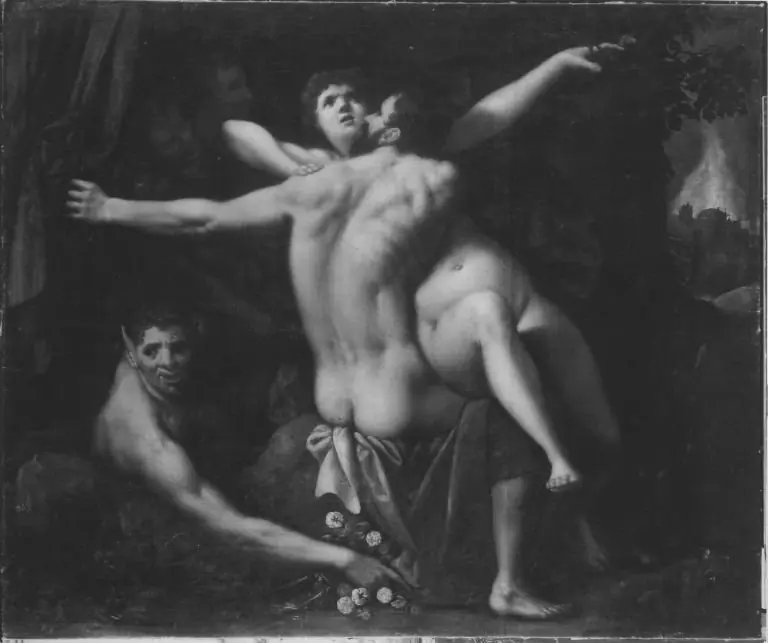
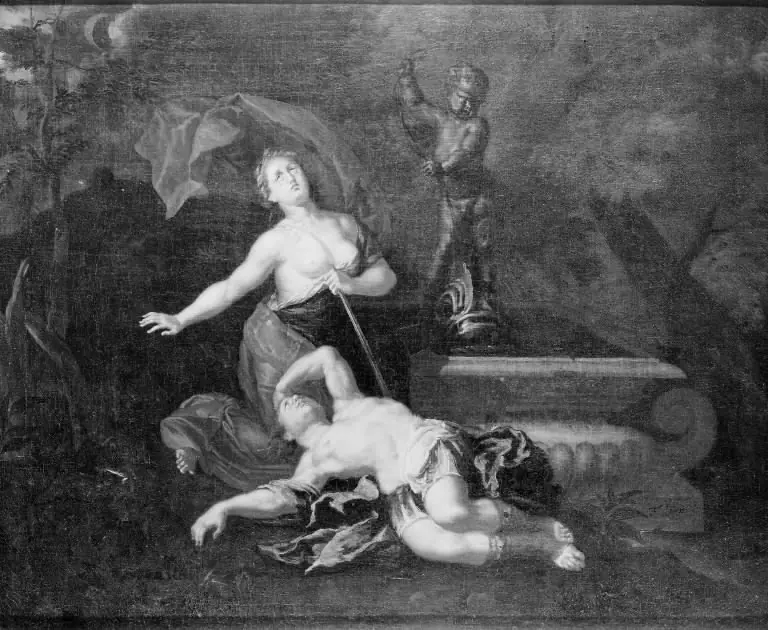
Guido Reni's 'Apollo Flaying Marsyas' (1608) depicts the mythological punishment of the satyr Marsyas, who challenged Apollo to a musical contest and lost. The composition centers on the bound, nude figure of Marsyas, suspended upside down from a tree branch, his body contorted in agony as he reaches upward. Above him stands Apollo, draped in flowing robes, holding a knife to execute the sentence. Reni employs a stark tenebrist background that isolates the figures, heightening the dramatic tension and focusing attention on the anatomical precision of the suffering body. Painted during the artist's early Bolognese period, this work demonstrates Reni's mastery of classical idealism combined with the emotional intensity characteristic of the Baroque style. The painting reflects the Counter-Reformation interest in martyrdom and physical suffering, translating the classical myth into a powerful religious allegory. Reni's treatment of the subject showcases his ability to balance idealized beauty with visceral realism, establishing a precedent for his later, more famous depictions of saints and martyrs. The work remains a significant example of early 17th-century Italian art, illustrating the transition from Mannerist complexity to the clearer, more direct emotional language of the Baroque.
Subject & Meaning
The composition draws on the myth in which Apollo defeats Marsyas after a musical contest, a story that has long symbolized the triumph of divine order over hubris. In the image, the nude Marsyas raises his arms toward the celestial figure, while Apollo, partially concealed by a draped garment, holds a curved instrument, suggesting the moment of judgment.
Technique & Style
Reni employs a pronounced chiaroscuro, using deep shadows and bright highlights to model the bodies and create a sense of three‑dimensionality within the confined space. The contrast between the luminous skin and the dark background intensifies the emotional charge, while the loose cloth and the curved instrument are rendered with delicate brushwork that conveys texture.
History & Provenance
Executed in 1608, the painting entered the holdings of the Alte Pinakothek, one of Germany’s foremost art museums, where it remains on display. Its attribution to Reni has been consistently affirmed by scholars, and the work exemplifies the artist’s mature Baroque style during his prolific period in the early seventeenth century.
Artist & collection
Artist
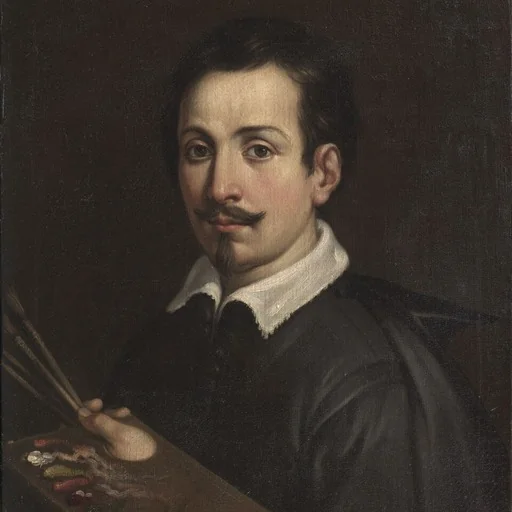
Guido Reni was an Italian Baroque painter, although his works showed a classical manner, similar to Simon Vouet, Nicolas Poussin, and Philippe de Champaigne.