Artwork
Pharaoh's daughter discovers Moses in the rush basket
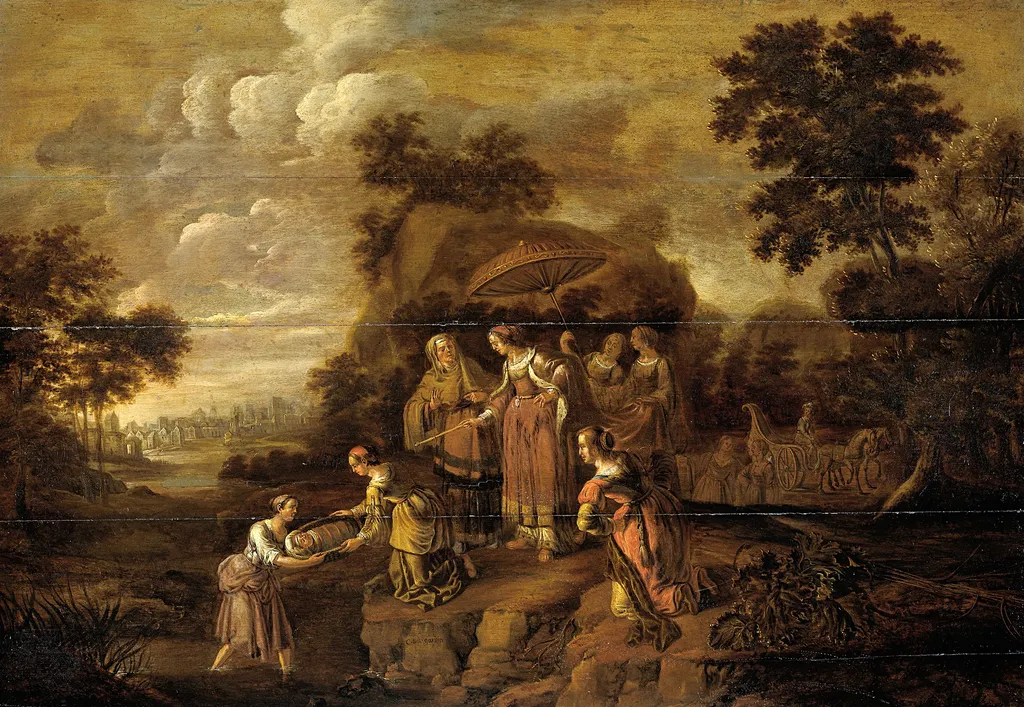
Pharaoh's daughter discovers Moses in the rush basket is an oil painting by the Flemish Baroque painting artist Guilliam du Gardijn. It dates from 1622 and is held in the collection of the Rijksmuseum.
About this work
Overview
Guilliam du Gardijn’s oil painting, dated 1622, depicts the biblical episode in which the Egyptian princess discovers the infant Moses hidden in a basket of reeds. The work is part of the Rijksmuseum’s collection and presents the narrative in a tranquil, river‑bank setting.
Subject & Meaning
The composition centers on the royal woman, dressed in a vivid red gown, holding a parasol as she surveys the basket that contains the newborn Moses. Surrounding figures—court attendants and a kneeling man—react with curiosity, emphasizing the moment of revelation and the protective care offered to the child.
Technique & Style
Du Gardijn employs a muted palette of soft hues, allowing the light to diffuse gently across the scene. The subtle gradations of tone create a calm atmosphere, while the figures merge seamlessly with the surrounding landscape, reflecting a restrained approach to chiaroscuro that balances illumination and shadow.
History & Provenance
Executed in the early seventeenth century, the painting entered the Rijksmuseum’s holdings through acquisition in the museum’s early collection-building phase. Its provenance prior to the museum remains undocumented, but the work has been catalogued as a representative example of Dutch religious painting of the period.
Context
The work reflects the continued interest of Dutch artists in biblical narratives during the post‑Reformation era, when such subjects were rendered with domestic tranquility rather than overt drama. Du Gardijn’s treatment aligns with contemporary trends that favored naturalistic settings and understated emotional expression.
Own this work as a print
Artist & collection

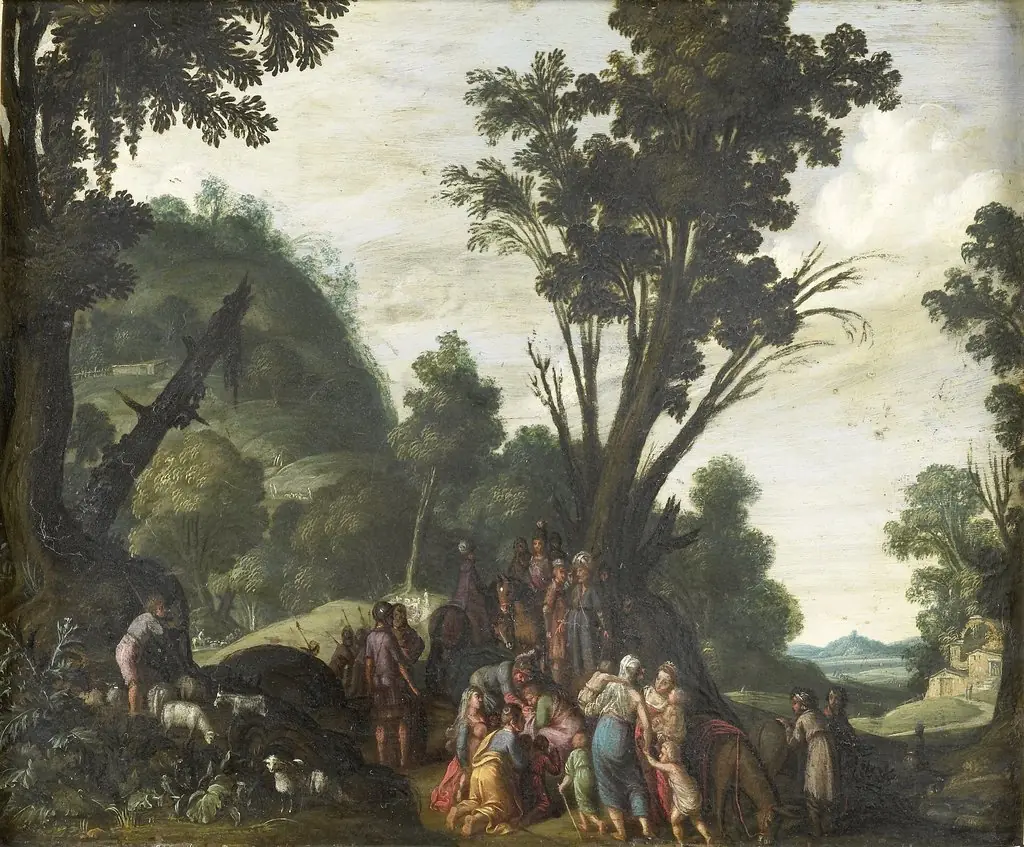 The meeting of Jacob and Esau
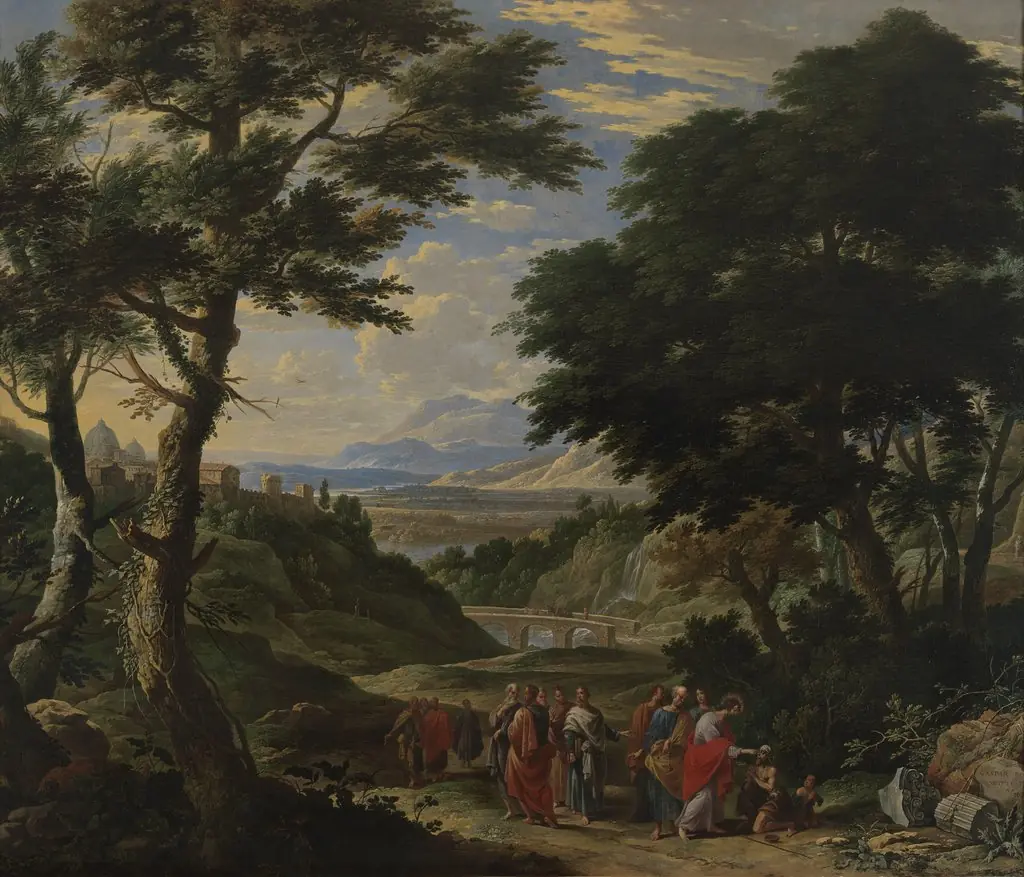 Christ Healing the Blind Man at Jericho
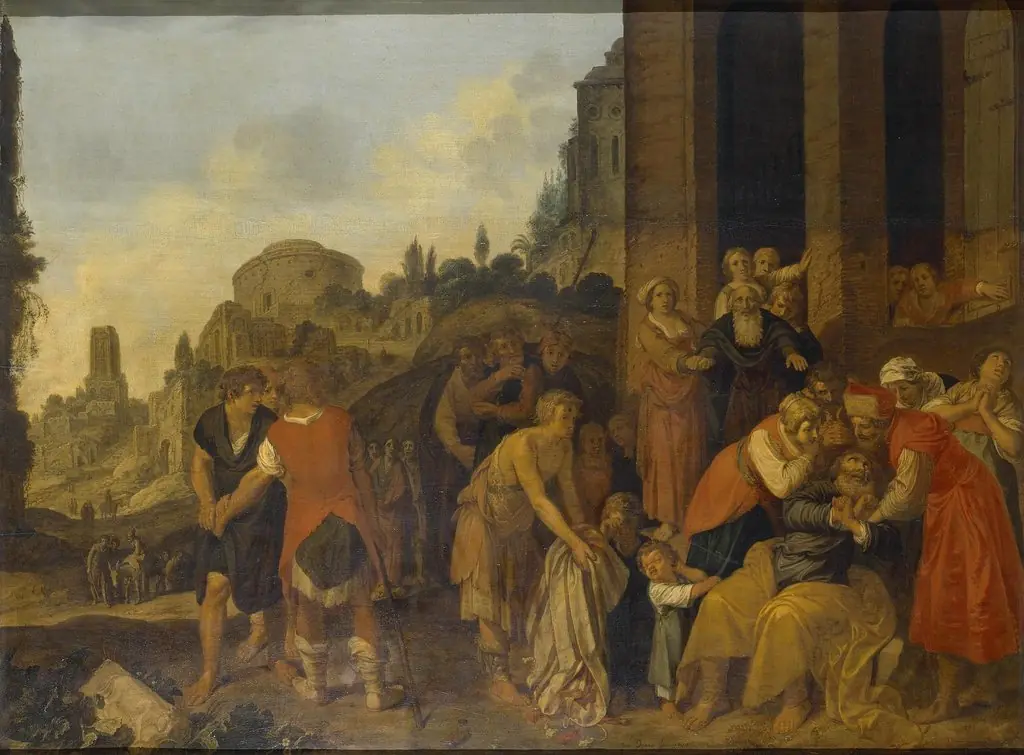 Jacob's Sons Show Him Joseph's Blood-Stained Robe
 Landscape with love couple
 Laban Searching for His Gods
 Primăvara
 Landscape with Gypsies
 Moses schlägt Wasser aus dem Felsen
 Landscape with Roman Ruins and the Meeting of Rebecca and Eliezer
 Landscape with a Group of Wanderers