Artwork
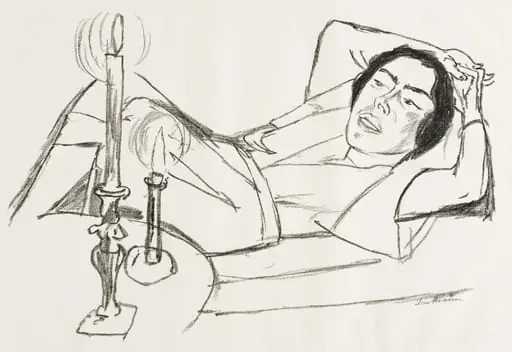
Untitled
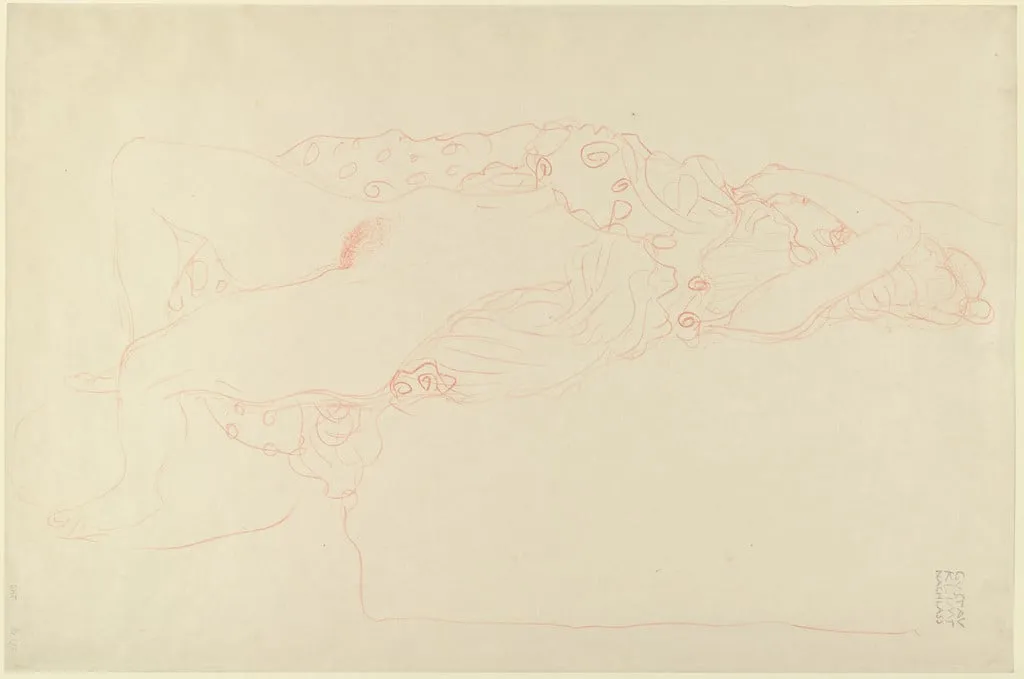
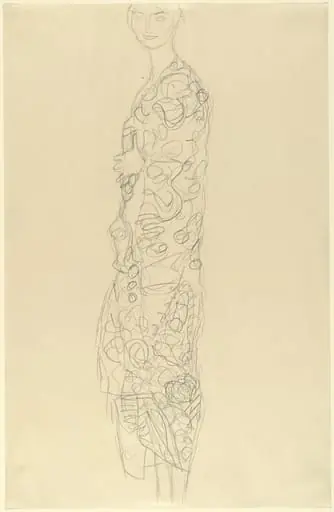
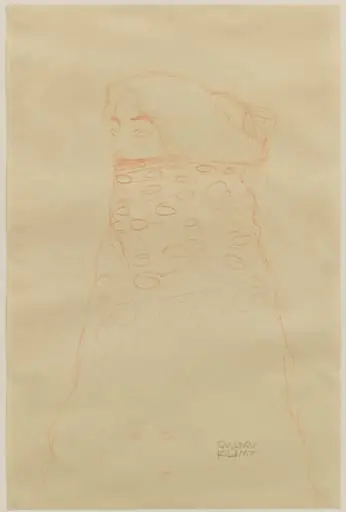
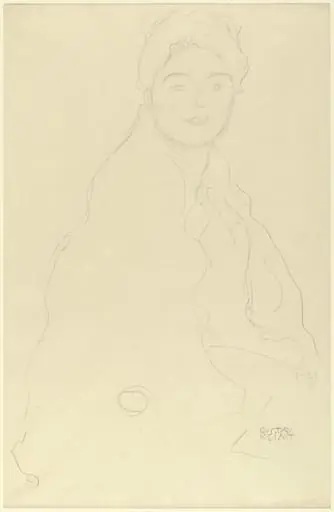
Untitled is a graphite drawing by Gustav Klimt. It dates from 1912 and is held in the collection of the Museum of Modern Art.
About this work
Overview
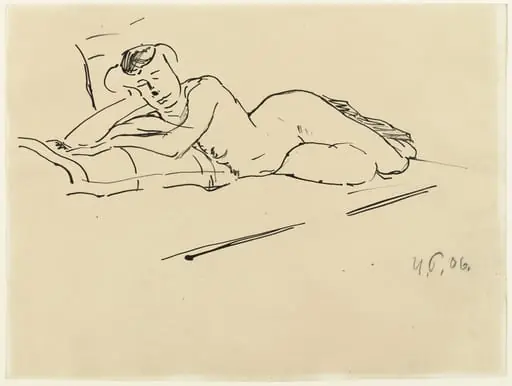
Created in 1912, this drawing by Gustav Klimt is executed in colored pencil on paper. It belongs to the collection of The Museum of Modern Art. The work presents a single, elongated figure in a reclining pose, rendered without defined anatomical precision. Its simplicity and immediacy suggest an intimate, spontaneous gesture rather than a polished composition.
Subject & Meaning
The figure lacks facial features or identifiable traits, reducing the form to its essential contours. This abstraction shifts focus from individual identity to the fluidity of the body in space. The absence of context or narrative invites contemplation of movement, vulnerability, or inner states, aligning with Klimt’s interest in the human form beyond literal representation.
Technique & Style
Klimt employed soft pinkish-red pencil strokes that flow in loose, undulating lines, creating a sense of motion rather than structure. The drawing’s sketchlike quality—minimal detail, no shading, no outlines—suggests rapid execution. Small circular marks imply joints or eyes, hinting at anatomy without defining it, emphasizing gesture over realism.
History & Provenance
The work was produced during Klimt’s later years, a period marked by increased experimentation with drawing. It entered The Museum of Modern Art’s collection in the mid-20th century, likely through acquisition or donation. Its modest scale and medium reflect its status as a private study, not a public commission, preserving its intimate character.
Context
In the early 20th century, Klimt increasingly turned to drawings as a space for personal exploration, separate from his ornate paintings. This piece aligns with a broader shift among modern artists toward expressive line and emotional immediacy. Its informality contrasts with his decorative public works, revealing a quieter, more introspective practice.
Legacy
This drawing exemplifies Klimt’s engagement with the expressive potential of line in private work. It influenced later artists interested in gestural abstraction and the emotional resonance of minimal form. Though not widely exhibited, it remains a quiet testament to his ongoing inquiry into the body’s language beyond ornamentation.
Artist & collection
Artist
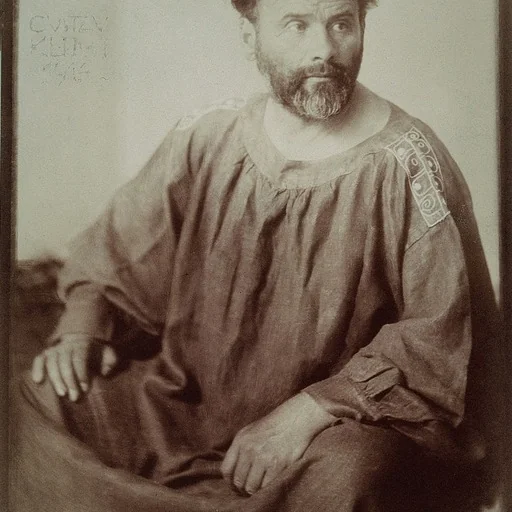
Gustav Klimt was an Austrian symbolist painter and a founding member of the Vienna Secession movement.