Artwork
Tête de sanglier
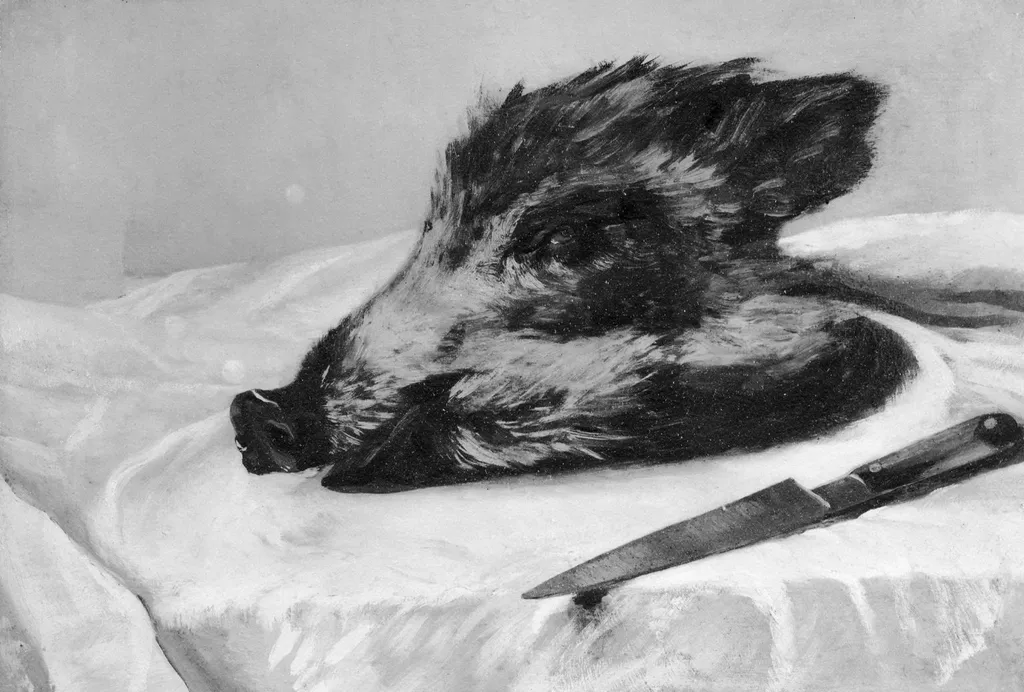
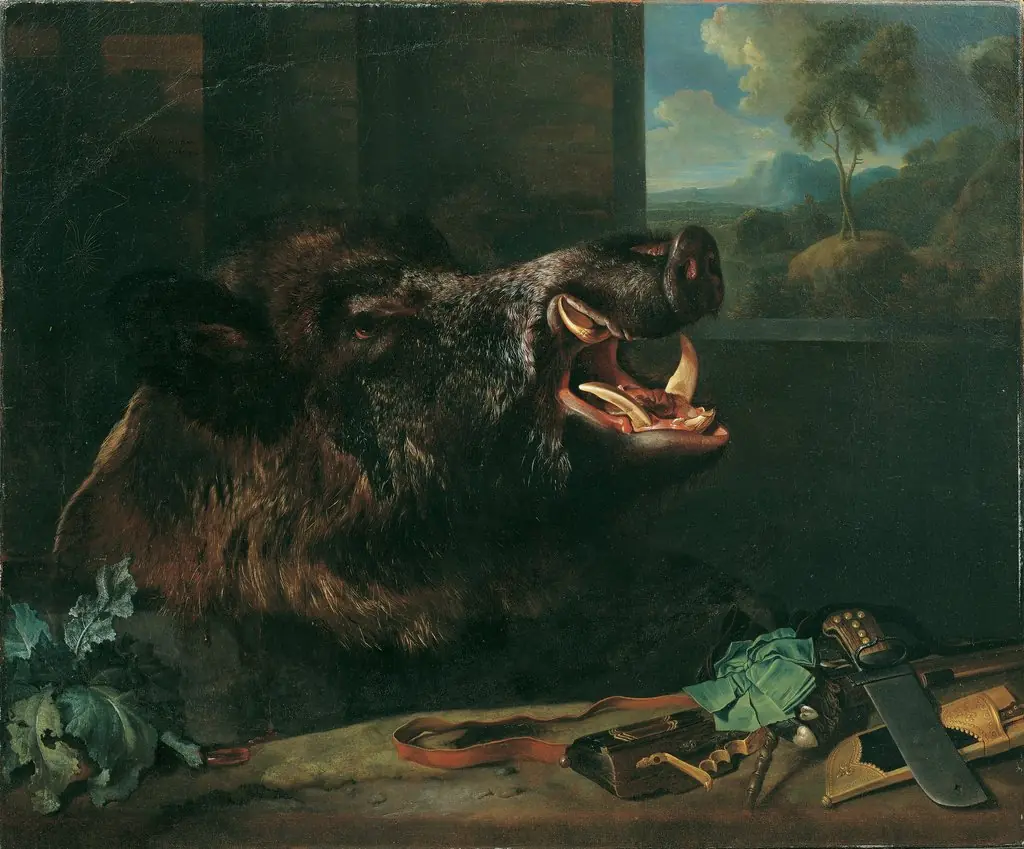
Tête de sanglier is an oil painting by the Realist artist Gustave Courbet. It dates from 1858 and is held in the collection of the Brooklyn Museum.
About this work
Overview
This piece exemplifies his rejection of idealized historical or mythological themes in favor of direct, observational art.
Painted around 1858, *Tête de sanglier* is an oil-on-canvas work by Gustave Courbet that presents a straightforward depiction of a boar’s head resting on a folded white cloth, with a knife laid beside it. The subject is rendered without embellishment, reflecting Courbet’s commitment to portraying ordinary, unadorned reality. This piece exemplifies his rejection of idealized historical or mythological themes in favor of direct, observational art.
Subject & Meaning
The painting shows a slaughtered boar’s head, a common sight in rural French markets, presented without narrative or moralizing. The inclusion of the knife suggests the act of butchery, grounding the image in daily life rather than allegory. Courbet’s choice to elevate such a mundane, even brutal, subject reflects his belief that art should engage with the tangible world, not escape into fantasy.
Technique & Style
Courbet applied thick, deliberate brushwork to capture the coarse texture of the boar’s fur and the soft folds of the cloth. Dark tones dominate the head, contrasted sharply by the pale linen, enhancing the object’s physical presence. The composition is deliberately sparse, with no background or contextual elements, focusing attention entirely on the materiality of the forms and their surface details.
History & Provenance
Created during Courbet’s early mature period, the painting emerged from his time in the French countryside, where he sought inspiration in local life. It was likely painted in his studio after direct study of carcasses, consistent with his practice of working from life. The work remained in private collections until entering a public museum, where it is now preserved as a key example of Realist still life.
Context
In mid-19th-century France, academic art favored grand historical scenes and polished finishes. Courbet’s unidealized depictions of animals, laborers, and landscapes challenged these norms. *Tête de sanglier* was part of a broader shift toward depicting the visible world without romanticization, aligning with emerging democratic values in art and society.
Legacy
Courbet’s insistence on painting ordinary subjects with unflinching detail influenced later movements that valued direct perception over idealization. The Impressionists adopted his focus on light and surface, while Cubists drew from his structural treatment of form. Though modest in scale, this work contributed to a lasting redefinition of what could be considered worthy of artistic attention.
Artist & collection
Artist
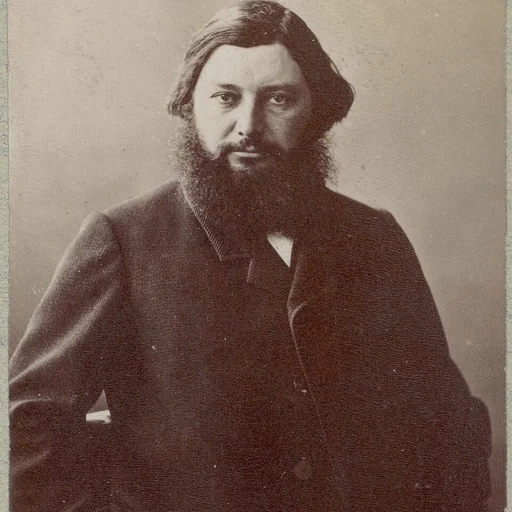
Jean Désiré Gustave Courbet (UK: KOOR-bay; US: koor-BAY; French: ; 10 June 1819 – 31 December 1877) was a French painter who led the Realism movement in 19th-century French painting.