Artwork
Marina
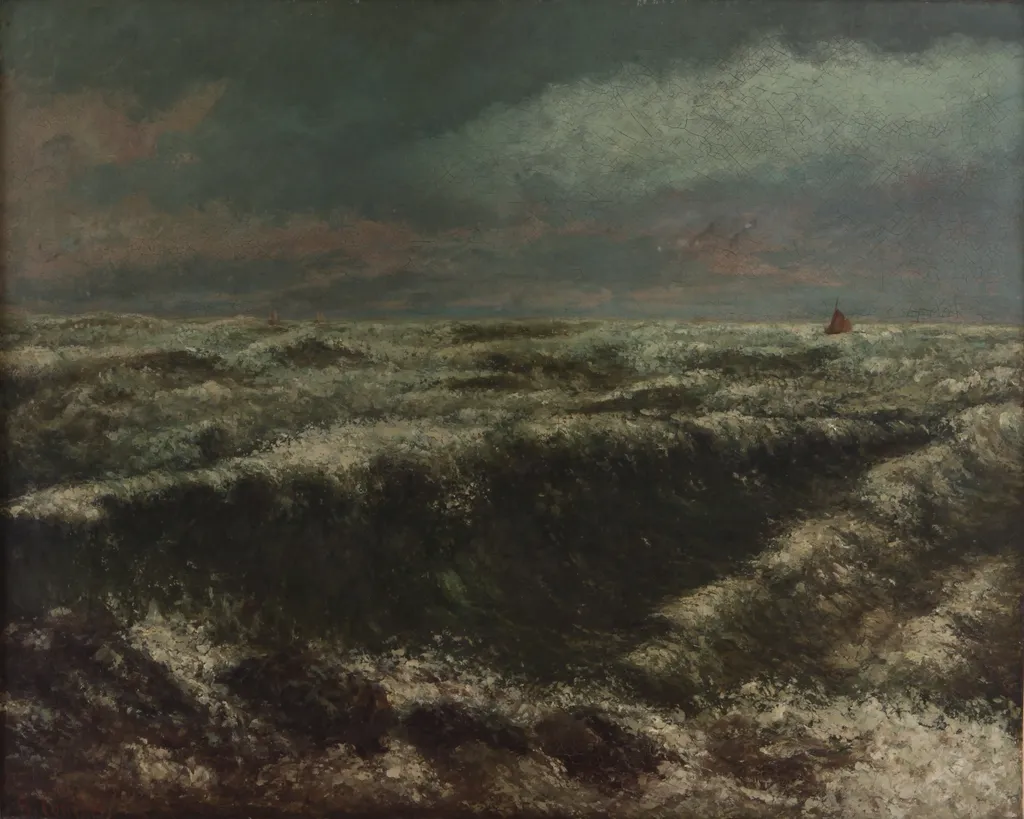
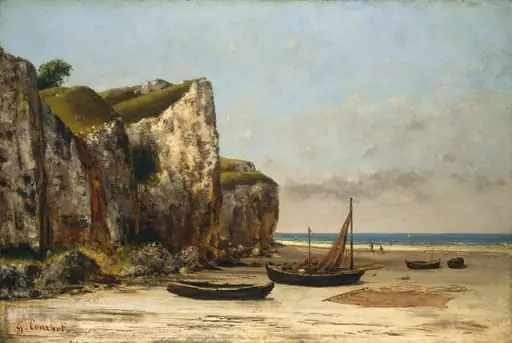
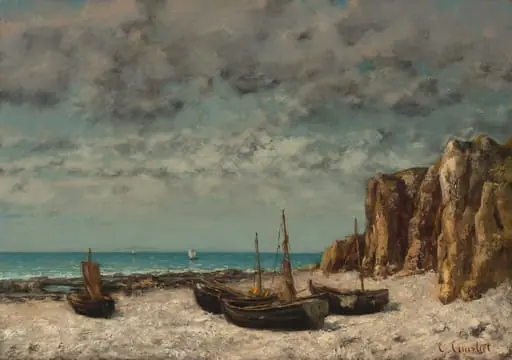
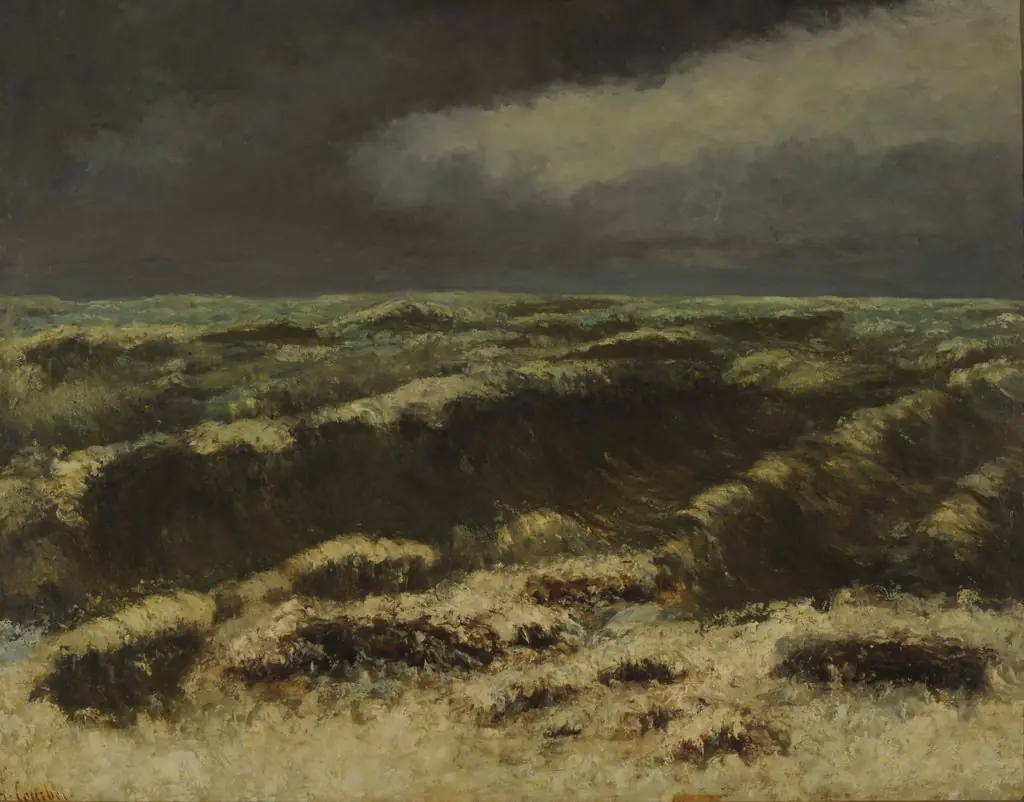
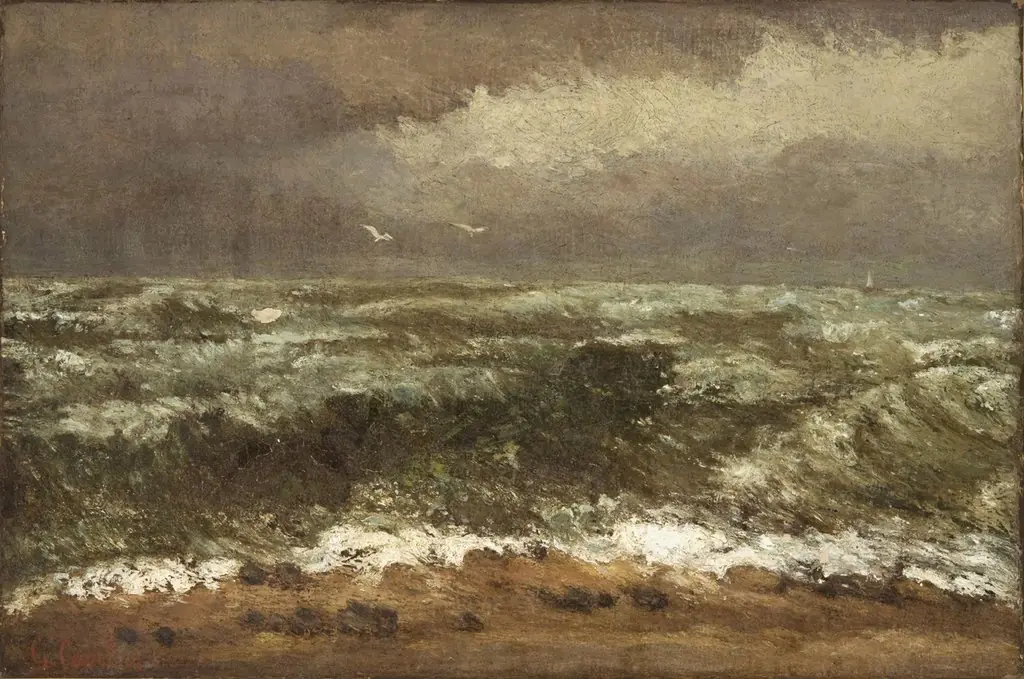
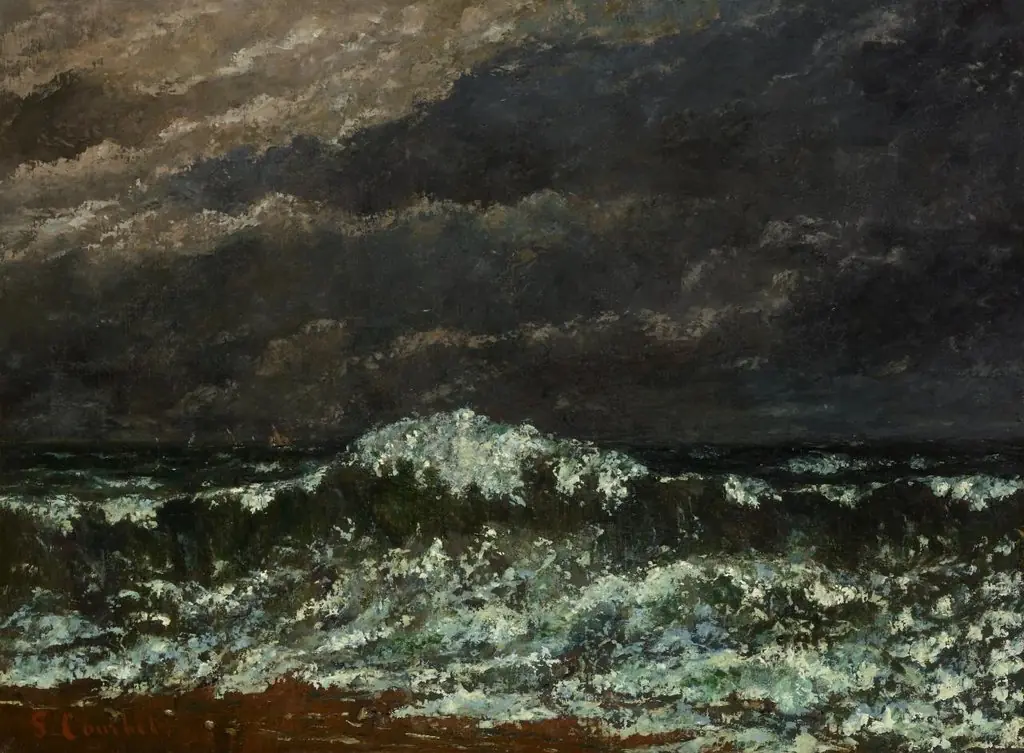
Marina is an oil painting by the Realist artist Gustave Courbet. It dates from 1870 and is held in the collection of the National Museum of Fine Arts, Argentina.
About this work
Overview
Gustave Courbet painted *Marina* in 1870 using oil on canvas, capturing a turbulent seascape with raw immediacy. As a leading figure in the Realism movement, he avoided idealized or theatrical subjects, instead focusing on nature as directly observed. The work reflects his commitment to portraying the physical world without embellishment, emphasizing the force and unpredictability of the sea.
Subject & Meaning
The painting depicts a violent stretch of ocean, with towering waves crashing against a rocky shore. A tiny boat, barely visible in the distance, suggests human vulnerability against elemental power. Courbet offers no narrative or moralizing tone—only the raw presence of nature in motion. The absence of human figures up close reinforces the indifference of the natural world to human endeavor.
Technique & Style
He used chiaroscuro to model the forms of waves and clouds, contrasting deep shadows with the bright, frothy crests of breaking surf.
Courbet employed thick, textured brushwork to convey the weight and movement of water and sky. He used chiaroscuro to model the forms of waves and clouds, contrasting deep shadows with the bright, frothy crests of breaking surf. His palette is restrained—dominated by grays, blues, and blacks—with accents of white foam adding rhythmic highlights. The composition avoids symmetry, mirroring the chaotic energy of the scene.
History & Provenance
Completed in 1870, *Marina* was among Courbet’s final seascapes before the political upheavals of the Franco-Prussian War. It entered the collection of the National Museum of Fine Arts in Buenos Aires in the early 20th century, likely through a private acquisition or donation. The painting has remained in Argentina since, with no record of significant public exhibition outside South America.
Context
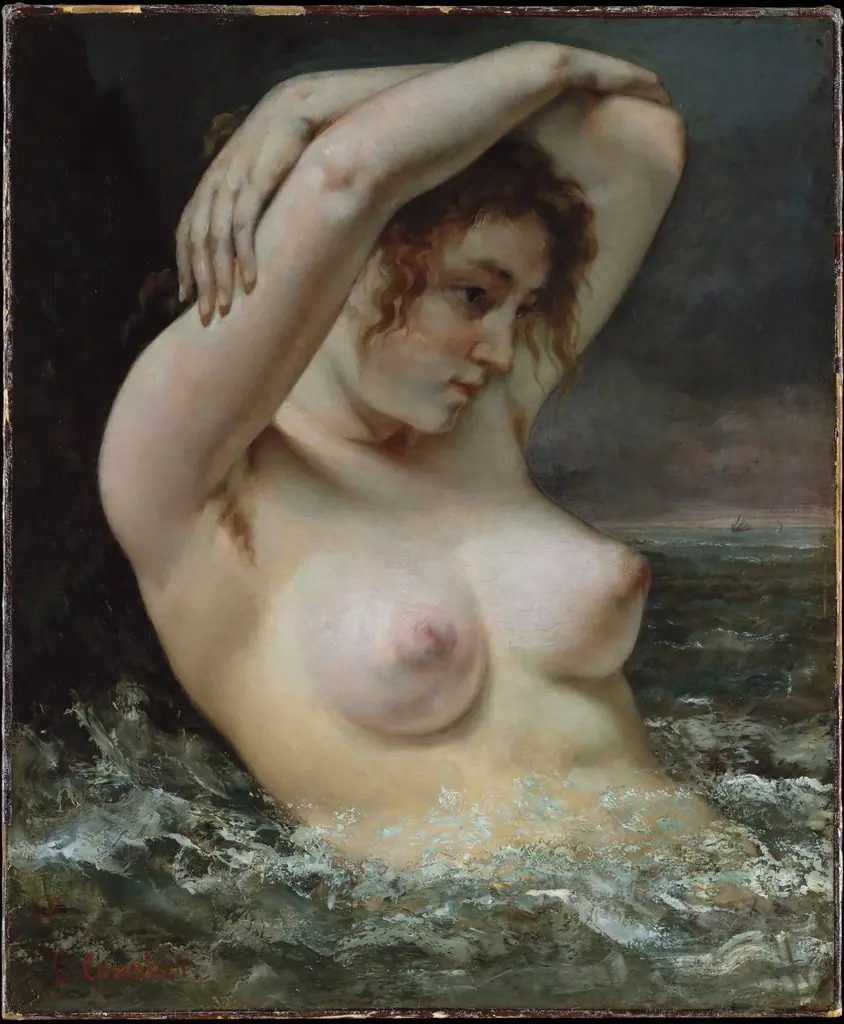
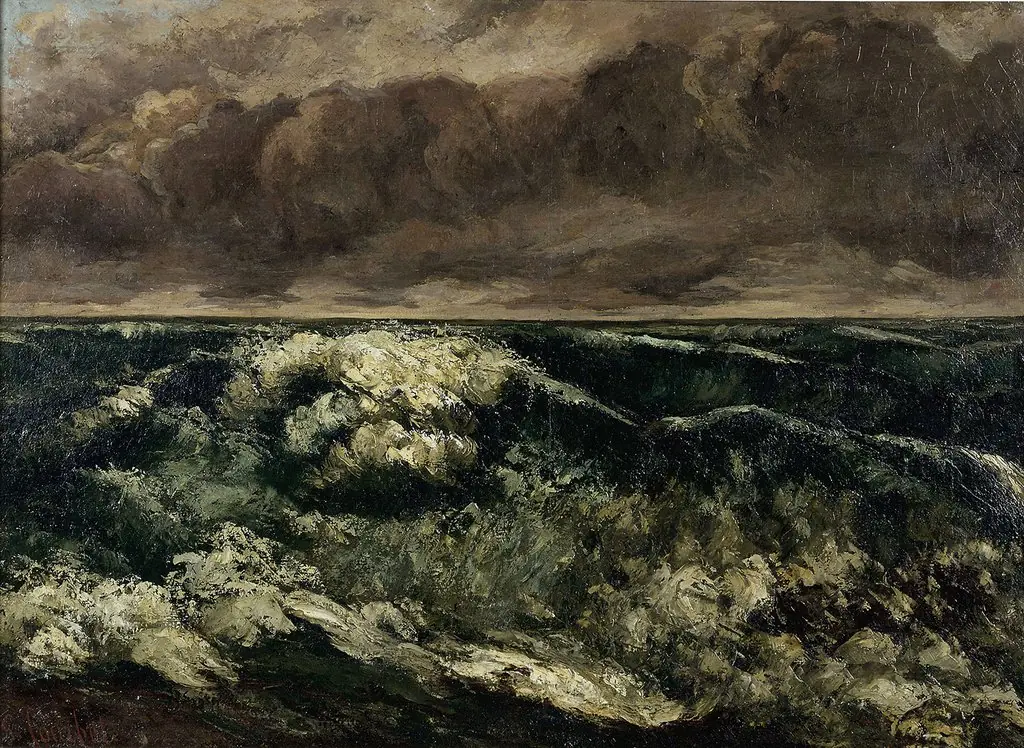
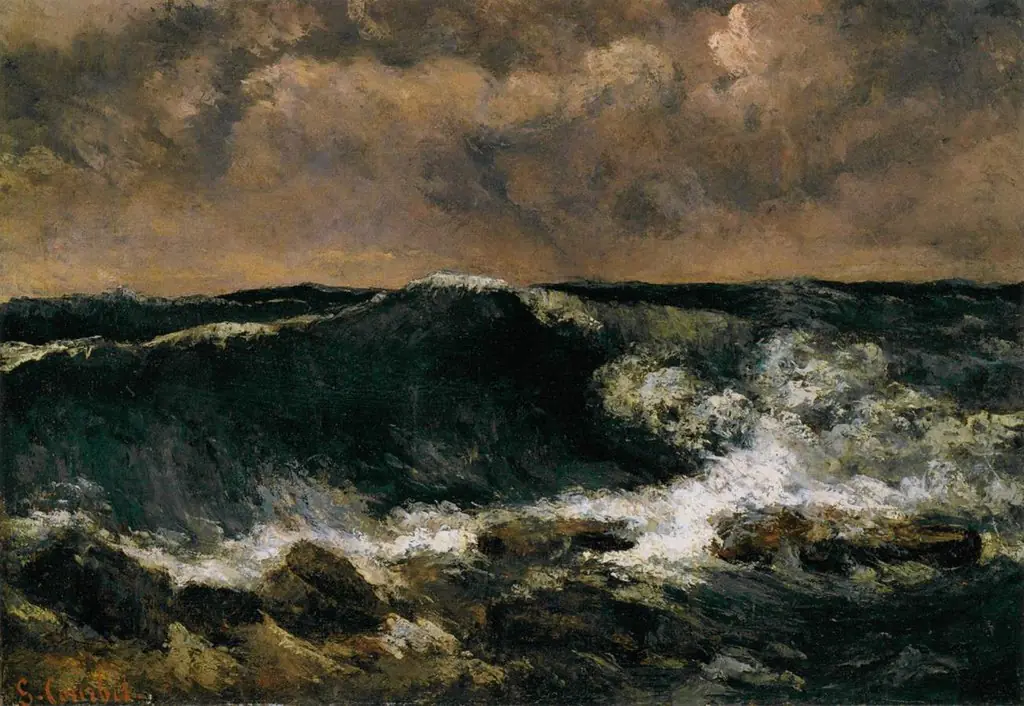
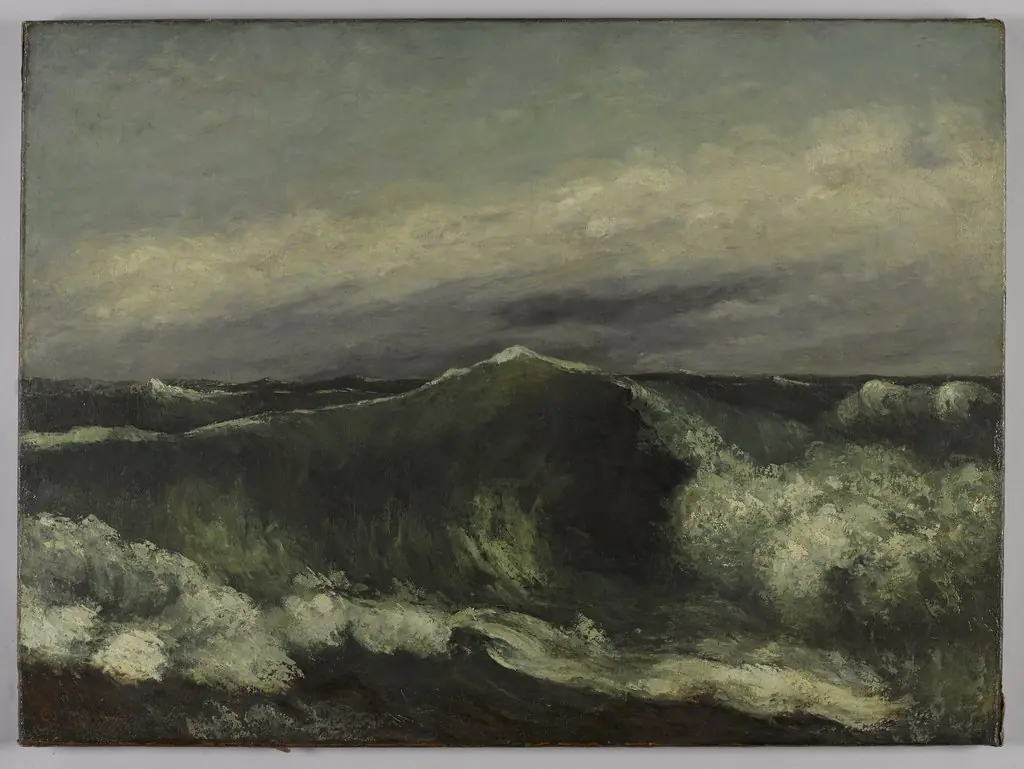
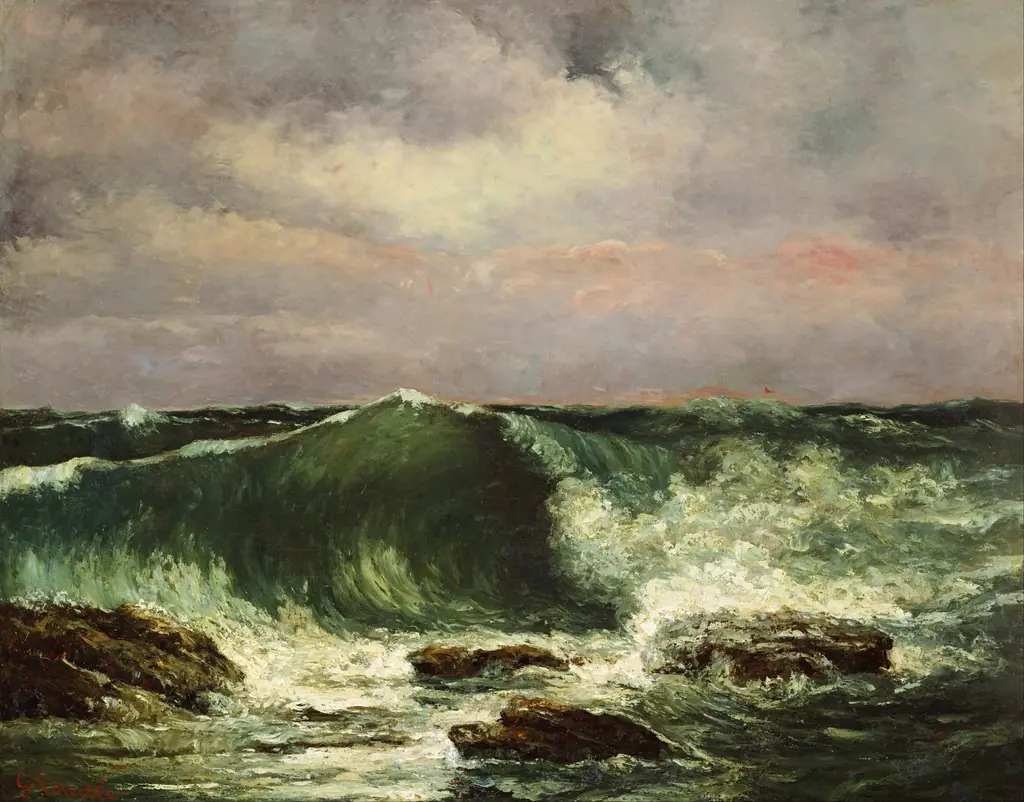
In 1870, Courbet was already established as a defiant voice against academic art, rejecting historical and mythological themes in favor of contemporary, observable reality. *Marina* aligns with his broader interest in natural forces, following earlier seascapes like *The Wave*. The painting emerged as European art was shifting toward impressionistic studies of light and atmosphere, though Courbet’s approach remained grounded in material substance rather than fleeting effects.
Legacy
Courbet’s unidealized treatment of nature influenced later movements that valued direct observation and expressive brushwork. While not a direct precursor to Impressionism, his emphasis on texture and atmospheric tension resonated with artists seeking to break from academic norms. *Marina* stands as a testament to his enduring commitment to portraying nature’s raw presence, independent of sentiment or symbolism.
Own this work as a print
Artist & collection
Artist
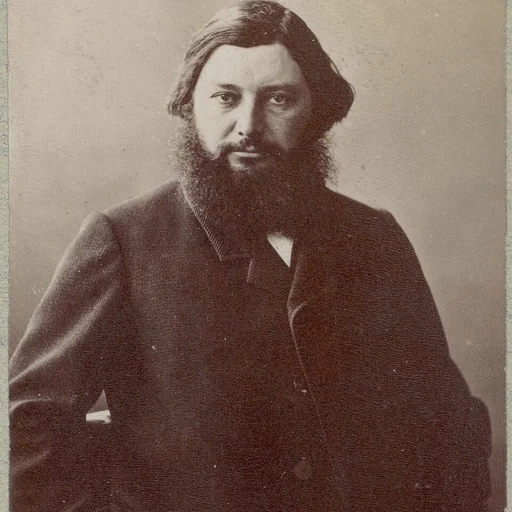
Jean Désiré Gustave Courbet (UK: KOOR-bay; US: koor-BAY; French: ; 10 June 1819 – 31 December 1877) was a French painter who led the Realism movement in 19th-century French painting.

Museum
National Museum of Fine Arts, Argentina
Continue through works from the same source collection.