Artwork
The Good Samaritan
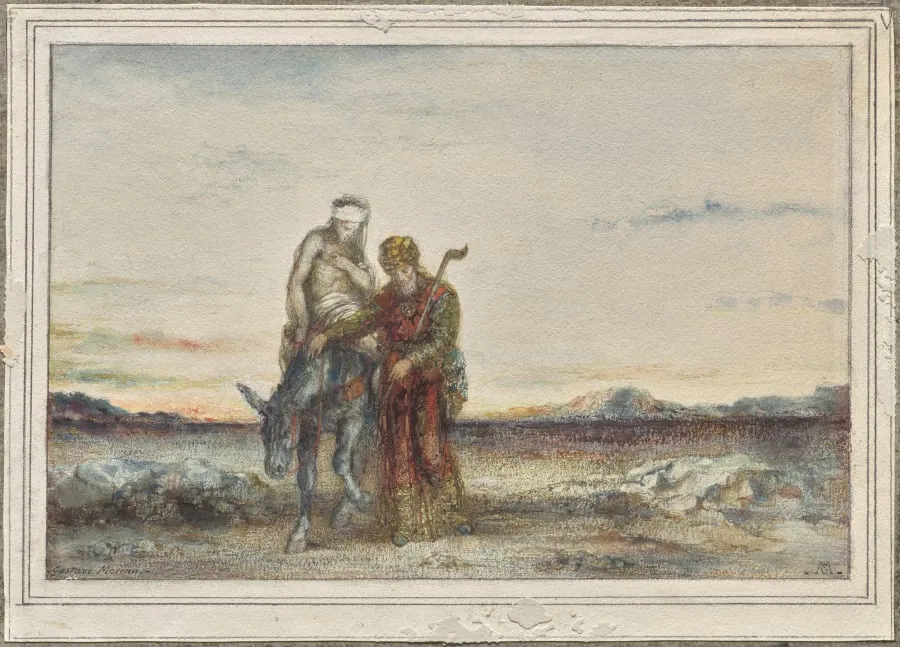
The Good Samaritan is a drawing by the Impressionist artist Gustave Moreau. It dates from 1868 and is held in the collection of the Cleveland Museum of Art.
About this work
Overview
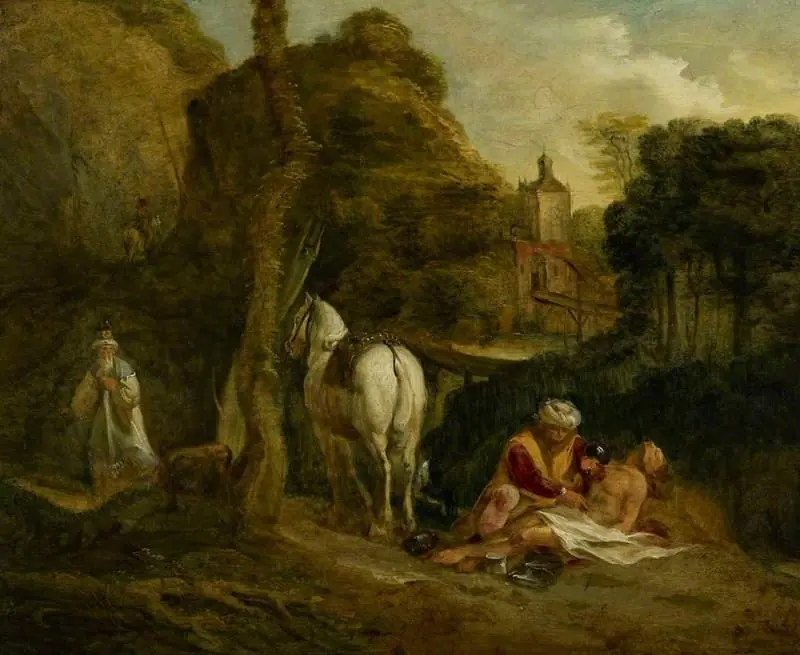
The Good Samaritan is a drawing by Gustave Moreau, created using watercolor to achieve a dense, layered effect. The work depicts a scene from a biblical parable.
Subject & Meaning
The drawing illustrates the moment when the Samaritan relinquishes his mount to aid a wounded traveler, emphasizing the act of selfless kindness between two individuals from different backgrounds.
Technique & Style
Moreau employed watercolor in a way that yields a rich, jewel-like quality, imbuing the scene with an emotional and dreamlike atmosphere. The figures are set against a backdrop of dark, swirling rocks, creating a sense of depth and mystery.
Context
This work is characteristic of Symbolism, a movement that prioritized the expression of inner experiences and ideas over realistic representation. Moreau's interpretation of a traditional biblical narrative reflects this emphasis on imagination and interiority.
Artist & collection

Artist
Gustave Moreau was a French artist and an important figure in the Symbolist movement.

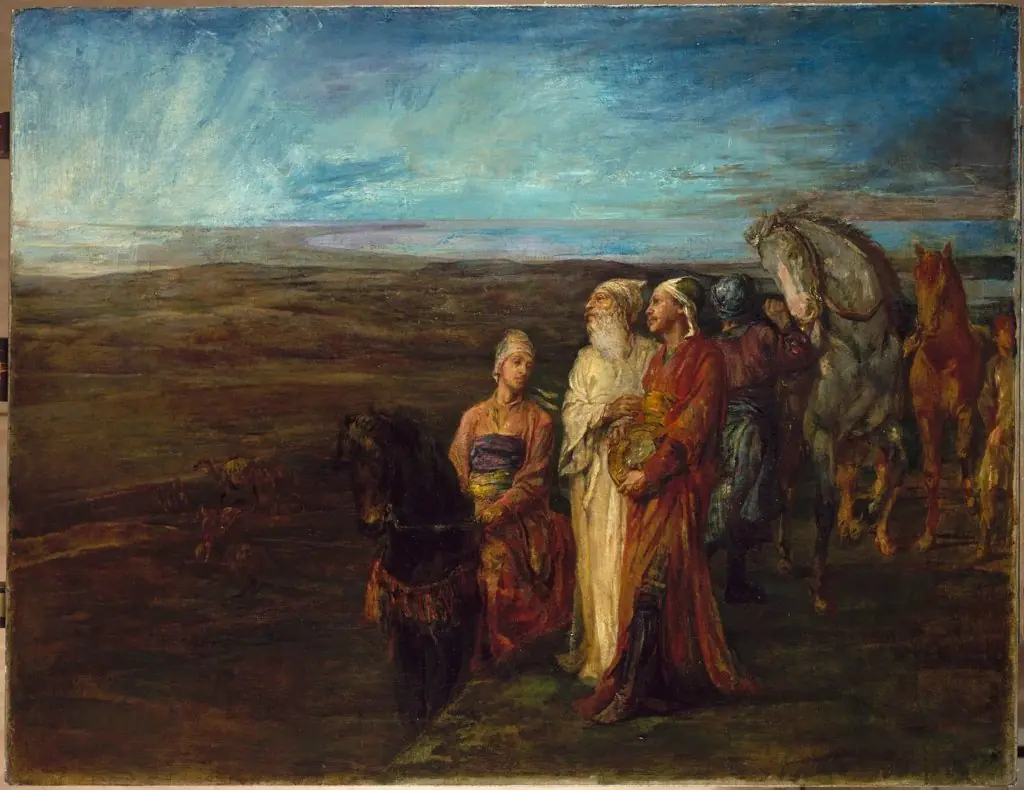 The Three Wise Men
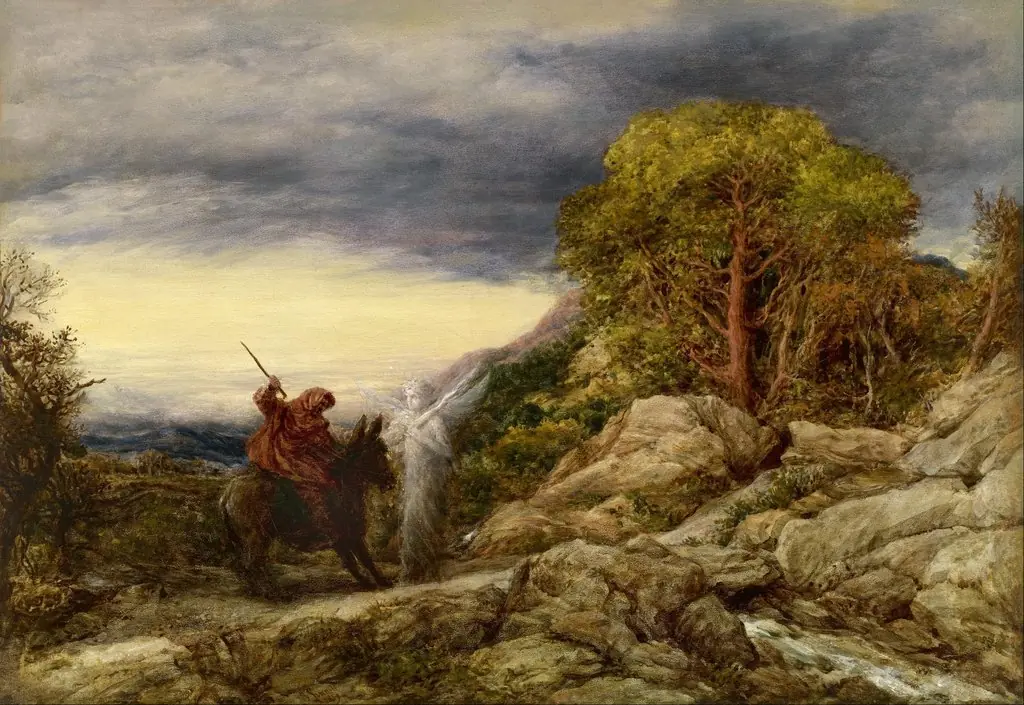 The Prophet Balaam and the Angel
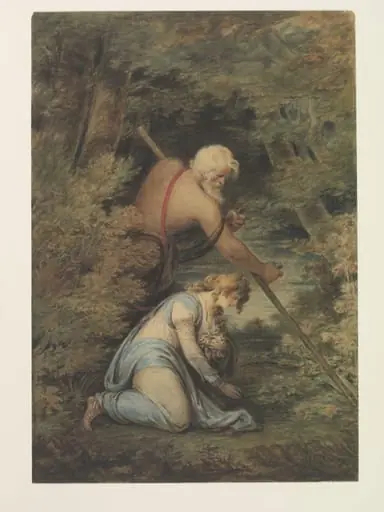 Memory gathering the flowers mowed down by time
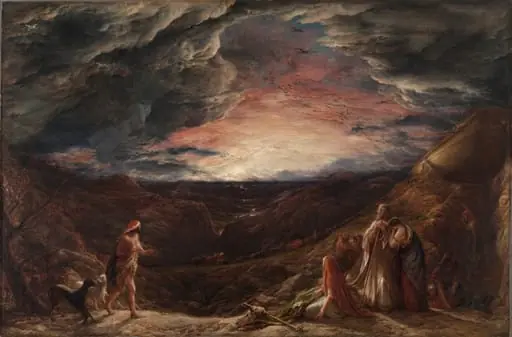 Noah: The Eve of the Deluge
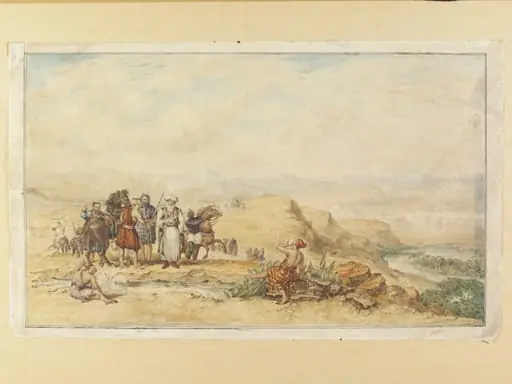 Halt at an Oasis
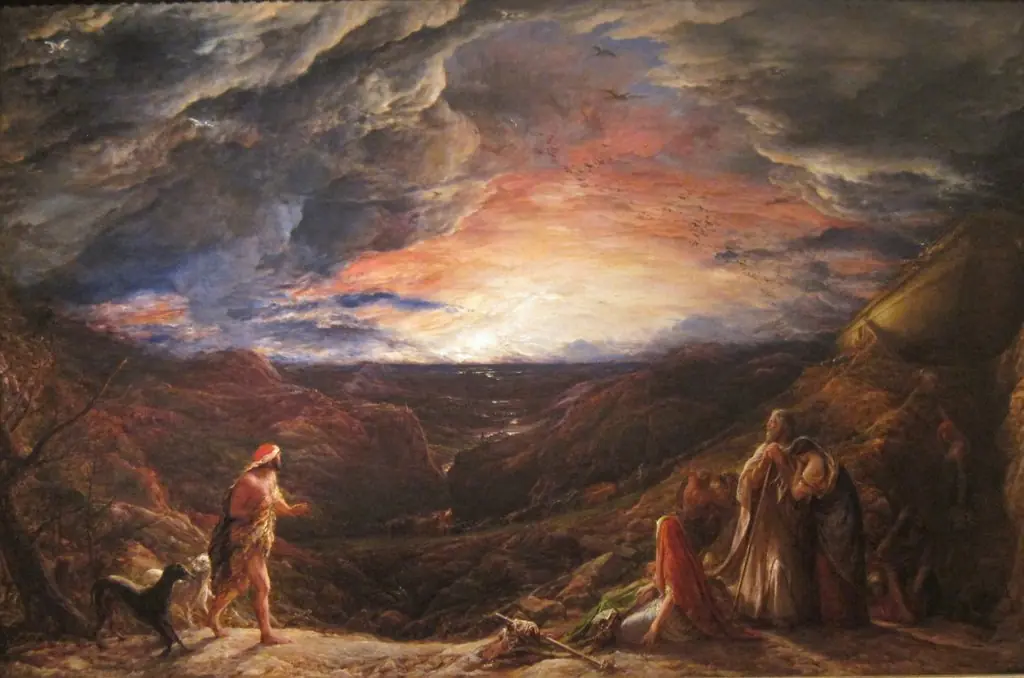 Noah: The Eve of the Deluge
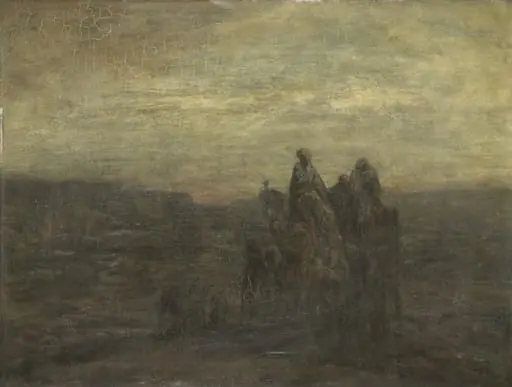 Caravan
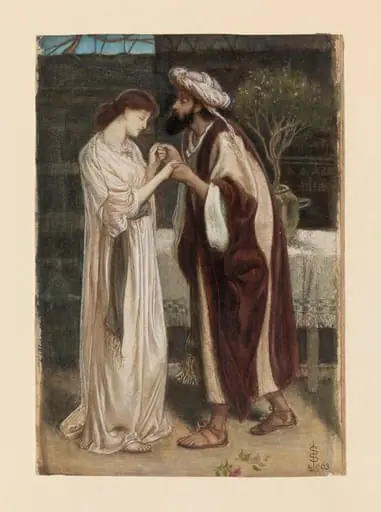 Isaac and Rebekah
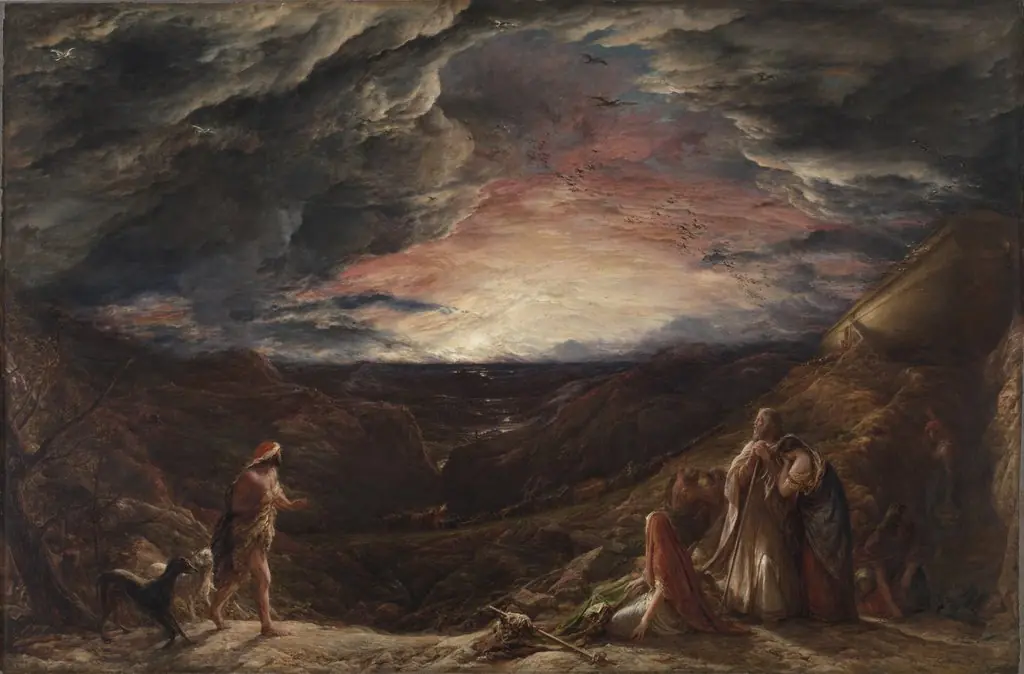 Noah: The Eve of the Deluge
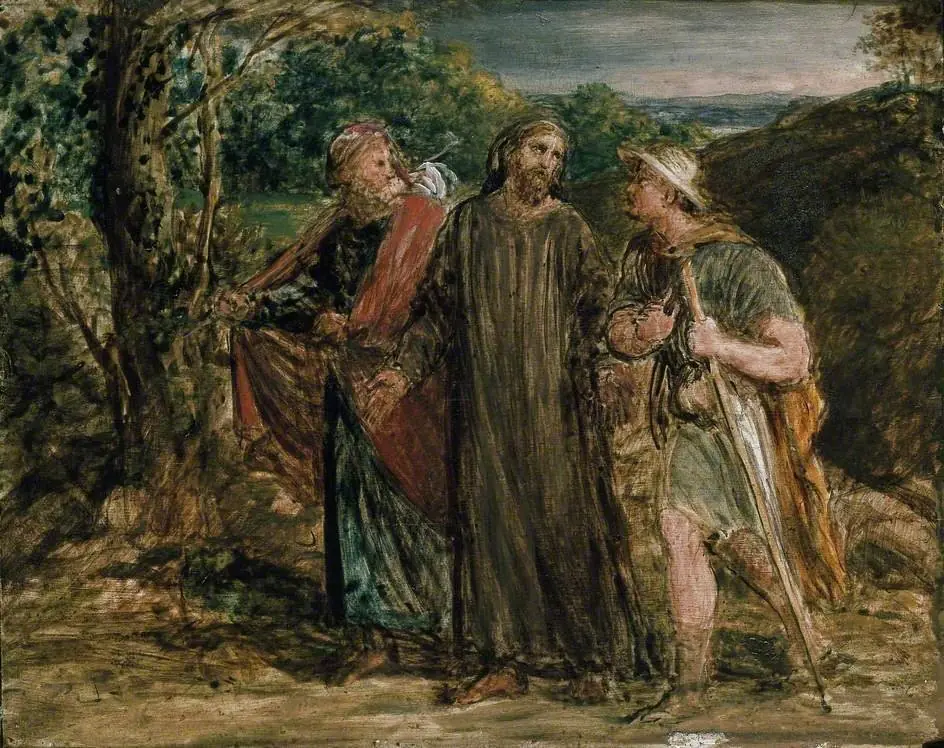 Sketch for 'Christ's Appearance to the two Disciples journeying to Emmaus'
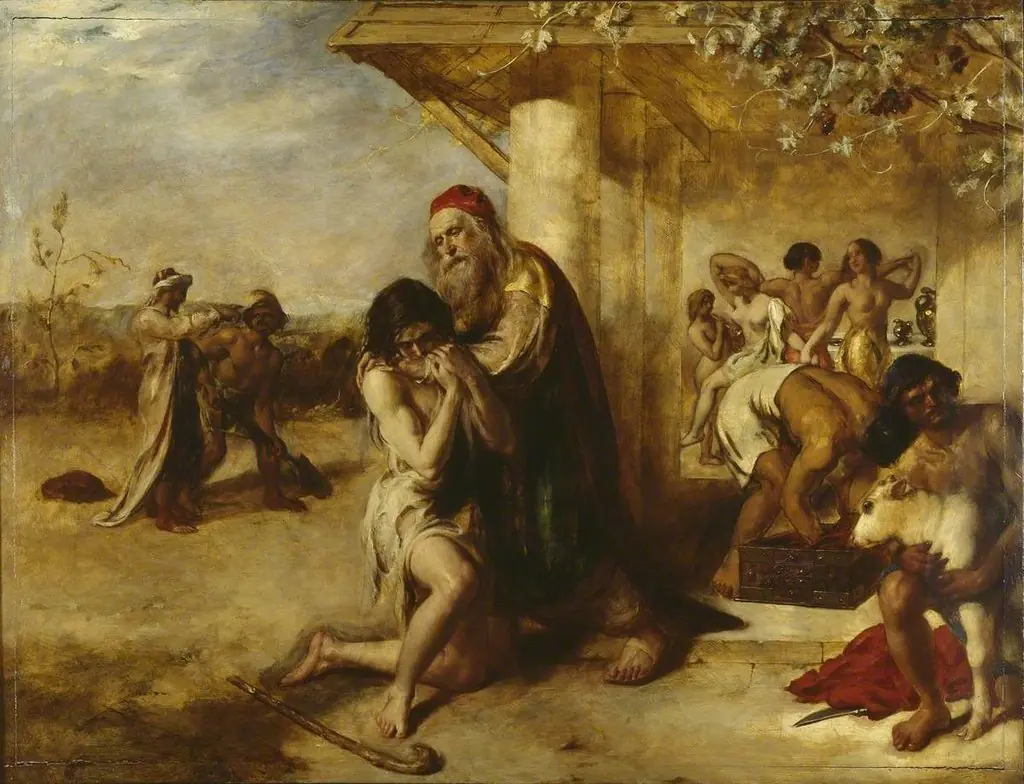 The Repentant Prodigal's Return to his Father
 The Good Samaritan