Artwork
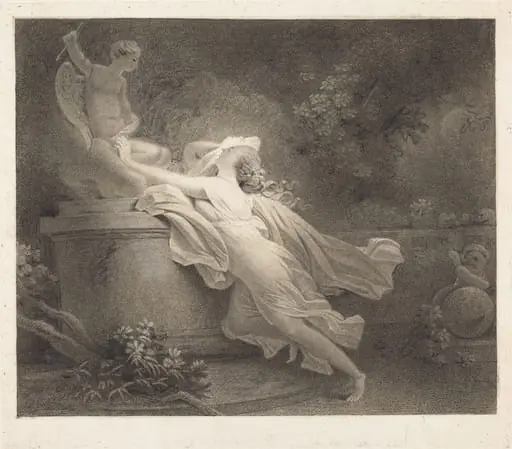
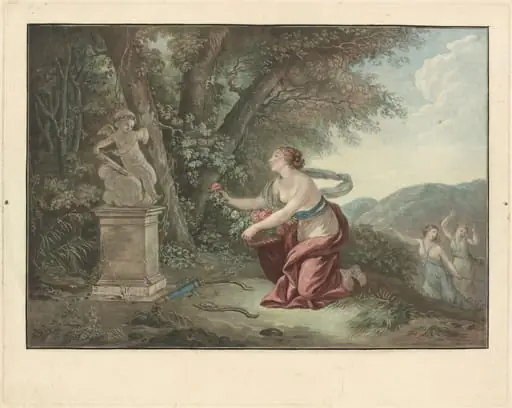
L'invocation a l'amour
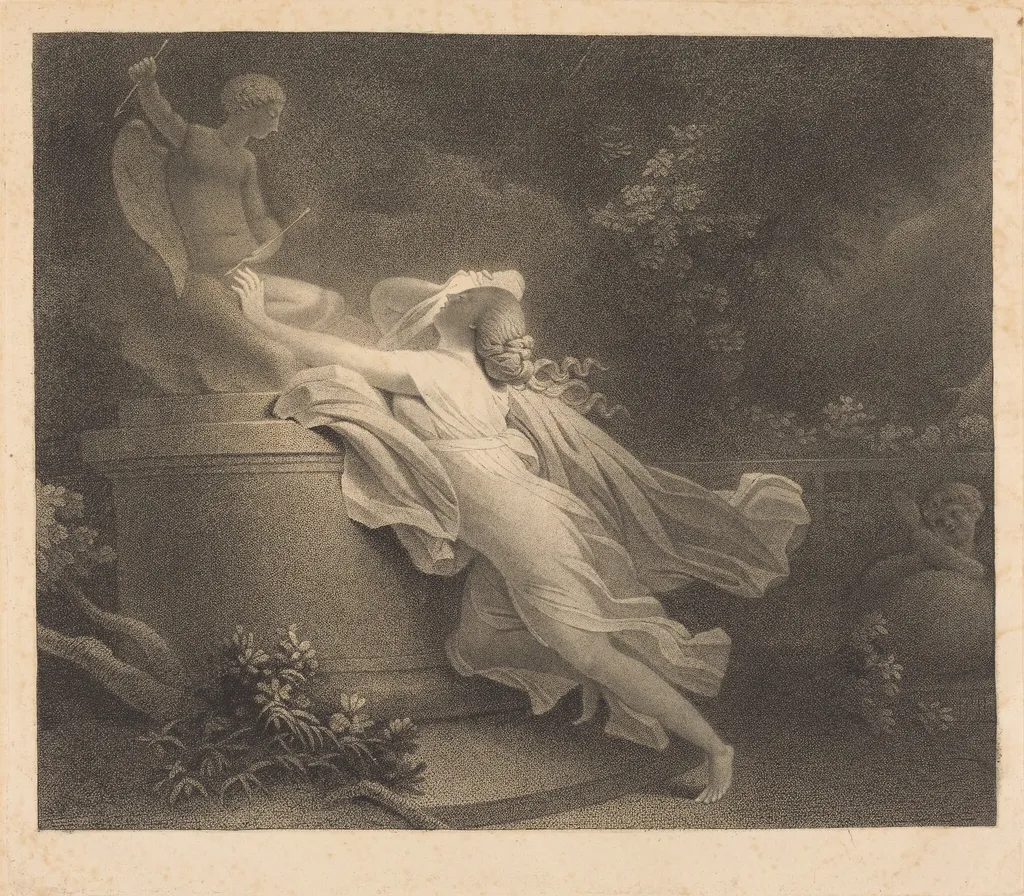
L'invocation a l'amour is an ink print by the Baroque artist Carl Guttenberg. It dates from 1766 and is held in the collection of the National Gallery of Art.
About this work
Overview
Executed as a single‑plate print, the work measures the delicate interplay of light and shadow typical of mid‑eighteenth‑century graphic art.
L’invocation à l’amour is a stipple etching produced in 1766 by the German printmaker Carl Guttenberg. Executed as a single‑plate print, the work measures the delicate interplay of light and shadow typical of mid‑eighteenth‑century graphic art. Its composition centers on a nocturnal scene in which a clothed woman and a semi‑nude male figure share a stone ledge, their gestures suggesting a moment of mythic or allegorical significance.
Subject & Meaning
The image presents a woman in a flowing white dress and a loose hat, leaning forward over a ledge while her hair billows in an unseen breeze. Opposite her, a man with a cloth wrapped around his waist holds a bow, poised to release an arrow. The juxtaposition of the white garments against a dark, plant‑filled background evokes themes of love, desire, and perhaps the classical motif of Cupid’s pursuit.
Technique & Style
Guttenberg employed stipple etching, a method that creates tonal gradations through densely punched dots rather than line work. This approach allows the artist to render the soft folds of the woman’s dress and the subtle modeling of the night sky with a velvety texture. The contrast between the luminous white figures and the deep shadows underscores the chiaroscuro sensibility inherited from the Baroque tradition, while the delicate stippling imparts a refined, almost painterly quality.
History & Provenance
Created in 1766, the print reflects the flourishing market for erotic and allegorical prints in the late Enlightenment period. While specific ownership records are scarce, prints of this type were commonly circulated among collectors and connoisseurs across Europe. The work remains attributed to Guttenberg, whose oeuvre includes several similarly themed prints that explore mythological love narratives.
Artist & collection