Artwork
People by a Road
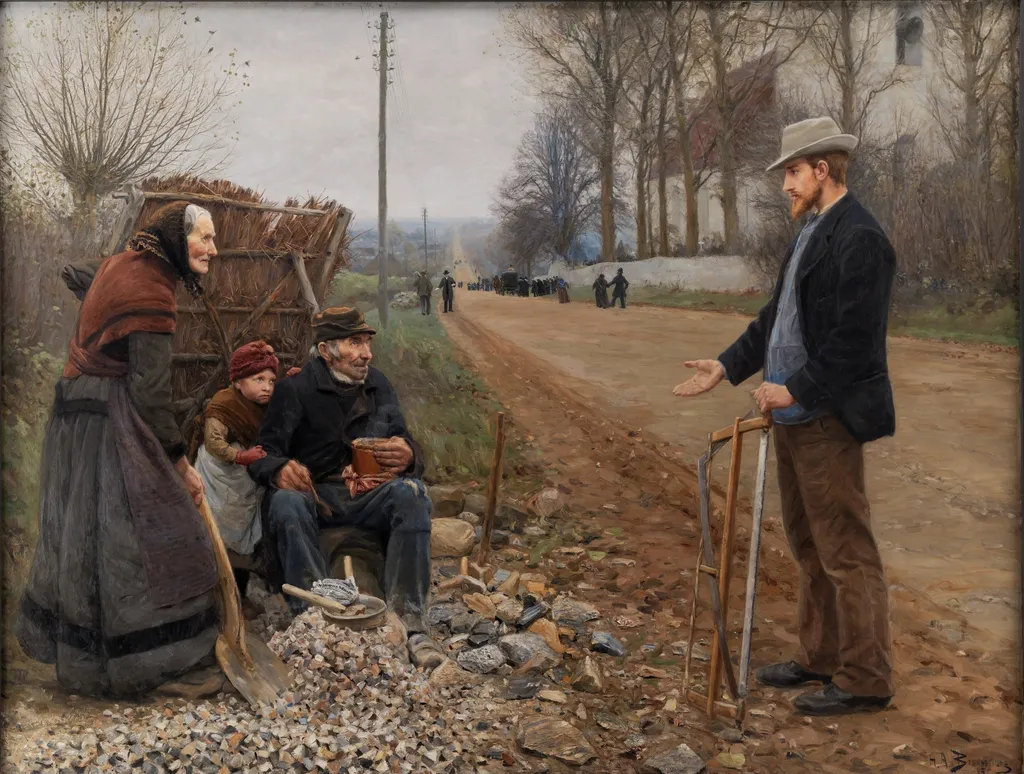
People by a Road is an oil painting by the Impressionist artist H. A. Brendekilde. It dates from 1897 and is held in the collection of the Statens Museum for Kunst. Painted in 1897 by H.
About this work
Overview
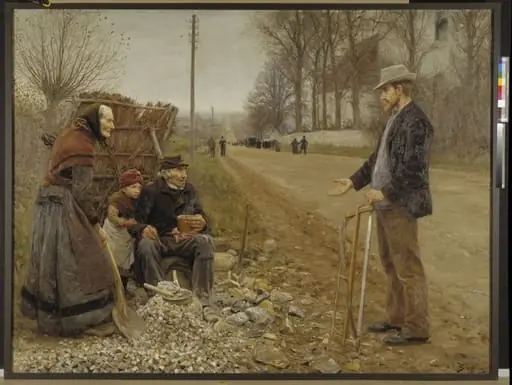
Painted in 1897 by H. A. Brendekilde, this oil-on-canvas work captures a quiet moment of rural life near a dirt road. The scene is unembellished, focusing on a small group of individuals engaged in ordinary tasks. Its composition is grounded in naturalism, with no dramatic focal point, reflecting the artist’s interest in depicting everyday existence without idealization.
Subject & Meaning
The figures—some seated, others standing near a pile of stones—suggest labor or rest after work. A man on the right, wearing a hat and gesturing toward an unseen companion, implies conversation or instruction, hinting at social dynamics within a close-knit community. The absence of clear narrative invites interpretation, emphasizing the quiet dignity of routine rather than storytelling.
Technique & Style
Brendekilde employed traditional oil painting methods to render subtle shifts in light and texture. The brushwork is restrained, favoring soft transitions over bold strokes. Colors are muted, dominated by earth tones, reinforcing the scene’s somber realism. The background trees and distant building are rendered with loose, atmospheric handling, grounding the figures in a believable landscape.
History & Provenance
The painting has been part of the Statens Museum for Kunst’s collection since its creation. It was likely acquired shortly after completion, as Brendekilde was an established Danish artist by the late 1890s. No significant changes in ownership are documented, and it has remained in public custody, reflecting its recognized place in Denmark’s artistic heritage.
Context
Created during a period when Scandinavian artists increasingly turned to rural life as subject matter, the painting aligns with broader trends in Nordic realism. Brendekilde, influenced by French naturalism and Danish folk traditions, sought to portray the lives of ordinary people with empathy and precision, resisting romanticized depictions common in earlier decades.
Legacy
Though not widely reproduced, the work remains a representative example of late 19th-century Danish genre painting. It contributes to the understanding of how Danish artists documented social conditions and labor in the countryside, offering a quiet counterpoint to urban modernism emerging elsewhere in Europe.
Own this work as a print
Artist & collection

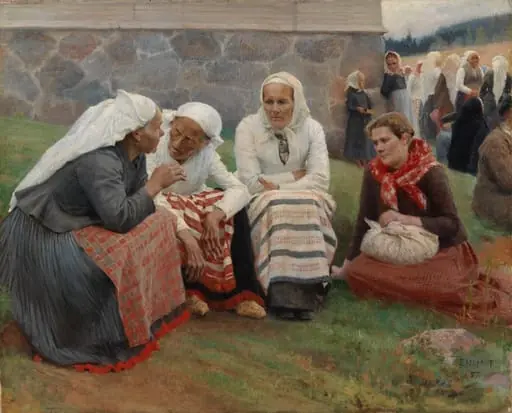 Ruokolahden eukkoja kirkonmäellä
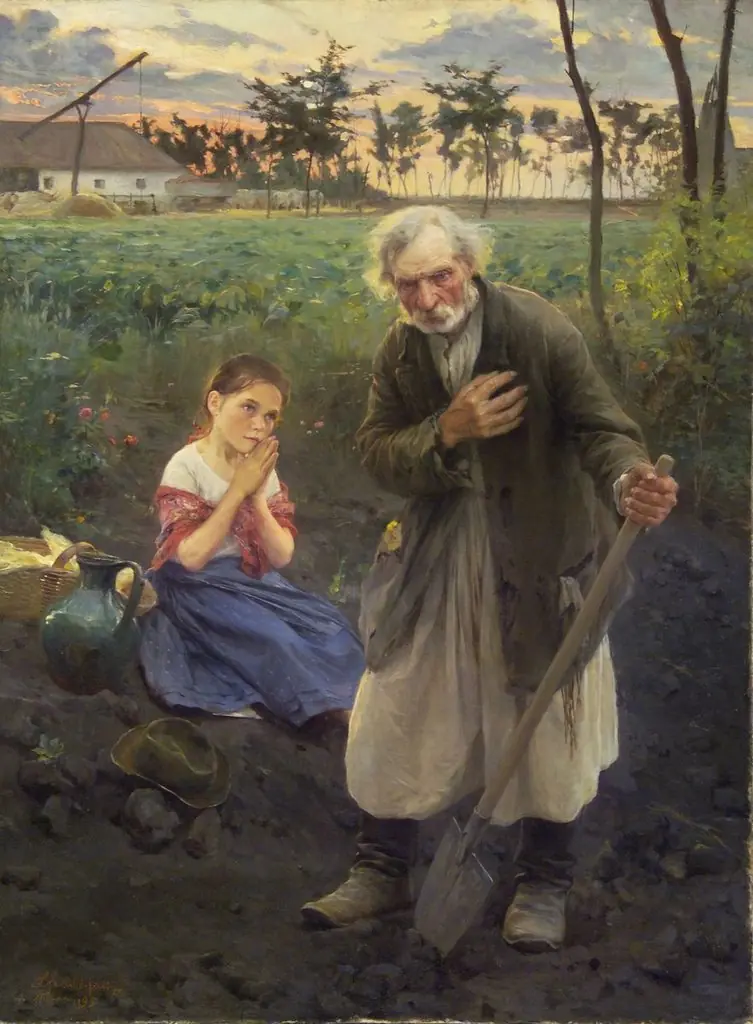 At Vesper Bell
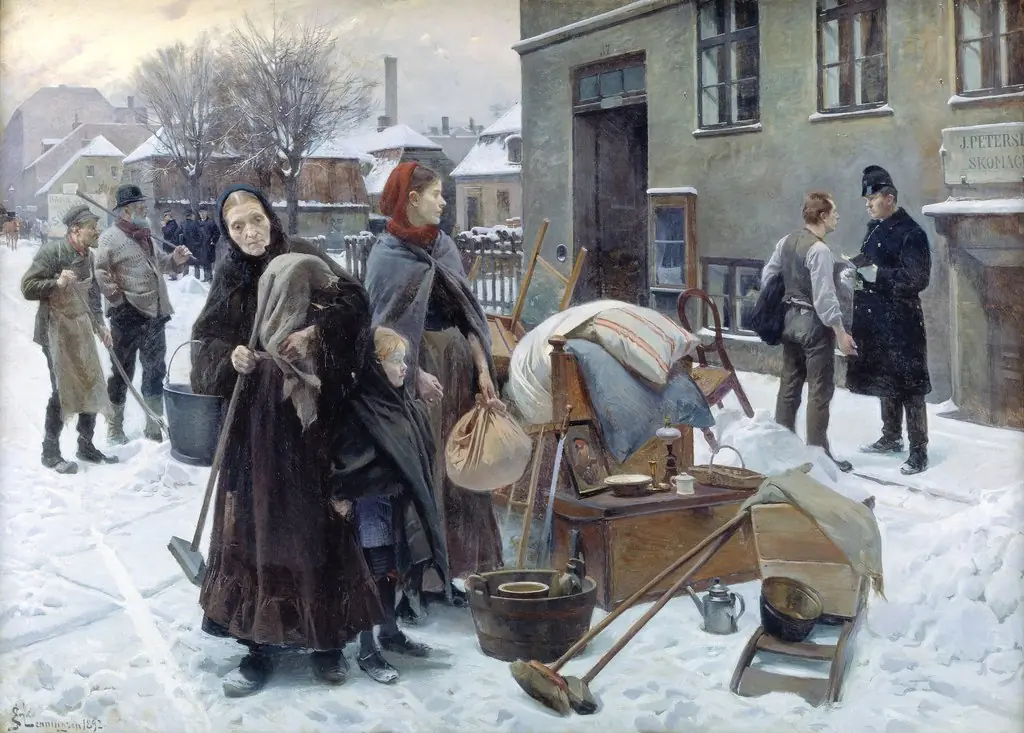 Evicted Tenants
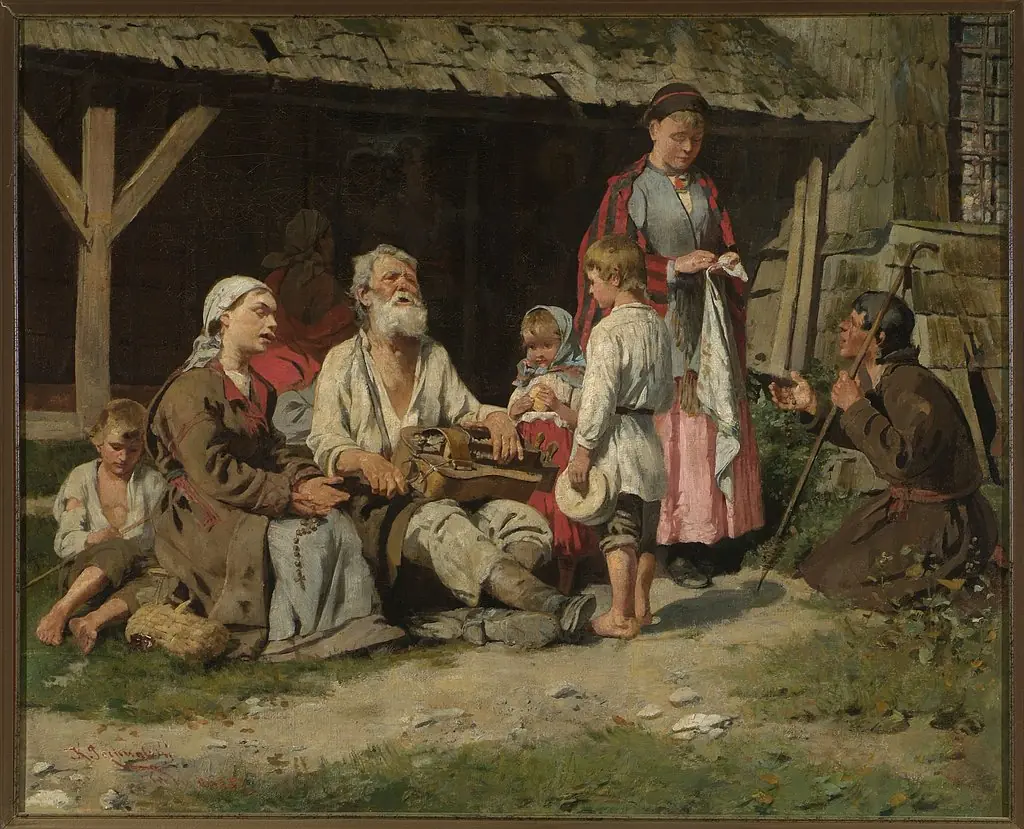 Genre scene – a hurdy-gurdy player in front of a cottage
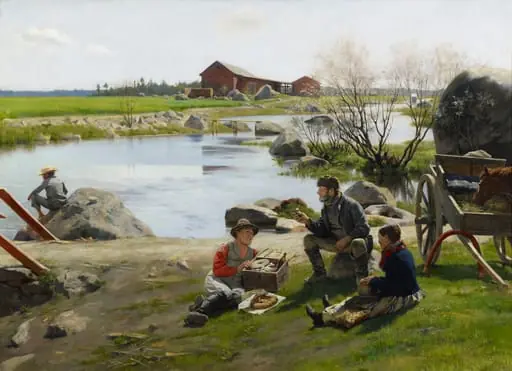 Levähdys markkinamatkalla
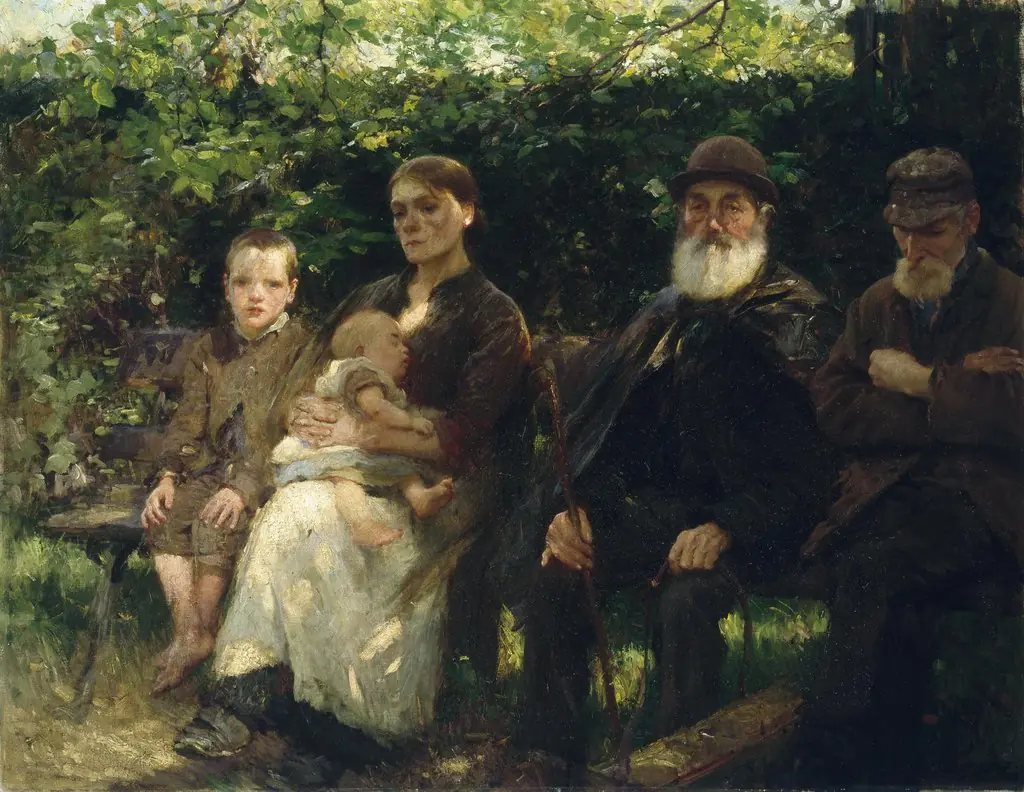 In a Dublin Park, Light and Shade
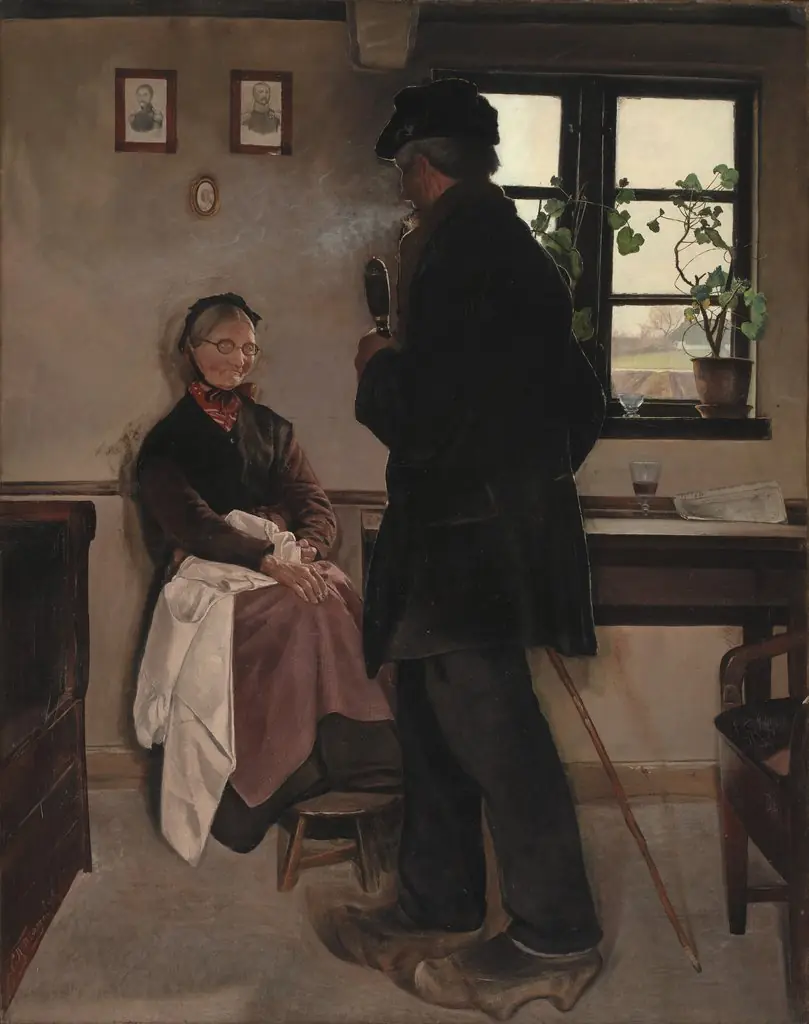 Small-Holders. Zealand
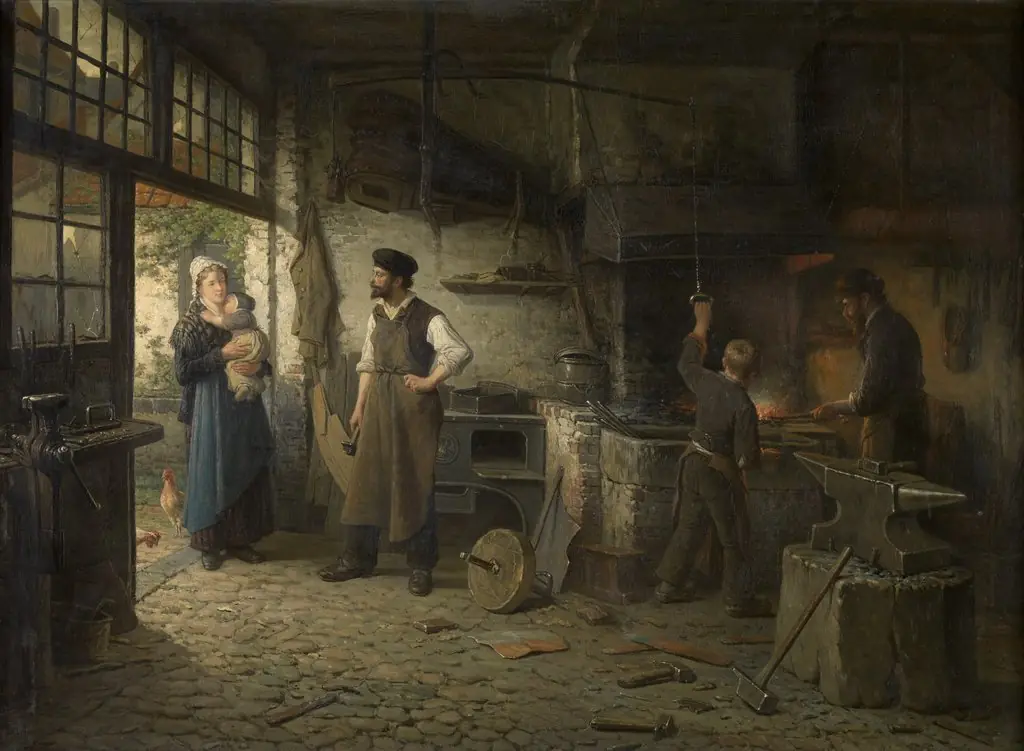 The Shoeing-Smith
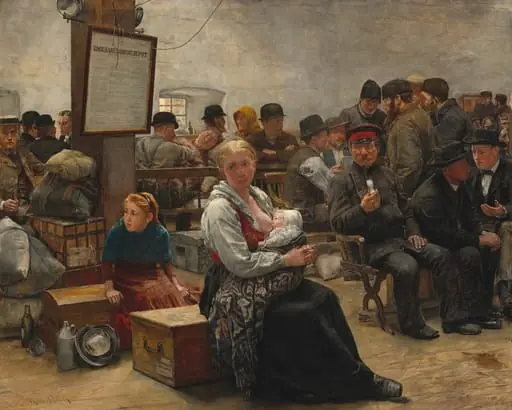 In the Land of Promise, Castle Garden
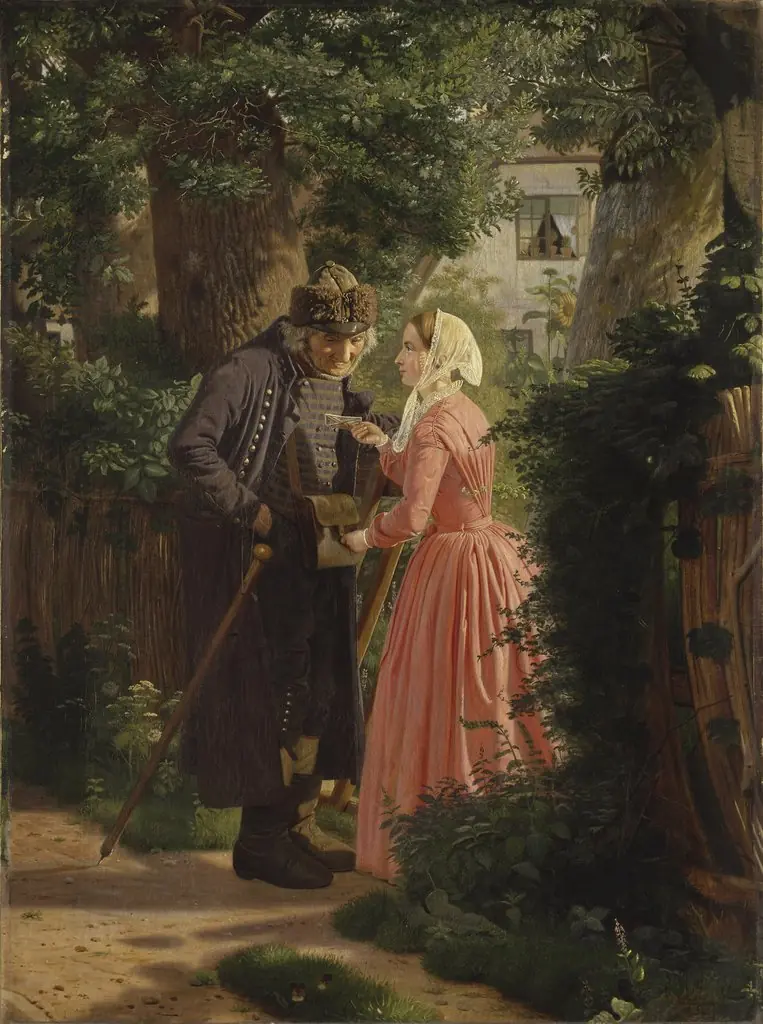 En ung pige beder landsbyens gamle postbud besørge et brev
 Women Outside the Church at Ruokolahti
 People by a Road