Artwork
Guy Little Theatrical Photograph
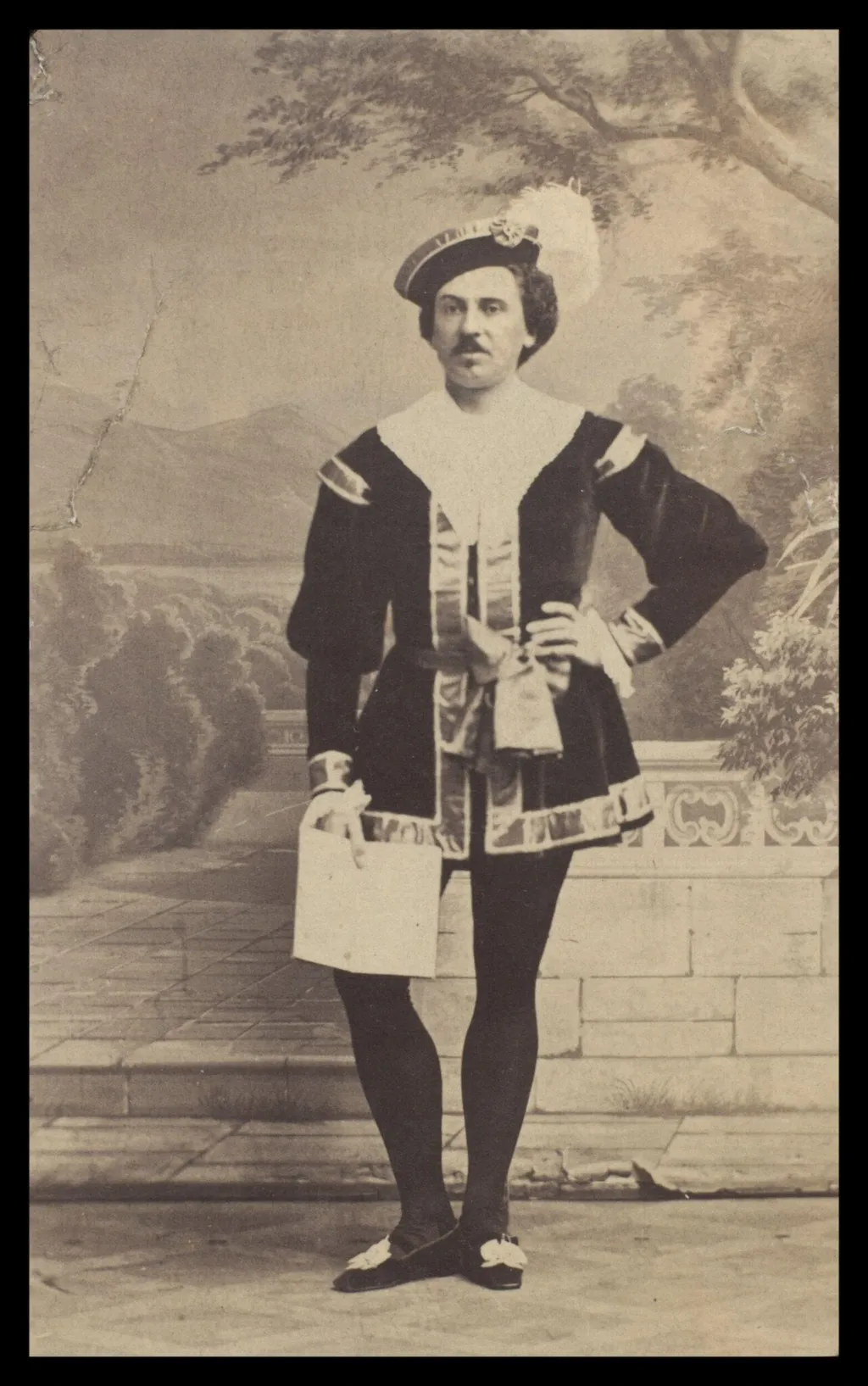
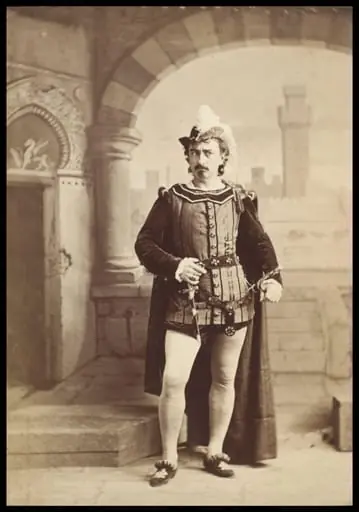
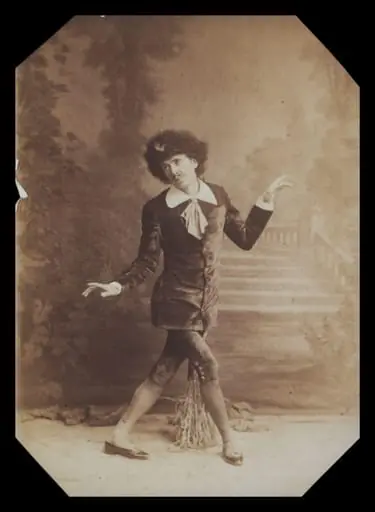
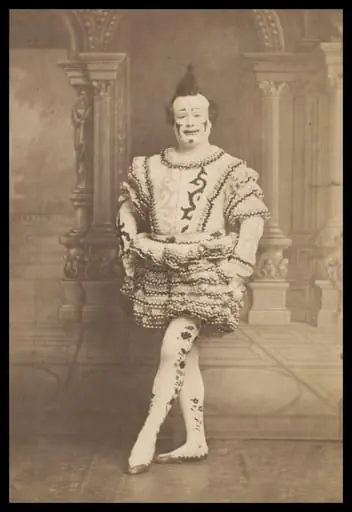
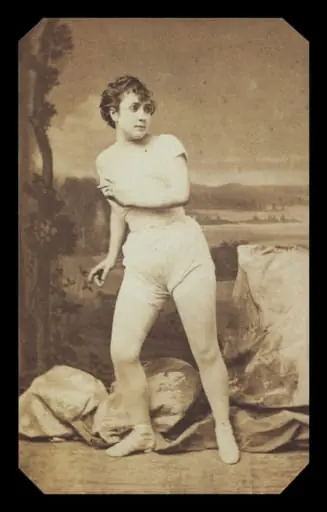
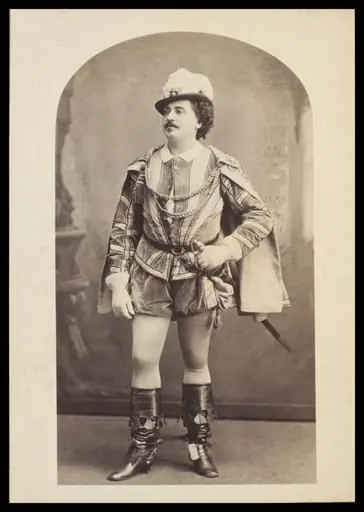
Guy Little Theatrical Photograph is a photographic photography by H. Lehmann & Co. It dates from 1850 and is held in the collection of the Victoria and Albert Museum. This photograph of actor Theodore Wachtel is an albumen print mounted on card, produced by the London studio H.
About this work
Overview
The image reflects the widespread practice of capturing theatrical figures in formal studio portraits for public circulation during the Victorian era.
This photograph of actor Theodore Wachtel is an albumen print mounted on card, produced by the London studio H. Lehmann & Co. in the late 19th century. It belongs to a personal collection assembled by Guy Tristram Little, a solicitor and avid collector of ephemera, who bequeathed his holdings to the Victoria and Albert Museum. The image reflects the widespread practice of capturing theatrical figures in formal studio portraits for public circulation during the Victorian era.
Subject & Meaning
Theodore Wachtel, a stage performer of the period, is depicted in his theatrical costume, suggesting a role he portrayed on stage. Such portraits served both as promotional tools and personal mementos, allowing audiences to connect with performers beyond the theater. The image preserves a fleeting moment of public persona, transforming the actor’s stage identity into a tangible object for private collection and display.
Technique & Style
The photograph is an albumen print made from a glass negative, a standard process in mid-to-late Victorian photography. Mounted on stiff card, it follows the format of a cabinet card, larger than the earlier carte de visite and more durable. The studio’s name, H. Lehmann & Co., appears on the reverse, a common practice that authenticated the image and advertised the photographer’s trade.
History & Provenance
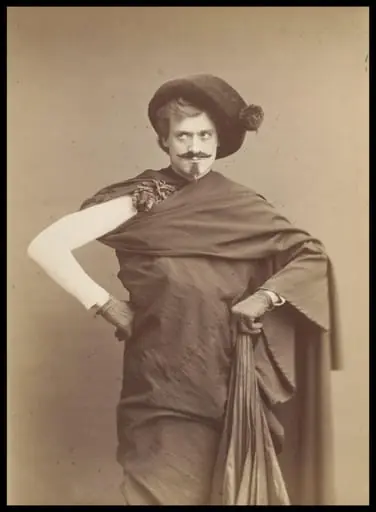
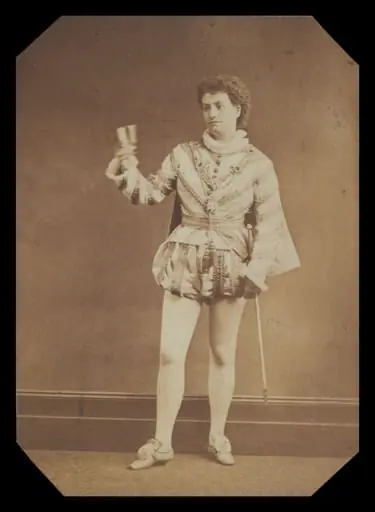
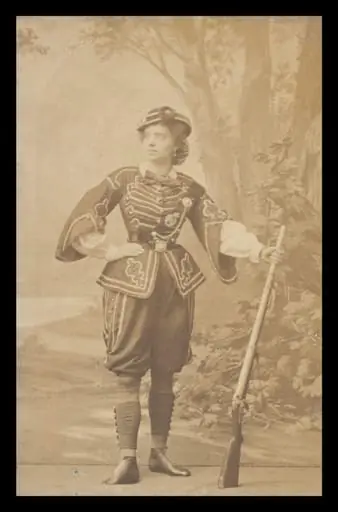
The photograph was once part of a larger assemblage of theatrical portraits collected by Guy Tristram Little, who systematically removed images from their original mounts and reorganized them into albums. Little, executor of Gabrielle Enthoven’s estate, inherited her extensive theatrical archive. His collection, donated to the V&A, became foundational to the museum’s theater holdings, preserving everyday cultural artifacts of the era.
Context
During the 1860s to 1890s, cabinet cards and cartes de visite were ubiquitous in middle-class households, functioning as both souvenirs and social currency. Actors, like other public figures, were popular subjects. Studios such as H. Lehmann & Co. catered to this demand, producing standardized portraits that blurred the line between art, commerce, and personal memory in an age of emerging mass media.
Legacy
Little’s collection, now held by the V&A, offers insight into how Victorian audiences engaged with performance culture through physical objects. These photographs, once exchanged and displayed, now serve as historical records of actors, studios, and public taste. Their preservation underscores the value placed on ephemeral media as cultural artifacts, long after their original function faded.
Artist & collection
Artist
H. Lehmann & Co. spent the 1880s turning actors into tiny living shadows behind glass. They ran a studio in London where every sitter posed for the same stiff-backed portrait, but the real trick was the backdrop: a…