Artwork
Portret de muncitor
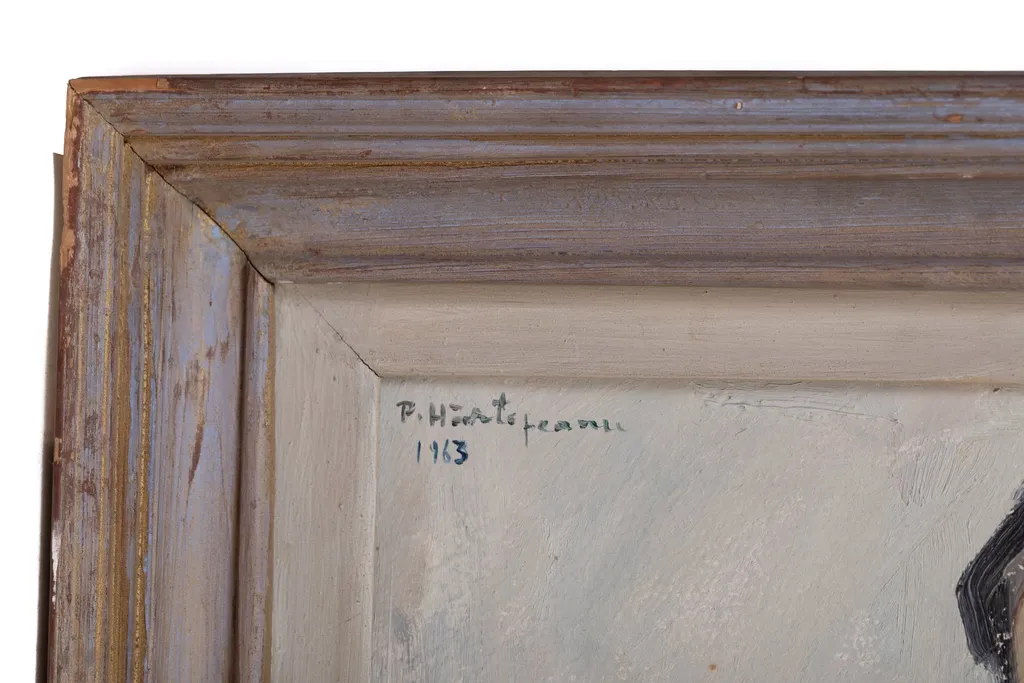
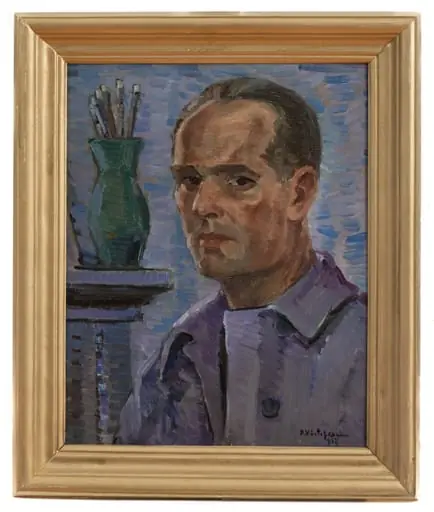
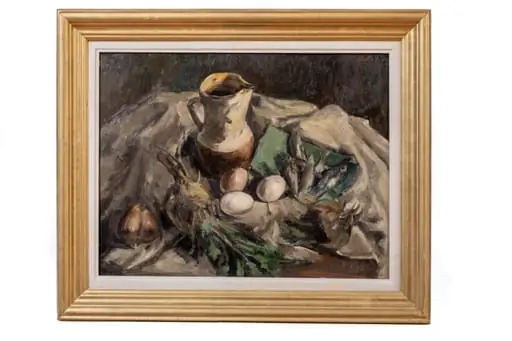
Portret de muncitor is a print by Hârtopeanu Petru. It dates from 1957 and is held in the collection of the Moldova National Museum Complex. The work is a portrait attributed to Petru Hârtopeanu, a Romanian-German artist active in the mid-20th century.
About this work
The signature hints this might be a portrait, but the image itself is too blurry to see details.
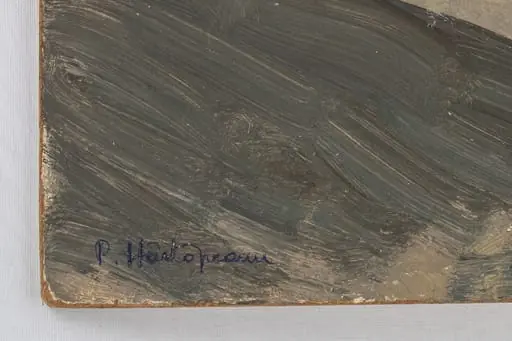
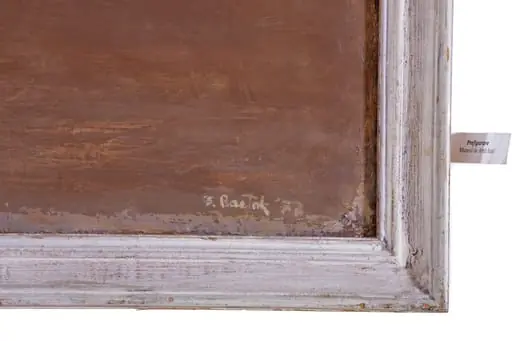
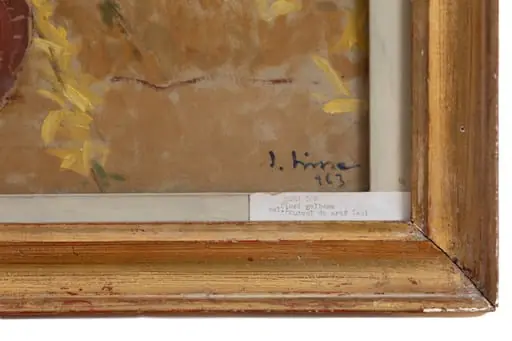
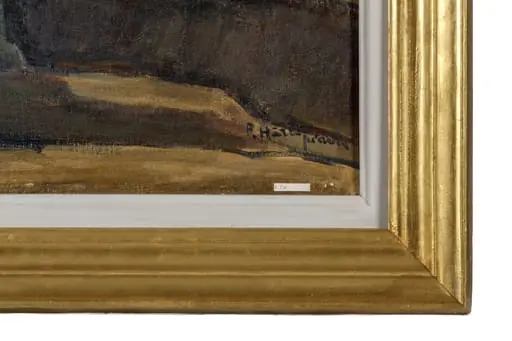
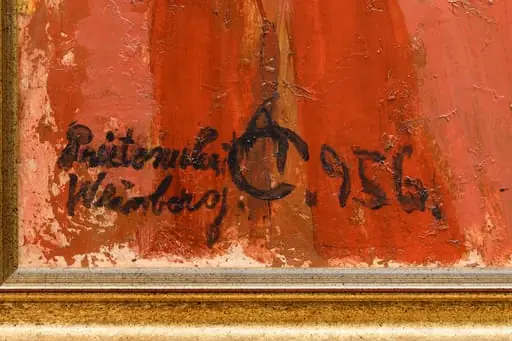
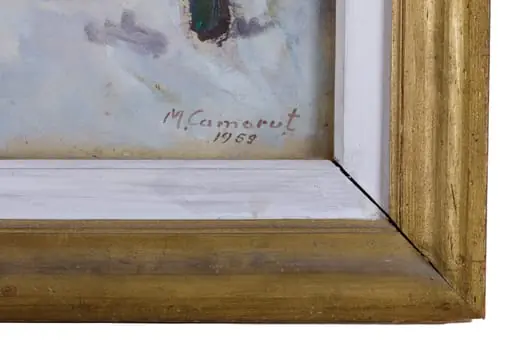
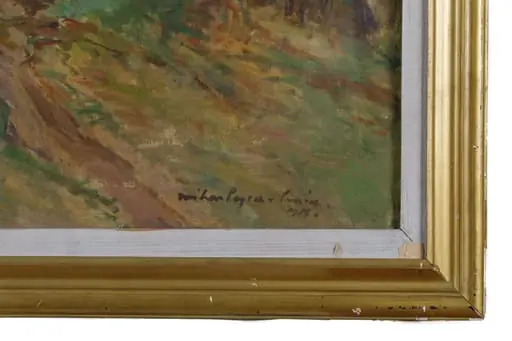
This is a close-up of a faded wooden frame with chipped paint. The corner shows worn brown and gray stripes where the wood meets. Inside the frame, there’s a small, barely visible signature in blue ink: *"P. Hârtopeanu"* and the year *"1963"*—though the rest of the painting isn’t clear.
The signature hints this might be a portrait, but the image itself is too blurry to see details. The wood looks old, with patches where the paint has worn off.
If you’re curious about the artist, look up Hârtopeanu Petru next.
Overview
The work is a portrait attributed to Petru Hârtopeanu, a Romanian-German artist active in the mid-20th century. Though the image within the frame is too degraded to identify specific features, the presence of a faint signature and date—'P. Hârtopeanu 1963'—suggests it was completed later than commonly cited dates. The wooden frame, worn and chipped, indicates prolonged handling or exposure, reinforcing the object’s age and material history.
Subject & Meaning
The title, *Portret de muncitor*, implies the subject is a worker, aligning with Hârtopeanu’s interest in figurative depictions of everyday life. However, the image’s poor condition obscures any visual details that might clarify the individual’s identity or social context. The title alone anchors the work within postwar European themes of labor and dignity, though the visual evidence remains incomplete.
Technique & Style
Hârtopeanu’s known style favored representational painting rooted in European figurative traditions. While the painting’s surface is now illegible, the signature’s placement and ink suggest a deliberate, if modest, authorial mark. The lack of visible brushwork or color detail prevents analysis of his technique here, but the frame’s physical state implies the work was not preserved as a high-value object.
History & Provenance
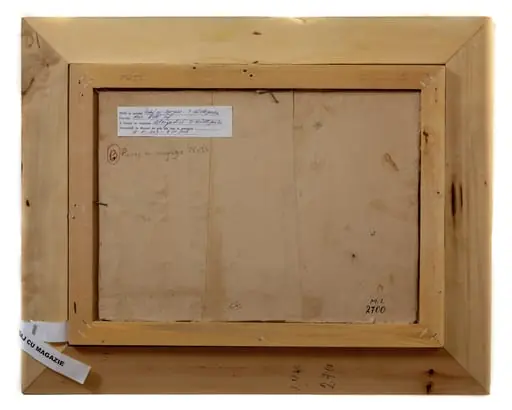
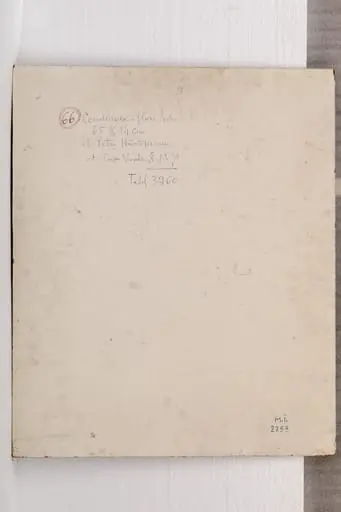
The painting’s current state—faded, framed in deteriorating wood, and bearing a barely legible signature—points to a private or non-institutional history. The date 1963, later than the commonly referenced 1957, may indicate a reworking or re-dating. No documented exhibition or collection history is visible, suggesting it remained in personal or regional circulation rather than public display.
Context
Hârtopeanu worked across Romanian and German artistic circles during a period when figurative art persisted despite rising abstraction. His focus on laborers reflected broader cultural narratives in Eastern Europe, yet this particular work’s obscurity suggests it was not part of major exhibitions or state-sponsored projects. Its survival as a physical object, rather than a documented image, speaks to informal artistic transmission.
Legacy
The portrait survives as a fragmentary artifact, its significance tied more to its material presence than its visual content. It offers no clear insight into Hârtopeanu’s broader output but serves as a tangible trace of an artist whose work was not widely archived. Its condition underscores how many mid-century figurative works remain outside institutional recognition, preserved only by chance.
Artist & collection
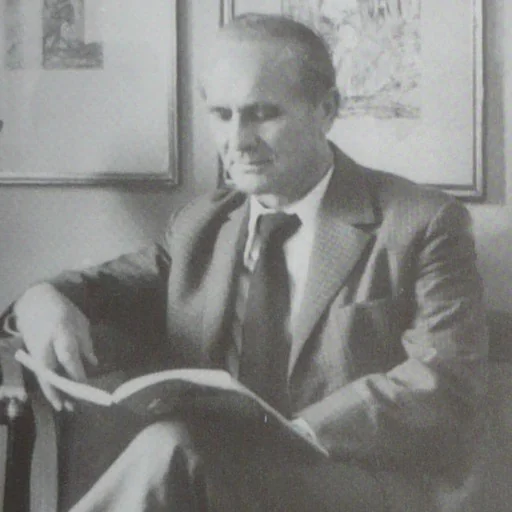
Artist
Petre Hârtopeanu (15 June 1913, Dângeni, Botoșani County, Romania — 22 March 2001, Frankfurt-am-Main) was a Romanian-German painter and art professor.