Artwork
Veneția
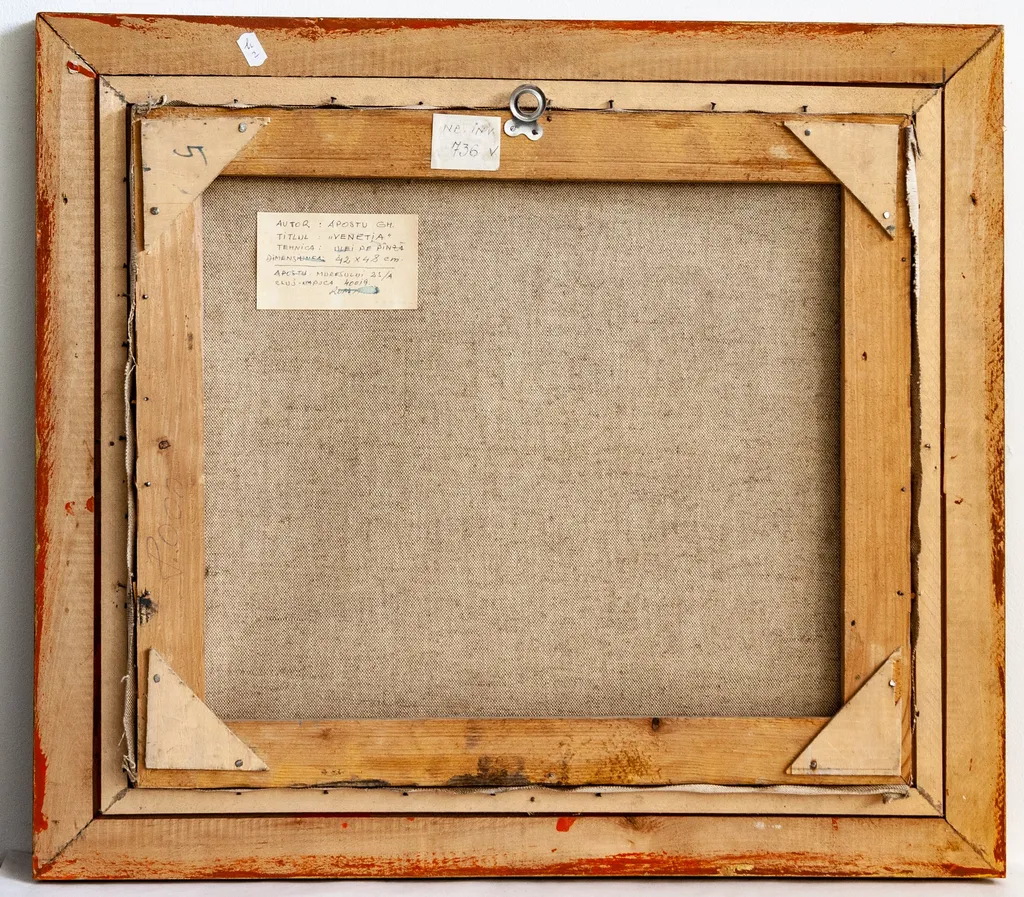
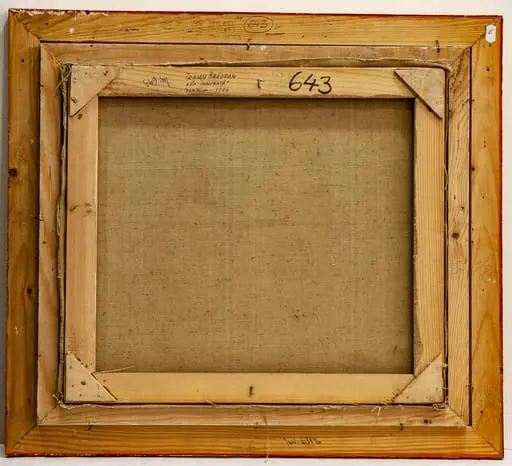
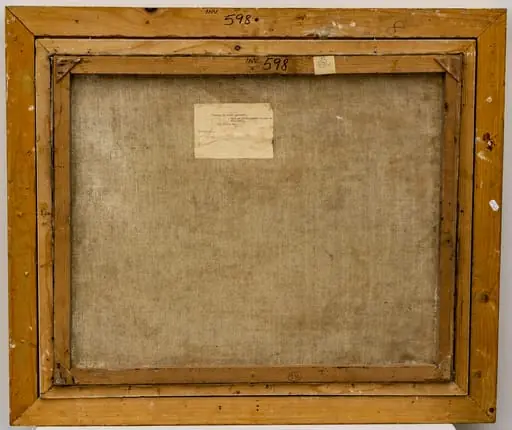
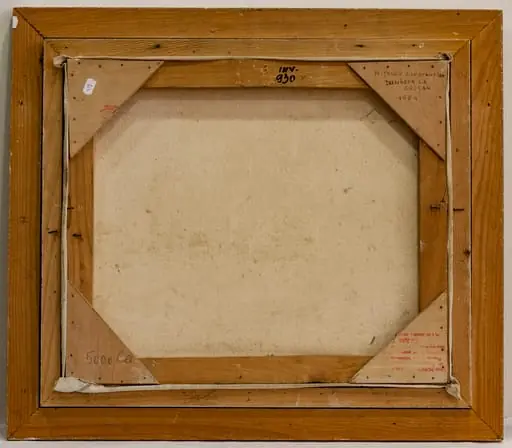
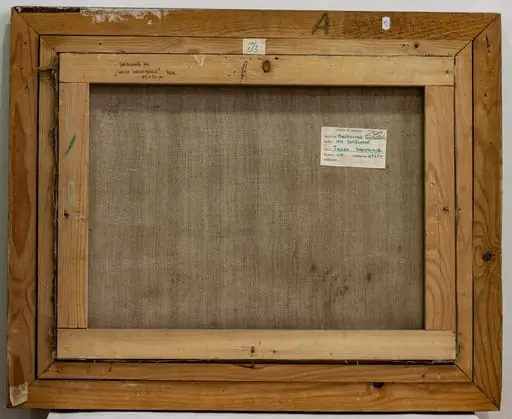
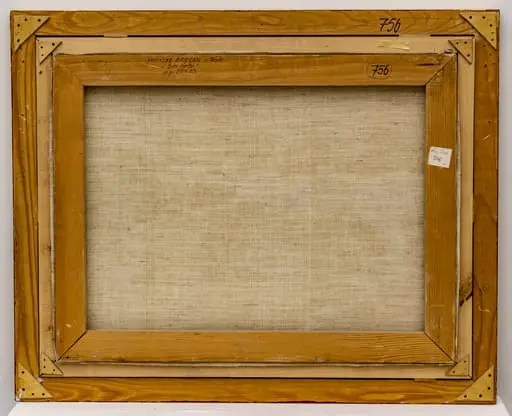
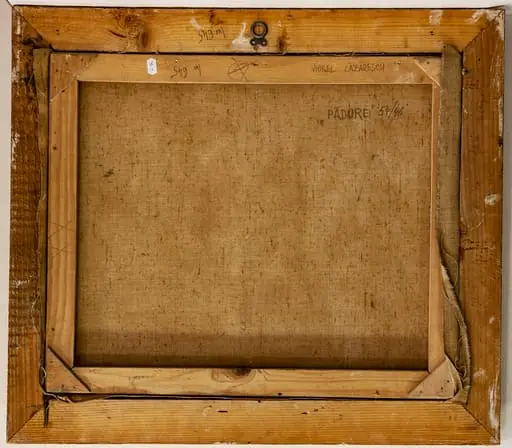
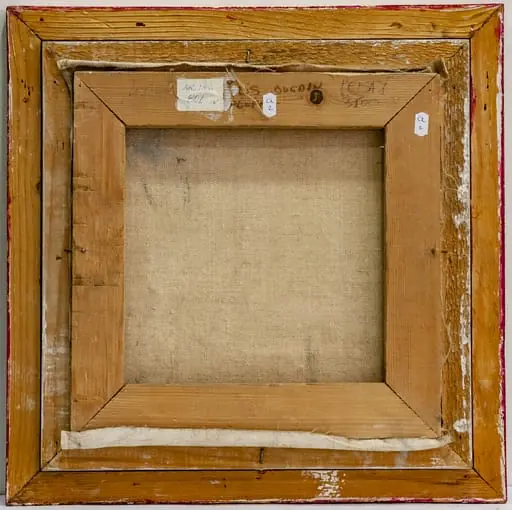
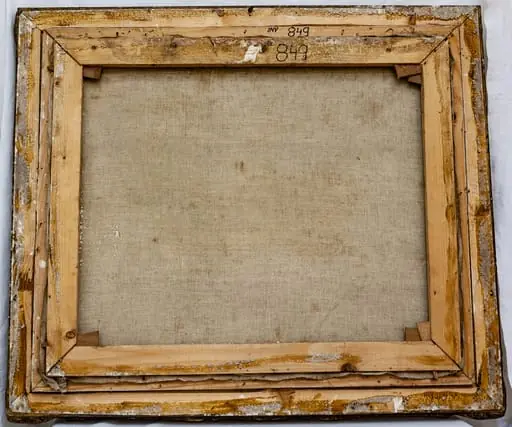
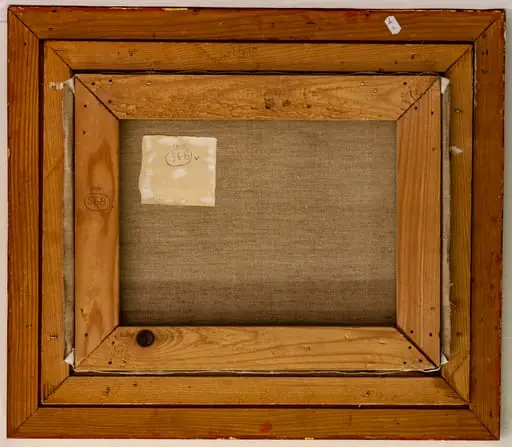
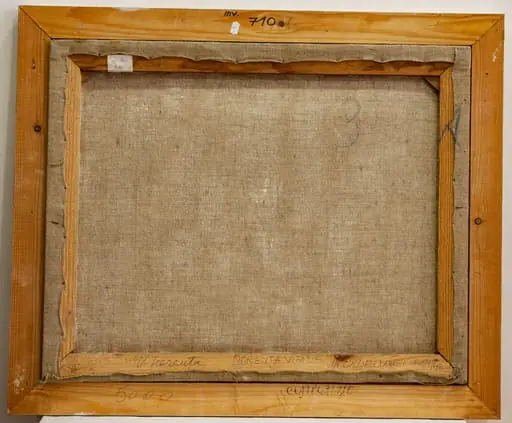
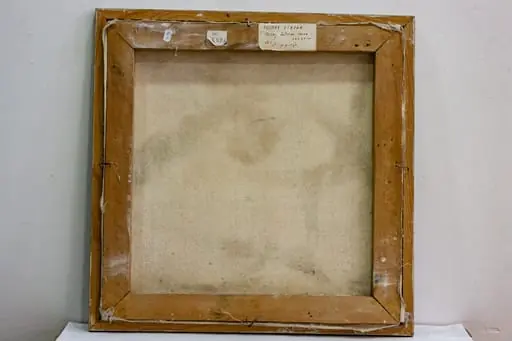
Veneția is an unspecified painting by Gheorghe Apostu. It is held in the collection of the Gavrila Simion Eco-Museum Research Institute Tulcea. This artwork is an empty wooden frame with a faded, light-colored canvas stretched inside.
About this work
Overview
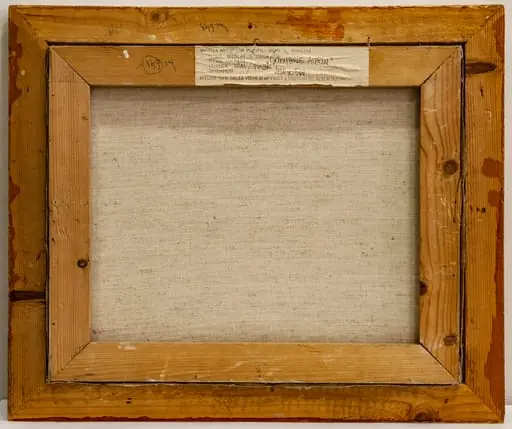
A small label on the reverse identifies the piece as *Veneția*, Romanian for Venice, but no image or inscription appears on the front.
This artwork is an empty wooden frame with a faded, light-colored canvas stretched inside. The frame shows signs of age, with chipped red paint along its edges and a basic metal clip securing the canvas. A small label on the reverse identifies the piece as *Veneția*, Romanian for Venice, but no image or inscription appears on the front. The absence of visual content makes the work’s original intent ambiguous.
Subject & Meaning
The title suggests a depiction of Venice, yet no imagery remains to confirm this. The blank canvas may indicate a lost or erased composition, possibly the result of deliberate removal, deterioration, or an unfinished work. Without visual evidence, the subject remains speculative, leaving the title as the sole link to a possible geographic or thematic origin.
Technique & Style
The construction is utilitarian: a simple wooden frame, standard canvas, and minimal hardware. No brushwork, pigment, or compositional elements are visible on the surface. The lack of artistic intervention on the front suggests either abandonment, erasure, or a conceptual choice to present the support as the work itself, though no evidence confirms the latter.
History & Provenance
The only documented information comes from a small label on the reverse, naming the piece and its Romanian title. The artist is tentatively linked to Gheorghe Apostu, though no verified records connect him definitively to this object. The frame’s condition implies decades of storage or display, but its full history—creation, display, and alteration—remains undocumented.
Context
In early 20th-century Romanian art, landscape painting was common, and Venice was a frequent subject among artists influenced by European travel. This frame may have once held such a scene. Its current state reflects a broader pattern of lost or obscured works from the period, where documentation was sparse and preservation inconsistent.
Legacy
The work survives only as a physical artifact without its original image. It stands as a silent testament to the fragility of artistic records, raising questions about loss, memory, and the boundaries of what constitutes an artwork. Its presence in collections hinges on its material history rather than its visual content.
Artist & collection
Artist
Gheorghe Apostu painted city scenes in the mid-20th century, and one of them shows Venice from the water.
Museum
Gavrila Simion Eco-Museum Research Institute Tulcea
Continue through works from the same source collection.