Artwork
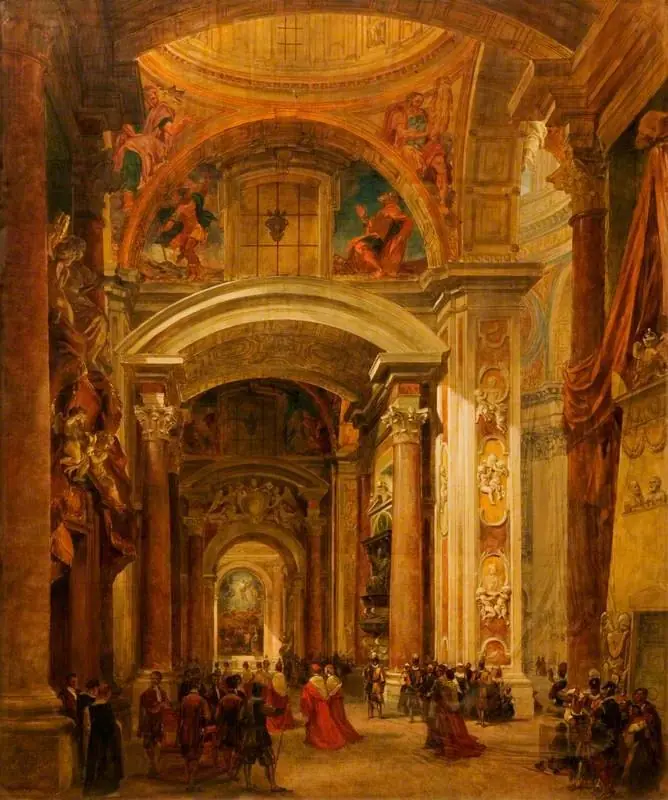
Transept of St. Peter's, Rome
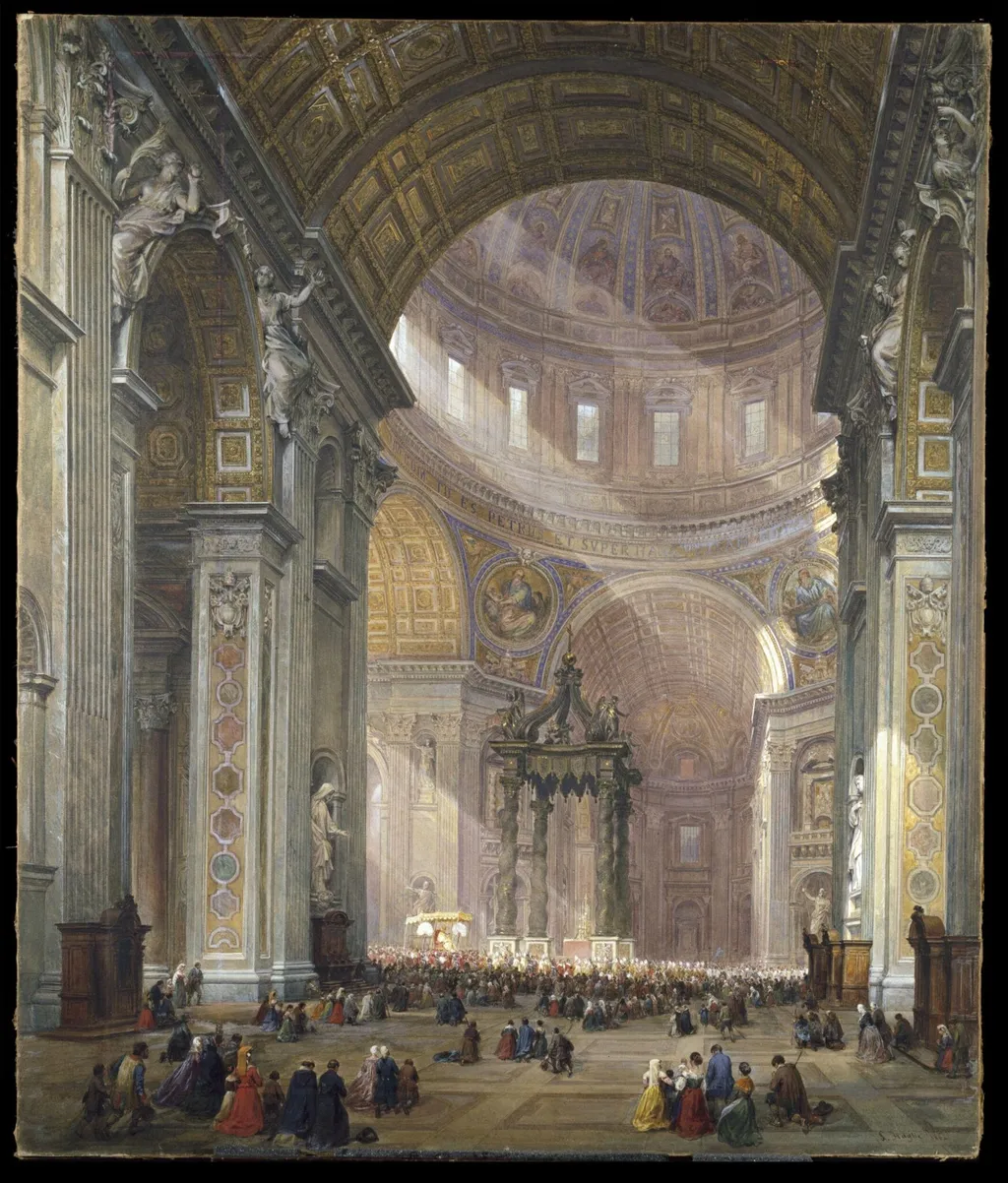
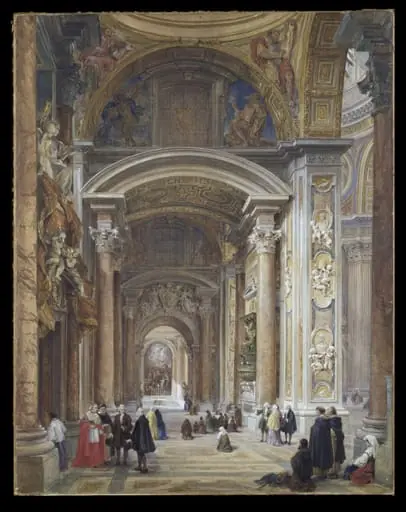
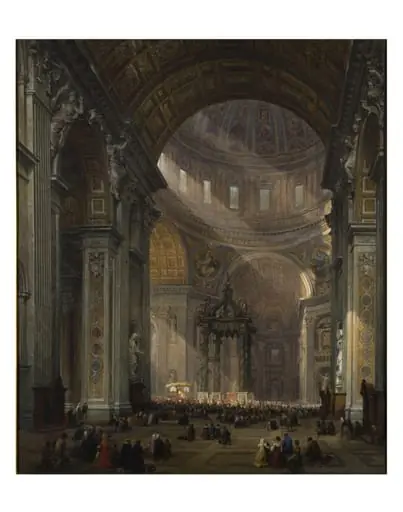
Transept of St. Peter's, Rome is a watercolor work on paper by the Biedermeier artist Haghe. It dates from 1864 and is held in the collection of the Victoria and Albert Museum. This 1864 watercolour depicts the transept of St.
About this work
Overview
The composition emphasizes spatial depth, drawing the eye toward the dome and the play of natural illumination across marble and gilded surfaces.
This 1864 watercolour depicts the transept of St. Peter’s Basilica in Rome, rendered with careful attention to architectural scale and atmospheric light. Signed and dated by the artist, the work captures the interior’s vastness through delicate washes and precise line work. The composition emphasizes spatial depth, drawing the eye toward the dome and the play of natural illumination across marble and gilded surfaces.
Subject & Meaning
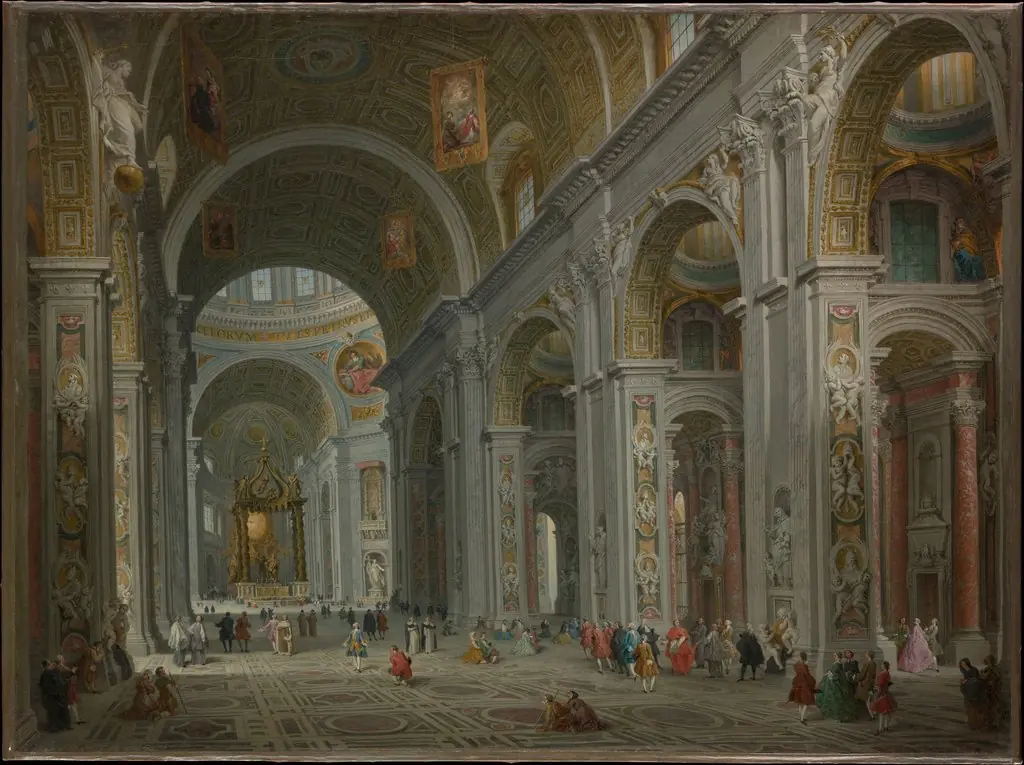
The scene presents a quiet moment in a bustling sacred space, with figures scattered across the floor—some seated, others standing—in modest, unposed groupings. The inclusion of worshippers and visitors grounds the architecture in human experience, suggesting the church as a living environment rather than a static monument. Statues in side niches reinforce the religious context without dominating the composition.
Technique & Style
The artist employed transparent watercolour washes to build layered tones, allowing the white of the paper to suggest highlights on marble and gold. Soft shadows and diffused light create a sense of ambient brightness, mimicking the effect of sunlight filtering through high windows. Fine detailing in the columns and statuary contrasts with the looser handling of the crowd, balancing precision with atmospheric suggestion.
History & Provenance
Created in 1864, the watercolour reflects a 19th-century tradition of topographical and architectural studies by travelers and artists visiting Rome. Its survival and documentation suggest it was likely made for private collectors or as part of a broader series of Italian sites. The work remains in institutional hands, preserved as an example of Victorian-era watercolour practice.
Context
During the mid-19th century, watercolour was widely used for documenting historic buildings, especially by British artists and tourists. St. Peter’s, as a symbol of religious and artistic heritage, was a frequent subject. This piece aligns with contemporary efforts to record architectural grandeur with fidelity, often for educational or commemorative purposes rather than overt artistic expression.
Legacy
The painting endures as a quiet record of how a major religious space was perceived and rendered in the 19th century. It contributes to a broader corpus of architectural watercolours that bridge documentary accuracy and aesthetic sensitivity. Its preservation in a public collection ensures continued access for study and reflection on the relationship between light, space, and sacred architecture.
Artist & collection
Artist
Louis Haghe made detailed watercolours of grand European interiors and everyday scenes in the 1800s.