Artwork
Rustic Piety
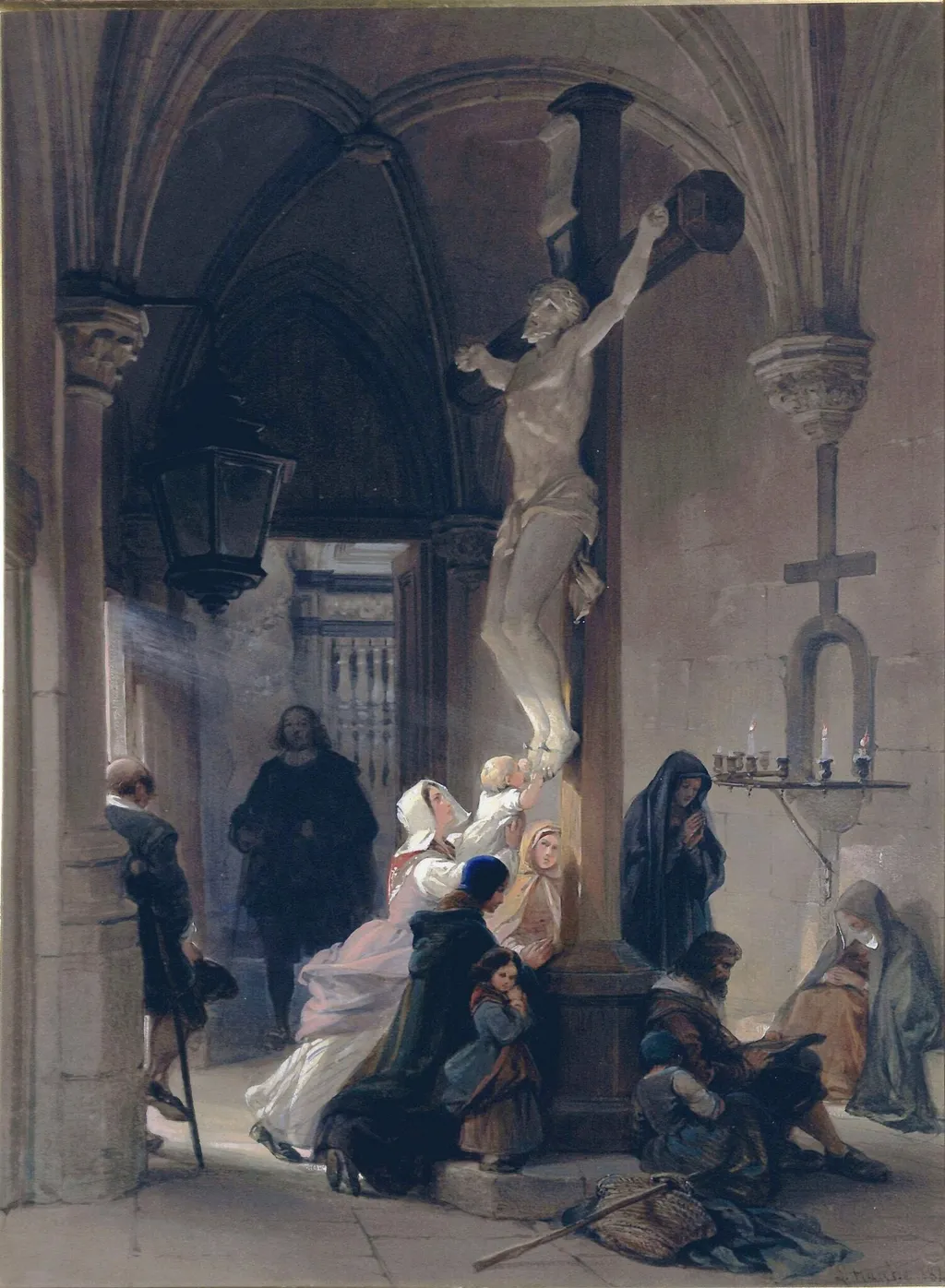
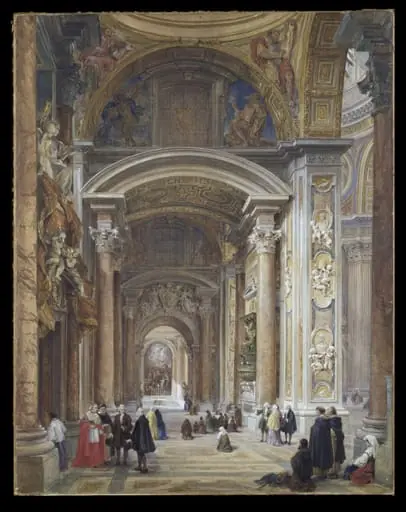
Rustic Piety is a watercolor work on paper by the Biedermeier artist Haghe. It dates from 1846 and is held in the collection of the Victoria and Albert Museum. Created in 1846 by L.
About this work
Overview
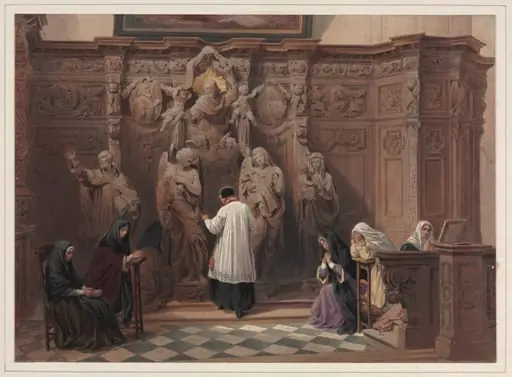
Created in 1846 by L. Haghe, this watercolour captures a quiet moment of devotion within a modest church interior. The work is signed and dated by the artist, affirming its authorship and temporal context. Rendered in muted tones, the composition emphasizes stillness and introspection, avoiding theatricality in favor of restrained emotional resonance.
Subject & Meaning
The scene centers on a crucifix mounted against a stone wall, around which a small group of worshippers kneel, sit, or stand in silent prayer. Their simple, dark garments suggest rural or working-class piety. The absence of clergy or ornate decoration underscores a personal, unmediated encounter with faith, reflecting a devotional tradition rooted in humility rather than ritual grandeur.
Technique & Style
This restrained approach prioritizes mood over precision, aligning with Romantic sensibilities that valued emotional atmosphere over topographical accuracy.
Haghe employed delicate watercolour washes to model form through subtle gradations of light and shadow. The dim interior is suggested not by detailed architecture but by soft edges and muted hues, with candlelight barely illuminating the stone surfaces. This restrained approach prioritizes mood over precision, aligning with Romantic sensibilities that valued emotional atmosphere over topographical accuracy.
History & Provenance
The work bears the artist’s signature and date, indicating it was completed as a finished piece rather than a study. No documented exhibition history or early ownership is recorded, suggesting it may have been privately held or produced for a devotional context. Its survival as a standalone watercolour reflects its modest scale and intimate character.
Context
Produced during the height of Romanticism, the piece aligns with a broader cultural turn toward inner spirituality and the sublime in everyday life. While grand religious narratives dominated academic art, this work instead focuses on quiet, vernacular devotion—mirroring contemporary interest in personal faith, rural piety, and the emotional power of simple rituals.
Legacy
Though not widely exhibited or reproduced, the watercolour endures as a quiet testament to 19th-century devotional practice. Its unadorned composition and emotional restraint distinguish it from more ornate religious imagery of the period, offering a glimpse into the private spiritual lives of ordinary believers through the language of understated art.
Artist & collection
Artist
Louis Haghe made detailed watercolours of grand European interiors and everyday scenes in the 1800s.

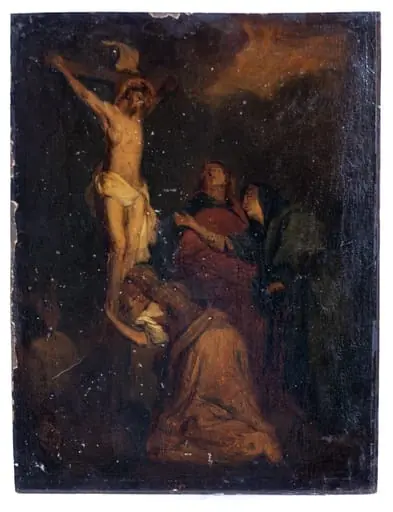 Răstignirea - schiță după van Dyck
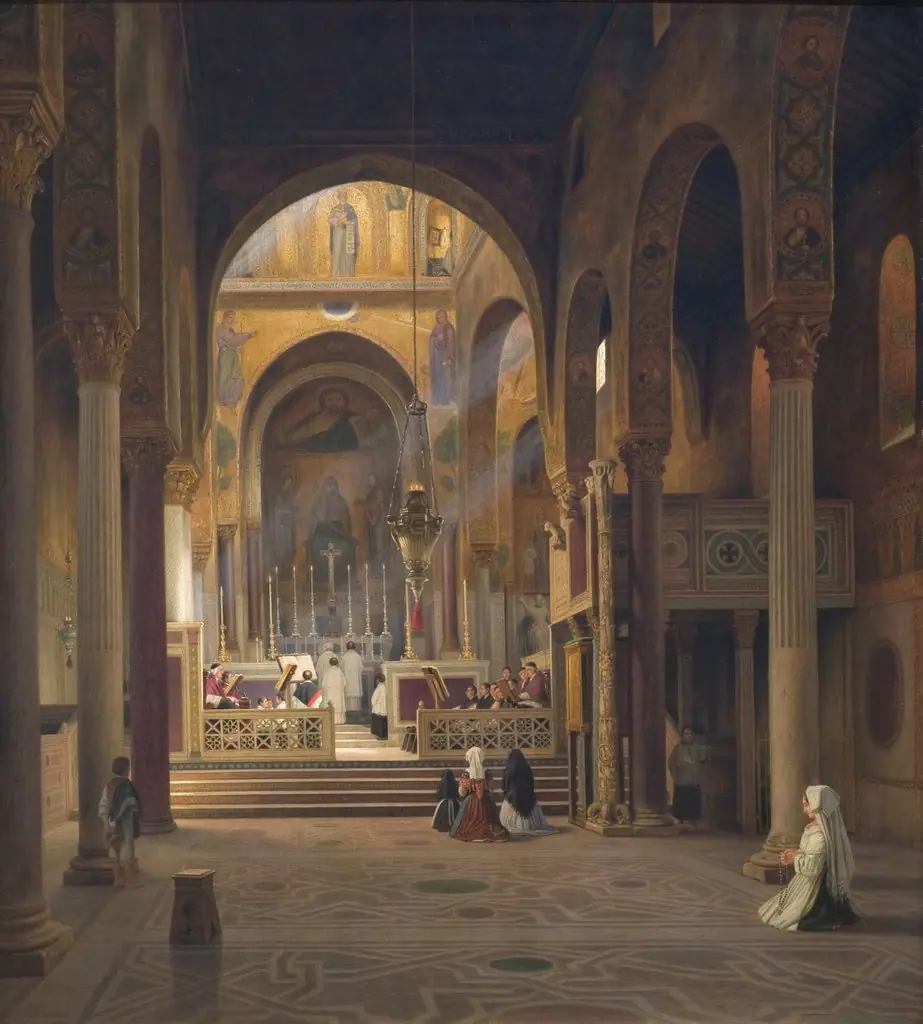 Interior of the Capella Palatina in Palermo, Italy
 Interior of the Capella Palatina in Palermo, Italy
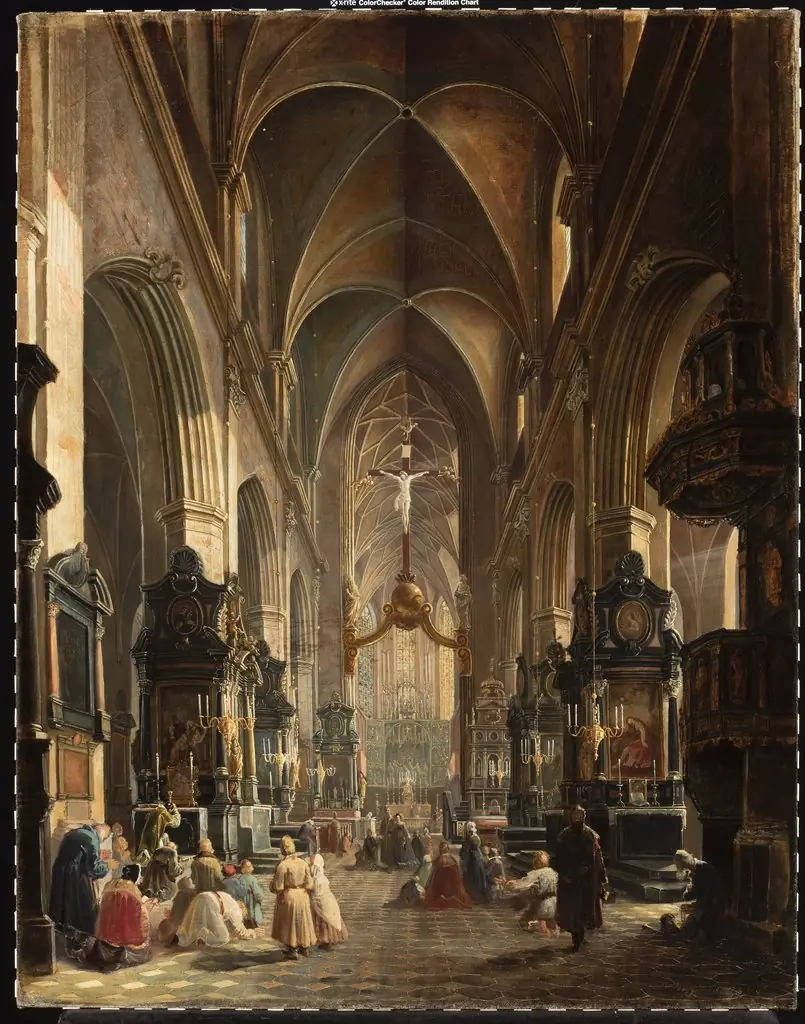 Interior of the Church of Virgin Mary in Kraków
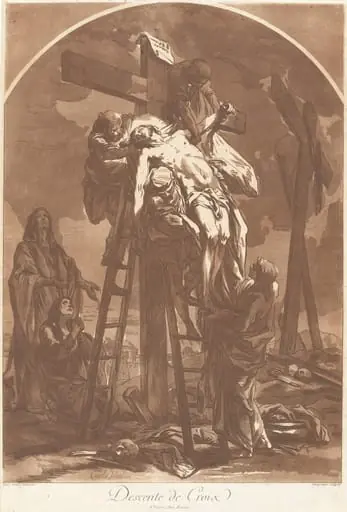 Descente de Croix (Descent from the Cross)
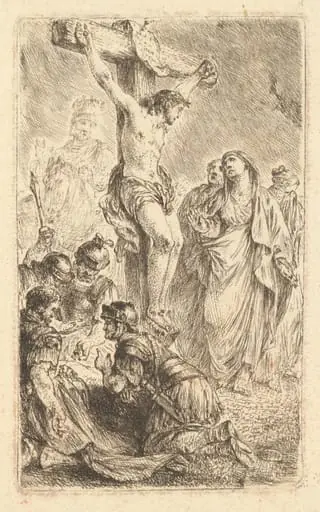 Christ on the Cross
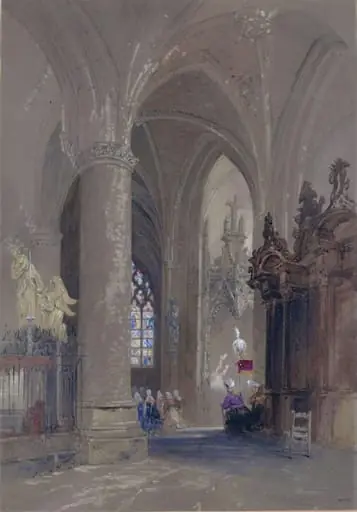 Caudebec on the Seine - Church Interior
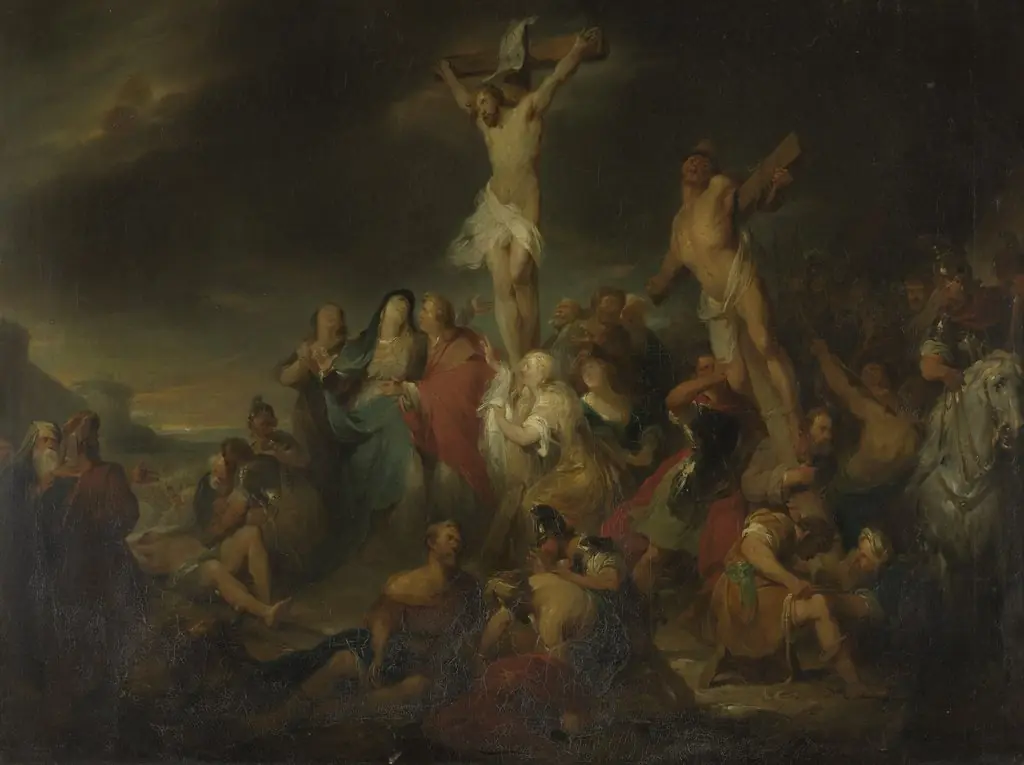 Calvary
 The Crucifixion
 The Crucifixion of Christ
 The Crucifixion
 Confessional, Church of St. Paul, Antwerp