Artwork
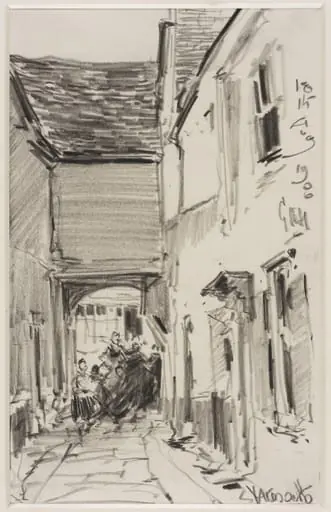
At the Gate, Kessingland.
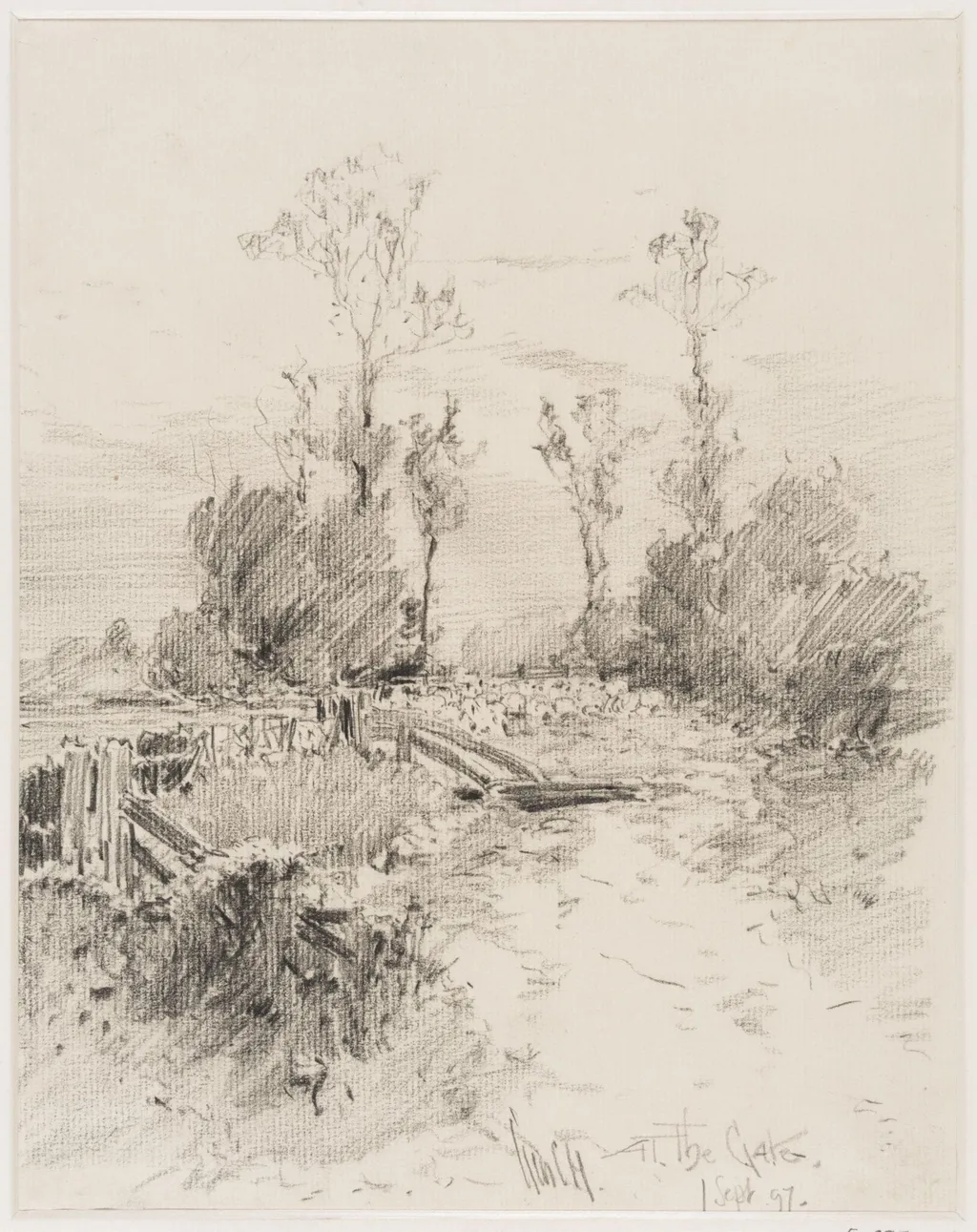
At the Gate, Kessingland. is a drawing by the Impressionist artist Haite. It dates from 1 and is held in the collection of the Victoria and Albert Museum. At the Gate, Kessingland is a pencil drawing by George Charles Haité, an English artist active in the late 19th and early 20th centuries.
About this work
Overview
At the Gate, Kessingland is a pencil drawing by George Charles Haité, an English artist active in the late 19th and early 20th centuries. Created as a spontaneous study, it captures a rural scene near the Suffolk village of Kessingland. The work is held in the Victoria and Albert Museum’s collection, reflecting Haité’s broader engagement with observational drawing and topographical record.
Subject & Meaning
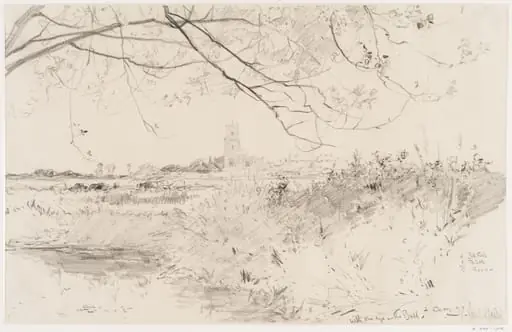
The drawing depicts a quiet rural gate, flanked by a low fence and scattered bare trees under a pale sky. No figures or activity are present, emphasizing stillness and solitude. The title anchors the scene in a specific location, suggesting a personal or habitual observation rather than a formal landscape. The absence of narrative invites contemplation of place and atmosphere over event.
Technique & Style
The ground is suggested through irregular lines and smudged shadows; branches are sketched with angular, broken contours.
Haité employed loose, rapid pencil strokes to convey texture and light without definition. The ground is suggested through irregular lines and smudged shadows; branches are sketched with angular, broken contours. There is no shading or polish—only the immediacy of the moment. This approach aligns with sketchbook practice, prioritizing perception over finish, and reflects the artist’s background in illustration and observational draftsmanship.
History & Provenance
The drawing is dated and inscribed by the artist, indicating it was made on-site. It entered the Victoria and Albert Museum’s collection as part of its broader acquisition of British graphic art. Haité’s role as founding president of the London Sketch Club underscores his commitment to drawing as a vital artistic discipline, and this work exemplifies the informal, personal studies valued by that community.
Context
In the late Victorian era, artists increasingly turned to direct observation of the English countryside, often as a counterpoint to industrialization. Haité’s sketch fits within this trend, sharing affinities with the work of the New English Art Club and other realist draftsmen. Unlike grand landscapes, it records an unremarkable threshold—suggesting value in the ordinary, everyday view.
Legacy
Though not widely exhibited, At the Gate, Kessingland remains a representative example of Haité’s sketchbook practice and the British tradition of topographical drawing. Its preservation in the V&A highlights the institutional recognition of informal works as legitimate records of artistic process and regional life, influencing later generations of observational artists.
Artist & collection
Artist
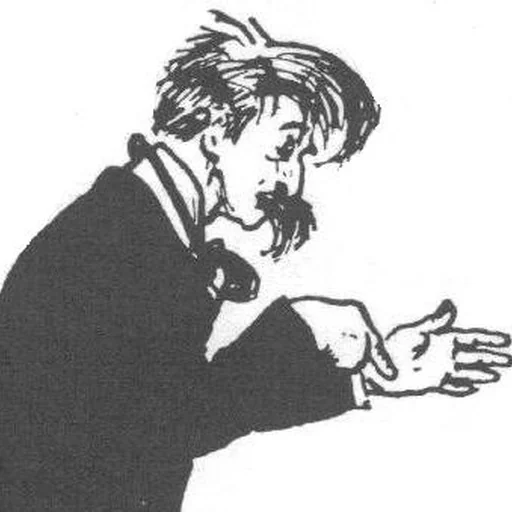
George Charles Haité (8 June 1855 – 31 March 1924) was an English designer, painter, illustrator and writer.

 Branchville, Connecticut
 Landscape (Paysage)
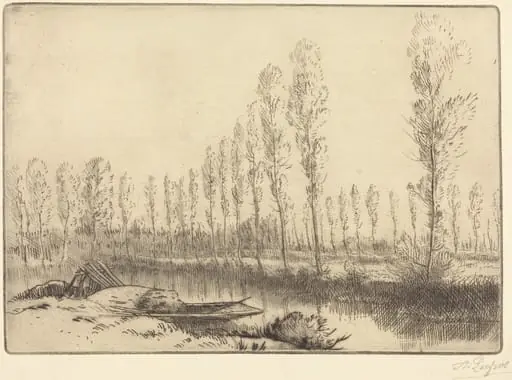 Poplars near Amiens (Pres d'Amiens, les tourbieres)
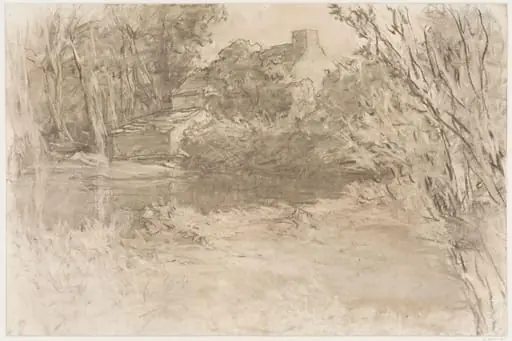 Cottage among trees, with a pond in front.
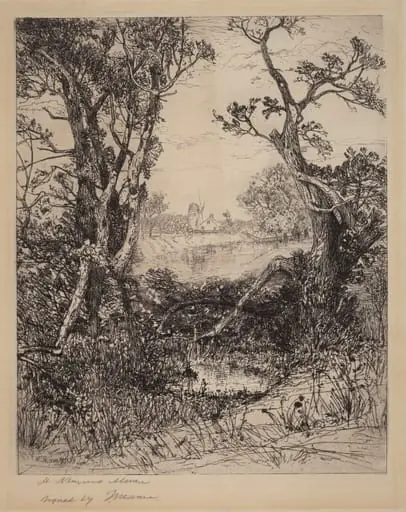 Summer—Easthampton
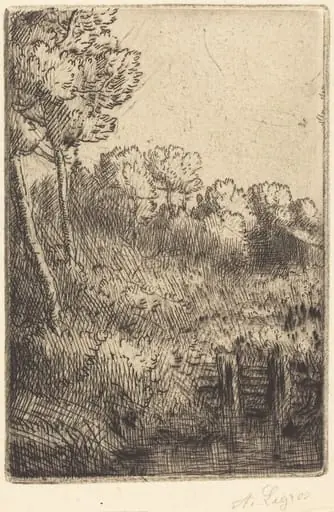 Along the Marne (Sur la Marne)
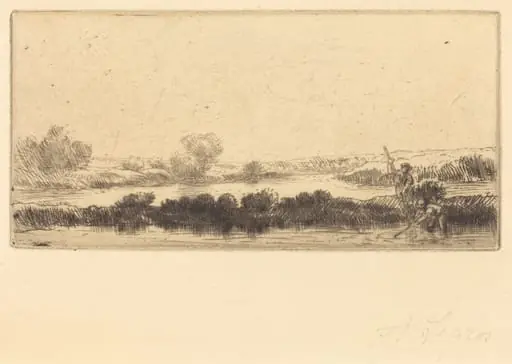 Landscape with Peat-bog; In the Marsh (Paysage des tourbieres; Dans les marais)
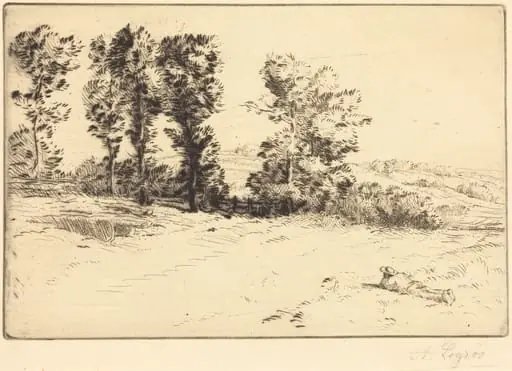 Meadow in Sunshine (Le pre ensoleille)
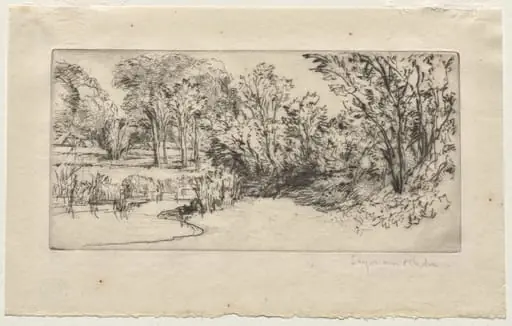 The Little Longparish
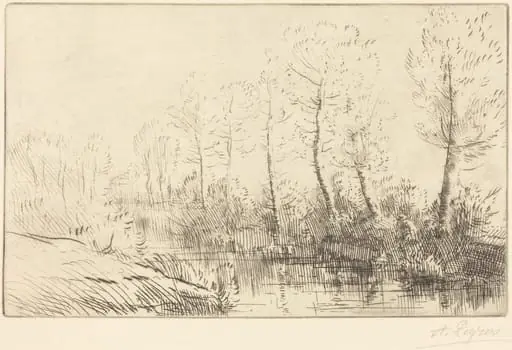 Birch Trees: Water's Edge Seen in Morning Light (Les bouleaux: Bord de l'eau, effet du matin
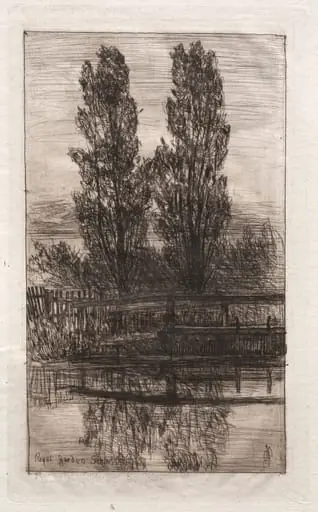 Poplars, Royal Garden, Schleissheim