Artwork
Langston.
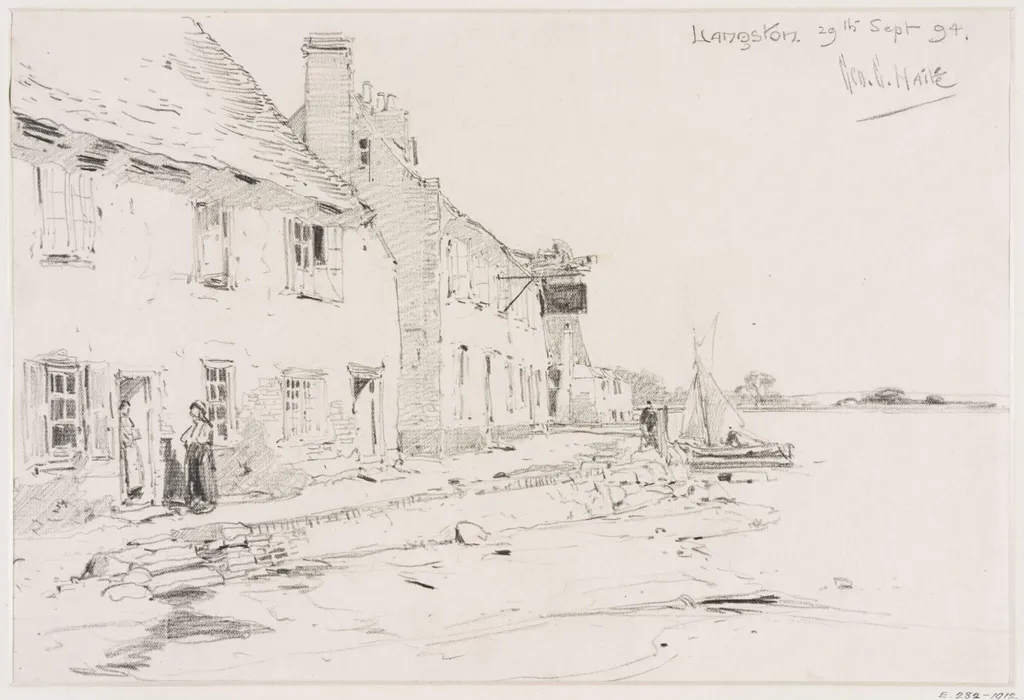
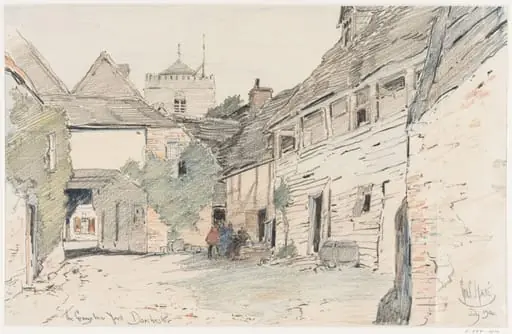
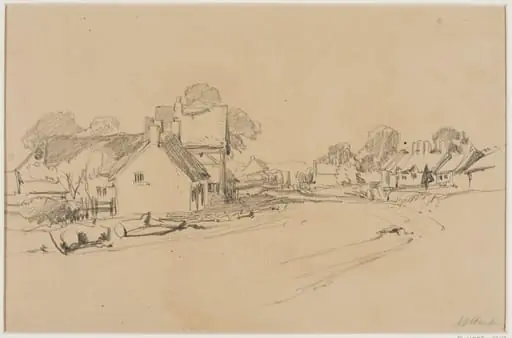
Langston. is a drawing by the Impressionist artist Haite. It dates from 29 and is held in the collection of the Victoria and Albert Museum. Created in 1929 by the English artist George Charles Haité, *Langston* is a detailed pencil drawing depicting a rural waterside cottage.
About this work
Overview
Haité, known for his illustrative work and contributions to Victorian-era publications, turned to intimate landscape subjects later in his career.
Created in 1929 by the English artist George Charles Haité, *Langston* is a detailed pencil drawing depicting a rural waterside cottage. Haité, known for his illustrative work and contributions to Victorian-era publications, turned to intimate landscape subjects later in his career. The drawing resides in the Victoria and Albert Museum’s collection, reflecting its significance as a personal, observational work rather than a commercial commission.
Subject & Meaning
The scene portrays a modest cottage by water, with figures near its entrance and a small boat resting among rocks. The quiet, unassuming setting suggests a moment of stillness, possibly evoking rural life in early 20th-century England. There is no overt narrative, but the careful rendering of domestic architecture and natural elements conveys a sense of place and solitude, characteristic of Haité’s later interest in tranquil, everyday environments.
Technique & Style
Haité employed fine linear precision and controlled cross-hatching to model form and texture. The architecture is rendered with measured detail, while the rocks and water’s edge are suggested through graduated shading rather than outline. The composition balances architectural solidity with the organic irregularity of the landscape, demonstrating a disciplined draftsmanship rooted in observational drawing traditions of the time.
History & Provenance
The drawing entered the Victoria and Albert Museum’s collection as part of its broader effort to document British graphic art of the late 19th and early 20th centuries. While Haité gained recognition for his magazine illustrations, *Langston* represents a more private artistic pursuit. Its preservation in a major public institution underscores its value as a representative example of non-commercial British drawing from the interwar period.
Context
In the decades following his work on *Strand Magazine*’s Sherlock Holmes covers, Haité shifted focus from commercial illustration to personal artistic expression. *Langston* reflects this transition, aligning with a broader trend among British artists of the era who sought to capture quiet, unidealized landscapes. The drawing stands apart from the illustrative dynamism of his earlier career, favoring contemplative realism.
Legacy
Though Haité is primarily remembered for his commercial illustrations, *Langston* contributes to a quieter legacy of British draftsmanship. The work exemplifies the enduring value of observational drawing outside the realm of mass media. Its presence in the V&A’s collection ensures continued access for study, offering insight into the artistic practices of illustrators who turned to personal subjects in their later years.
Own this work as a print
Artist & collection
Artist
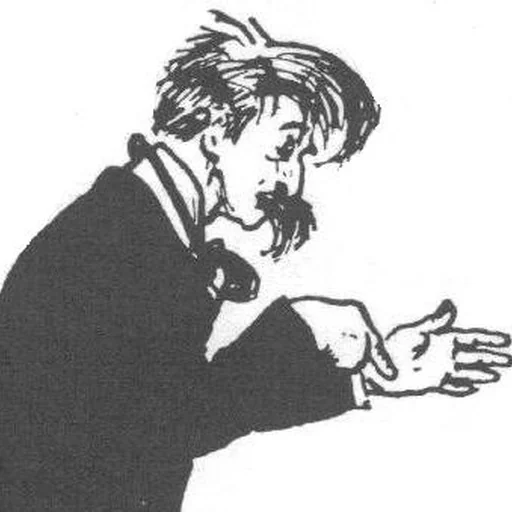
George Charles Haité (8 June 1855 – 31 March 1924) was an English designer, painter, illustrator and writer.

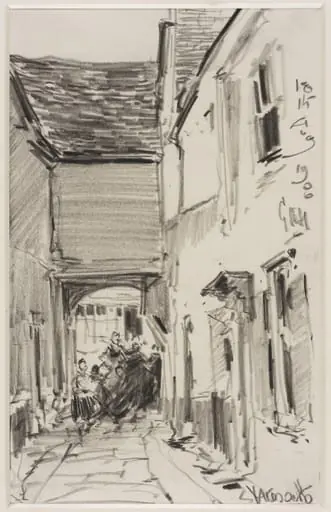
 A village street
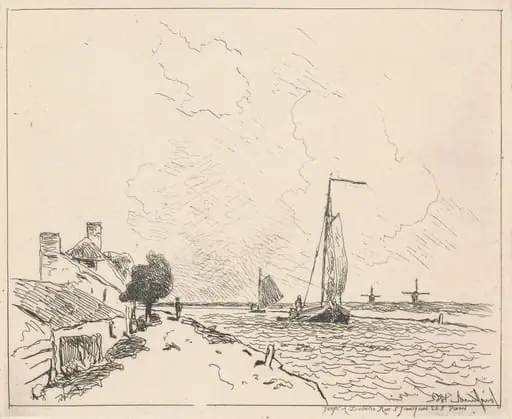 Two Boats at Sail (Les deux Barques à voile)
 A Cottage at Dorking in Surrey
 Two Boats at Sail (Les deux Barques a voile)
 Whistler's House, Old Chelsea
 Whistler's House, Old Chelsea
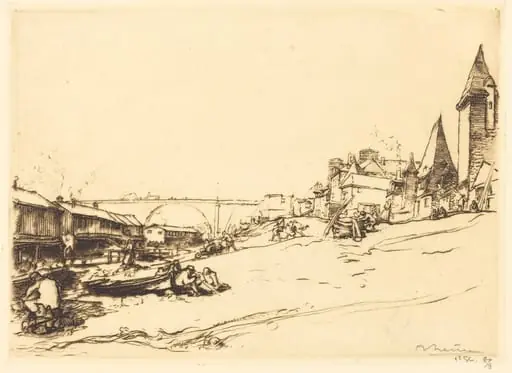 Angers - The House of the King of Poland (Angers - La maison du roi de Pologne)
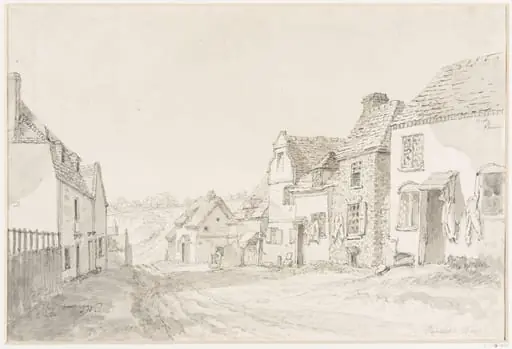 Pegwell Bay
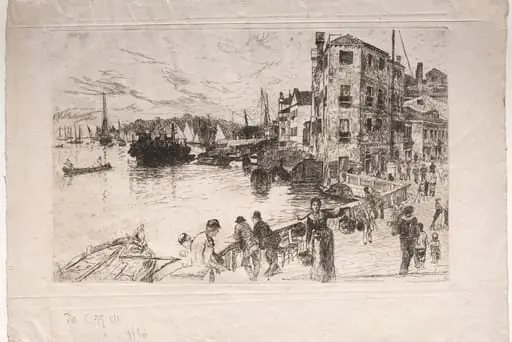 Castello Quarter, Riva
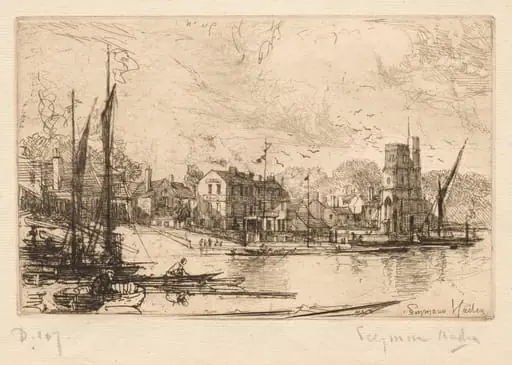 Harry Kelly's, Putney
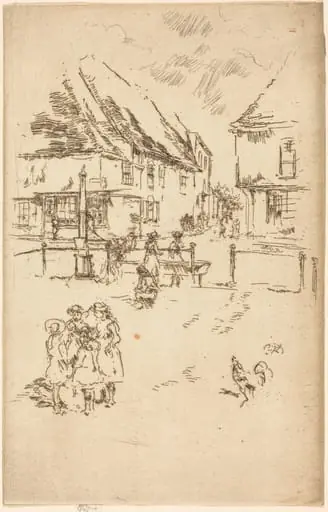 The Cock and the Pump
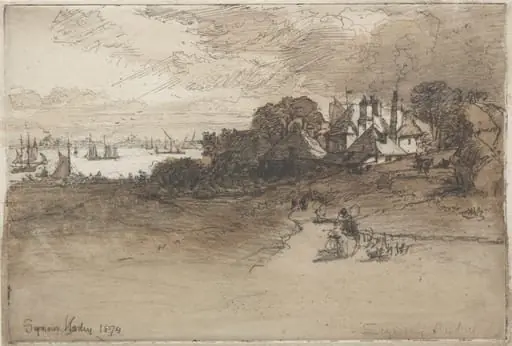 An Essex Farm