Artwork
A village street
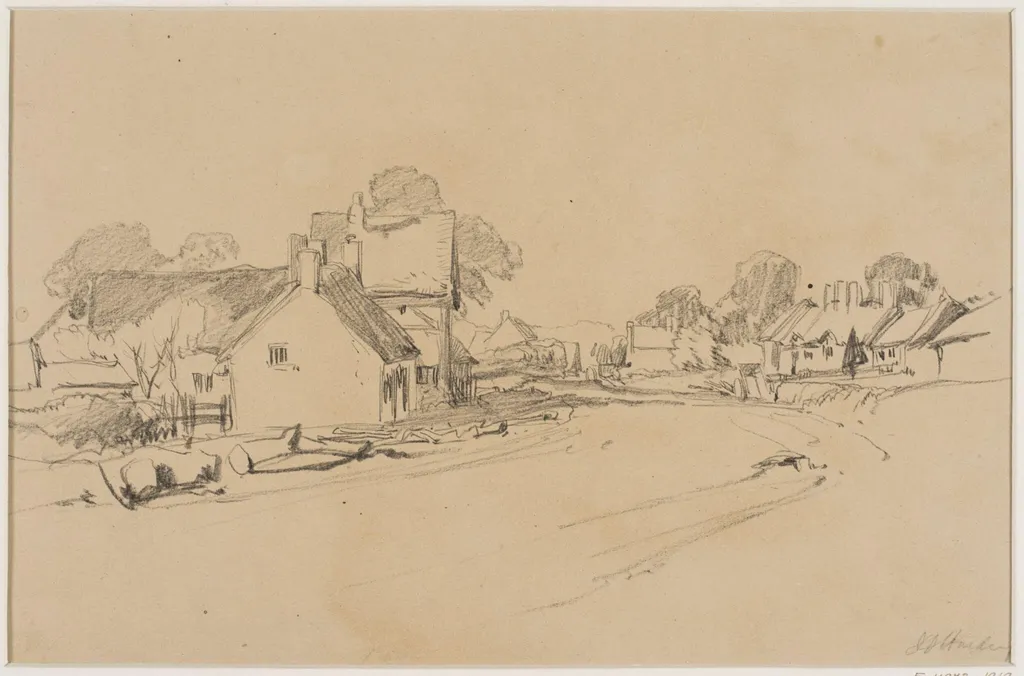
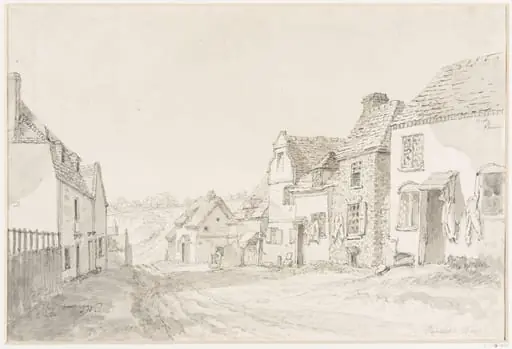
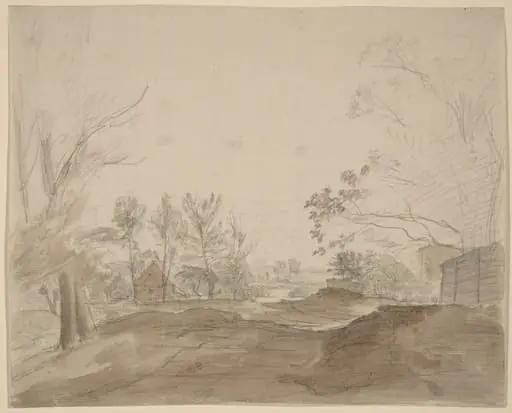
A village street is a drawing by the Impressionist artist James Duffield Harding. It dates from 1858 and is held in the collection of the Victoria and Albert Museum.
About this work
Overview
It belongs to a series of observational studies made outdoors, reflecting Harding’s interest in recording everyday landscapes.
Created around 1858, this drawing by James Duffield Harding captures a rural English street in pencil and watercolour. It belongs to a series of observational studies made outdoors, reflecting Harding’s interest in recording everyday landscapes. Executed on tinted paper, the work demonstrates his preference for opaque watercolour techniques, which allowed for subtle layering and a muted, atmospheric tone.
Subject & Meaning
The scene depicts a quiet, unremarkable village lane lined with modest wooden dwellings, their steep roofs suggesting local building traditions. A narrow stream traces the left edge, accompanied by scattered logs, hinting at domestic or agricultural use. There is no human presence, emphasizing stillness and the quiet rhythm of rural life, free from idealization or narrative.
Technique & Style
Harding employed light pencil strokes to define forms and suggest shadow, avoiding heavy outlines. Washes of opaque watercolour were applied sparingly, preserving the paper’s tone and creating a soft, diffused effect. The loose, rapid handling reflects its function as a preparatory study—intended not as a finished piece but as a record of light, structure, and atmosphere.
History & Provenance
The drawing is part of Harding’s extensive archive of landscape sketches, many of which were later used as references for finished works or instructional illustrations. It entered the Victoria and Albert Museum’s collection as part of a broader acquisition of 19th-century British drawings, reflecting the institution’s interest in artistic process and documentary practice.
Context
In mid-19th century Britain, landscape sketching was both an artistic pursuit and a pedagogical tool. Harding’s manuals promoted direct observation, encouraging amateurs and professionals alike to study nature closely. This drawing exemplifies that ethos—unembellished, attentive to detail, and grounded in the physical reality of the countryside.
Legacy
Harding’s approach to landscape drawing influenced generations of artists through his widely circulated instructional books. His use of tinted paper and layered washes became a standard technique in British watercolour practice. Though modest in scale, works like this helped shape how landscape was taught and understood as a discipline rooted in observation rather than grandeur.
Artist & collection
Artist
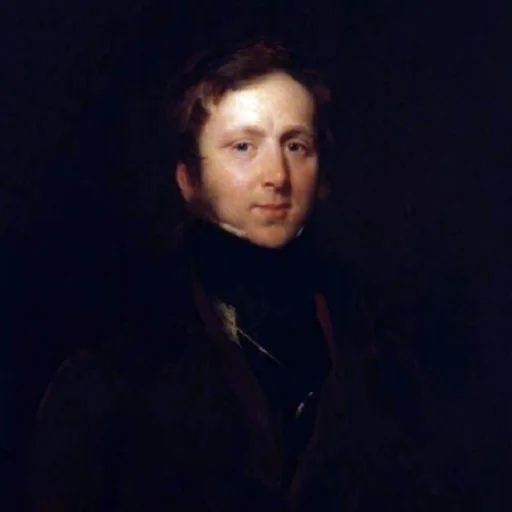
James Duffield Harding (1798 – 4 December 1863) was a British landscape painter, lithographer and author of drawing manuals. His use of tinted papers and opaque paints in watercolour proved influential.

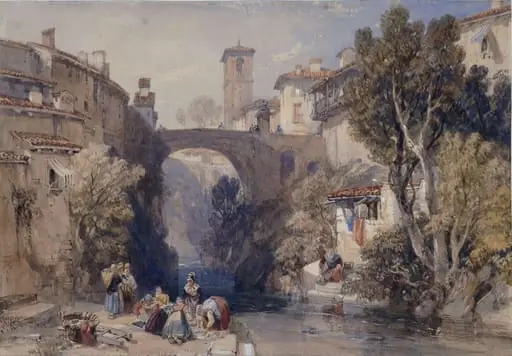
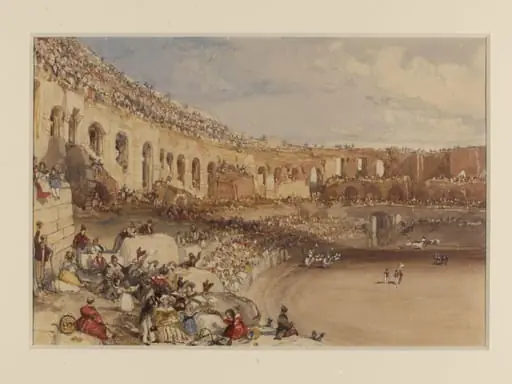
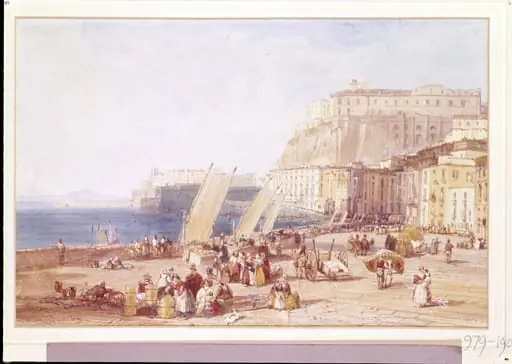
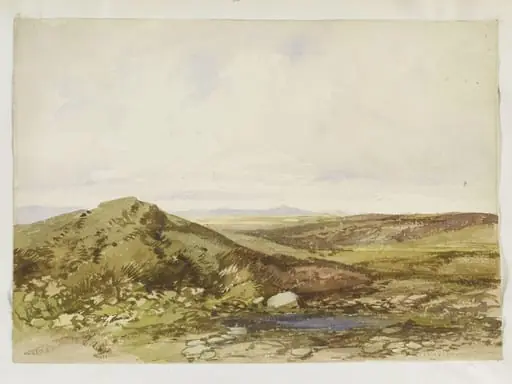
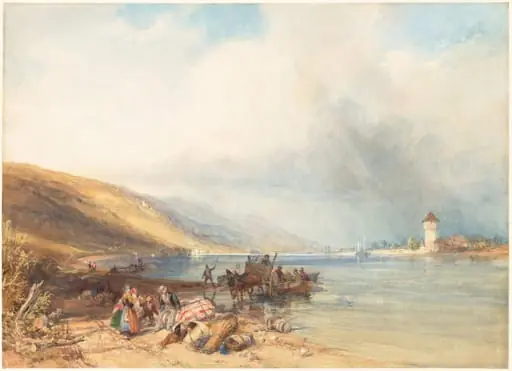
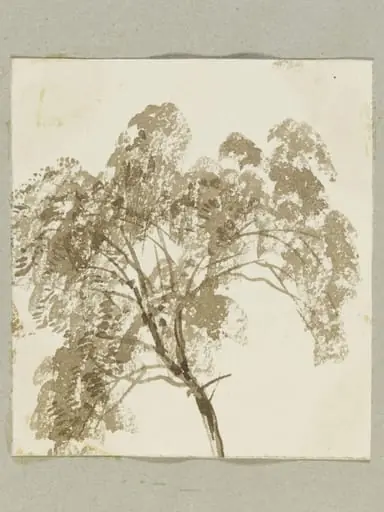
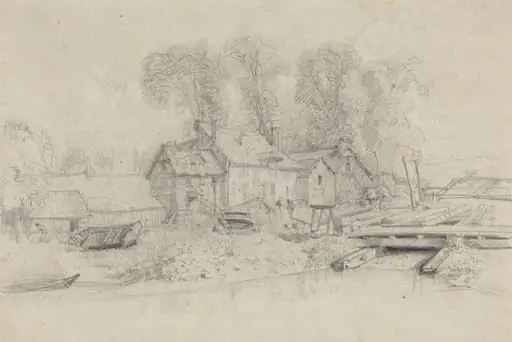 River Landscape with Buildings, Boats, and Figures
 Pegwell Bay
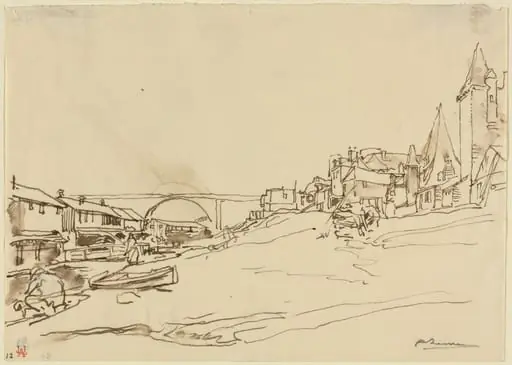 The House of the King of Poland (Angers)
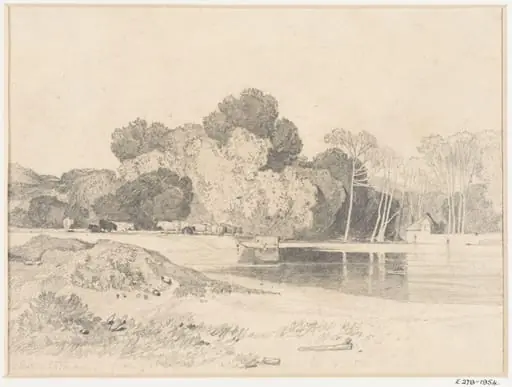 Cattle grazing beside a lake
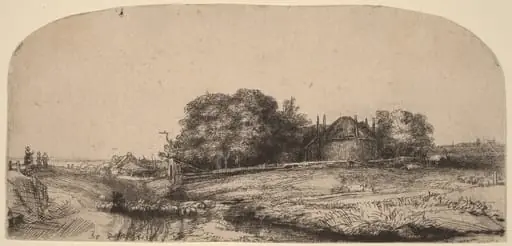 Landscape with a Hay Barn and a Flock of Sheep
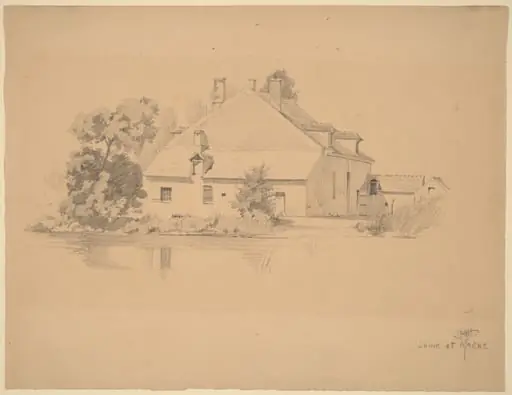 Seine et Marne
 House in Hammersmith
 Sawley Abbey
 Bords de Canal
 A Cottage at Dorking in Surrey
 Landscape with Trees, Cottage, and Farm Wagon
 A Road through a Country Village