Artwork
The Hall Summer House at Ambleside
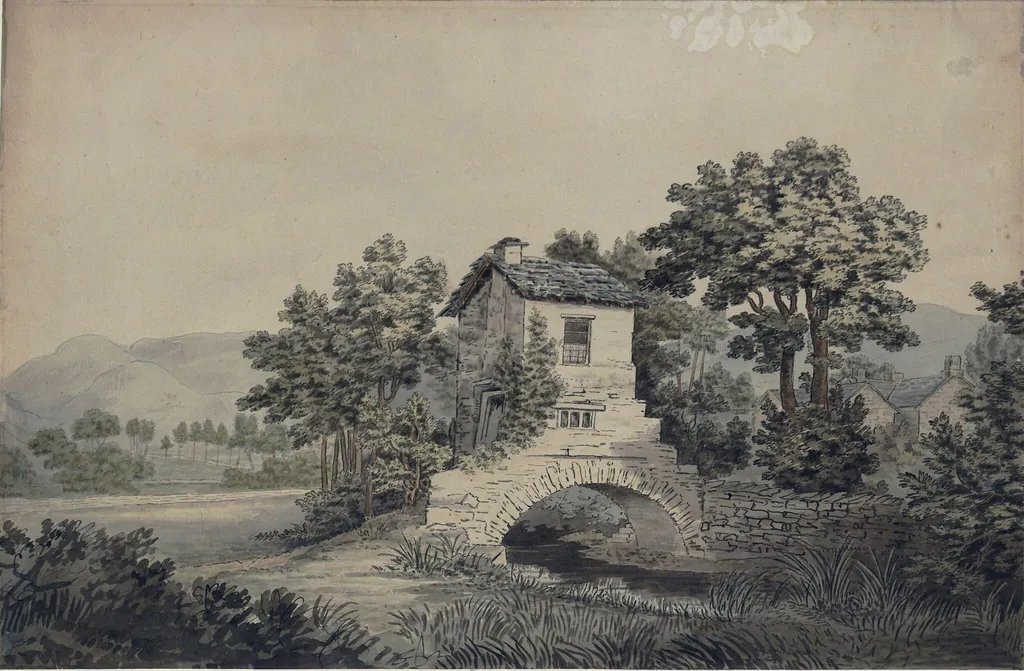
The Hall Summer House at Ambleside is a watercolor work on paper by the Romanticist artist Joseph Halfpenny. It dates from 14 and is held in the collection of the Victoria and Albert Museum. This watercolour depicts a modest stone house nestled into a wooded slope near Ambleside.
About this work
Overview
The composition emphasizes quiet seclusion, with trees framing the structure and misty hills receding into a pale, soft sky.
This watercolour depicts a modest stone house nestled into a wooded slope near Ambleside. A narrow stream flows beneath a small arched bridge in the foreground, with a winding path leading toward a distant valley. The composition emphasizes quiet seclusion, with trees framing the structure and misty hills receding into a pale, soft sky. The overall tone is subdued and contemplative, reflecting a sensitivity to natural stillness.
Subject & Meaning
The subject is a rural dwelling integrated into its landscape, suggesting harmony between human habitation and the natural environment. The house, partially hidden by foliage, conveys a sense of retreat rather than dominance. Its isolation and the gentle curvature of the path imply a private, unhurried existence, evoking themes of solitude and quiet endurance within the Lake District’s pastoral setting.
Technique & Style
The artist employed diluted watercolours to achieve a translucent, airy effect, allowing the paper’s whiteness to suggest light and atmosphere. Delicate washes blend the sky into the distant hills, while minimal detail in the architecture and foliage preserves a sense of softness. The brushwork is restrained, avoiding sharp definition to maintain a dreamlike, atmospheric quality consistent with Romantic-era landscape sensibilities.
History & Provenance
The work originates from the early 19th century, likely created during a period when artists increasingly turned to the Lake District for its unspoiled scenery. It was probably made as a personal study or travel sketch, not for public exhibition. Its survival suggests it remained in private hands, possibly within local circles familiar with the region’s topography and aesthetic values.
Context
Created during a time when the Lake District was becoming a destination for artists and poets seeking natural beauty, this piece reflects broader cultural interest in rural tranquility. Unlike grander Romantic landscapes, it focuses on modest, everyday scenes — a quiet house, a hidden path — aligning with emerging tastes for intimate, unidealized nature rather than dramatic vistas.
Legacy
The work contributes to a tradition of British watercolour that valued subtlety over spectacle. While not widely exhibited, it exemplifies how artists captured the emotional resonance of quiet places. Its preservation in institutional collections underscores its role as a representative example of 19th-century topographical watercolour, valued for its sensitivity rather than its scale.
Artist & collection
Artist
Joseph Halfpenny painted quiet English places in watercolor in the late 1700s. His 1792 view of a summerhouse near Ambleside shows trees, light, and a simple building. A year later he sketched the old stone bridge at…

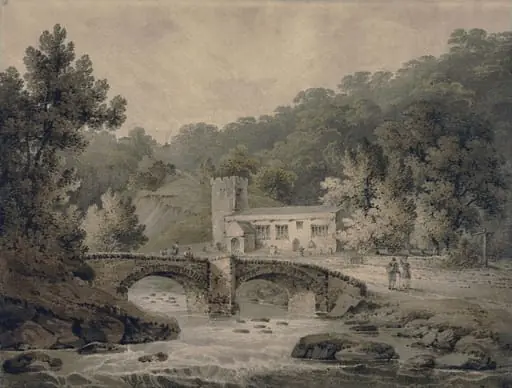 Church and bridge at Hubberholme, Yorkshire
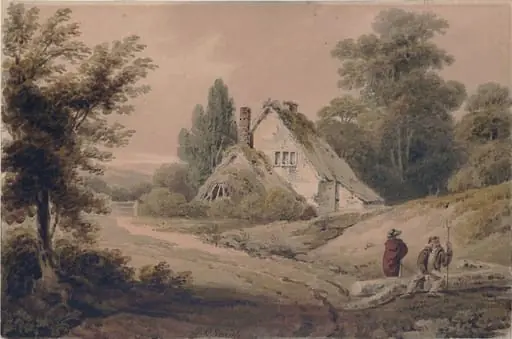 Landscape with cottage and figures
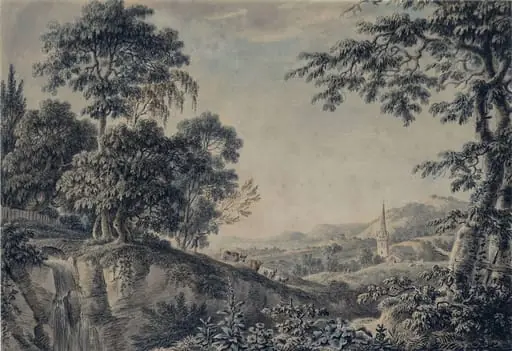 Landscape with church and cattle
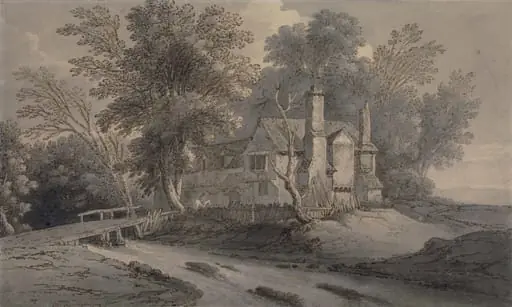 An Old Manor House
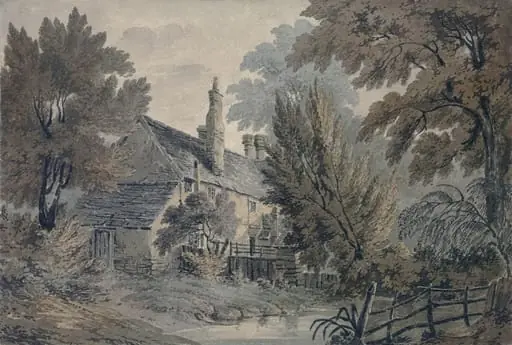 Landscape with House by a Pond
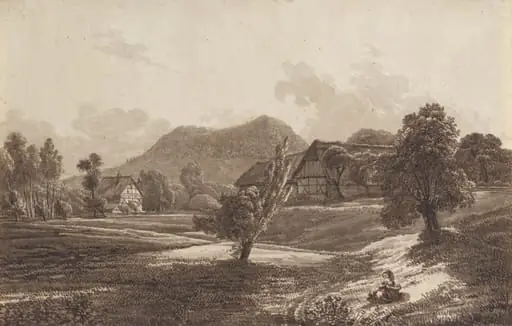 Lusatian Landscape with the Landeskrone Mountain
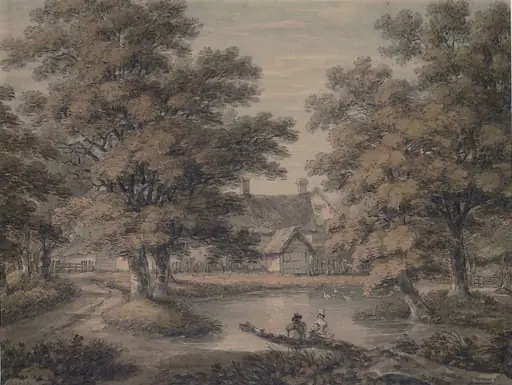 Farmhouse and Trees
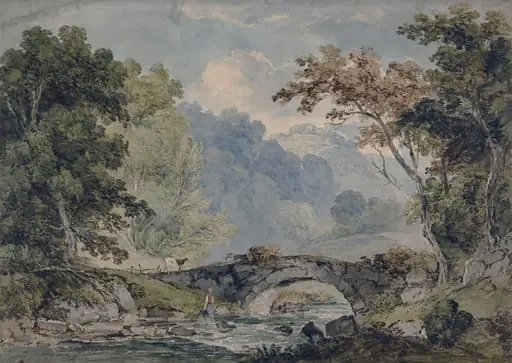 Bridge at Kippenross, near Dunblane
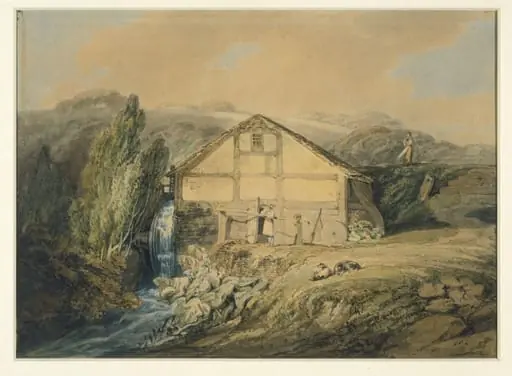 Pembury Mill, near Tunbridge Wells
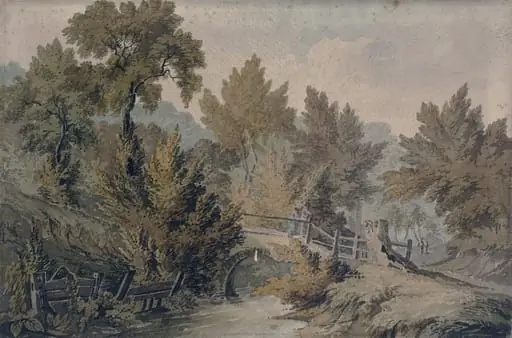 Landscape with Bridge and Stream