Artwork
Fog Warning
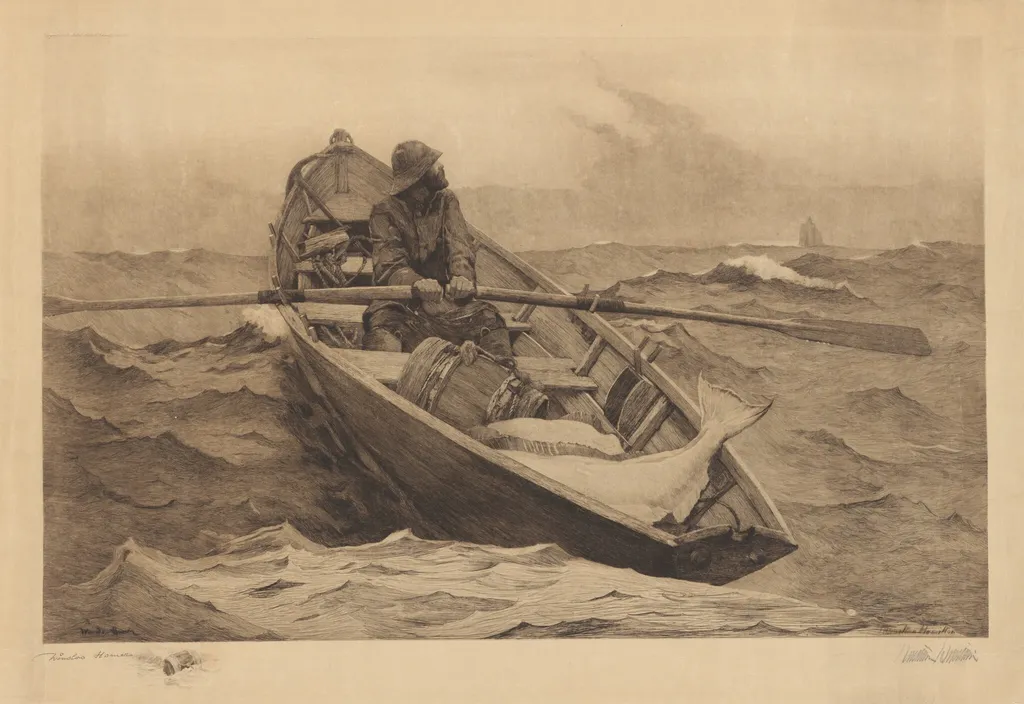
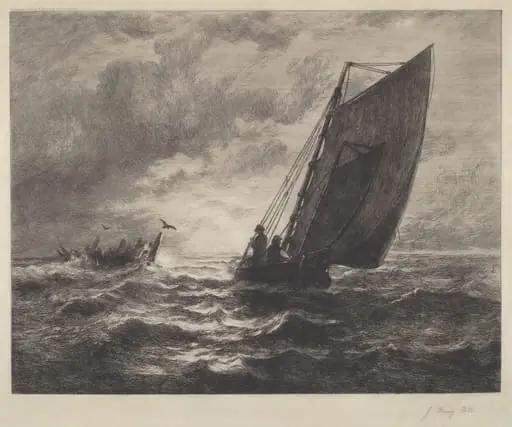
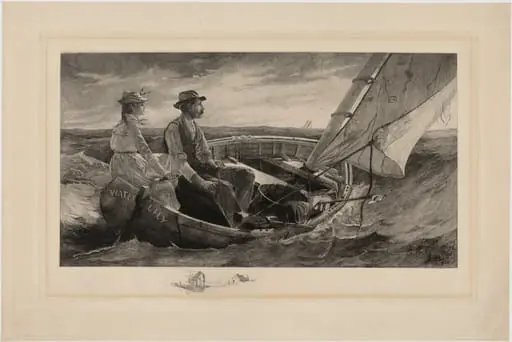
Fog Warning is an ink print by the Impressionist artist Hamilton Hamilton. It dates from 1887 and is held in the collection of the National Gallery of Art.
About this work
Overview
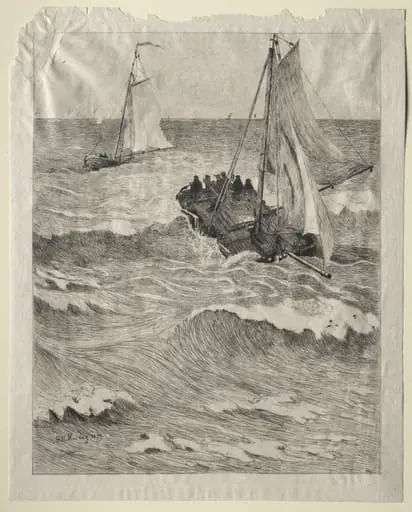
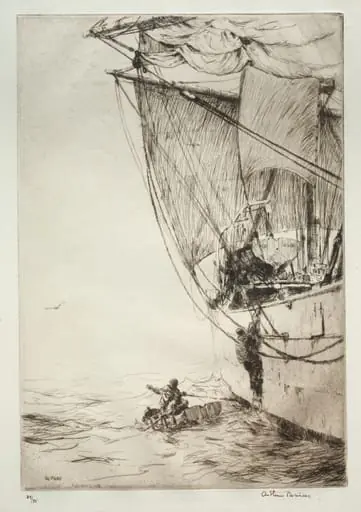
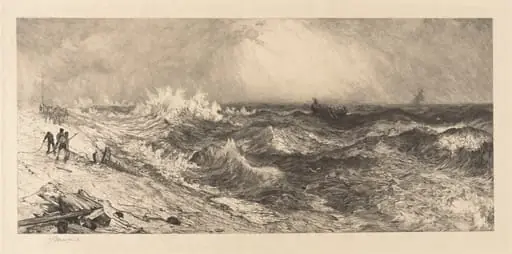
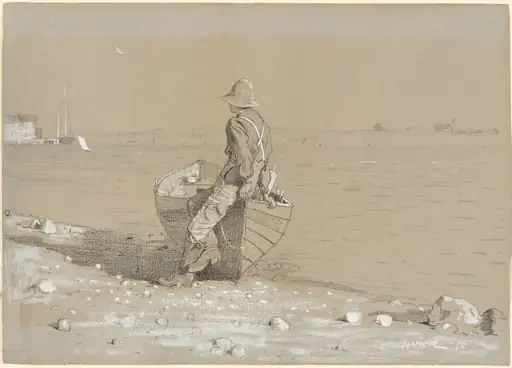
Fog Warning, created in 1887 by Hamilton Hamilton, is an etching on chine collé that captures a solitary fisherman navigating treacherous seas. The print conveys a moment of quiet urgency, as the figure leans into his oar amid towering waves. The composition isolates the boat against a dense, enveloping fog, emphasizing vulnerability against nature’s scale.
Subject & Meaning
The figure, bent low in a weathered dory, represents the quiet labor of coastal fishermen. His isolation and the looming fog suggest the peril inherent in maritime work. The faint suggestion of land or a lighthouse in the distance implies a distant, unreachable safety, reinforcing themes of endurance and uncertainty in the face of natural forces.
Technique & Style
Hamilton employed fine etched lines to render the turbulence of water and the opacity of fog. Chine collé added subtle texture to the paper, enhancing the tactile sense of the boat’s worn surfaces. Delicate gradations of tone, rather than sharp outlines, define forms, allowing the fog to visually dissolve the horizon and heighten the scene’s atmospheric tension.
History & Provenance
Created in 1887, the print emerged during a period of growing interest in maritime realism among American printmakers. Hamilton, known for his focus on coastal life, produced this work as part of a series documenting fishing communities. Its survival in institutional collections suggests early recognition of its quiet documentary value.
Context
In the late 19th century, industrialization and urbanization drew attention to vanishing rural and maritime livelihoods. Hamilton’s work responded to this shift, portraying the dignity and danger of seafaring labor without romanticism. The print aligns with broader artistic efforts to record everyday struggles with observational precision.
Legacy
Fog Warning remains a quiet example of American printmaking’s engagement with natural environment and labor. It influenced later artists interested in atmospheric realism and the emotional weight of marginal professions. Its endurance lies not in spectacle, but in its restrained, empathetic depiction of human resilience.
Artist & collection