Artwork
Boat in a Storm at Sea
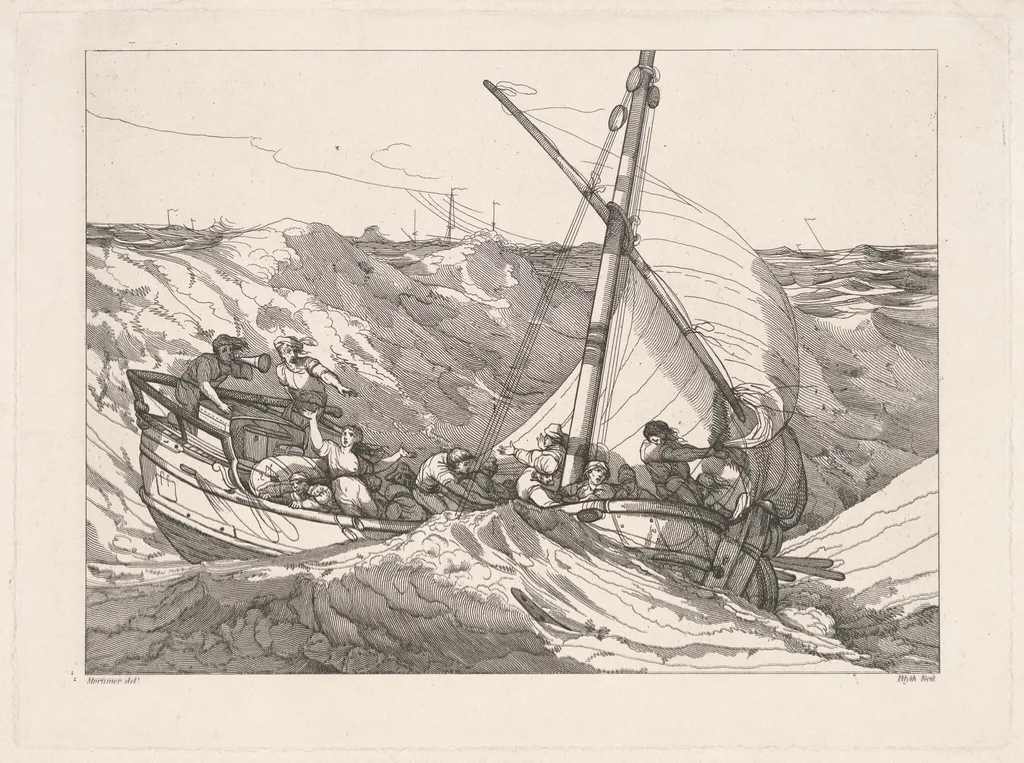
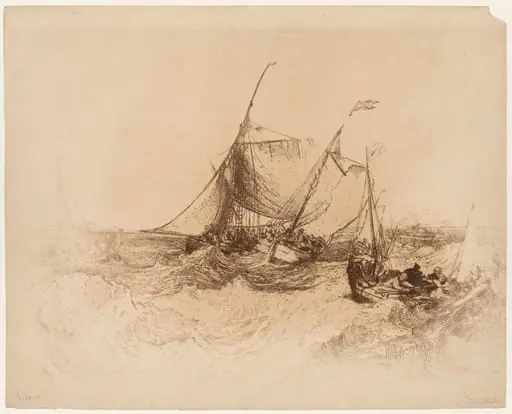
Boat in a Storm at Sea is an ink print by the Romanticist artist Robert Blyth. It dates from 1803 and is held in the collection of the National Gallery of Art.
About this work
Overview
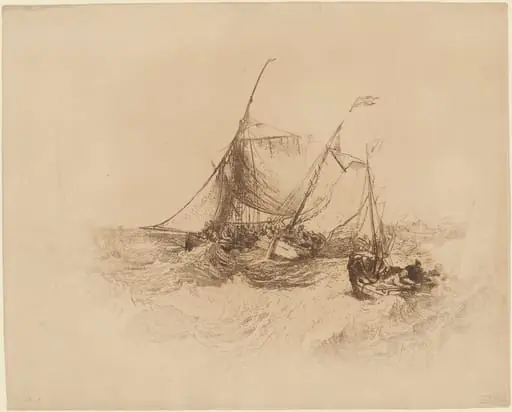
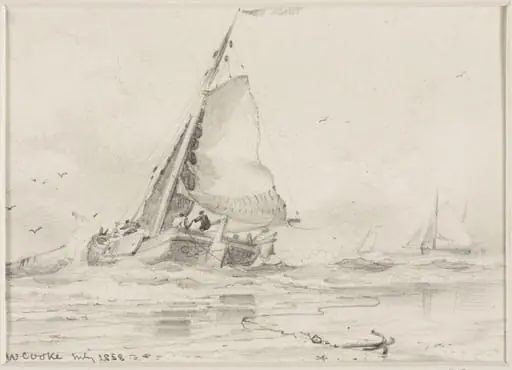
The composition centers on the boat’s precarious position amid towering waves, with no horizon to offer reassurance.
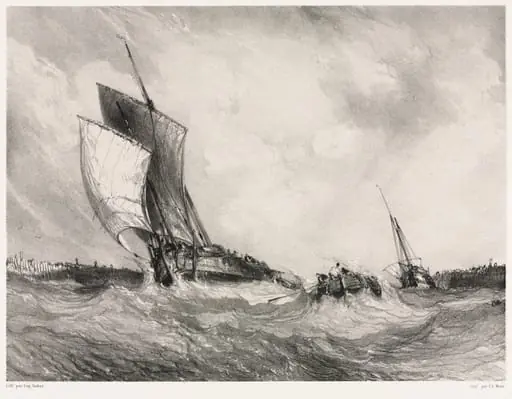
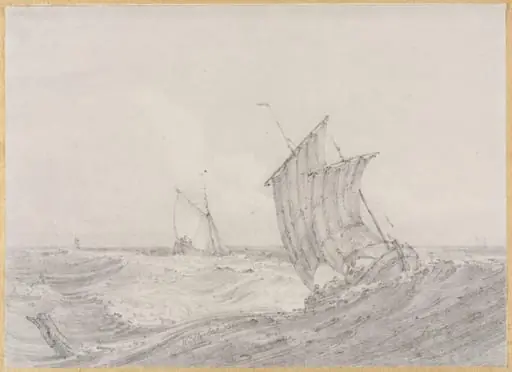
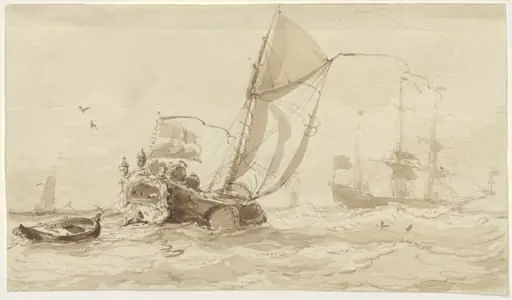
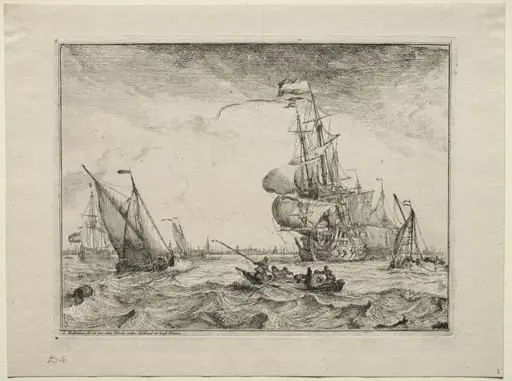
Created in 1803 by Robert Blyth, this etching captures a small vessel engulfed by a violent sea. Rendered in monochrome on laid paper, the print conveys the fragility of human effort against nature’s force. The composition centers on the boat’s precarious position amid towering waves, with no horizon to offer reassurance. The absence of color heightens the tension, focusing attention on form, motion, and texture.
Subject & Meaning
The scene depicts sailors struggling to maintain control of their boat as waves crash over the deck. Figures are shown bracing against ropes, their postures suggesting exhaustion and urgency. The storm is not merely weather but an overwhelming presence, indifferent to human struggle. The image evokes vulnerability and resilience, reflecting common maritime anxieties of the early 19th century without romanticizing the danger.
Technique & Style
Blyth employed etching to achieve fine, incised lines that define the turbulence of water and sky. The contrast between dense, shadowed waves and the jagged, white crests creates rhythmic movement. Each wave is uniquely shaped, avoiding repetition to enhance realism. The sky’s swirling clouds are rendered with loose, energetic strokes, reinforcing the sense of chaos. The paper’s texture subtly enhances the tactile quality of the scene.
History & Provenance
The print was produced in 1803 during a period when maritime themes were common in British printmaking, often tied to naval service or commercial shipping. While Blyth’s broader career remains poorly documented, this work survives in institutional collections, suggesting it was circulated among collectors or used as a study piece. No known early ownership records exist, but its preservation indicates recognition of its technical merit.
Context
In the early 1800s, Britain’s reliance on sea trade and naval power made maritime imagery culturally significant. Artists frequently depicted storms to convey both danger and heroism, often for audiences familiar with seafaring life. Blyth’s work aligns with this tradition but avoids grandeur, focusing instead on intimate, visceral struggle. It reflects a shift toward realism in printmaking, away from idealized naval scenes.
Legacy
Though not widely reproduced or celebrated in its time, the etching endures as a quiet example of early 19th-century British printmaking. Its emphasis on natural force over narrative drama distinguishes it from more theatrical contemporaries. Today, it serves as a reference for how etching could convey emotional intensity through line and tone, influencing later artists interested in the sublime in everyday scenes.
Artist & collection