Artwork
Homeward Bound
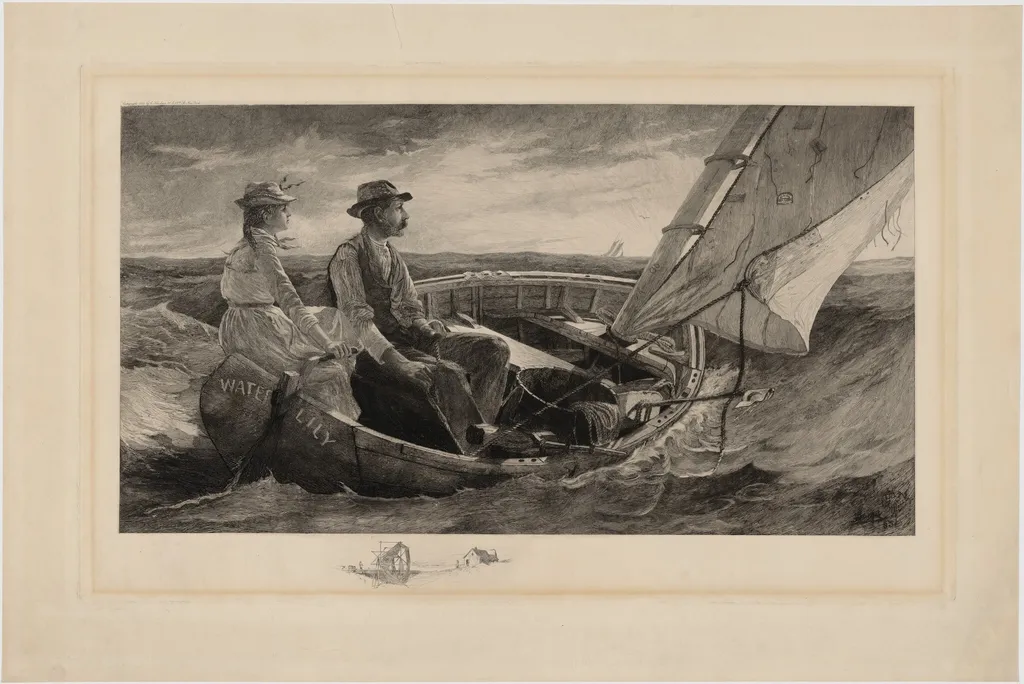
Homeward Bound is an ink print by the Impressionist artist Henry Pruett Share. It dates from 1885 and is held in the collection of the National Gallery of Art.
About this work
Overview
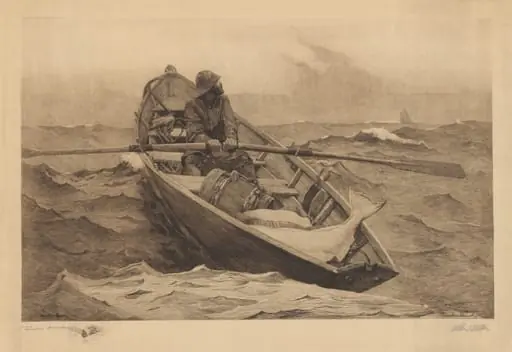
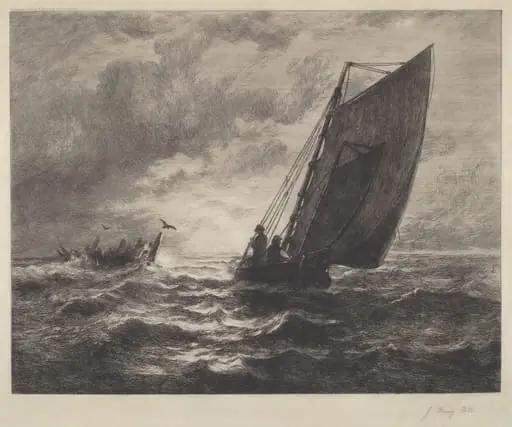
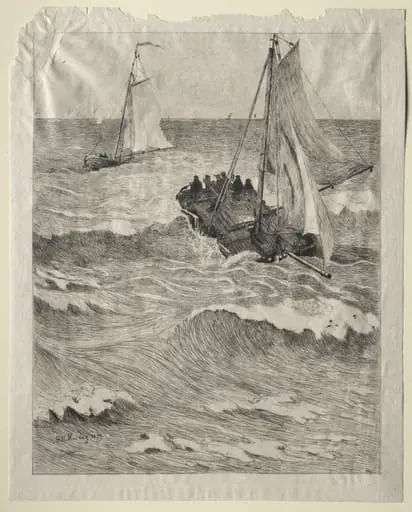
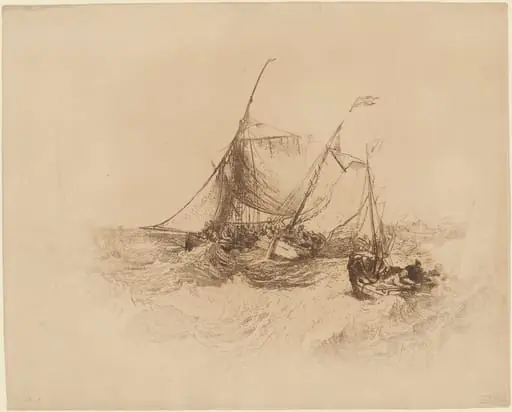
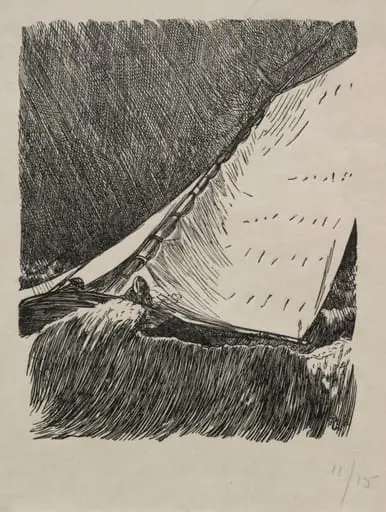
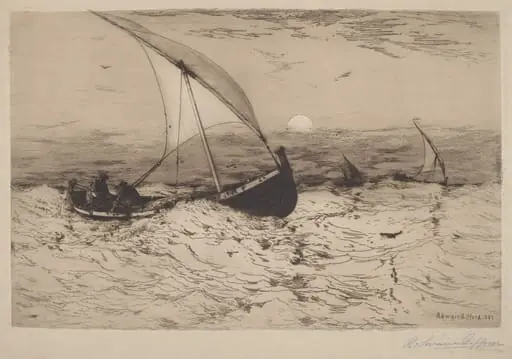
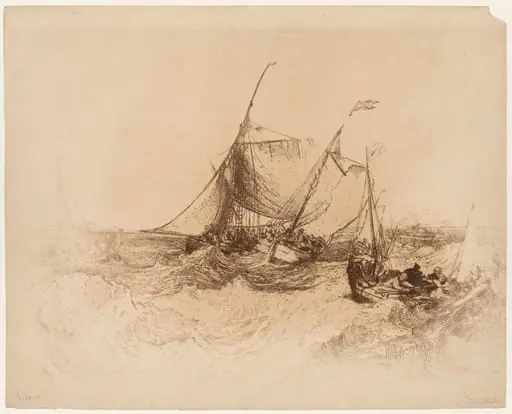
Homeward Bound is a black-and-white etching produced by Henry Pruett Share in 1885. The print depicts a small boat struggling through turbulent waters, with two figures aboard: a man rowing at the bow and a woman seated behind him, clutching a heavy sack marked 'WARE.' The scene is framed by a capsized vessel and a faint shoreline under a brooding sky, conveying a sense of peril and endurance.
Subject & Meaning
The figures in the boat appear to be survivors, their posture and the labeled sack suggesting they carry essential goods after a maritime disaster.
The figures in the boat appear to be survivors, their posture and the labeled sack suggesting they carry essential goods after a maritime disaster. The overturned sailboat in the background implies recent catastrophe, while the distant bridge hints at a fragile hope of landfall. The composition emphasizes vulnerability and resilience, focusing on quiet determination amid natural chaos rather than overt drama.
Technique & Style
Share employed fine, incised lines typical of etching to render the churning waves and tense human forms. The contrast between sharp, angular strokes in the water and softer, blurred contours of the distant shore creates depth and movement. A small auxiliary sketch in the corner, depicting another wreck, functions as a narrative footnote, expanding the scene’s implied history without overwhelming the main image.
History & Provenance
Created in 1885, Homeward Bound emerged during a period when etching experienced a revival among American artists seeking intimate, detailed expression. While little is documented about Share’s personal life, the print reflects broader 19th-century interests in maritime themes and human struggle against nature. Its survival in institutional collections suggests early recognition within printmaking circles.
Context
In the late 19th century, American printmakers often turned to seascapes and laboring figures to explore themes of endurance and isolation. Homeward Bound aligns with this trend, echoing the realism of contemporary illustrations in newspapers and magazines that depicted coastal life and shipwrecks. The work avoids romanticism, instead presenting a grounded, unembellished moment of survival.
Legacy
Though not widely reproduced, Homeward Bound remains a quiet example of American etching’s capacity for narrative economy. Its restrained composition and attention to detail reflect the medium’s strength in conveying complex stories through line and tone. It continues to be studied for its technical precision and understated emotional resonance within the history of printmaking.
Artist & collection