Artwork
January and May
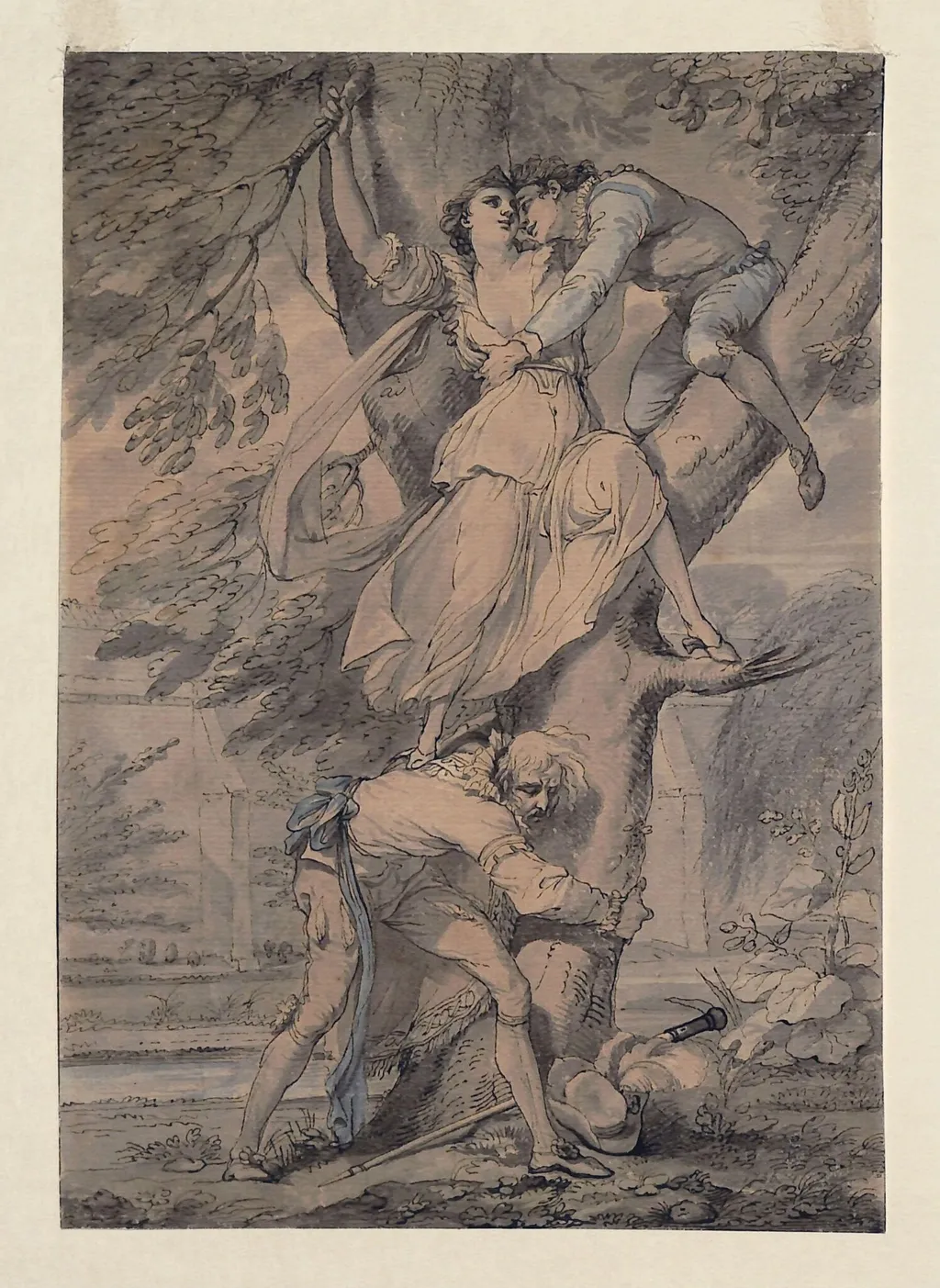
January and May is a watercolor work on paper by the Rococo painting artist Hamilton Mortimer. It dates from 1770 and is held in the collection of the Victoria and Albert Museum.
About this work
Overview
The composition emphasizes emotional tension through quiet gestures and restrained color, characteristic of late 18th-century literary illustration.
Painted in 1770 by Hamilton Mortimer, this watercolour depicts a moment from Chaucer’s Merchant’s Tale. Rendered in muted tones of gray, brown, and subtle blue, the scene captures a dramatic encounter between a human figure holding a child and a hovering, winged entity. The composition emphasizes emotional tension through quiet gestures and restrained color, characteristic of late 18th-century literary illustration.
Subject & Meaning
The scene illustrates the moment in Chaucer’s tale when the supernatural figure of Pluto, the Roman god of the underworld, intervenes in the mortal world. The winged form, with outstretched arms, suggests divine authority or cosmic intervention, while the grounded figure with the child embodies human vulnerability. The imagery reflects medieval moral allegory, where earthly actions are observed and judged by higher powers.
Technique & Style
Mortimer employs soft watercolour washes to model form with subtle gradations of tone, creating a sense of volume without heavy outline. The use of chiaroscuro enhances the three-dimensionality of the figures, particularly in the drapery and the hovering entity’s wings. The palette remains deliberately subdued, reinforcing the somber, otherworldly mood and directing focus to the emotional exchange between the figures.
History & Provenance
Created in 1770, the watercolour was likely produced as part of a series illustrating Chaucer’s tales, a popular project among British artists and patrons of the period. It remained in private collections through the 19th century before entering a public institution. Its survival in good condition reflects its status as a carefully preserved example of literary illustration from the Georgian era.
Context
In the late 18th century, there was renewed interest in medieval literature among British intellectuals and artists. Chaucer’s tales, with their rich characters and moral themes, provided fertile ground for visual interpretation. Mortimer’s work aligns with this trend, blending classical imagery with literary narrative to appeal to educated audiences seeking cultural refinement through art.
Legacy
Though not widely exhibited today, the watercolour stands as a quiet example of how 18th-century artists engaged with medieval texts through visual storytelling. Its restrained aesthetic and careful attention to emotional nuance reflect a broader shift toward introspective, literary-inspired art, influencing later illustrators who sought to translate narrative depth into visual form.
Artist & collection
Artist
Hamilton Mortimer painted lively watercolours in the 1700s, full of characters and storytelling.

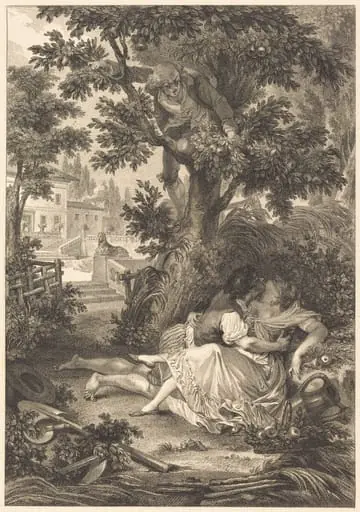 La gageure des trois commeres: Le poirier
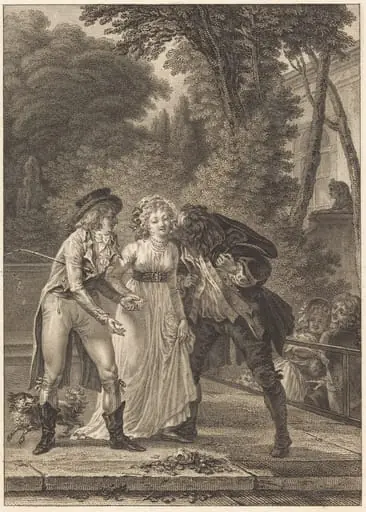 Le baiser rendu: Le baiser rendu
 La gageure des trois commeres: Le poirier
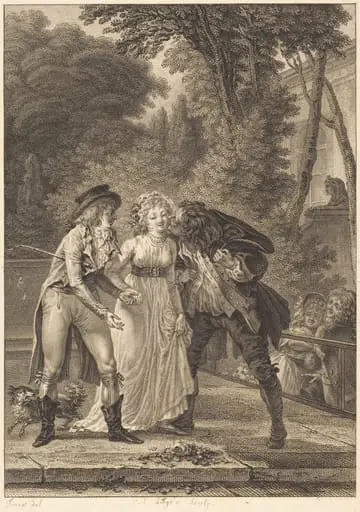 Le baiser rendu: Le baiser rendu
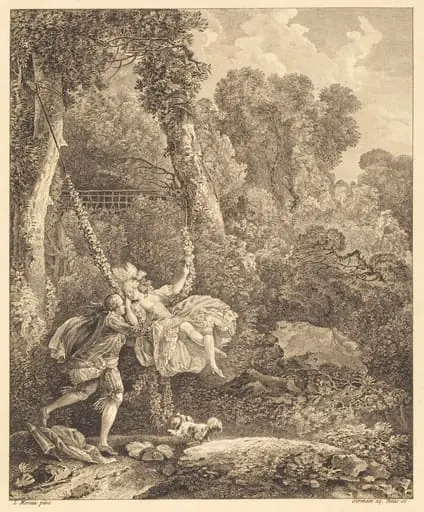 On y court plus d'un danger
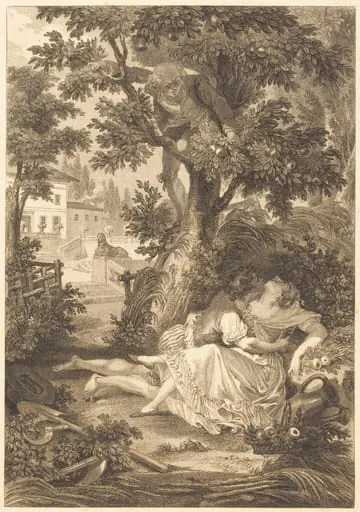 La gageure des trois commeres: Le poirier
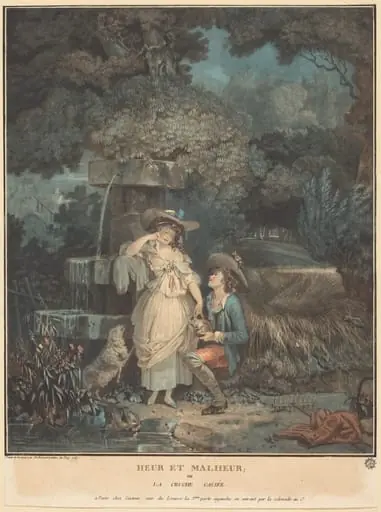 Heur et Malheur, ou la Cruche cassée
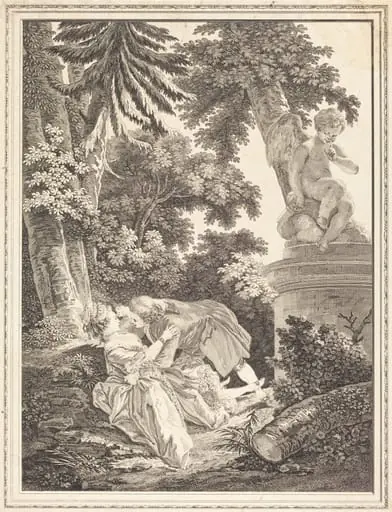 La nuit
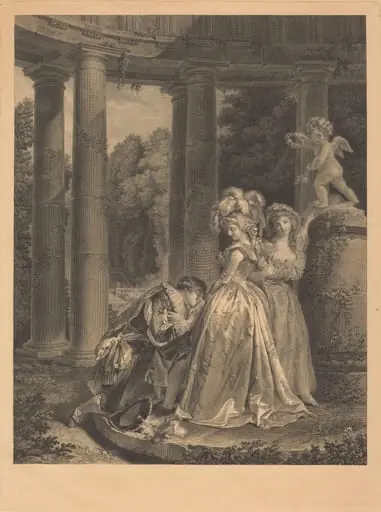 La Declaration
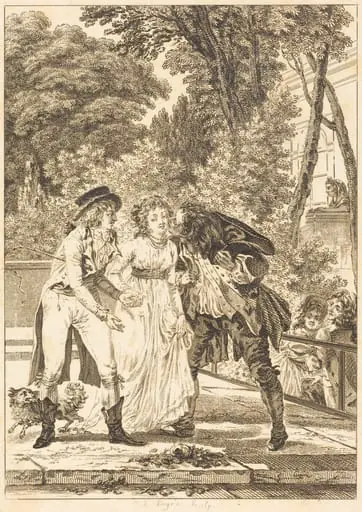 Le baiser rendu: Le baiser rendu
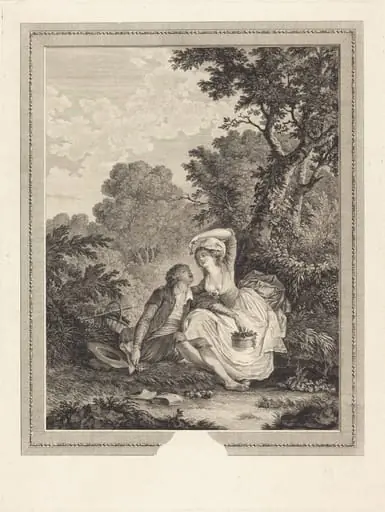 Les sabots
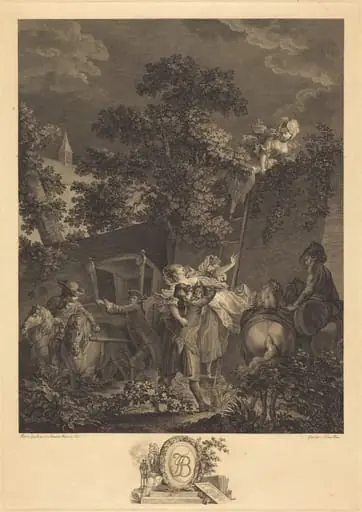 L'enlevement nocturne