Artwork
The Sompnour, the Devil, and the Widow
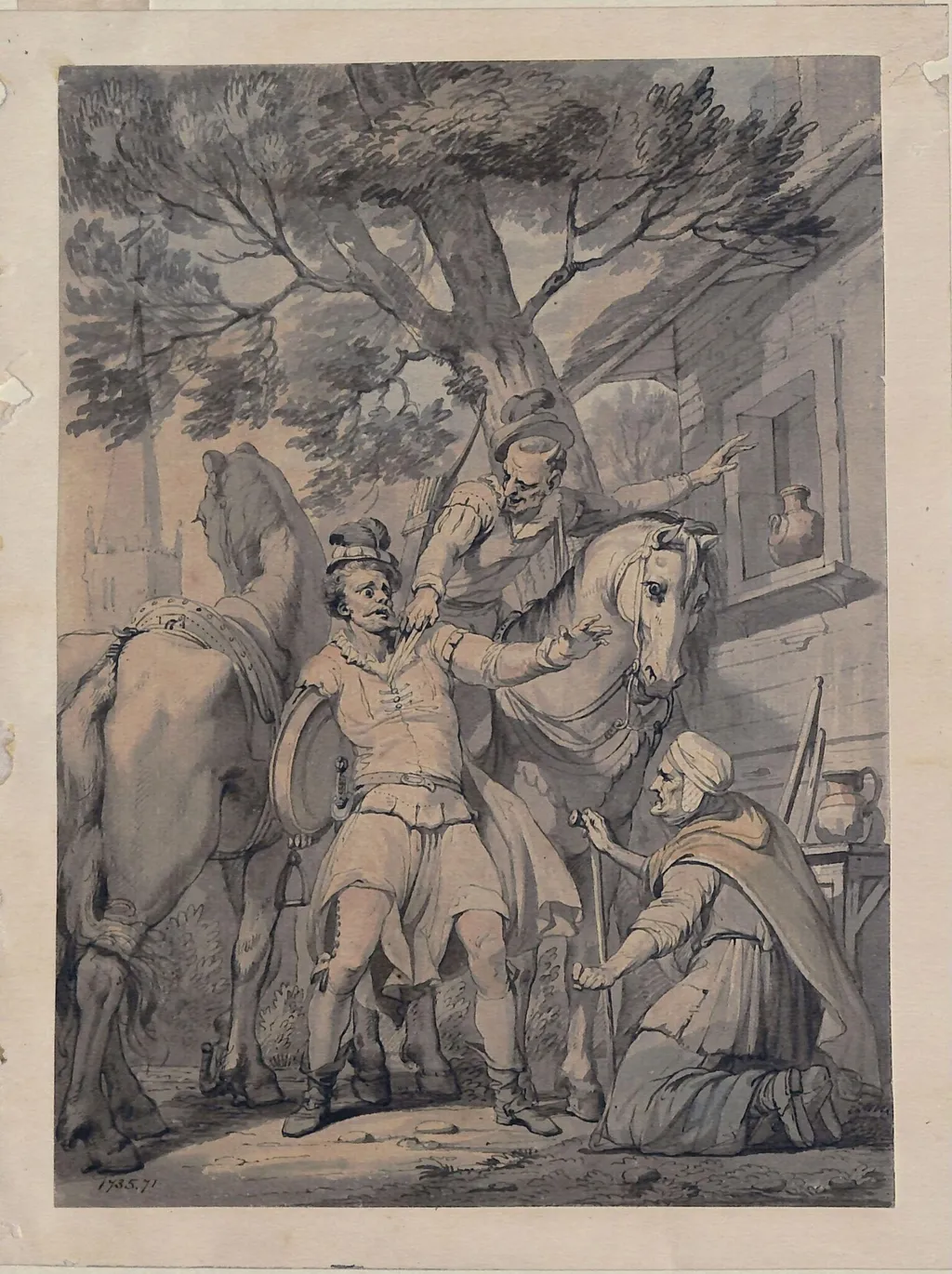
The Sompnour, the Devil, and the Widow is a watercolor work on paper by the Rococo painting artist Hamilton Mortimer. It dates from 1770 and is held in the collection of the Victoria and Albert Museum.
About this work
Overview
The scene captures a confrontation between a corrupt church official, the Devil, and a widow, rendered in loose, expressive brushwork.
Created in 1770 by Hamilton Mortimer, this watercolour illustrates a moment from Chaucer’s Friar’s Tale within The Canterbury Tales. The scene captures a confrontation between a corrupt church official, the Devil, and a widow, rendered in loose, expressive brushwork. The medium’s fluidity enhances the sense of motion and emotional urgency, aligning with the narrative’s moral tension. The composition is tightly framed by dense foliage and rocky terrain, isolating the figures in a moment of moral reckoning.
Subject & Meaning
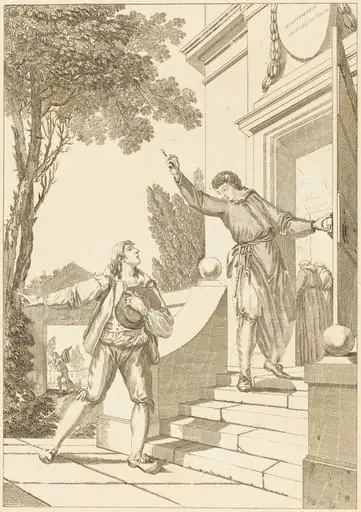
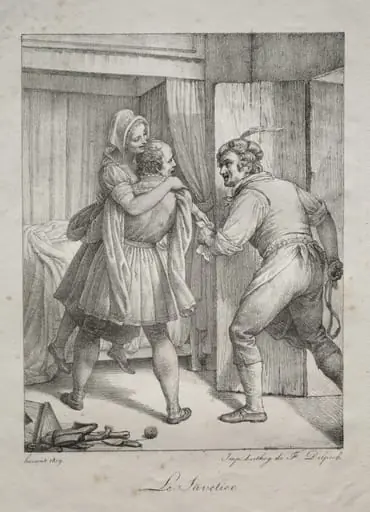
The scene depicts the Sompnour, a church official known for extortion, being confronted by the Devil, who has taken the form of a summoner. The widow, whose husband the Sompnour had wronged, watches as divine justice unfolds. The Devil’s presence reveals the Sompnour’s hypocrisy—his sins have made him vulnerable to the very evil he pretends to combat. The kneeling figure pointing to the widow’s home underscores the quiet resilience of the oppressed.
Technique & Style
Mortimer employed quick, sketchy watercolour strokes to convey movement and psychological intensity. The figures are defined by gestural lines rather than precise detail, emphasizing their emotional states. Washes of diluted pigment suggest shadow and depth without heavy modeling, while the background remains loosely rendered to focus attention on the central drama. The technique reflects an interest in narrative immediacy over polished finish.
History & Provenance
This work is one of several illustrations Mortimer produced for Chaucer’s tales in the late 18th century, likely as part of a private commission or scholarly project. It was never published widely and remained in private hands until the 20th century. Its survival is attributed to its inclusion in a small collection of literary illustrations, reflecting contemporary interest in medieval literature during the Romantic era’s revival of antiquarian themes.
Context
In the 1770s, English artists increasingly turned to literary subjects as a means of moral and historical reflection. Chaucer’s tales, with their vivid social critiques, offered fertile ground for visual interpretation. Mortimer’s illustration aligns with a broader trend of illustrating classical and medieval texts, often to underscore contemporary concerns about corruption, justice, and religious authority in Georgian society.
Legacy
Though not widely exhibited during Mortimer’s lifetime, this watercolour contributes to a modest but significant body of 18th-century literary illustration. It stands as a quiet example of how medieval narratives were reimagined through early modern visual language. Its emphasis on emotional gesture over historical accuracy influenced later illustrators seeking to capture the moral urgency of Chaucer’s characters.
Artist & collection
Artist
Hamilton Mortimer painted lively watercolours in the 1700s, full of characters and storytelling.