Artwork
David and Abigail
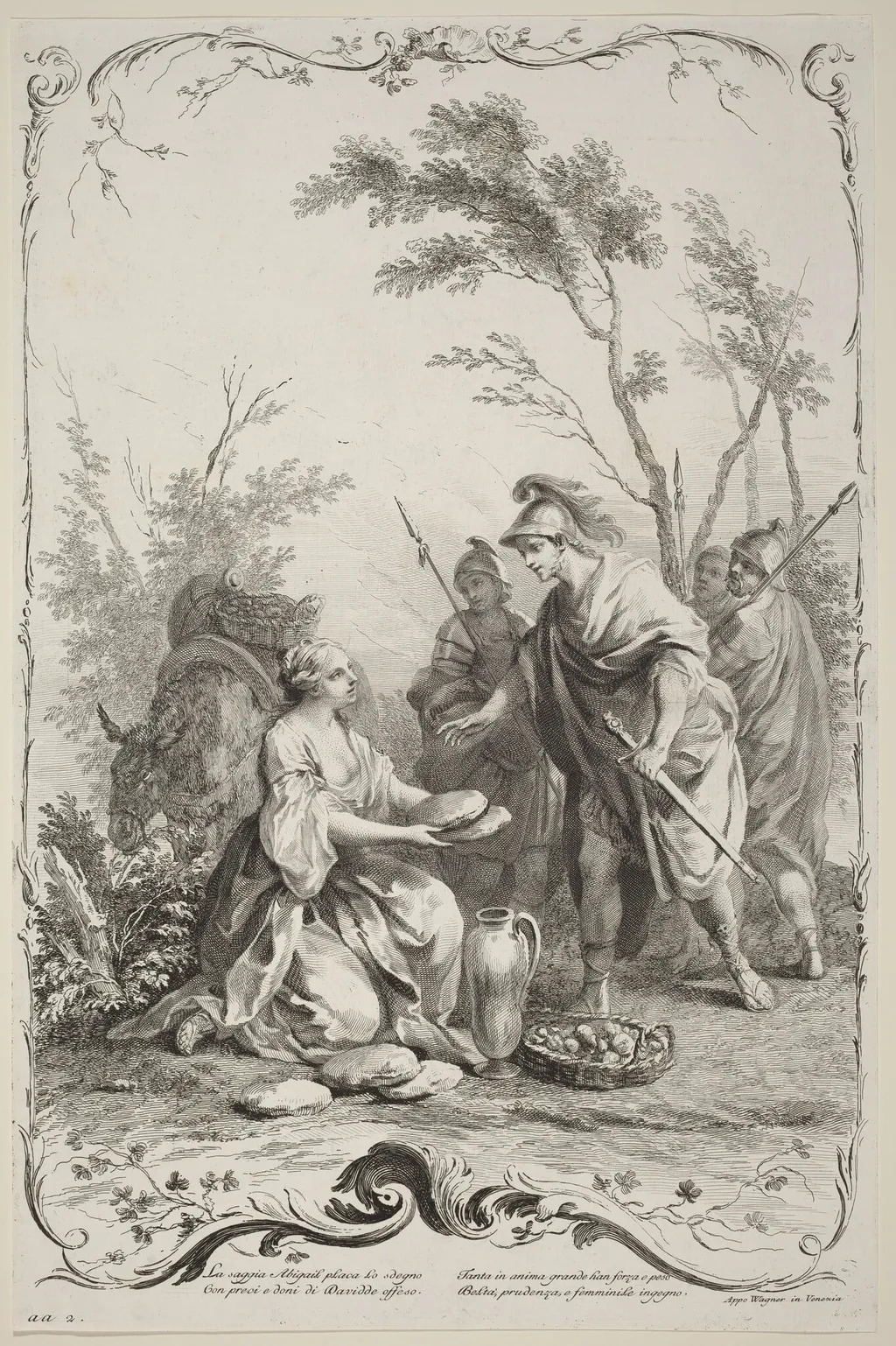
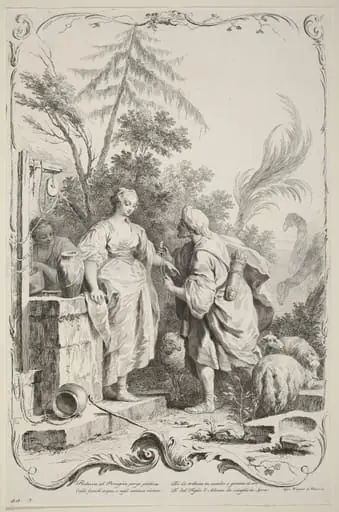
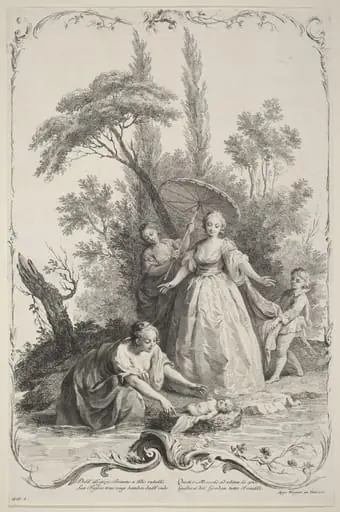
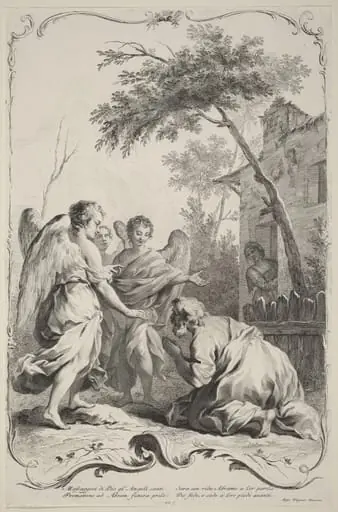
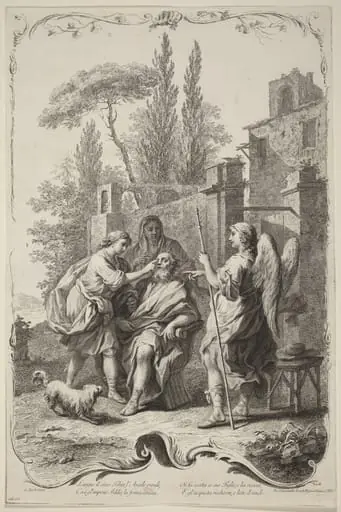
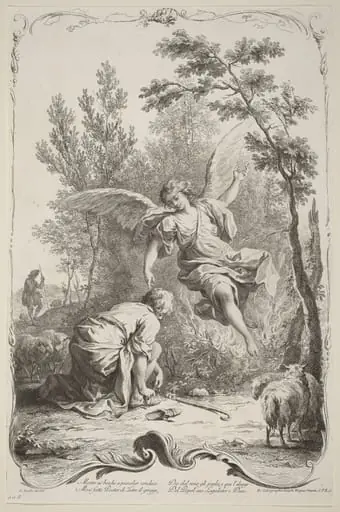
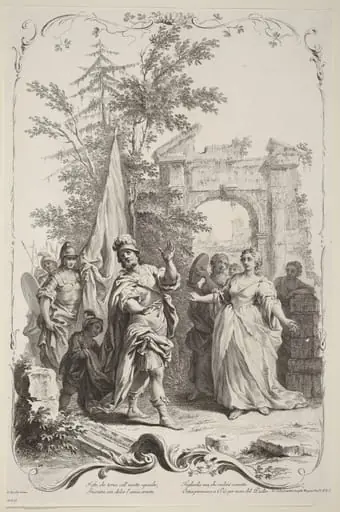
David and Abigail is an ink print by the Baroque artist Joseph Wagner. It dates from 1745 and is held in the collection of the National Gallery of Art.
About this work
Overview
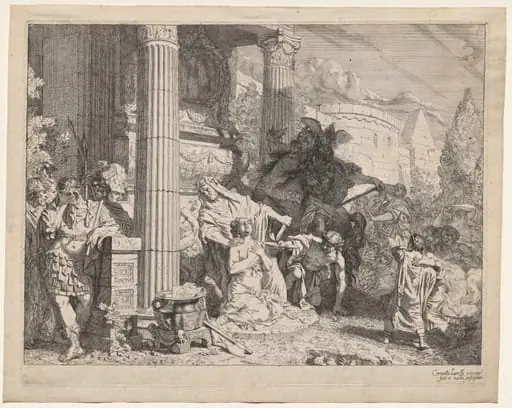
Joseph Wagner’s print David and Abigail, executed around 1745, is a black‑and‑white work on laid paper. The image presents a biblical scene in which both King David and the woman Abigail are shown kneeling, with a small sheep in the background. Abigail holds a basket of food, a gesture meant to pacify David’s fury.
Subject & Meaning
The composition captures the moment described in the First Book of Samuel, when Abigail intervenes to avert David’s wrath after her husband’s insult. By depicting the two figures at the same level, Wagner emphasizes the act of mediation, while the presence of the grazing sheep adds a pastoral calm that contrasts with the tension of the narrative.
Technique & Style
Wagner combined etching with dry‑point on a copper plate, incising lines that vary from delicate, feathered strokes to crisp, defined edges. After inking the plate, the image was transferred to laid paper, producing a surface where soft tonal transitions coexist with sharply rendered details, a hallmark of his printmaking approach.
Context
Produced in the mid‑eighteenth century, the print reflects the period’s interest in biblical subjects rendered for a broad audience. Wagner, active in London’s print market, often employed a mix of line qualities to convey narrative depth, and this work aligns with his broader oeuvre of religious and historical scenes.
Artist & collection