Artwork
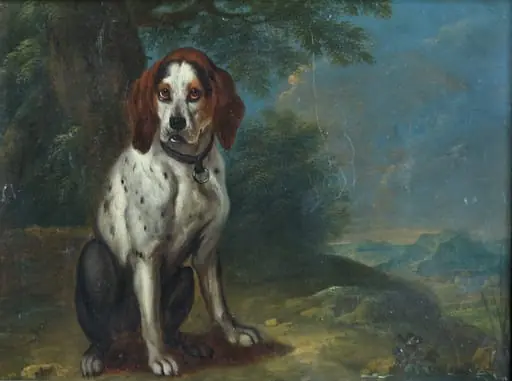
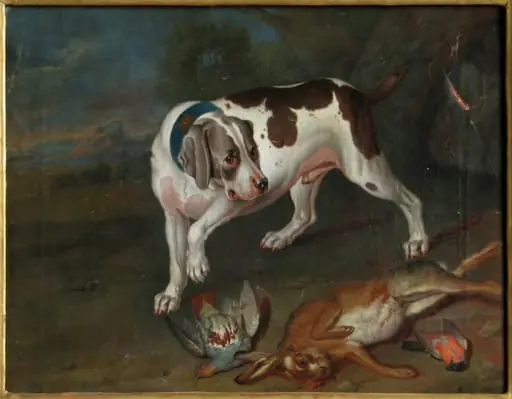
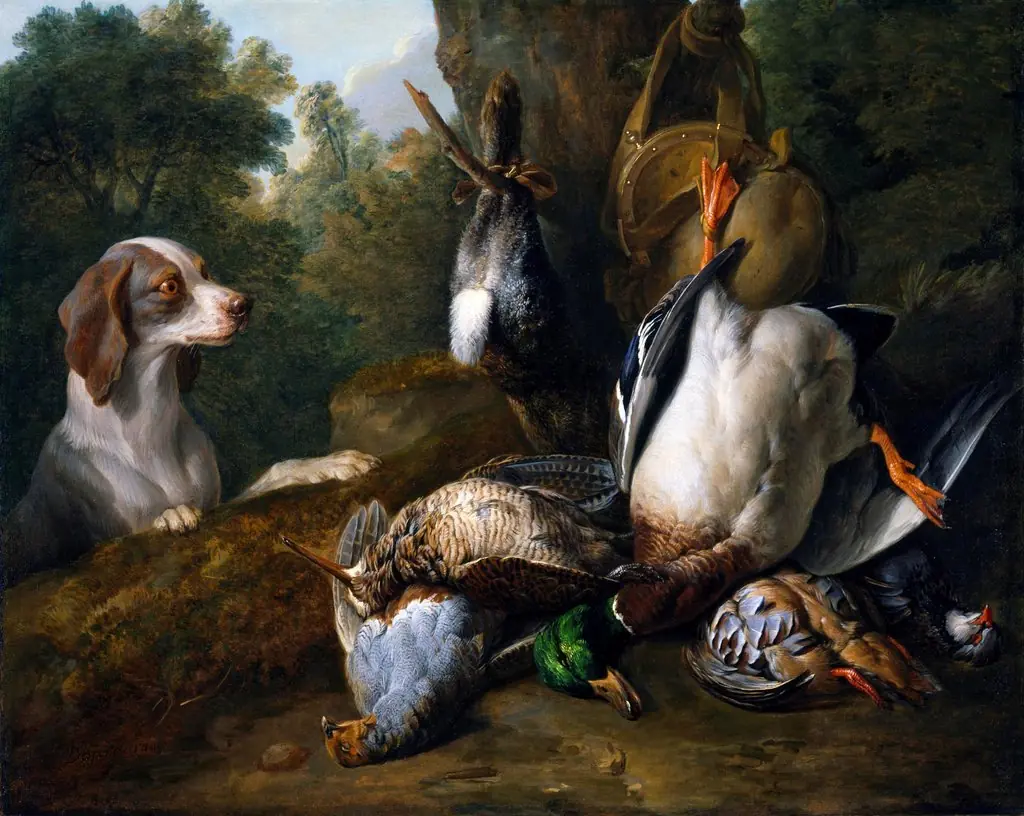
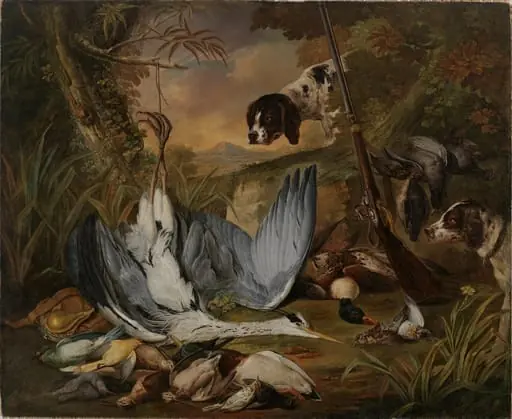
Rațe sălbatice gonite de un câine. Pandant: Rațe sălbatice gonite de un câine flocos
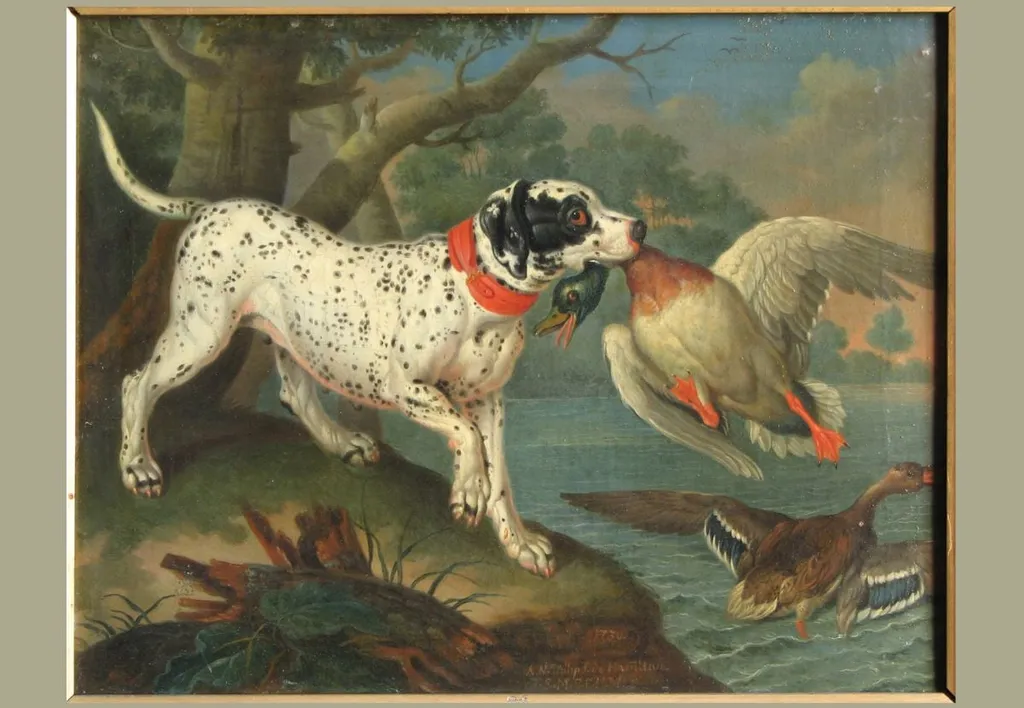
Rațe sălbatice gonite de un câine. Pandant: Rațe sălbatice gonite de un câine flocos is an unspecified painting by the Baroque artist Philipp Ferdinand de Hamilton. It dates from 1730 and is held in the collection of the Brukenthal National Museum.
About this work
Overview
Rațe sălbatice gonite de un câine is a painting by Philipp Ferdinand de Hamilton, created circa 1730 in the Rococo style. It forms a pair with its pendant, Rațe sălbatice gonite de un câine flocos.
Subject & Meaning
The painting captures a fleeting moment of a wild duck in mid-air, being chased by a white dog with black spots and an orange collar, set against a serene landscape backdrop. The dynamic scene conveys energy and movement.
Technique & Style
Hamilton employs detailed naturalistic rendering, characteristic of his animal paintings. The work showcases skilled use of light and shadow to add depth, alongside a thoughtful composition that directs the viewer’s attention to the central chase.
History & Provenance
Created around 1730 by Philipp Ferdinand de Hamilton, a Southern Netherlands painter active in Austria, the painting is part of the Rococo movement. Note: The original description mistakenly attributes the painting to the Baroque style, which is incorrect given its Rococo characteristics.
Context
Part of the Rococo movement, this piece reflects the era’s emphasis on lighthearted, natural themes. Hamilton’s work in Austria during this period contributed to the regional interpretation of Rococo aesthetics.
Legacy
While specific lasting impacts of *Rațe sălbatice gonite de un câine* are not broadly documented, it remains a representative example of Hamilton’s contribution to 18th-century Rococo animal painting.
Artist & collection
Artist
Philipp Ferdinand de Hamilton (c. 1664 – 1750), was an 18th-century painter from the Southern Netherlands active in Austria.