Artwork
Count Philip Bellicosus
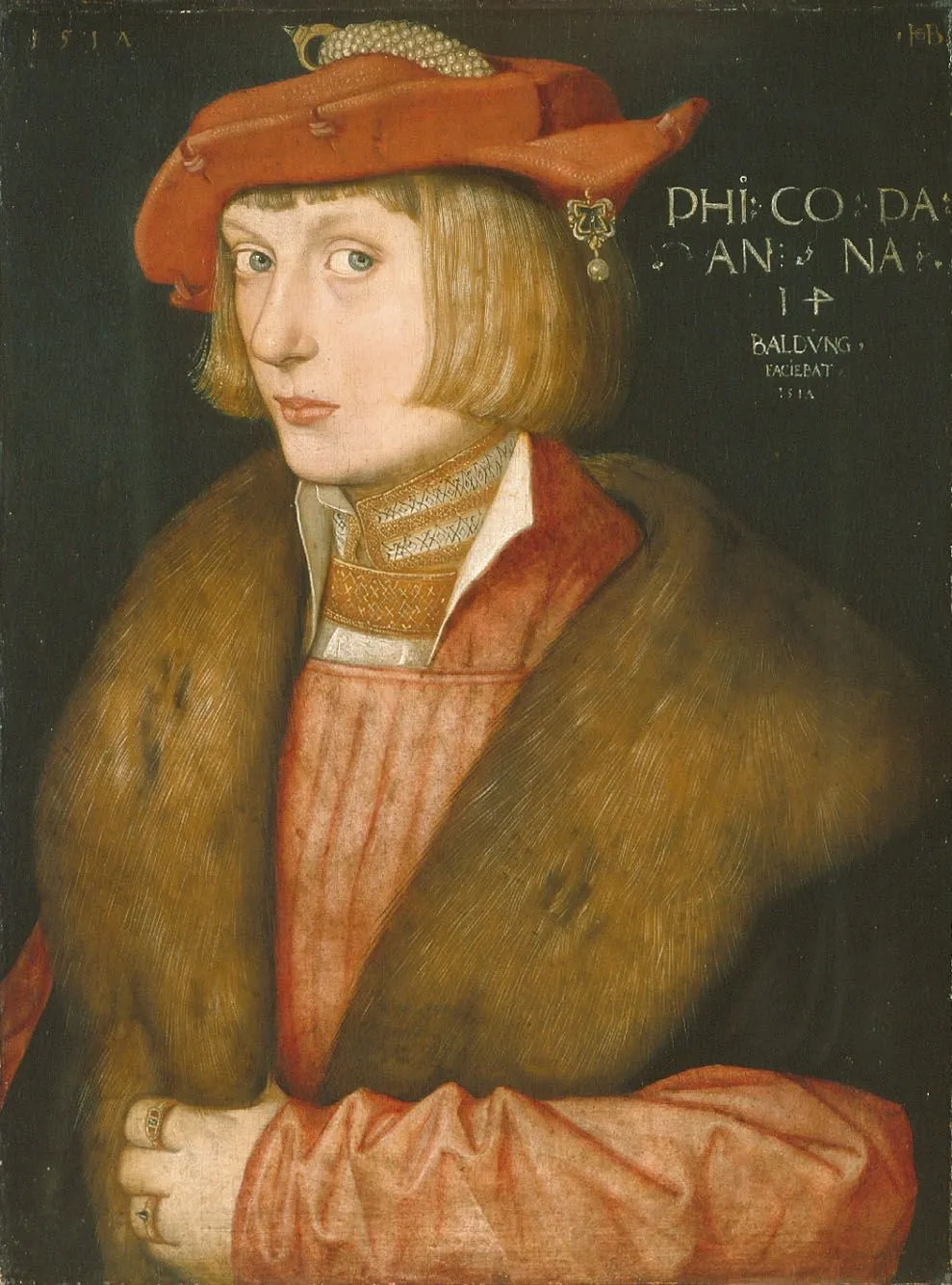
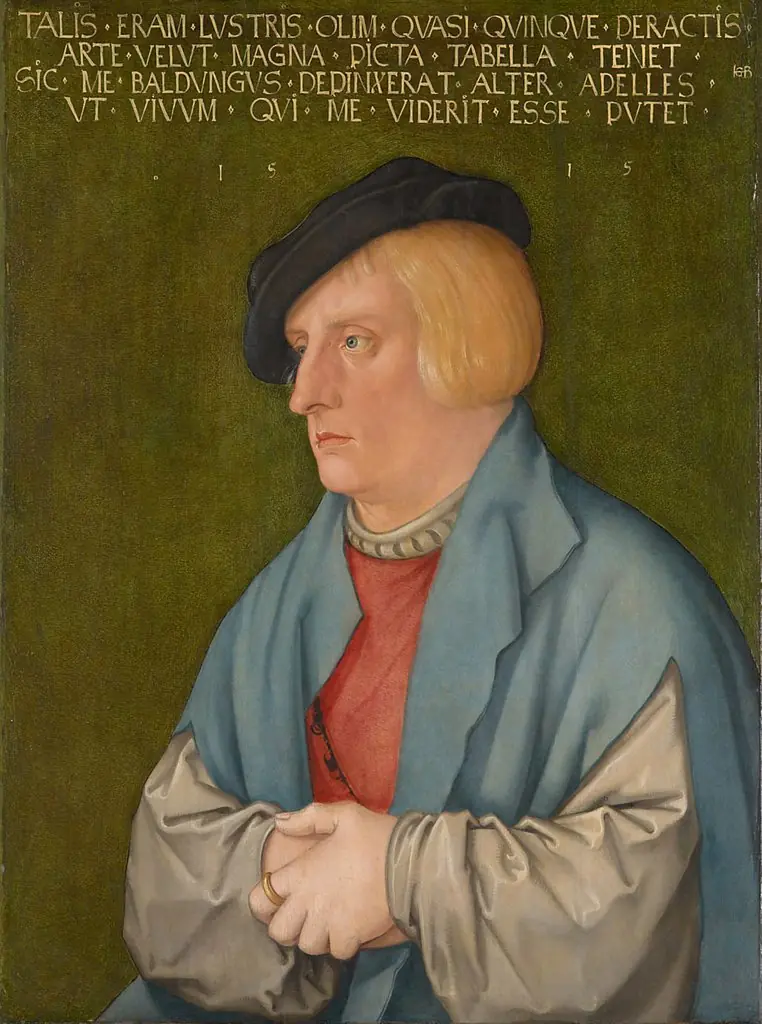
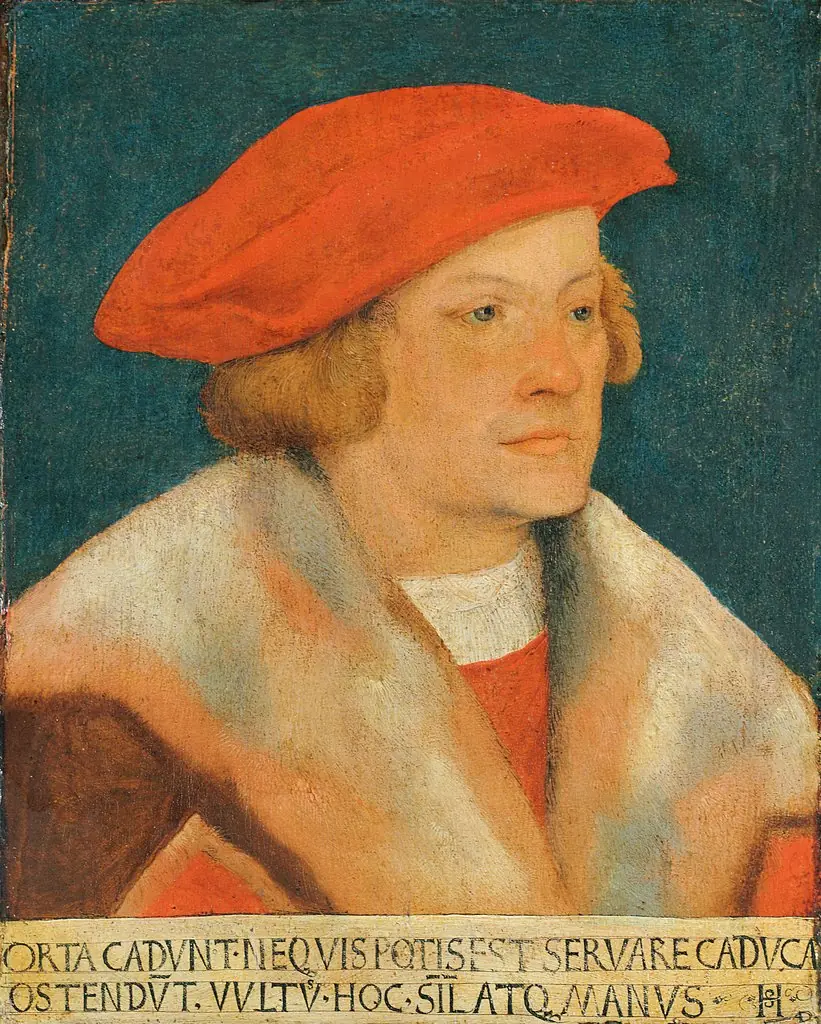
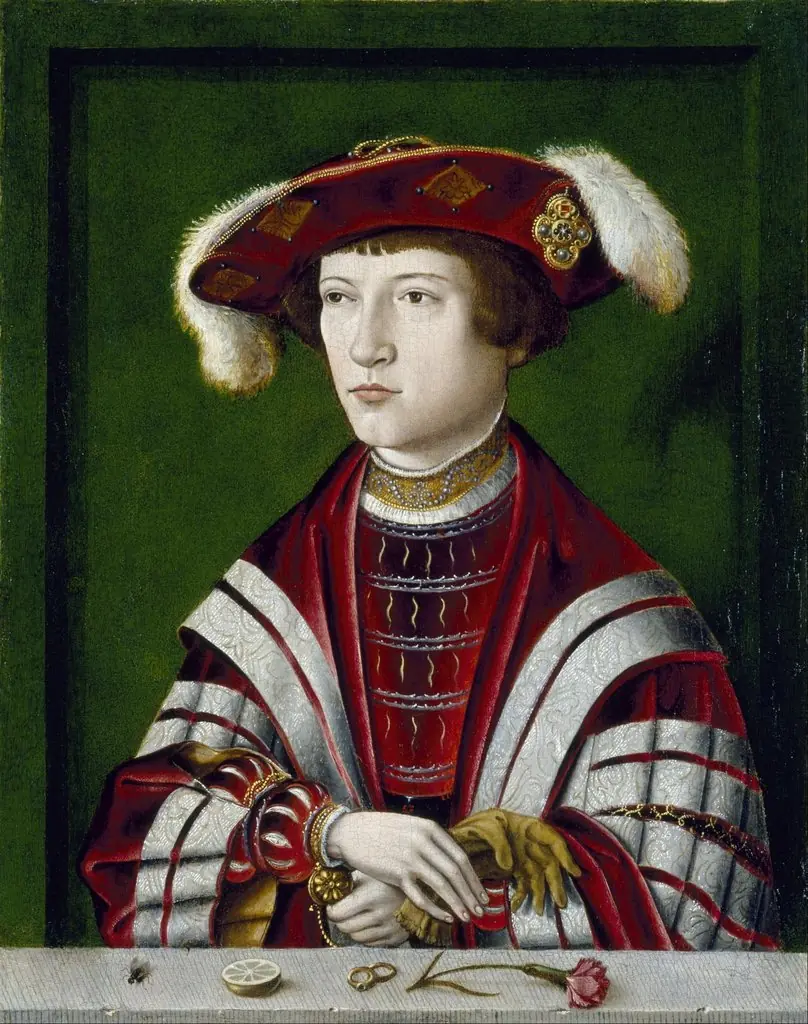
Count Philip Bellicosus is an oil painting by the Northern Renaissance artist Hans Baldung Grien. It dates from 1517 and is held in the collection of the Bavarian State Painting Collections.
About this work
He’s wearing a bright red hat with a feather sticking up, a fur-lined coat, and a red robe with gold trim.
This portrait shows a young man in fancy clothes. He’s wearing a bright red hat with a feather sticking up, a fur-lined coat, and a red robe with gold trim. His hands rest on his chest, and he has a calm, serious look. The background is plain black, so all the focus is on him.
The name on the painting reads *Philip* and the date *1517*, hinting this might be someone important. The artist used soft shadows to make his face look three-dimensional.
Next, look up Hans Baldung Grien to see how his style compares to other artists of the time.
Overview
Hans Baldung Grien’s 1517 oil portrait presents Philip, Duke of Palatinate‑Neuburg, in a formal pose. Rendered on a dark ground, the figure dominates the composition, his attire and bearing indicating high status. The work exemplifies the Northern Renaissance’s attention to detail and the emerging interest in individualized portraiture.
Subject & Meaning
The sitter, identified by the inscription “Philip” and the date, is a young nobleman dressed in luxurious garments—a red hat with a plume, a fur‑trimmed coat, and a red robe edged in gold. His hands rest on his chest and his expression is composed, conveying both confidence and the dignified bearing expected of a ducal figure.
Technique & Style
Baldung employs subtle chiaroscuro to model the face, creating a sense of three‑dimensionality against the flat black background. The handling of the fabrics shows fine brushwork, especially in the rendering of fur and the sheen of the silk, reflecting the artist’s training under Albrecht Dürer and his later Mannerist tendencies toward expressive detail.
History & Provenance
The portrait has been part of the Alte Pinakothek’s collection in Munich. Its provenance traces back to the early 16th‑century courts of the Palatinate, where it likely served as a formal representation of the duke for diplomatic or commemorative purposes.
Context
Created during a period when German artists were integrating Italian Renaissance ideas, the painting illustrates the Northern Renaissance’s blend of precise observation and symbolic ornamentation. Baldung’s work stands alongside contemporary portraiture that emphasized individual identity within a restrained, often austere setting.
Artist & collection
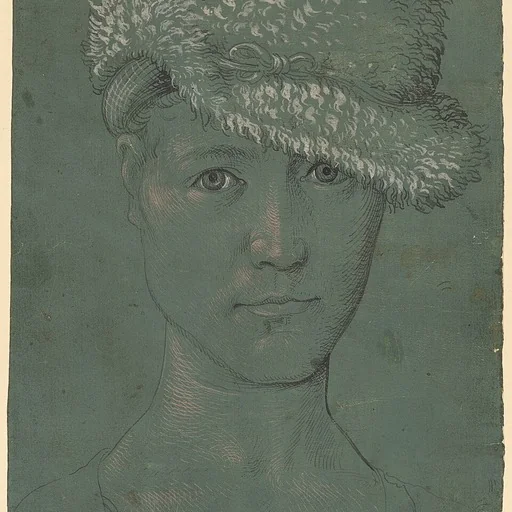
Artist
Hans Baldung (1484 or 1485 – September 1545), called Hans Baldung Grien, (being an early nickname, because of his predilection for the colour green), was a painter, printer, engraver, draftsman, and stained glass…