Artwork
Saint John Altarpiece
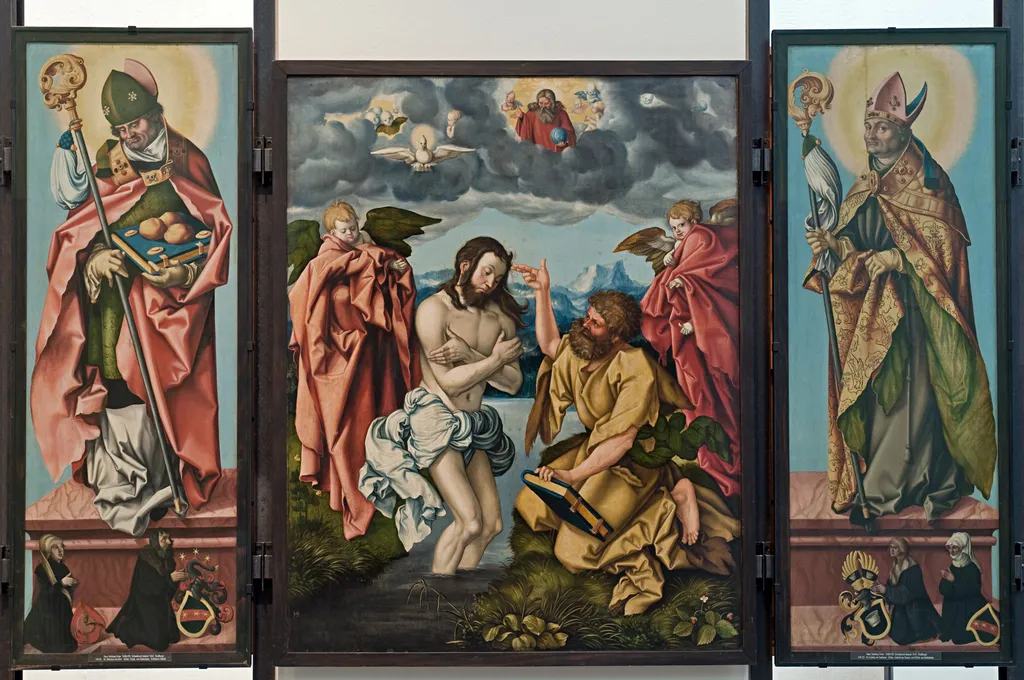
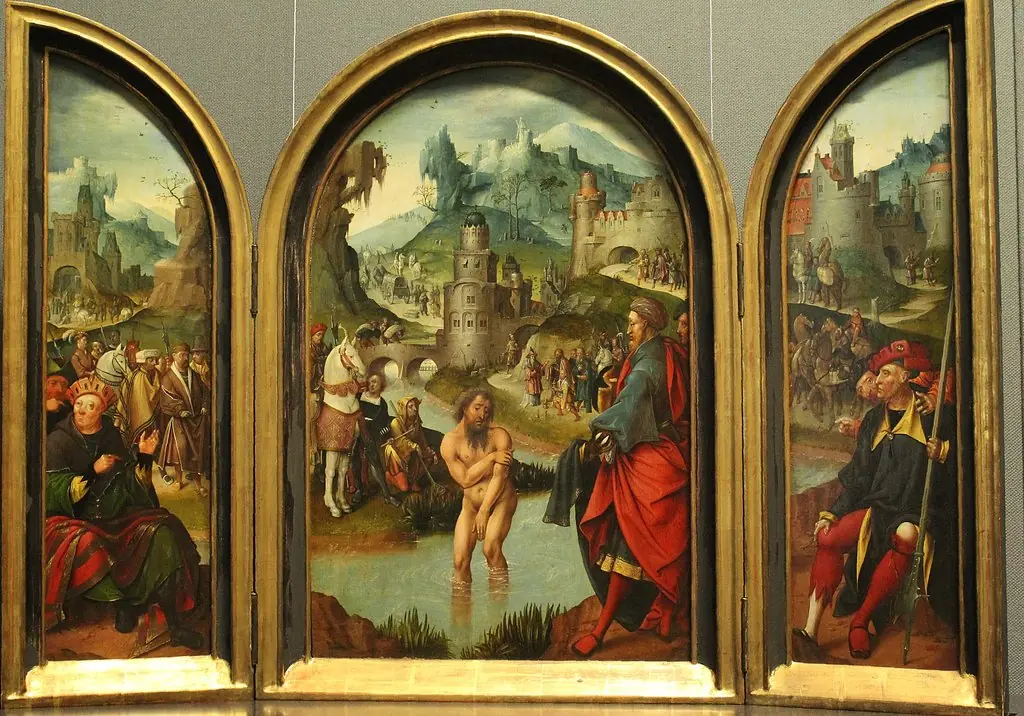
Saint John Altarpiece is a tempera painting by the Northern Renaissance artist Hans Baldung Grien. It dates from 1510 and is held in the collection of the Historical Museum Frankfurt.
About this work
Overview
The work was intended for liturgical use, likely in a church setting, and reflects the devotional priorities of early 16th-century religious art.
Created in 1510 by Hans Baldung Grien, this tempera-on-panel altarpiece consists of three distinct panels. It was produced during the German Renaissance, a period marked by a fusion of Northern European detail and emerging expressive forms. The work was intended for liturgical use, likely in a church setting, and reflects the devotional priorities of early 16th-century religious art. It remains part of the Städel Museum’s permanent collection in Frankfurt.
Subject & Meaning
The central panel portrays John the Baptist in the Jordan River, clad in a simple loincloth, gesturing toward his head as if in contemplation or prophecy. To his side, a seated figure—possibly a disciple or symbolic representation of the faithful—holds a book, suggesting scriptural reflection. Flanking angels reinforce the sacred nature of the moment. The side panels feature two bishops, likely donors or ecclesiastical patrons, their presence underscoring the altarpiece’s function as both spiritual aid and institutional statement.
Technique & Style
Baldung Grien employed tempera, a medium that allowed for fine detail and luminous color, particularly in the rendering of fabric folds and natural elements. The figures exhibit elongated proportions and heightened emotional expression, traits associated with early Mannerist tendencies. Clothing is rendered with meticulous attention to texture and pattern, while the landscape background remains stylized, balancing realism with symbolic intent.
History & Provenance
The altarpiece was commissioned for a religious context, likely a chapel or monastery, and remained in ecclesiastical hands until entering the Städel Museum’s collection. Its survival through the Reformation and subsequent secularizations speaks to its perceived artistic value. Documentation of its early ownership is limited, but its stylistic links to Baldung Grien’s other works from the same period support its attribution and dating.
Context
Produced during a time of religious upheaval, the altarpiece reflects the enduring power of traditional iconography even as Protestant critiques gained ground. Baldung Grien, trained under Dürer, navigated the tension between Catholic devotional norms and emerging humanist sensibilities. The inclusion of bishops as donors suggests continued support from institutional clergy, even as theological debates reshaped artistic patronage across Germany.
Legacy
Though not widely exhibited outside Germany, the altarpiece remains a significant example of Baldung Grien’s mature style and the transition from High Renaissance to Mannerist expression in Northern art. Its preservation in a major public collection ensures continued scholarly attention, particularly regarding the interplay of religious symbolism and individualized portraiture in early 16th-century German painting.
Artist & collection
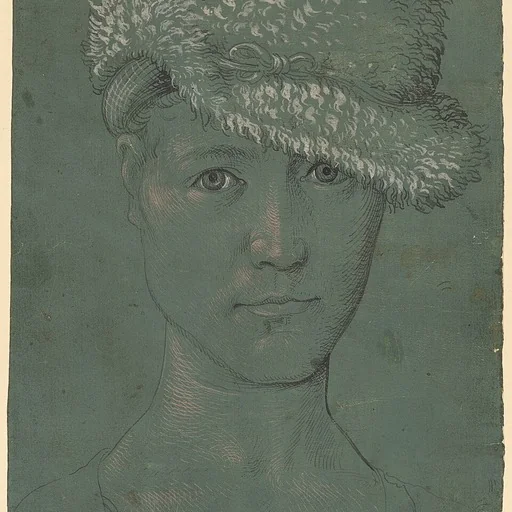
Artist
Hans Baldung (1484 or 1485 – September 1545), called Hans Baldung Grien, (being an early nickname, because of his predilection for the colour green), was a painter, printer, engraver, draftsman, and stained glass…


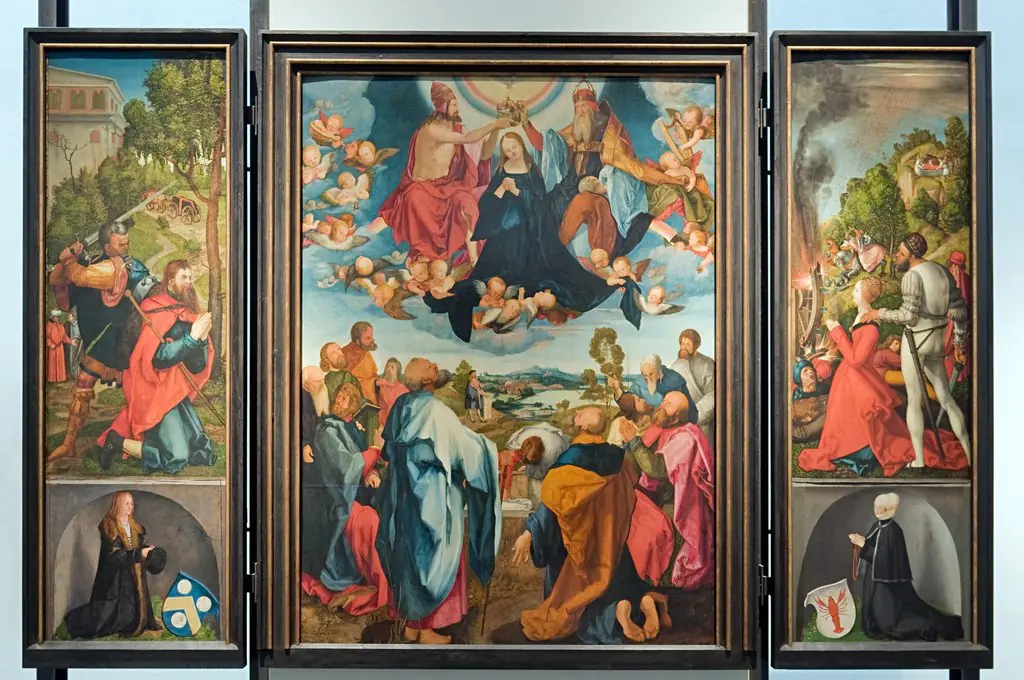 Heller Altarpiece
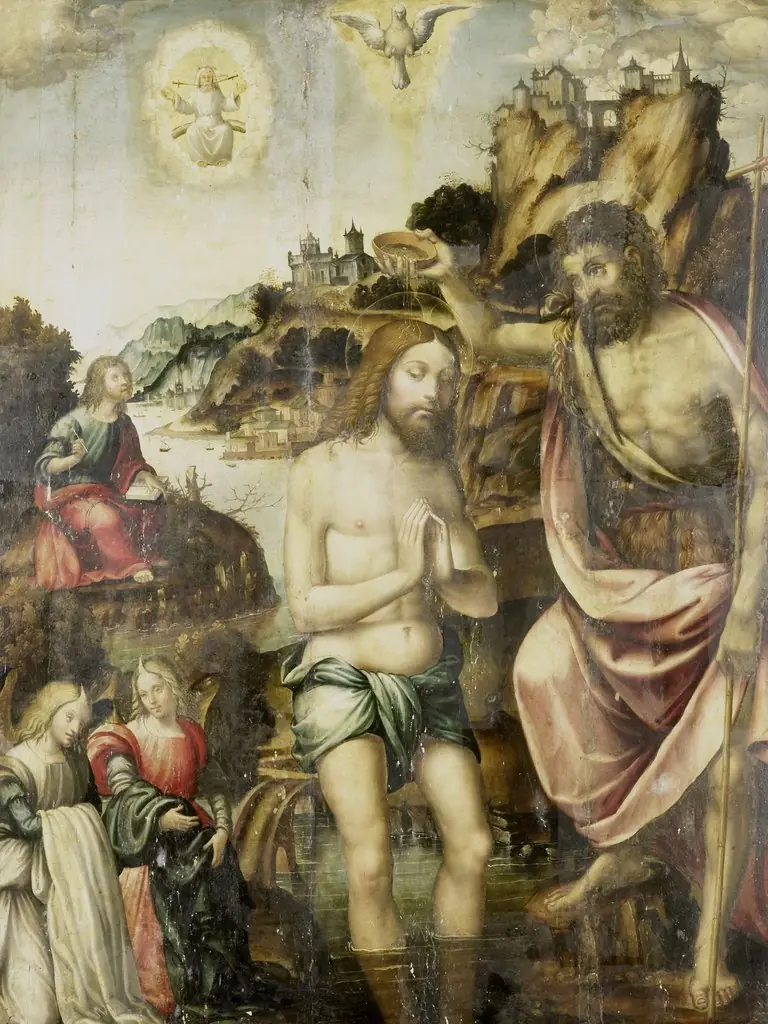 The Baptism of Christ
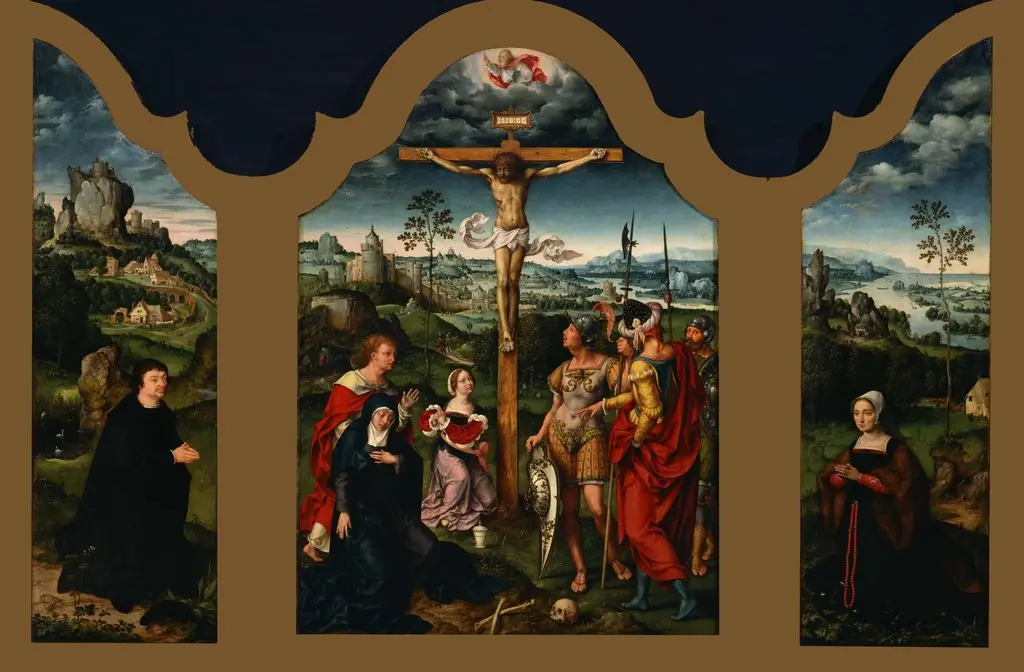 Triptych: The Crucifixion Flanked by the Kneeling Donor and His Wife
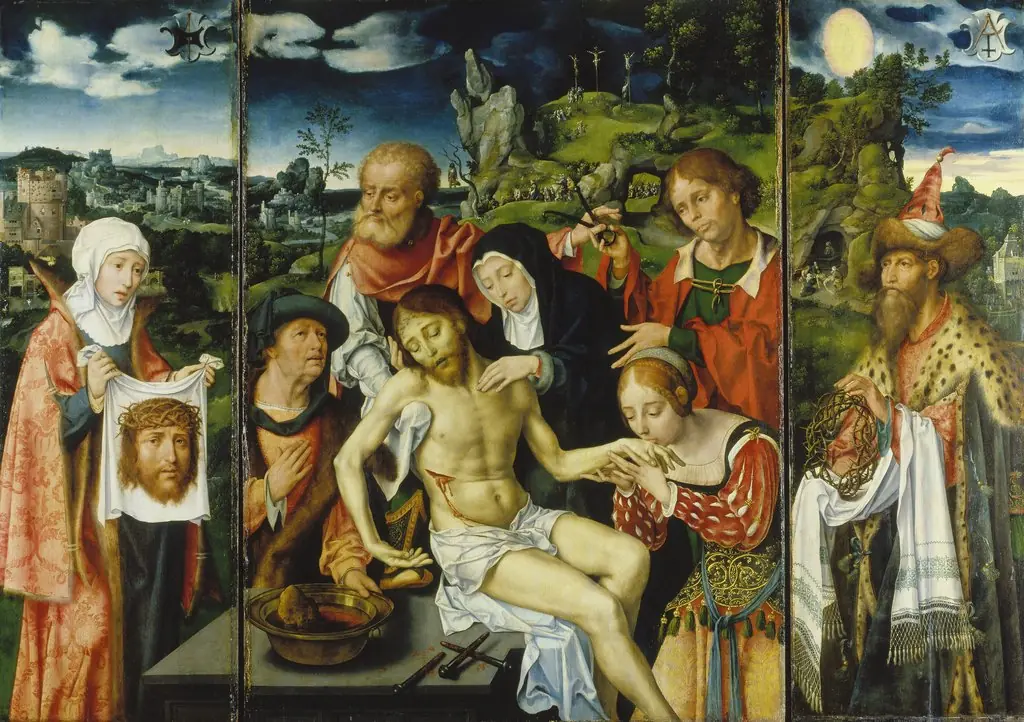 Triptych with the Lamentation of Christ
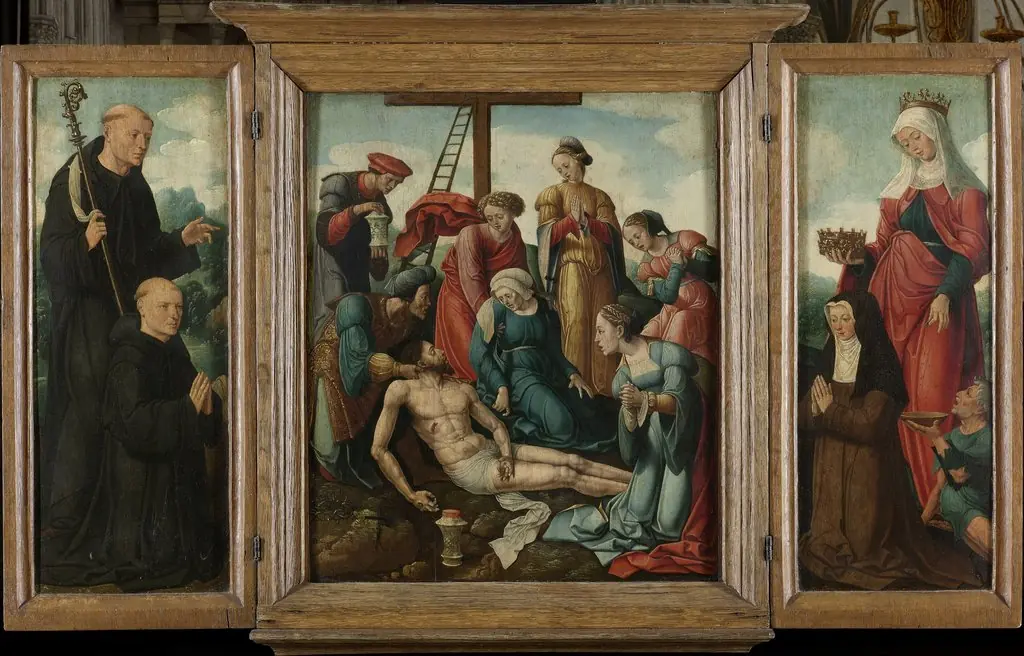 Triptych with the Lamentation of Christ (centre panel), the donor with St Benedict (inner left wing) and the donatrix with St Elizabeth of Thuringia (inner right wing)
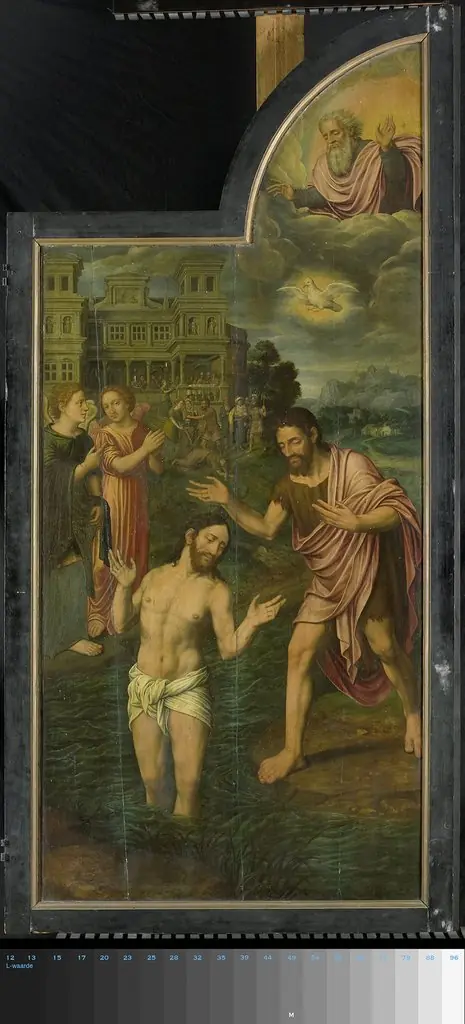 De doop van Christus in de Jordaan, rechter paneel van een drieluik (open)
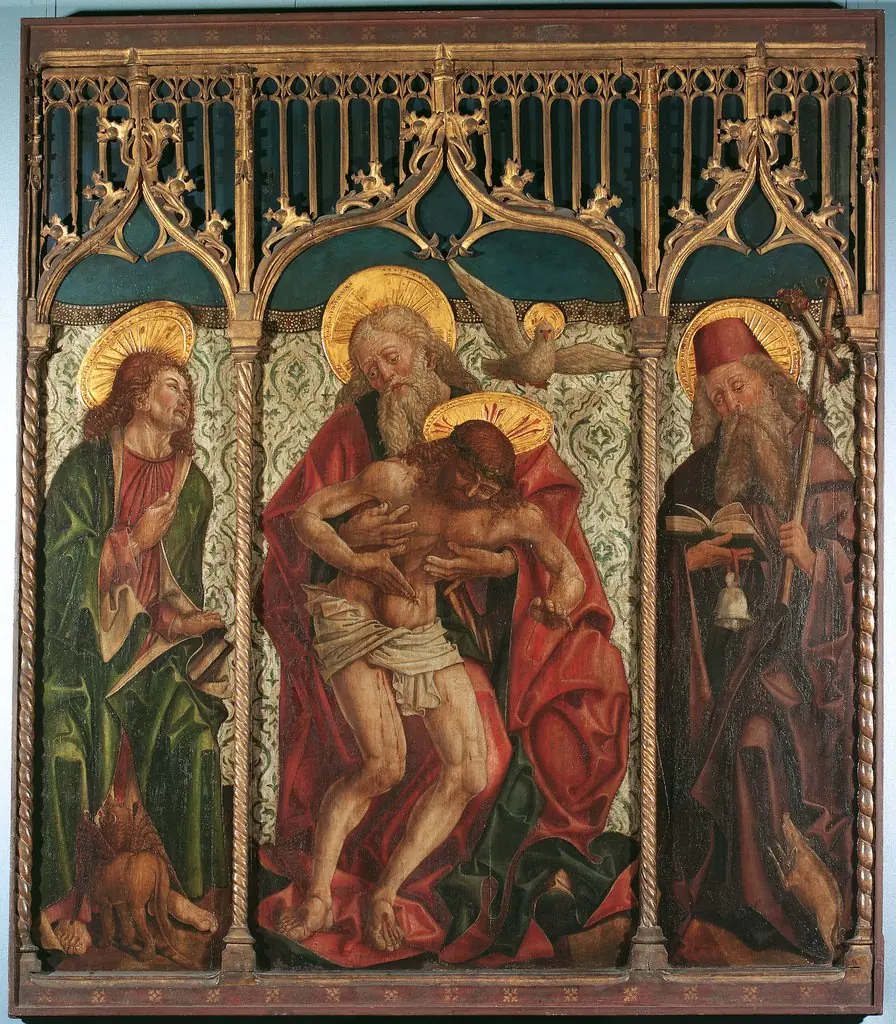 Hl. Dreifaltigkeit zwischen den hll. Markus und Antonius Eremita
 Flügelaltärchen (Flügel): Naam badet im Jordan; Seitenflügel: Hll. Cosmas und Damian