Artwork
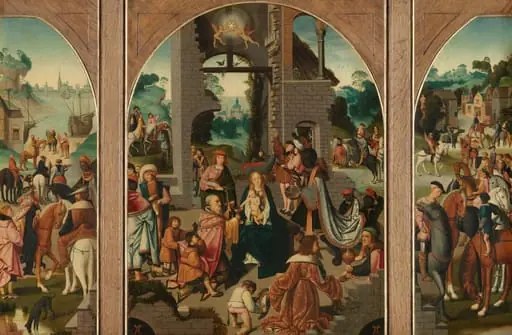
Flügelaltärchen (Flügel): Naam badet im Jordan; Seitenflügel: Hll. Cosmas und Damian
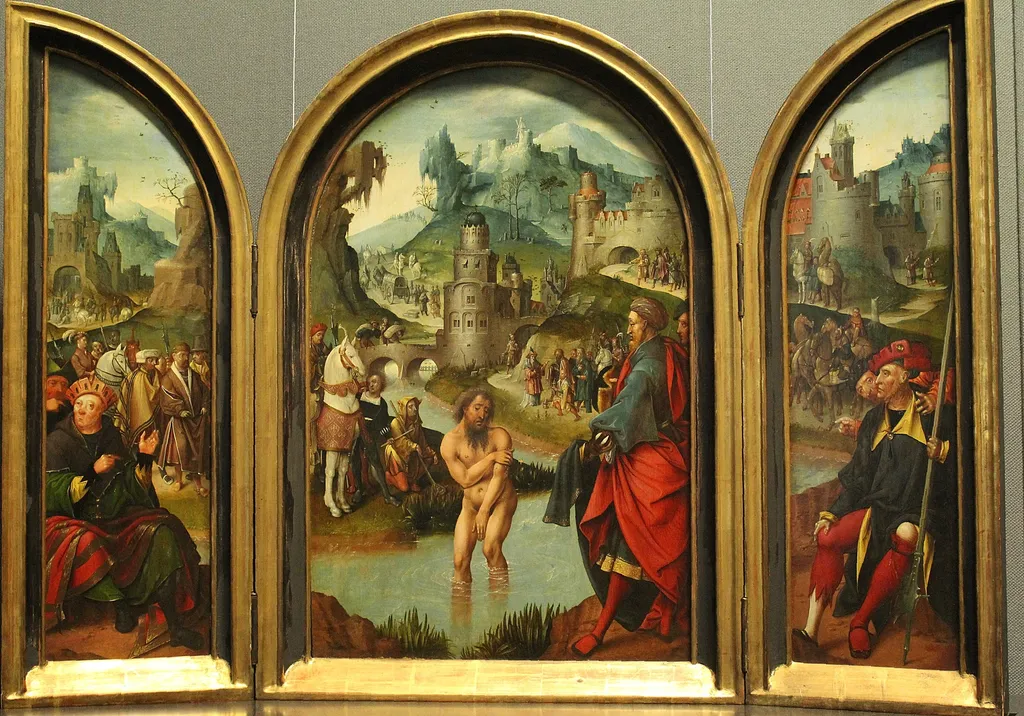
Flügelaltärchen (Flügel): Naam badet im Jordan; Seitenflügel: Hll. Cosmas und Damian is an unspecified painting by Unknown. It is held in the collection of the Kunsthistorisches Museum. The work is a triptych painted on a winged altar, each wing divided into three arched registers.
About this work
Overview
The left wing presents a crowned woman in a green dress, while the right wing depicts a man in a black coat with red trousers, holding a long staff.
The work is a triptych painted on a winged altar, each wing divided into three arched registers. The central register shows a figure standing in water, surrounded by a crowd that includes a man in a red robe. The left wing presents a crowned woman in a green dress, while the right wing depicts a man in a black coat with red trousers, holding a long staff. A distant castle and mountains rise behind the central scene, adding spatial depth.
Subject & Meaning
The central scene is traditionally interpreted as the baptism of a man named Naaman in the Jordan River, a biblical episode of purification and healing. The flanking panels likely represent saints associated with the altar’s dedication: the left panel with a crowned female figure may allude to a saintly queen, and the right panel to Saints Cosmas and Damian, who are often shown with a staff and distinctive attire.
Technique & Style
Executed in tempera on wood, the painting employs a clear division of space through arches that frame each narrative vignette. The artist uses a restrained palette of reds, greens, and earth tones, while detailed rendering of clothing and landscape elements—such as the distant castle and mountainous horizon—demonstrates a careful attention to both figure and setting.
History & Provenance
The triptych was created as the wing altarpiece (Flügelaltärchen) for a church altar, originally serving a liturgical function. Over time it was detached from its original setting and entered museum collections, where it is now displayed as an example of devotional panel painting.
Artist & collection

 Domestic Scene
 Giacomo and Cardinal Marco, investing Andrea, Abbot of San Zeno, with his Benefice
 The Nymph of Fontainebleau
 Portrait of a Woman
 Madonna and Child with Saints in the Enclosed Garden
 Venus and Minerva
 Family Group of Four on Sofa
 Wall painting from Room H of the Villa of P. Fannius Synistor at Boscoreale
 Triptych with the Crucifixion and Donors
 The Penitence of Saint Jerome
 Triptych with the Crucifixion
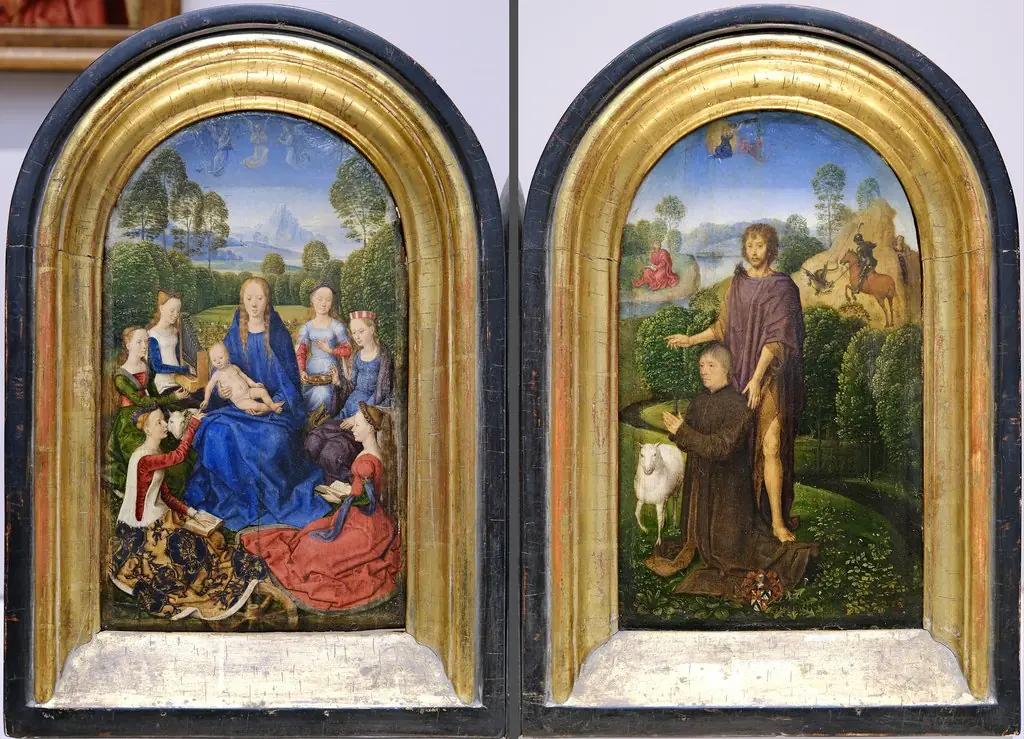 Diptych of Jan du Cellier
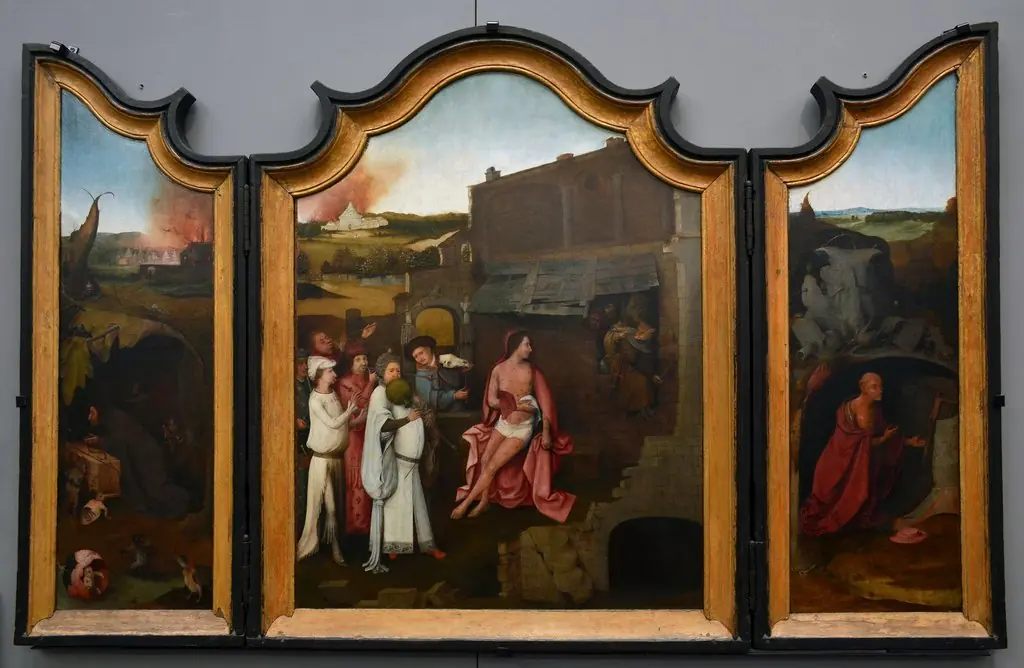 Job Triptych
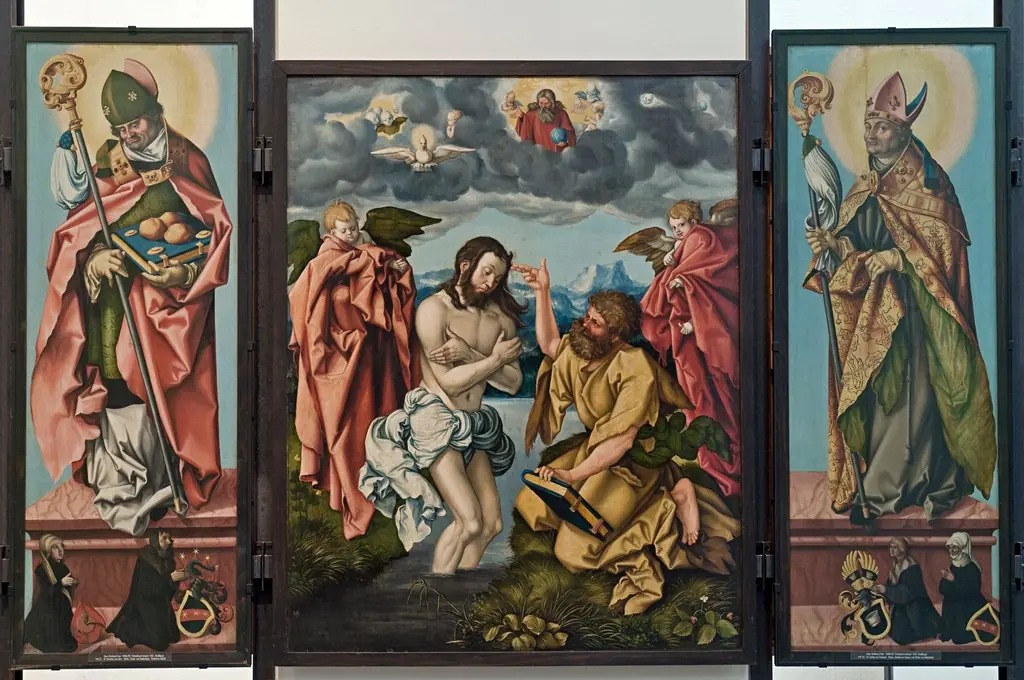 Saint John Altarpiece
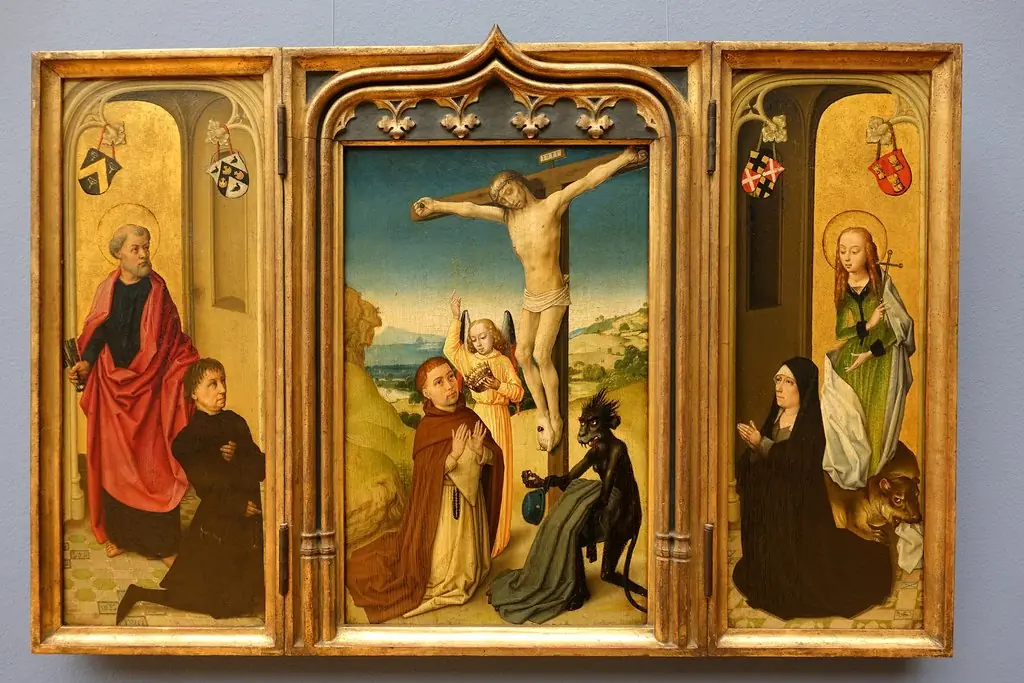 Triptychon des Pieter van de Woestyne
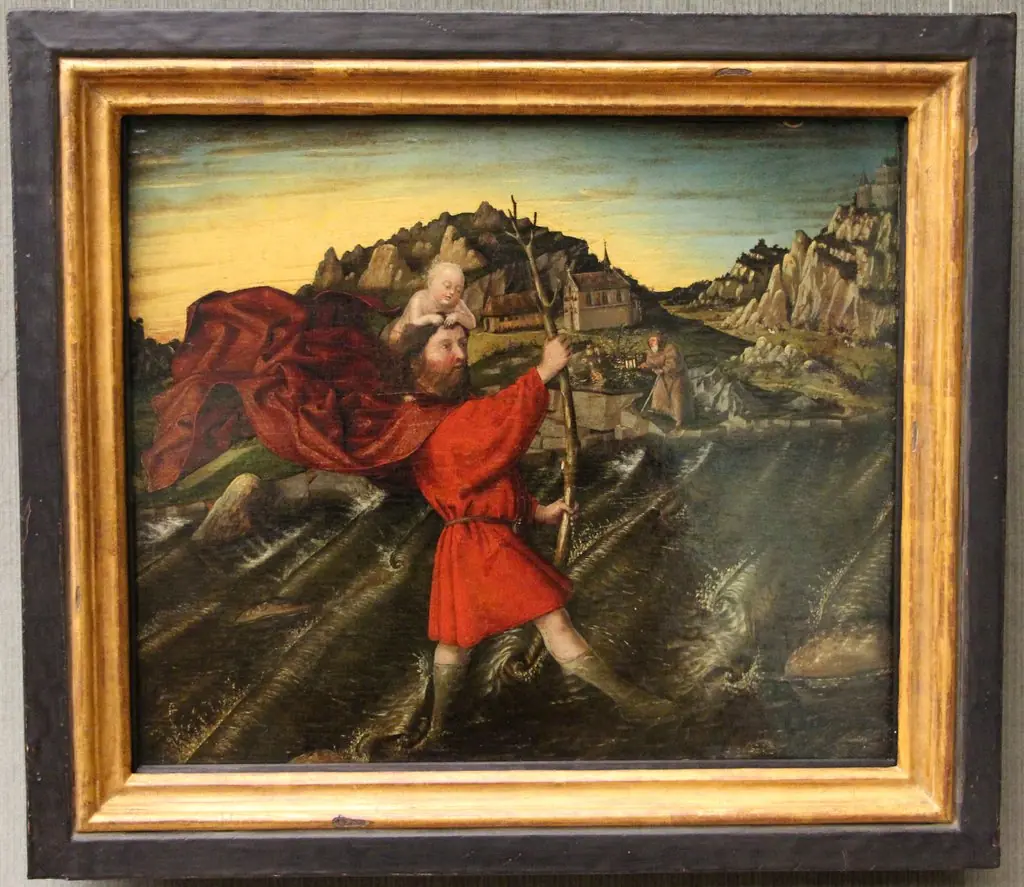 Saint Christopher (Berlin)
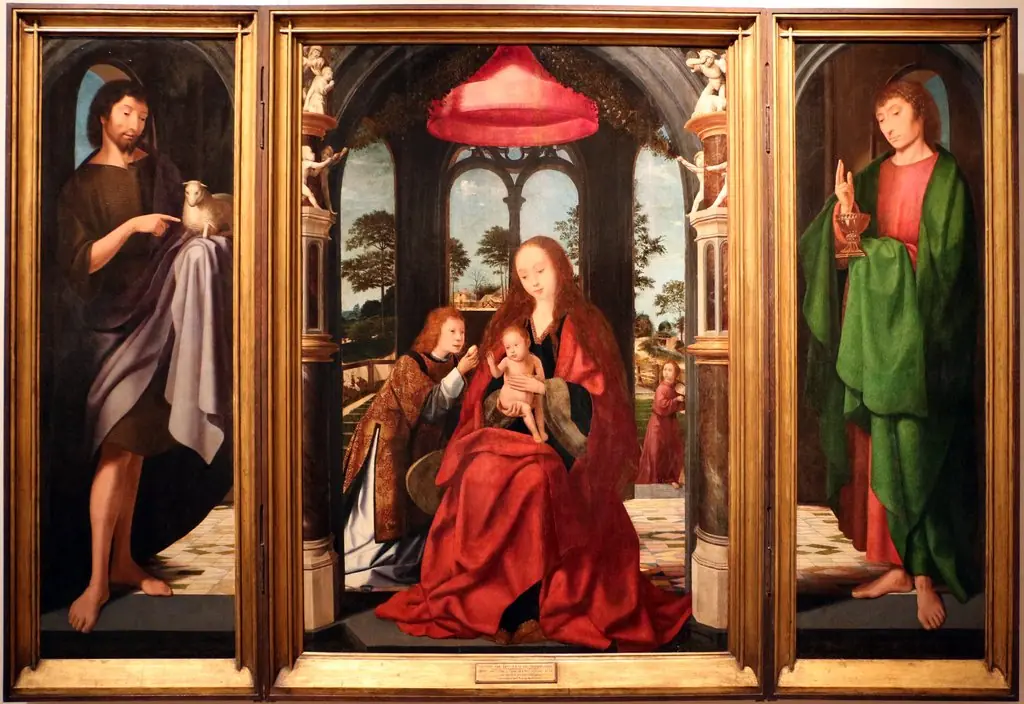 Triptych of the Virgin with the Child and Angels, St. John the Baptist and St. John the Evangelist
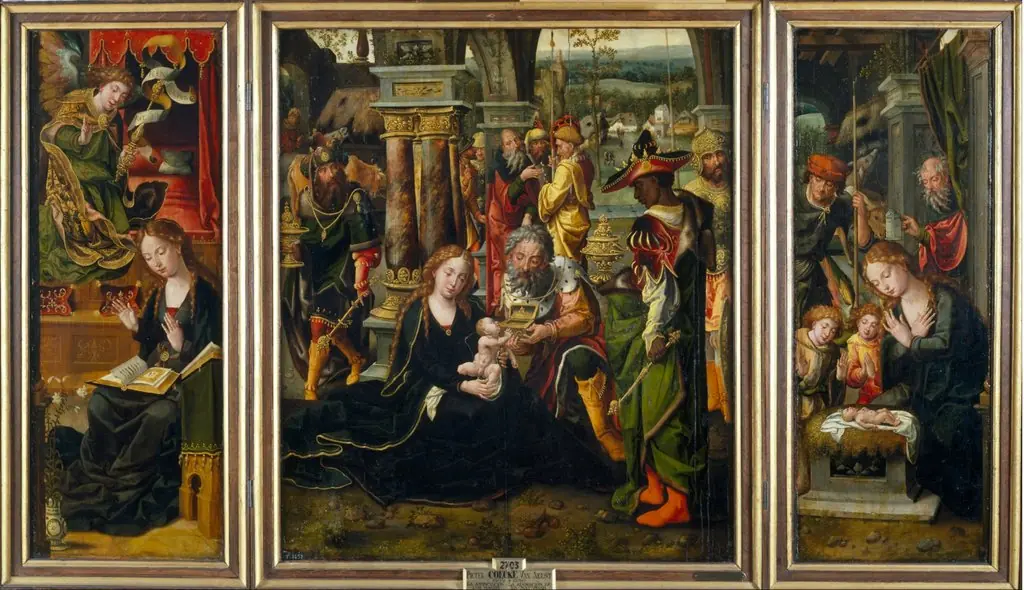 Triptych with the Annunciation, the Adoration of the Magi and the Nativity with Angels and Shepherds
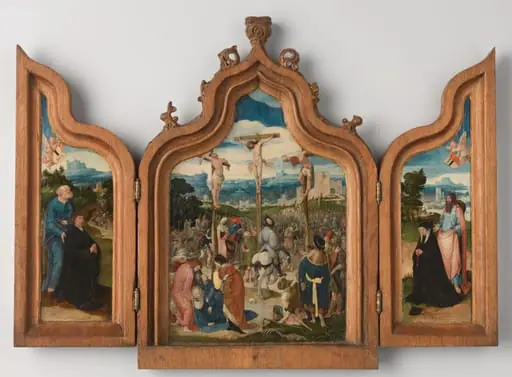 Drieluik
 Triptych with Adoration of the Magi (center and inner wings), Saint Antony Abbot (left, outer wing) and Saint Adrian (right, outer wing)