Artwork
Monilivm Bvllarvm, Inavrivmqve Artificiocissimae Icones
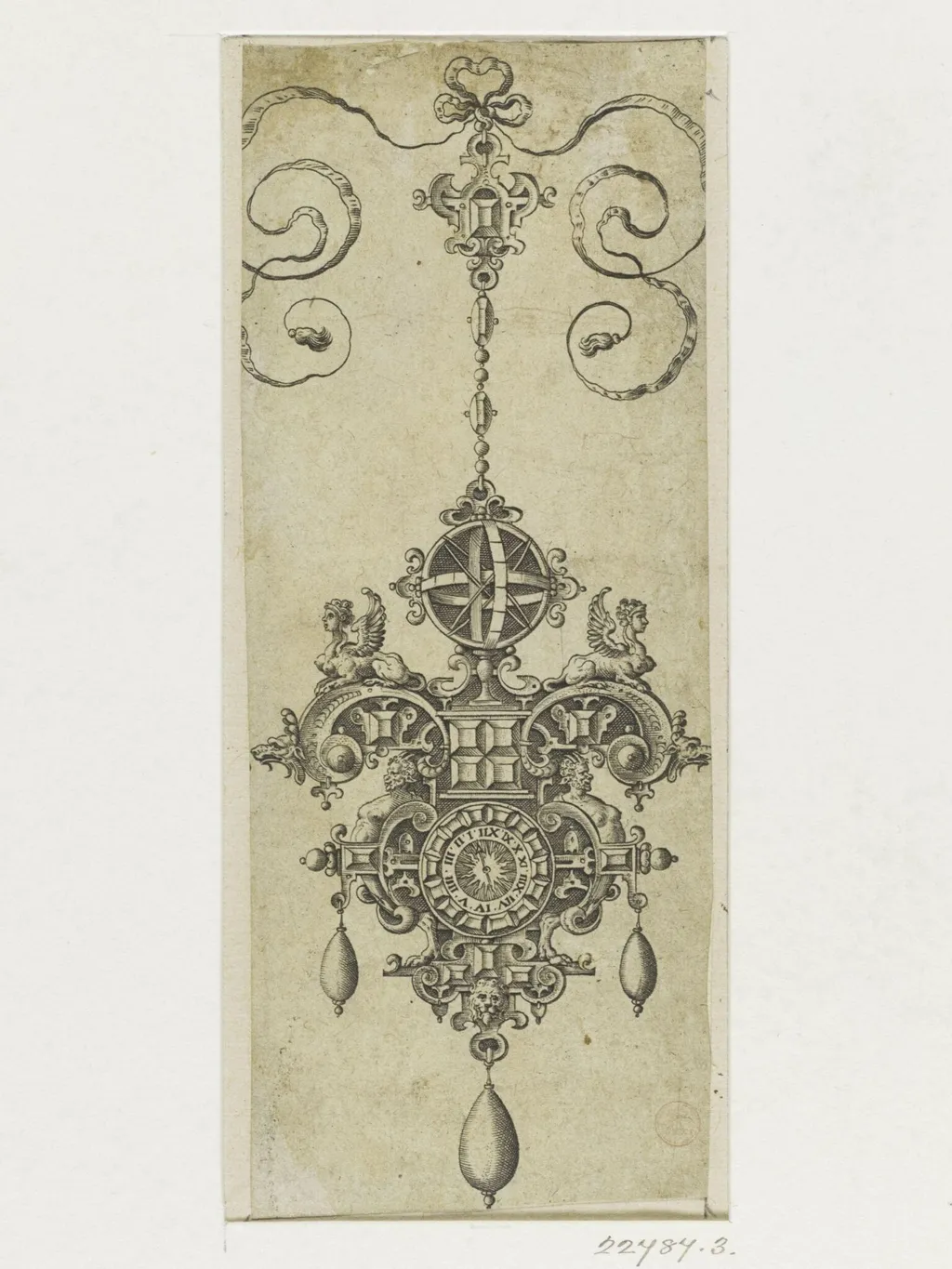
Monilivm Bvllarvm, Inavrivmqve Artificiocissimae Icones is a print by the Renaissance artist Hans Collaert. It is held in the collection of the Victoria and Albert Museum.
About this work
This print comes from a 1581 book of jewelry designs by Hans Collaert. It shows ten engravings, including a title page, made after his death by his sons and publisher.
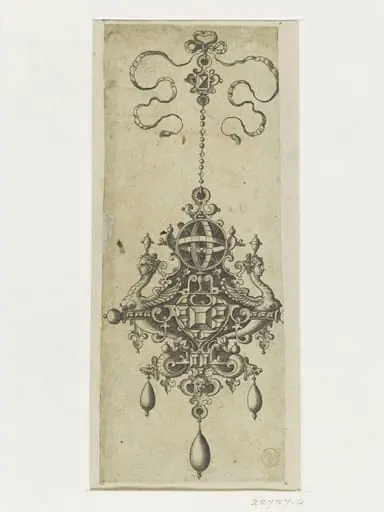
Each page shows a pendant on a dark background. Most have mythological figures set into the metal. The last two prints show a sundial and a clock instead.
Look up Hans Collaert next.
Overview
The series includes a title page and nine pendant designs, with the final two prints deviating from the pattern to depict timekeeping devices.
Published in 1581, this set of ten engravings was produced posthumously by Hans Collaert’s sons and publisher Philips Galle, using designs created by Collaert before his 1580 death. The prints form a printed catalog of jewelry motifs, each rendered as a detailed engraving on a dark ground. The series includes a title page and nine pendant designs, with the final two prints deviating from the pattern to depict timekeeping devices.
Subject & Meaning
The pendants feature mythological figures—deities and allegorical forms—embedded within ornate metalwork, suggesting a fusion of classical symbolism with personal adornment. These figures likely conveyed virtues, celestial influence, or intellectual refinement to the wearer. The inclusion of a sundial and clock at the end shifts focus from personal ornament to the measurement of time, subtly framing jewelry within a broader contemplation of mortality and temporality.
Technique & Style
Each design is rendered in fine-line engraving, emphasizing intricate strapwork and delicate textures against a dark, unmodulated background. The contrast heightens the three-dimensionality of the metal forms and pearls. Figures are rendered with classical poise, their drapery and gestures echoing Renaissance ideals. The ribbon-like borders and triple pearl suspensions reflect contemporary goldsmithing trends, translated into print with precision.
History & Provenance
Hans Collaert, a Flemish designer and engraver, created the original patterns before his death in 1580. His sons and Philips Galle, a prominent Antwerp publisher, oversaw the 1581 publication to capitalize on his reputation. The prints were likely intended as pattern books for goldsmiths and collectors, circulating design ideas across Europe. No original jewelry from these designs is known to survive, making the prints the primary record of his work.
Context
In late 16th-century Antwerp, printed pattern books were vital tools for artisans and the elite seeking fashionable adornment. Collaert’s designs aligned with a broader trend of mythological and allegorical ornament in jewelry, influenced by humanist scholarship and the revival of classical antiquity. The publication reflects the commercialization of artistic design, where engravers and publishers mediated between craftsmen and patrons.
Legacy
The 1581 series stands as an early example of jewelry design being systematically documented and disseminated through print. It preserved Collaert’s aesthetic for future generations of goldsmiths and collectors, influencing regional styles in Northern Europe. While not widely exhibited today, the set remains a key reference for historians studying the intersection of print culture, craftsmanship, and personal adornment in the Renaissance.
Artist & collection
Artist
Jan Collaert the Elder or (I), Hans Collaert the Elder or Johannes Collaert (Brussels, between 1525 and 1530 – Antwerp, October 1580) was a Flemish printmaker, publisher, draftsman, tapestry designer, glass painter and designer and…

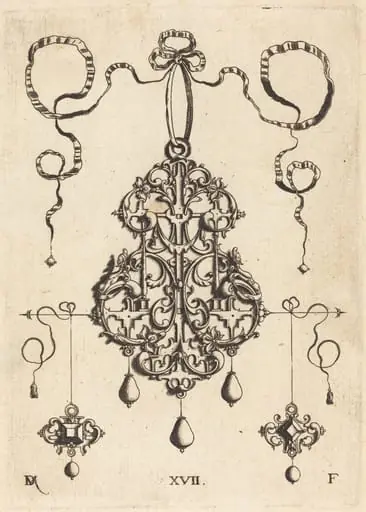 Strapwork Pendant with Two Square Tablestonesas Earrings at Left and Right
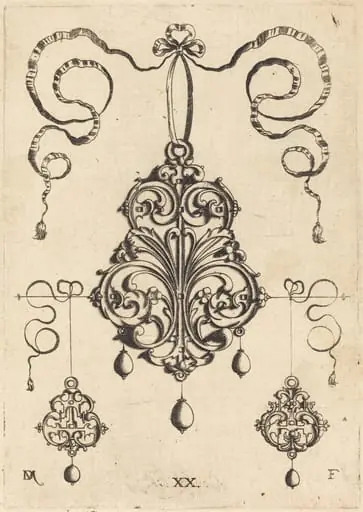 One Large and Two Smaller Strapwork Pendants
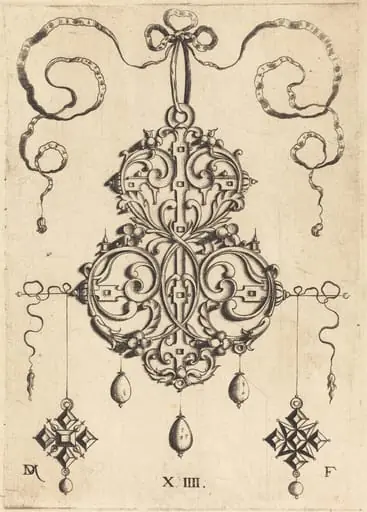 Strapwork Pendant with Three Drops and Two Cross-Shaped Pendants as Earrings at Left and Right
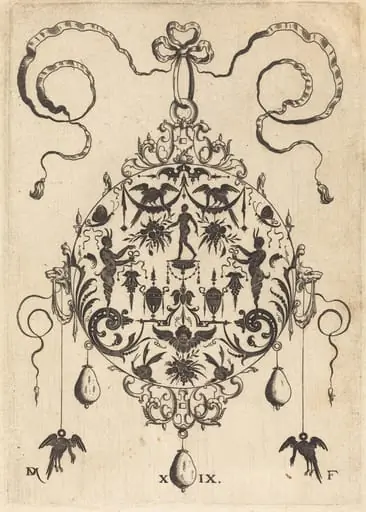 Large Pendant, In Circular Form, Nude Man Flanked by Two Herms
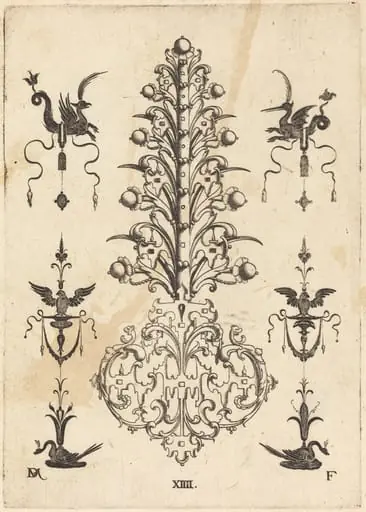 Hyacinth-Shaped Brooch with Winged Animals at Top and Crouching Swans at Bottom
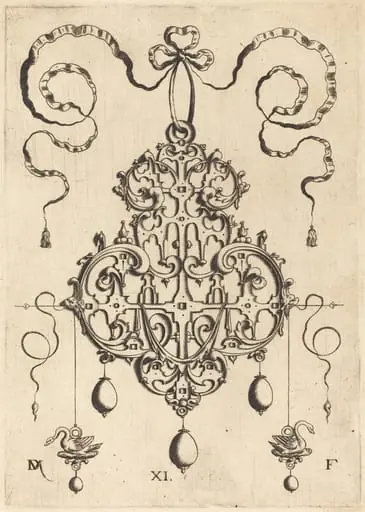 Strapwork Pendant with Two Swans as Earrings at Left and Right
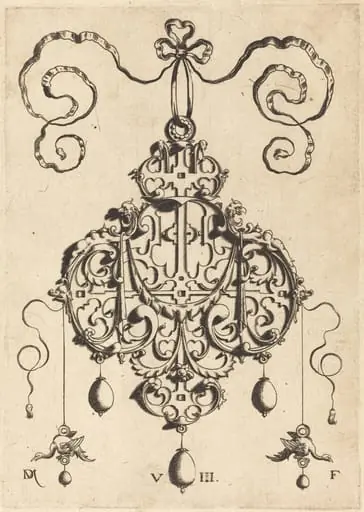 Strapwork Pendant with Two Eagles as Earringsat Left and Right
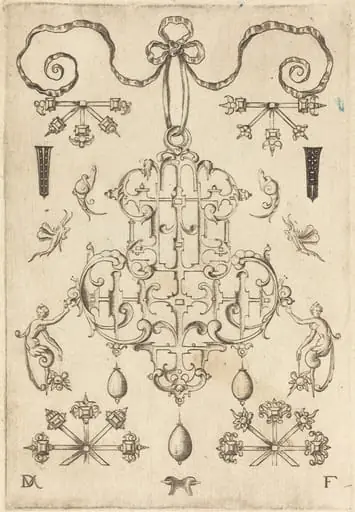 Large Pendant with Three Drops Below
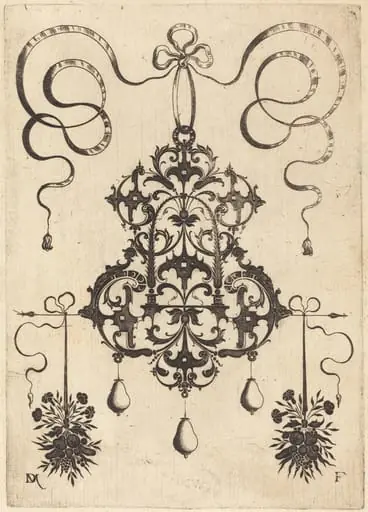 Large Pendant, Lower Left and Right Two Bunches of Grass, Flowers, and Fruit
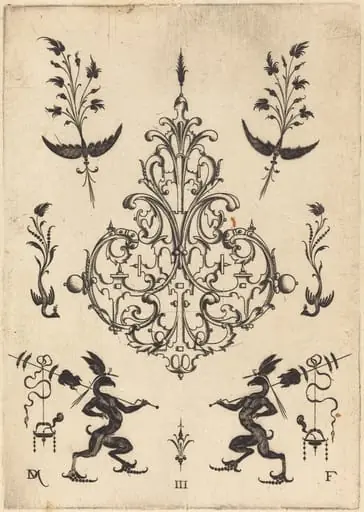 Brooch with Sprigs at Top and Griffins with Trophies at Bottom
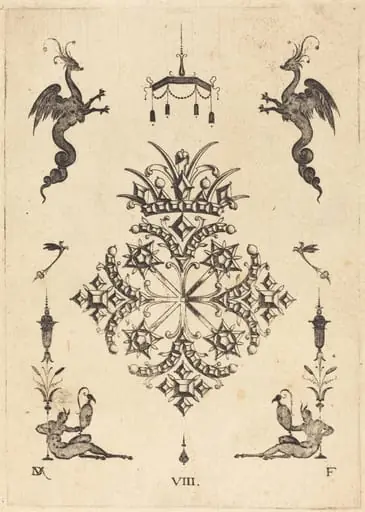 Brooch with Fantasy Animals at Top and Fauns with Vases at Bottom