Artwork
Brooch with Fantasy Animals at Top and Fauns with Vases at Bottom
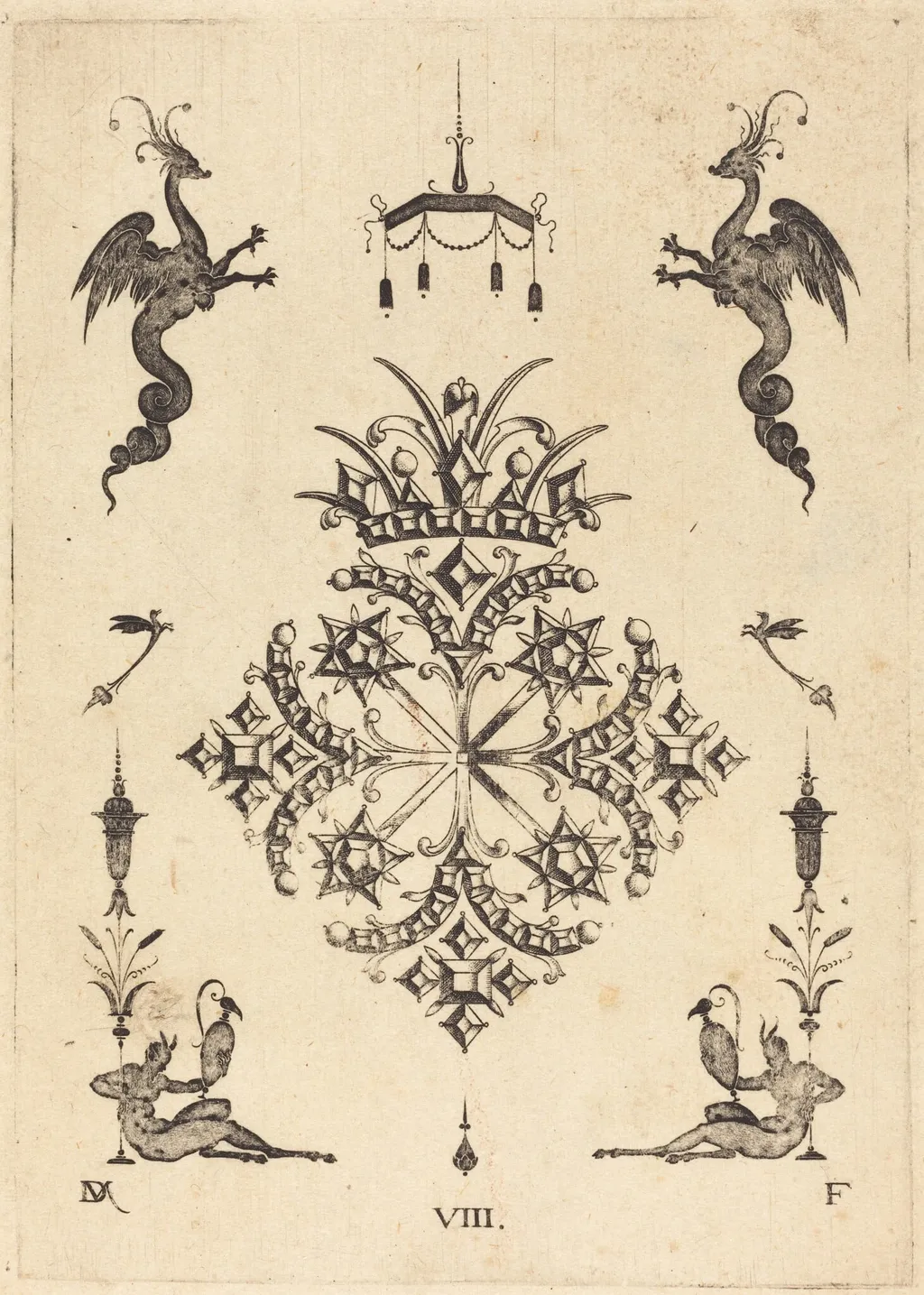
Brooch with Fantasy Animals at Top and Fauns with Vases at Bottom is an ink print by the Renaissance artist Daniel Mignot. It dates from 1596 and is held in the collection of the National Gallery of Art.
About this work
The fauns and dragons mix real and made-up animals, which was a fun trick back then.
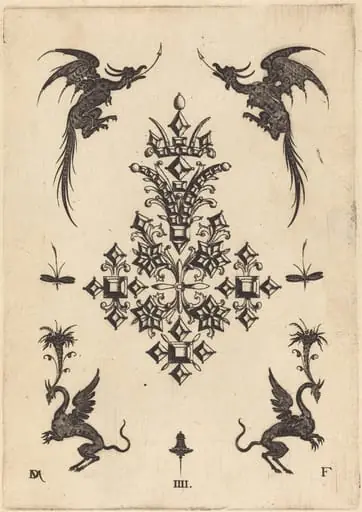
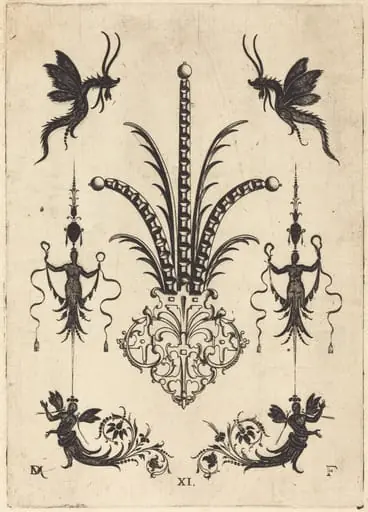
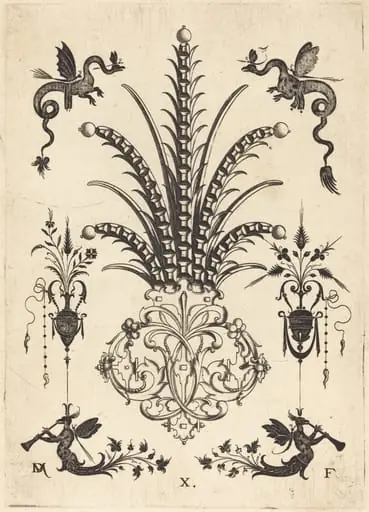
This drawing shows a fancy brooch with weird creatures and shapes. At the top, two dragon-like beasts face each other. Below them is a big, starburst design with crowns and jewels. On the sides, two small fauns sit holding vases. The whole thing looks like it’s made of metal, with lots of tiny lines for detail.
The artist drew this in 1596 as a way to show off jewelry designs. The lines and shading make it look almost 3D. The fauns and dragons mix real and made-up animals, which was a fun trick back then.
Want to see more like this? Check out engraving to learn how artists use lines to create depth.
Overview
Created in 1596 by Daniel Mignot, this engraving depicts a decorative brooch design intended as a model for metalwork. The composition is structured vertically, with fantastical creatures above and mythological figures below, framed by ornamental motifs. The work functions as a study in intricate line work, demonstrating how engraving could translate three-dimensional jewelry into flat, detailed impressions for artisans and patrons.
Subject & Meaning
The brooch features two dragon-like beasts facing each other atop a radiant starburst pattern adorned with crowns and gem-like dots. Below, two fauns—half-human, half-goat figures—hold vases, suggesting themes of nature and abundance. The blending of real and imaginary creatures reflects Renaissance fascination with mythological hybrids, serving both decorative and symbolic purposes in elite personal adornment.
Technique & Style
Mignot employed fine, controlled engraving lines to simulate texture and volume, using cross-hatching and stippling to suggest metallic surfaces and depth. The precision of the lines mimics the sheen and weight of precious metal, while the dense detailing in the starburst and animal forms reveals a mastery of visual illusion. The style aligns with Northern Mannerist traditions, emphasizing complexity over naturalism.
History & Provenance
The engraving was produced during a period when printed design books circulated among goldsmiths and court artisans across Europe. Though no original brooch made from this design is known, similar engravings were used as templates in workshops. Mignot’s work likely appeared in a pattern book, aiding the dissemination of fashionable motifs among craftsmen in France and beyond.
Context
In late 16th-century Europe, engraved designs were vital for transmitting ornamental styles before mass production. Mythological and hybrid creatures were popular in jewelry, reflecting humanist interests in classical antiquity and natural wonders. Mignot’s piece fits within a broader trend of printmakers documenting luxury objects, bridging artistic imagination and artisanal practice.
Legacy
This engraving survives as an example of how printmaking facilitated the standardization of decorative arts. While Mignot’s individual output was modest, his technique influenced later designers who used line to convey texture and form. The work remains a quiet testament to the role of prints in shaping Renaissance material culture beyond painting and sculpture.
Artist & collection


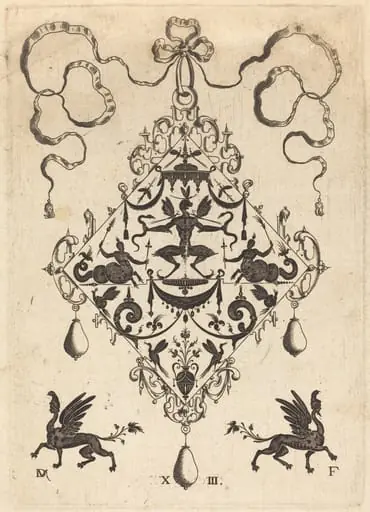 Large Pendant, Winged Fantasy Creature Holding Two Snakes
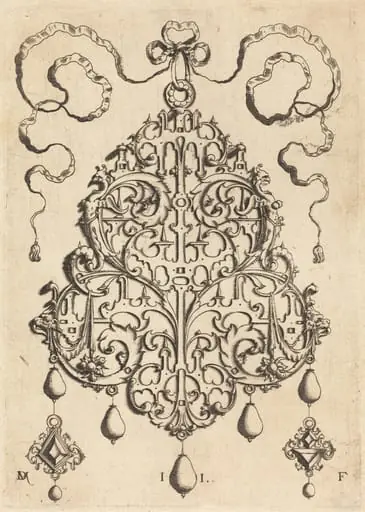 Large Strapwork Pendant with Two Hangers as Earrings at Left and Right
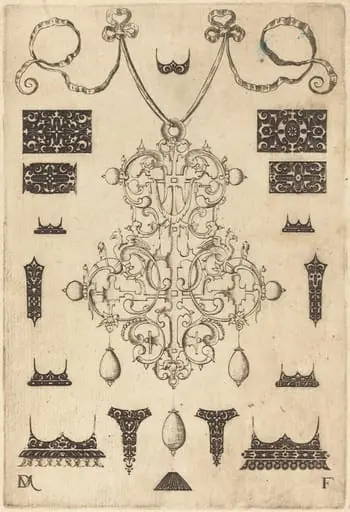 Large Pendant with Three Drops Below, Surrounded by Fifteen Different Studs
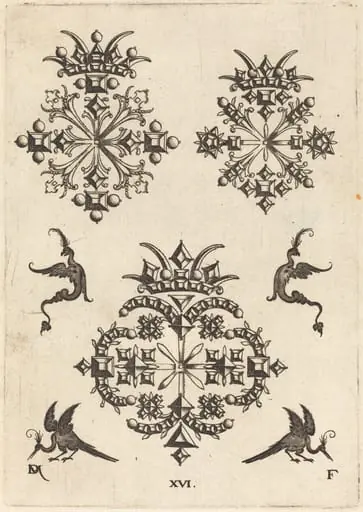 Three Brooches with Fantasy Birds at Left, Right, and Bottom
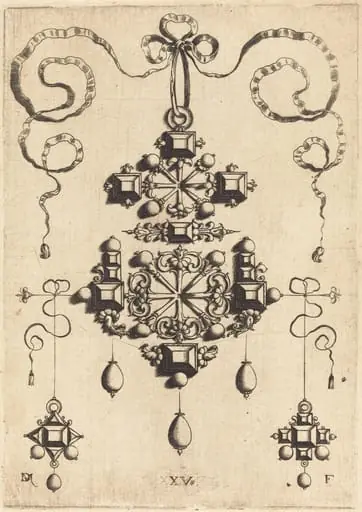 Pendant with Two Double Crosses, Surrounded by Four Diamond-Shaped Stones, Five Table-Stones, and Thirteen Pearls
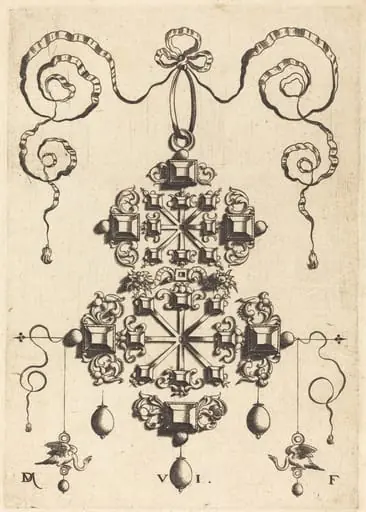 Large Pendant with Two Double Crosses, Surrounded by Six Large and Sixteen Small Table-Stones
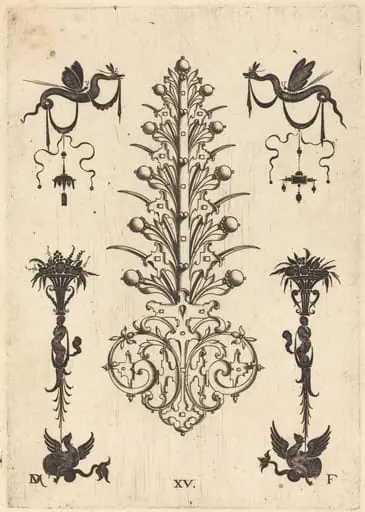 Hyacinth-Shaped Brooch with Winged Snakes at Top and Winged Animals at Bottom
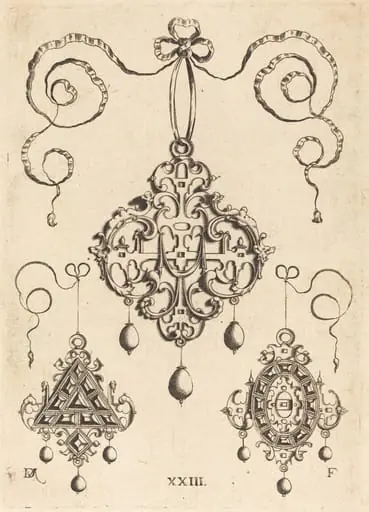 Three Strapwork Pendants, The Lower Ones Triangular and Oval
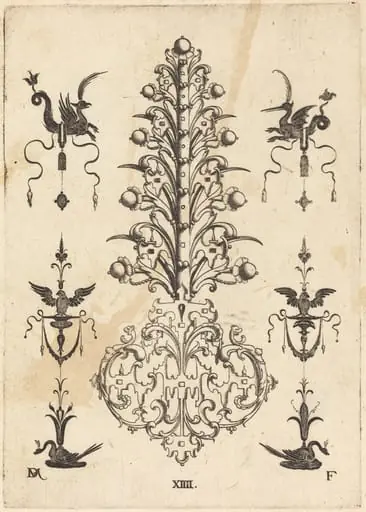 Hyacinth-Shaped Brooch with Winged Animals at Top and Crouching Swans at Bottom
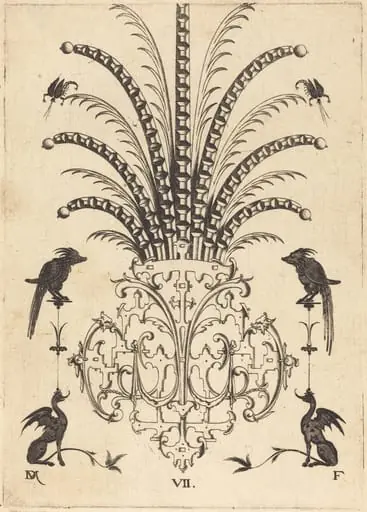 Brooch with Table-Stones, Flying Scorpions at Top, and Dogs at Bottom
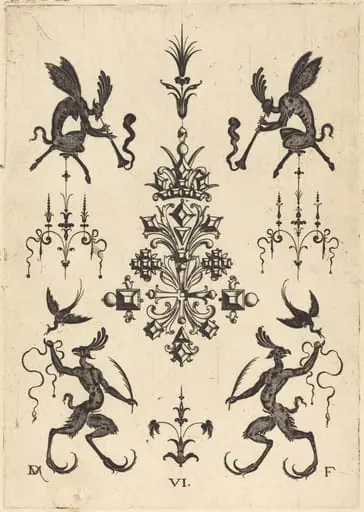 Brooch with Winged Fauns Blowing Trumpets at Top and Fantasy Creatures with Birds at Bottom
 Brooch with Table-Stones, Winged Dragons at Top, and Griffins at Bottom
 Brooch with Tablestones and Winged Griffins Above and at Bottom
 Brooch with Sprigs at Top and Griffins with Trophies at Bottom
 Two Brooches with Bird and Winged Snake at Top and Griffins with Vases at Bottom
 Brooch with Table-Stones, Winged Animals at Top, and Winged Human Beings at Bottom
 Brooch with Table-Stones, Dragons at Top, andWinged Monsters Blowing Horns at Bottom
 Hyacinth-Shaped Brooch with Birds at Top and Devil's- and Angel's-Head at Bottom