Artwork
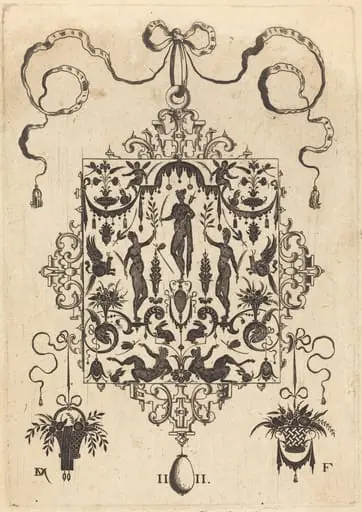
Large Pendant, In Circular Form, Nude Man Flanked by Two Herms
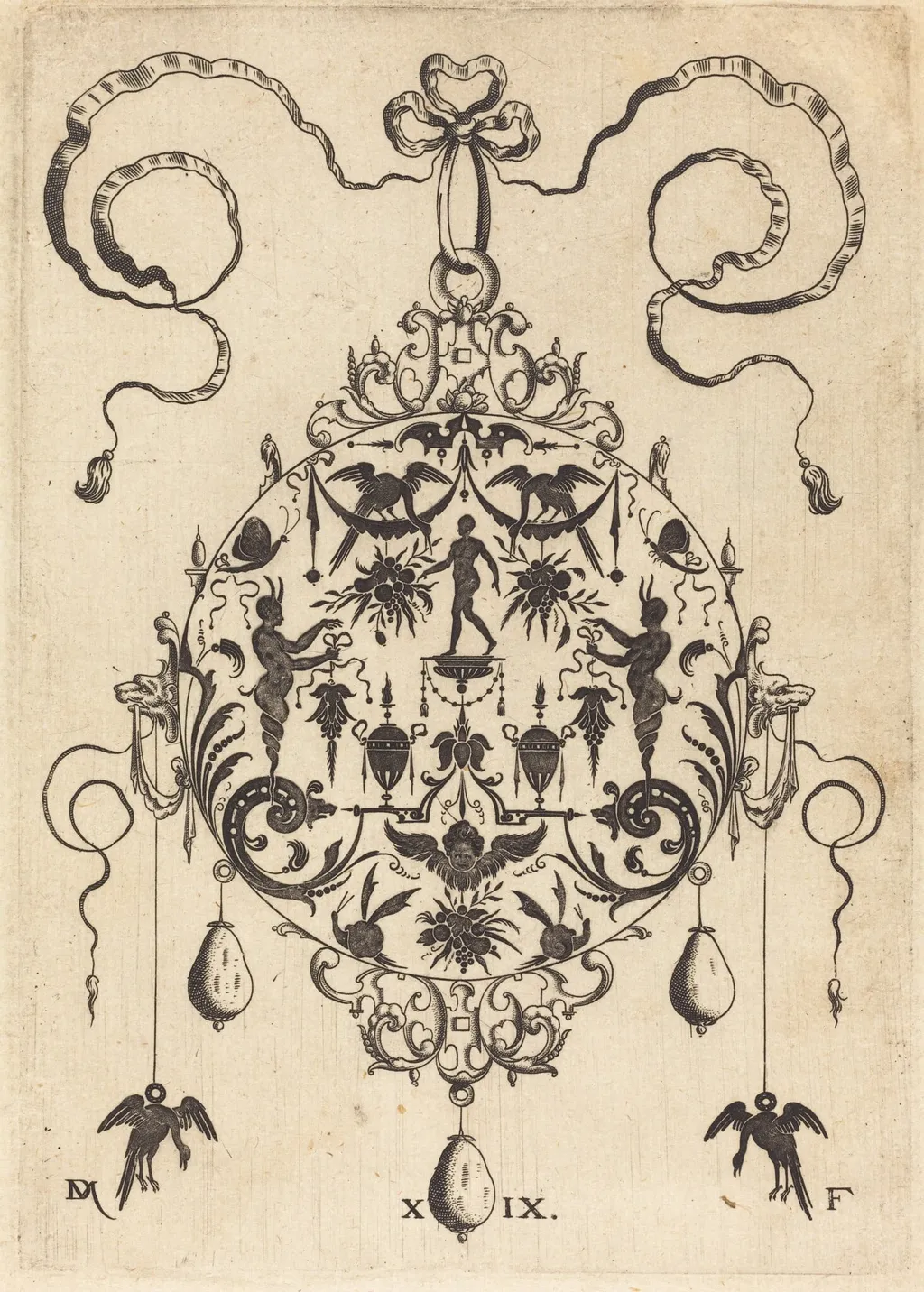
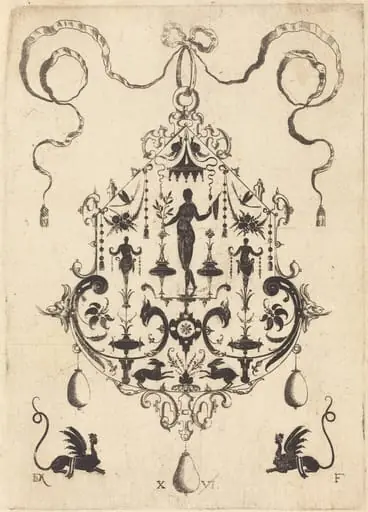
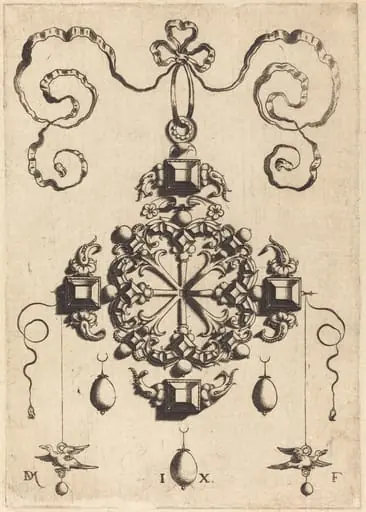
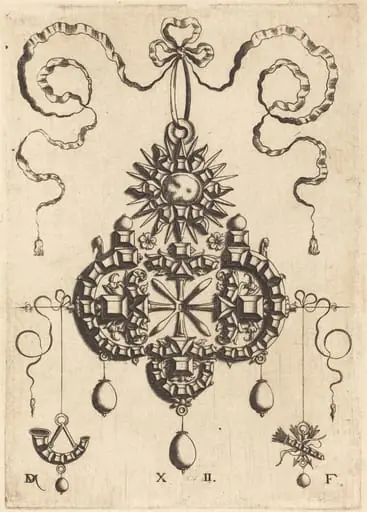
Large Pendant, In Circular Form, Nude Man Flanked by Two Herms is an ink print by the Renaissance artist Daniel Mignot. It dates from 1596 and is held in the collection of the National Gallery of Art.
About this work
Overview
Created in 1596 by Daniel Mignot, this circular engraving presents a central nude male figure surrounded by two herms—winged, sculpted heads mounted on pillars.
Created in 1596 by Daniel Mignot, this circular engraving presents a central nude male figure surrounded by two herms—winged, sculpted heads mounted on pillars. Rendered entirely in fine black lines on a pale ground, the composition is framed by an elaborate border teeming with natural and fantastical motifs. The technique relies on meticulous cross-hatching to model form and depth, characteristic of late Renaissance printmaking.
Subject & Meaning
The nude figure at the center, though small, anchors the composition, possibly symbolizing human vulnerability or idealized form. Flanking him, the herms—traditional Renaissance emblems of protection and boundary—serve as structural and symbolic supports. Their presence, combined with the dense ornamentation, suggests a fusion of classical iconography with allegorical intent, perhaps evoking themes of harmony, abundance, or the human condition framed by divine or natural forces.
Technique & Style
Mignot employed fine-line engraving to achieve intricate detail, using dense cross-hatching to render texture and shadow across the ornate frame and figures. The background remains uninked, enhancing contrast and drawing focus to the linear precision. The swirling, rhythmic patterns in the border reflect Mannerist tendencies—emphasizing complexity over naturalism—while the controlled economy of line reveals mastery of the burin tool in reproductive printmaking.
History & Provenance
This print likely originated as part of a series of decorative engravings intended for collectors or interior decoration in late 16th-century Europe. Its format suggests use as a pendant or wall ornament, possibly mounted in frames or bound in albums. No definitive early ownership records survive, but its stylistic ties to French and Flemish print circles point to circulation among educated, affluent patrons interested in classical revival imagery.
Context
In the late Renaissance, engraved pendants and ornamental prints were popular among humanist collectors who valued classical references and technical virtuosity. Herms, derived from ancient Greek hermai, were revived as symbols of protection and intellectual boundaries. Mignot’s work aligns with a broader trend of blending mythological motifs with decorative excess, reflecting a taste for erudition and craftsmanship in private collections.
Legacy
Though not widely reproduced or studied today, this engraving exemplifies the precision and symbolic richness of late Mannerist printmaking. It contributes to understanding how classical motifs were adapted for intimate, decorative purposes beyond monumental art. Its survival offers insight into the domestic use of prints as both aesthetic objects and carriers of cultural symbolism in early modern Europe.
Artist & collection


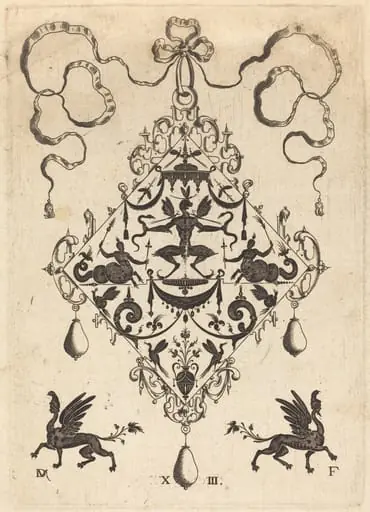 Large Pendant, Winged Fantasy Creature Holding Two Snakes
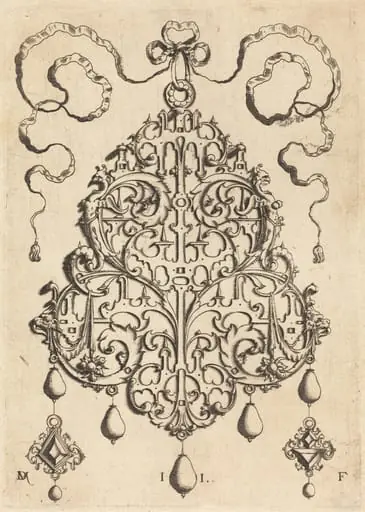 Large Strapwork Pendant with Two Hangers as Earrings at Left and Right
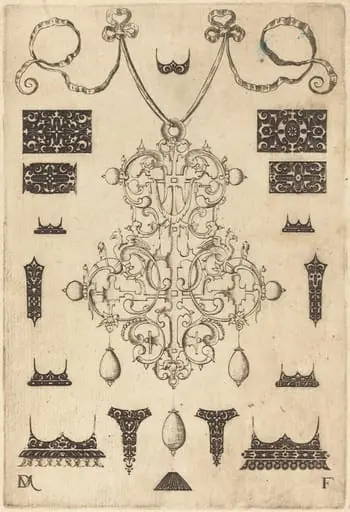 Large Pendant with Three Drops Below, Surrounded by Fifteen Different Studs
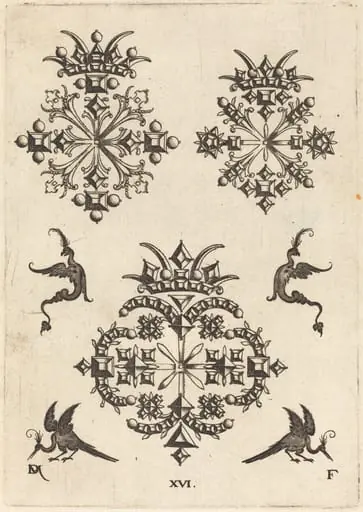 Three Brooches with Fantasy Birds at Left, Right, and Bottom
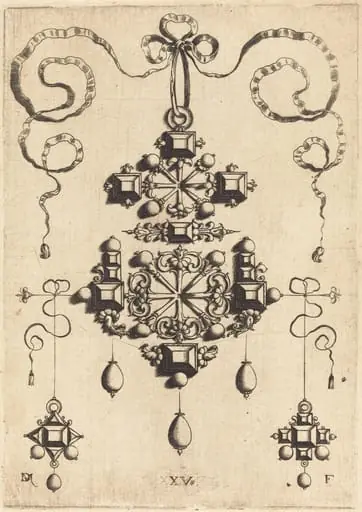 Pendant with Two Double Crosses, Surrounded by Four Diamond-Shaped Stones, Five Table-Stones, and Thirteen Pearls
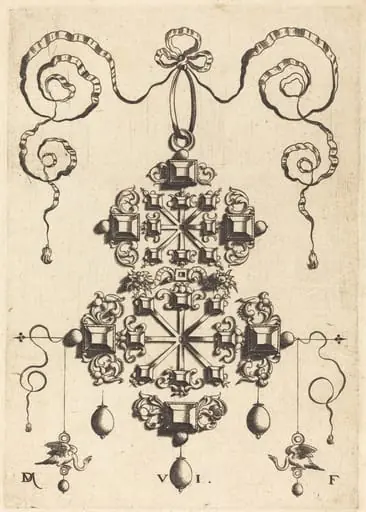 Large Pendant with Two Double Crosses, Surrounded by Six Large and Sixteen Small Table-Stones
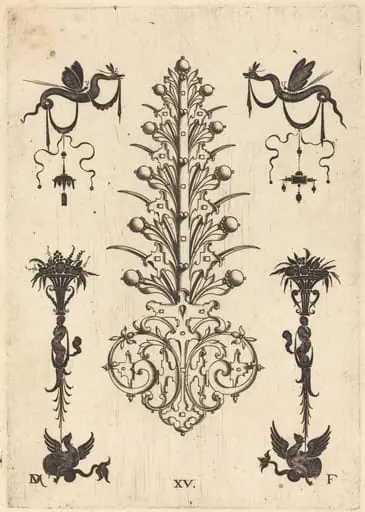 Hyacinth-Shaped Brooch with Winged Snakes at Top and Winged Animals at Bottom
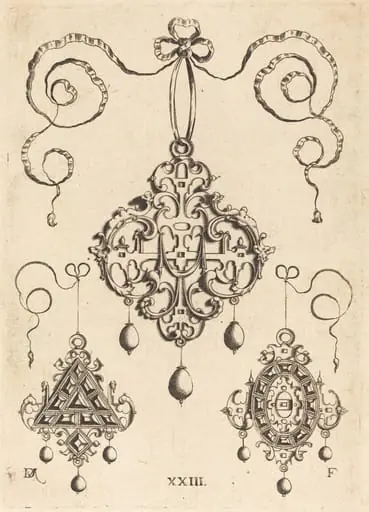 Three Strapwork Pendants, The Lower Ones Triangular and Oval