Artwork
The Israelites after Crossing the Red Sea
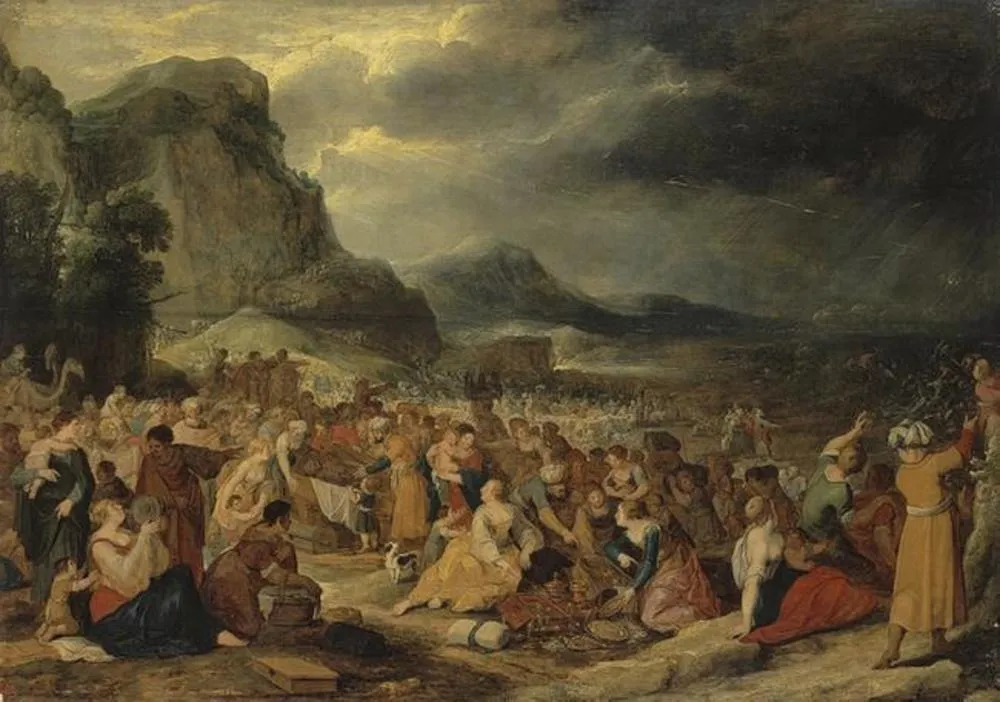
The Israelites after Crossing the Red Sea is an oil painting by Hans Jordaens. It dates from 1626 and is held in the collection of the Hermitage Museum.
About this work
Overview
The painting resides in the State Hermitage Museum in Saint Petersburg.
Painted in 1626 by Hans Jordaens, this oil-on-canvas work portrays a moment from the biblical Exodus, shortly after the Israelites have passed through the parted waters of the Red Sea. The painting resides in the State Hermitage Museum in Saint Petersburg. Its composition captures a moment of pause amid movement, as the group gathers on a shore, exhausted yet unharmed, surrounded by the vastness of the sea behind them.
Subject & Meaning
The scene illustrates the Israelites’ deliverance from Egyptian pursuit, a moment of divine intervention in their journey toward freedom. Figures of all ages are shown in varied postures—some kneeling in prayer, others standing in quiet awe or preparing to move forward. The absence of the pursuing army emphasizes the focus on survival and collective relief, underscoring the narrative of faith and escape rather than conflict.
Technique & Style
Jordaens employs chiaroscuro to model forms and suggest spatial depth, with light falling selectively across faces and garments, drawing attention to expressions of exhaustion and gratitude. The figures are rendered with a naturalistic solidity, their clothing reflecting 17th-century Flemish interpretations of ancient dress. The brushwork is loose in the background, contrasting with tighter detail in the foreground, enhancing the sense of immediacy.
History & Provenance
Commissioned during Jordaens’ mature period, the painting entered the Hermitage collection in the 18th or early 19th century, likely through imperial acquisitions of European art. Its presence in Russia reflects the broader European interest in biblical subjects during the Baroque era. No significant alterations or restorations are documented, and it has remained in the museum’s holdings since acquisition.
Context
Created during a time when religious narratives remained central to Northern European art, the painting aligns with Flemish traditions of biblical storytelling, influenced by Rubens and Caravaggio. Jordaens, though less known than his contemporaries, contributed to a genre that emphasized human emotion and physical presence in sacred stories, responding to Counter-Reformation demands for accessible, emotionally resonant imagery.
Legacy
While not widely reproduced or publicly celebrated today, the painting remains a representative example of early 17th-century Flemish biblical painting. It contributes to scholarly understanding of how religious stories were visualized beyond the most famous works of the period, offering insight into regional interpretations of Exodus that prioritized communal experience over dramatic spectacle.
Artist & collection

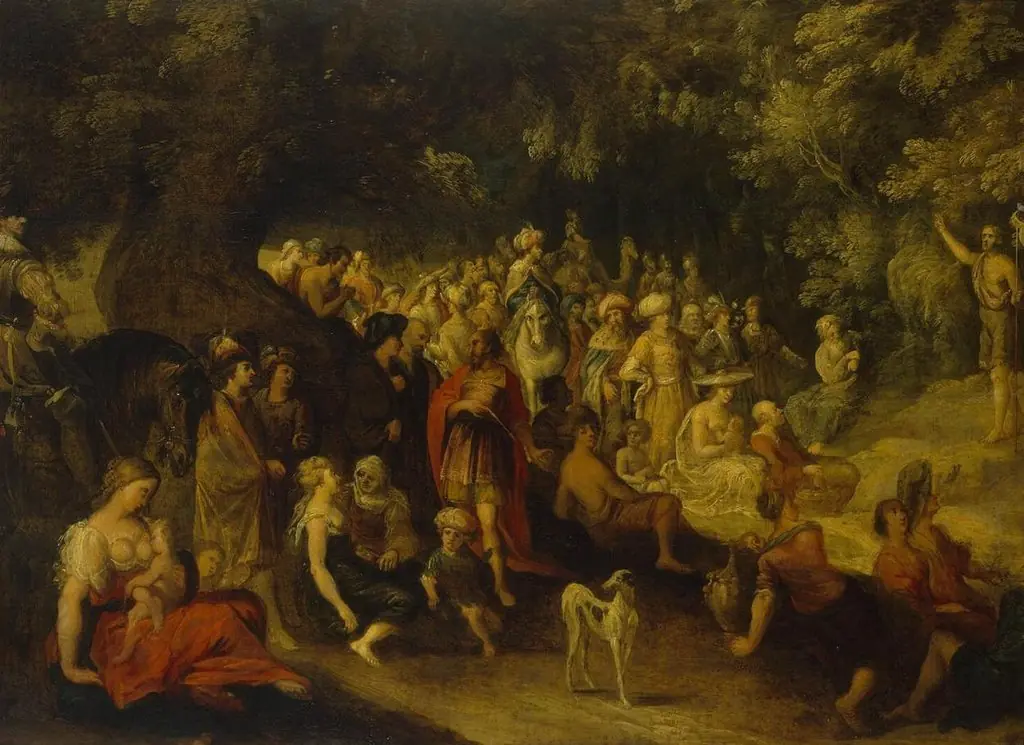 Sermon of St John the Baptist
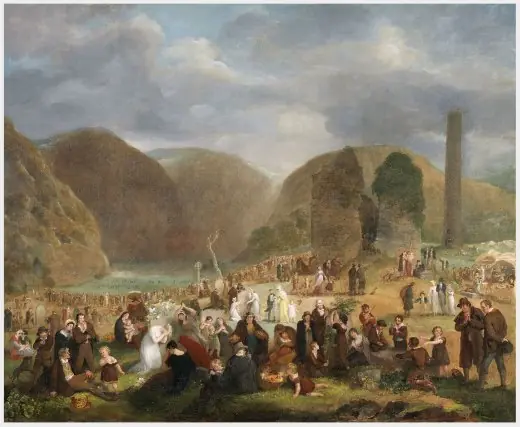 Patron's Day at the Seven Churches, Glendalough
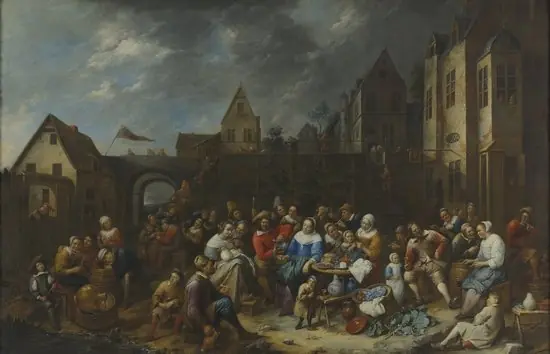 Village fête
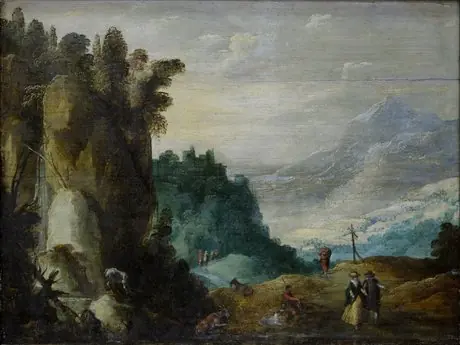 Мountain landscape
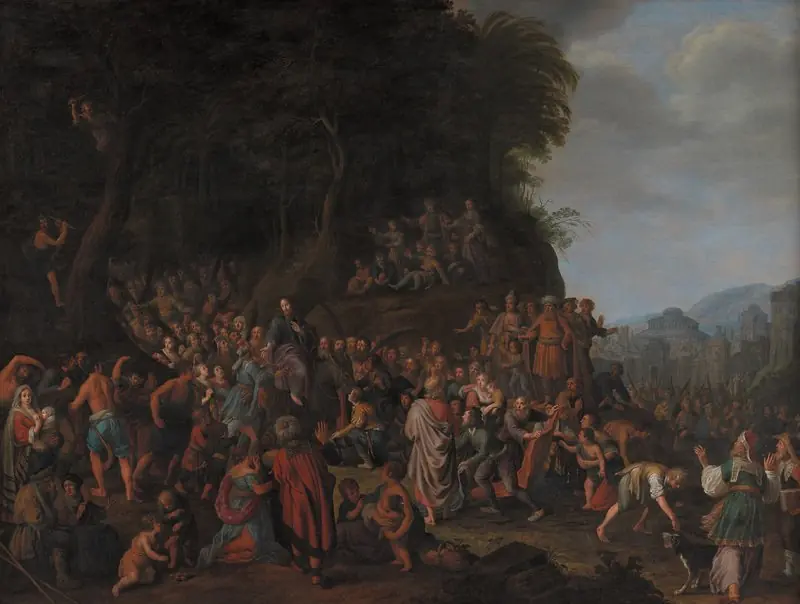 Christ's Entry into Jerusalem
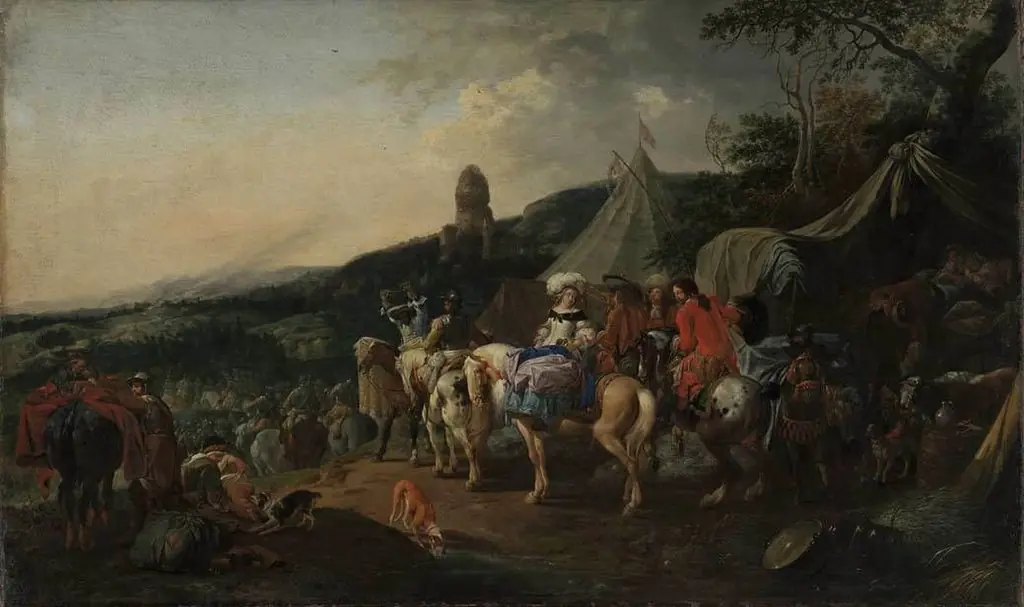 Aufbruch eines Heeres aus dem Lager
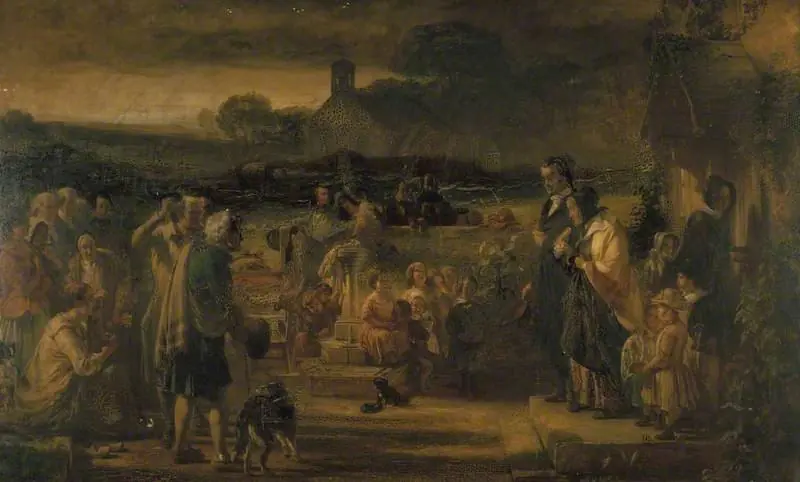 Quitting the Manse
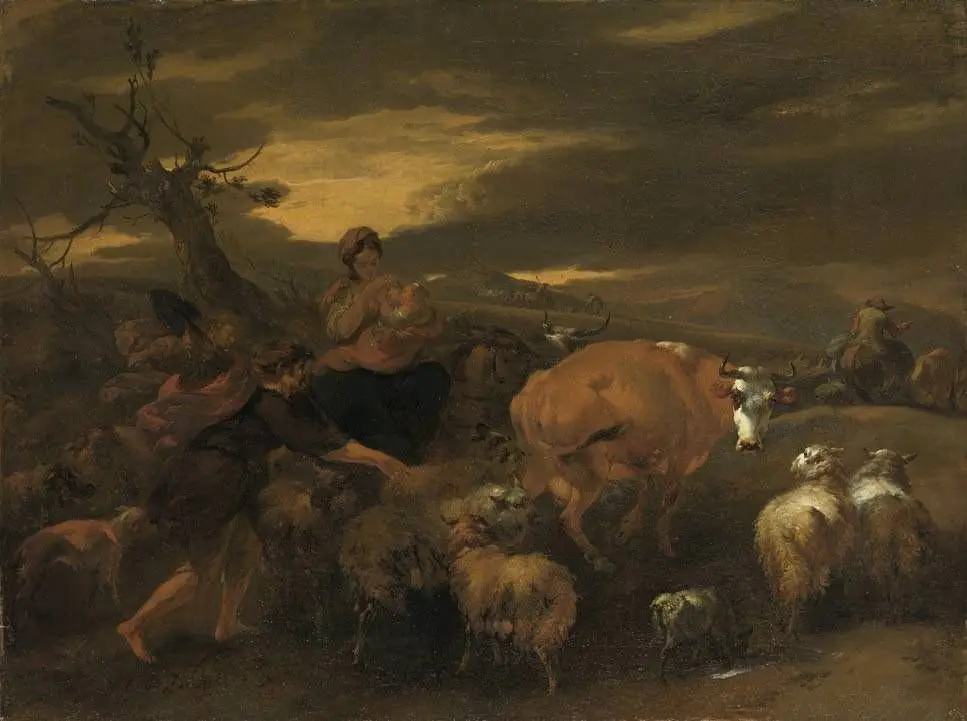 Evening landscape with cattle and shepherds
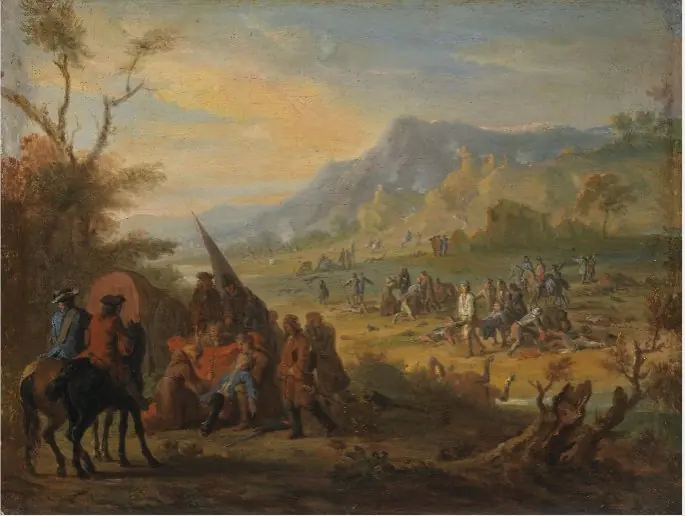 After the Combat
 Landscape with travelers and bittern hunter
 The troops rest (war)
 Drumclog