Artwork
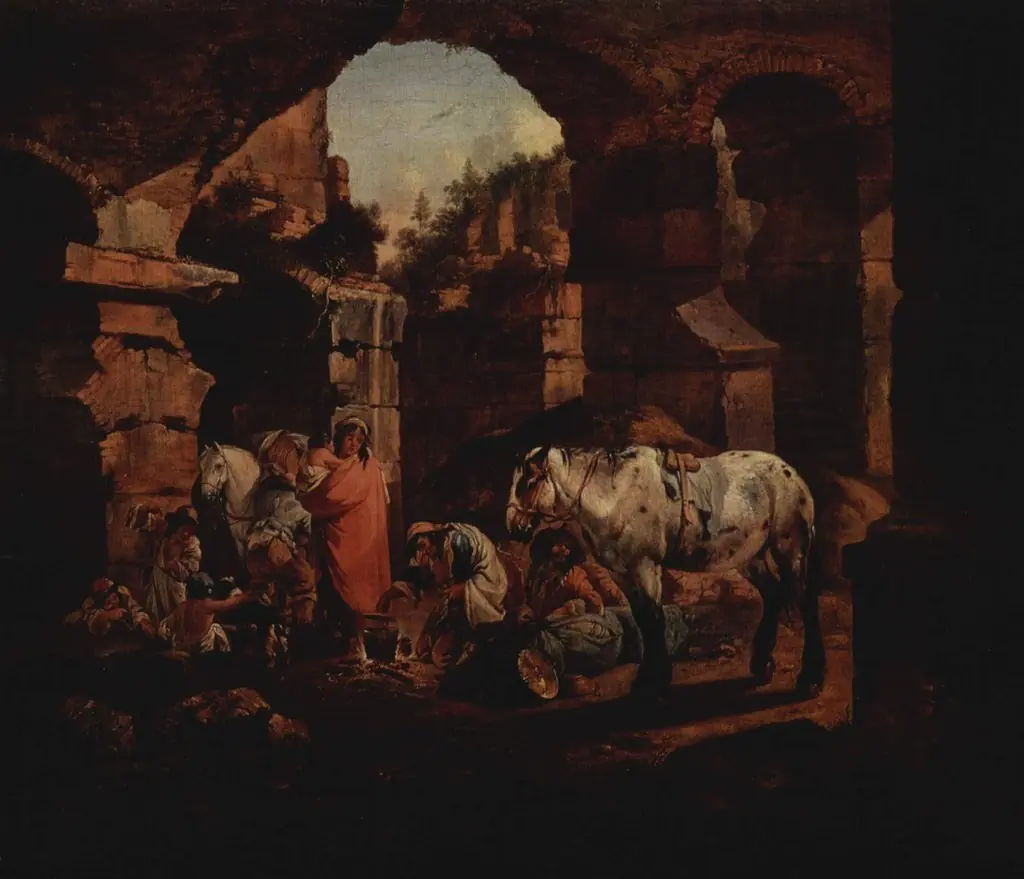
Aufbruch eines Heeres aus dem Lager
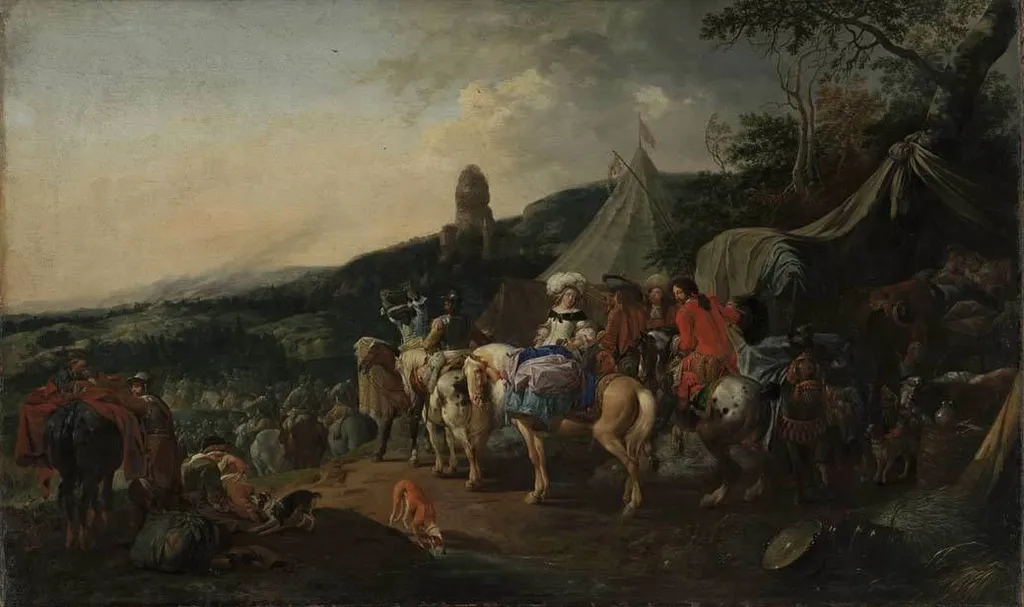
Aufbruch eines Heeres aus dem Lager is an unspecified painting by the Flemish Baroque painting artist Johann Heinrich Roos. It is held in the collection of the Bavarian State Painting Collections.
About this work
Overview
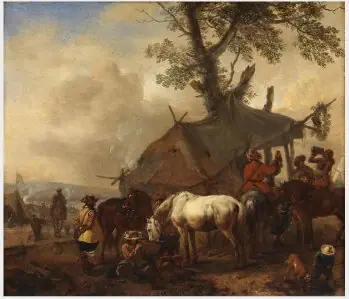
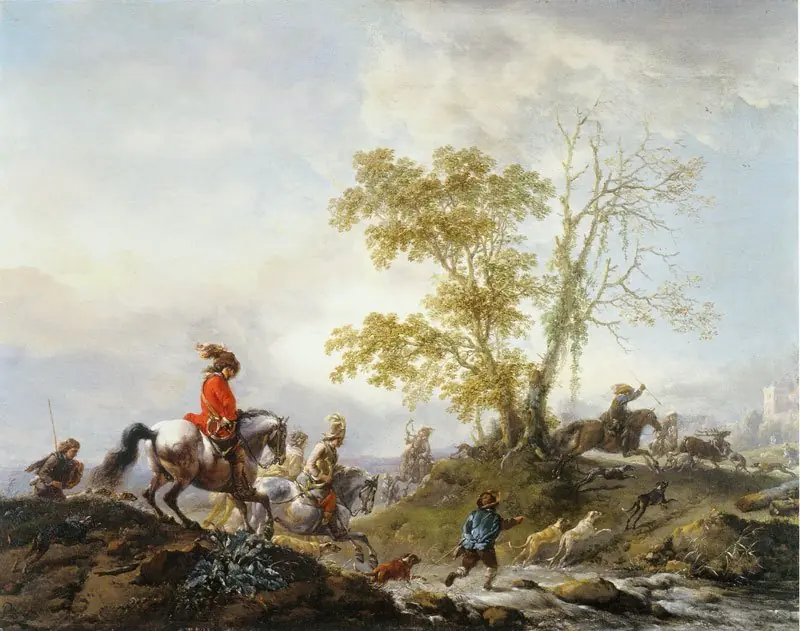
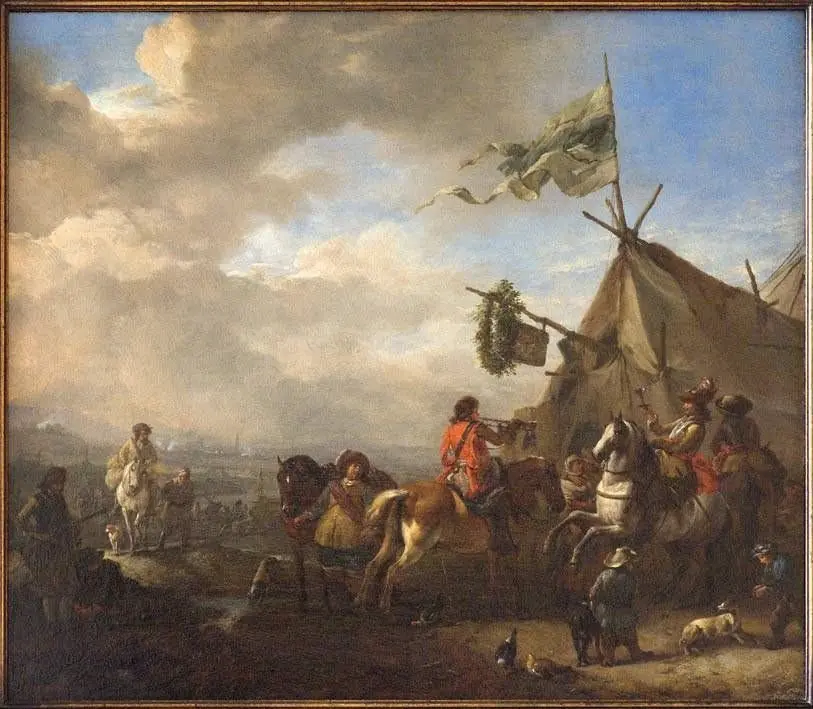
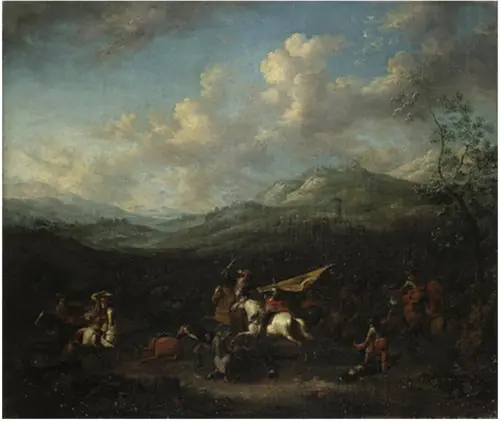
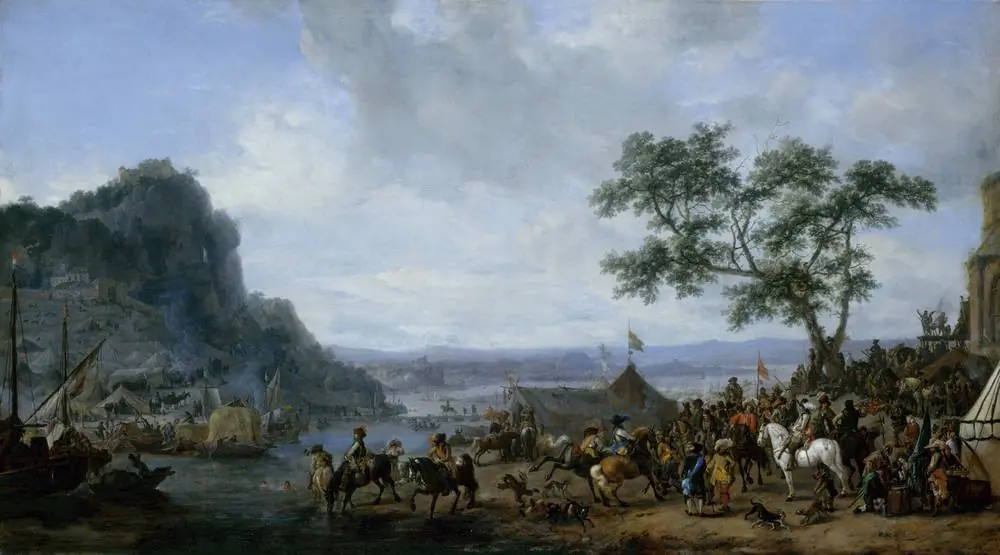
Painted in 1689 by Johann Heinrich Roos, this work captures a moment of departure from a military encampment. The scene is populated by figures and animals in motion, suggesting the logistical preparations preceding a campaign. It is part of the collection at the Alte Pinakothek in Munich, where it represents Roos’s engagement with narrative landscape painting in the late 17th century.
Subject & Meaning
The composition emphasizes movement and collective action, reflecting themes of readiness and transition rather than battle itself.
The central figure is a woman mounted on a horse, surrounded by soldiers, servants, and animals. Her presence, distinct in attire and position, may symbolize leadership or moral authority within the group. The composition emphasizes movement and collective action, reflecting themes of readiness and transition rather than battle itself. The inclusion of dogs and livestock underscores the mundane realities of military life.
Technique & Style
Roos employs a detailed, naturalistic approach to rendering figures and animals, with careful attention to texture and posture. The landscape is rendered in soft, atmospheric tones, framing the activity without dominating it. Brushwork is precise yet fluid, capturing the dynamism of motion—horses mid-stride, figures turning, dogs in alert stance—while maintaining a balanced, harmonious composition.
History & Provenance
The painting entered the Alte Pinakothek’s collection in the 19th century, likely through the Bavarian royal acquisitions of German and Flemish works. Its provenance before that is undocumented, though Roos’s reputation in southern Germany and his ties to the Nuremberg artistic circle suggest it may have been commissioned by a local noble or military patron.
Context
Created during the Nine Years' War, the painting reflects a period when European armies were frequently mobilized. Roos, known for animal and landscape scenes, adapted his skills to depict military life with observational accuracy. His work diverges from grand battle paintings, focusing instead on the quieter, preparatory moments that defined military existence.
Legacy
Roos’s depiction of everyday military activity influenced later genre painters who sought realism over heroism. While not widely known today, this painting exemplifies a niche in 17th-century German art that valued detailed observation of nature and human behavior. It remains a quiet testament to the rhythms of camp life during a turbulent era.
Artist & collection