Artwork
Pagagnotti Triptych
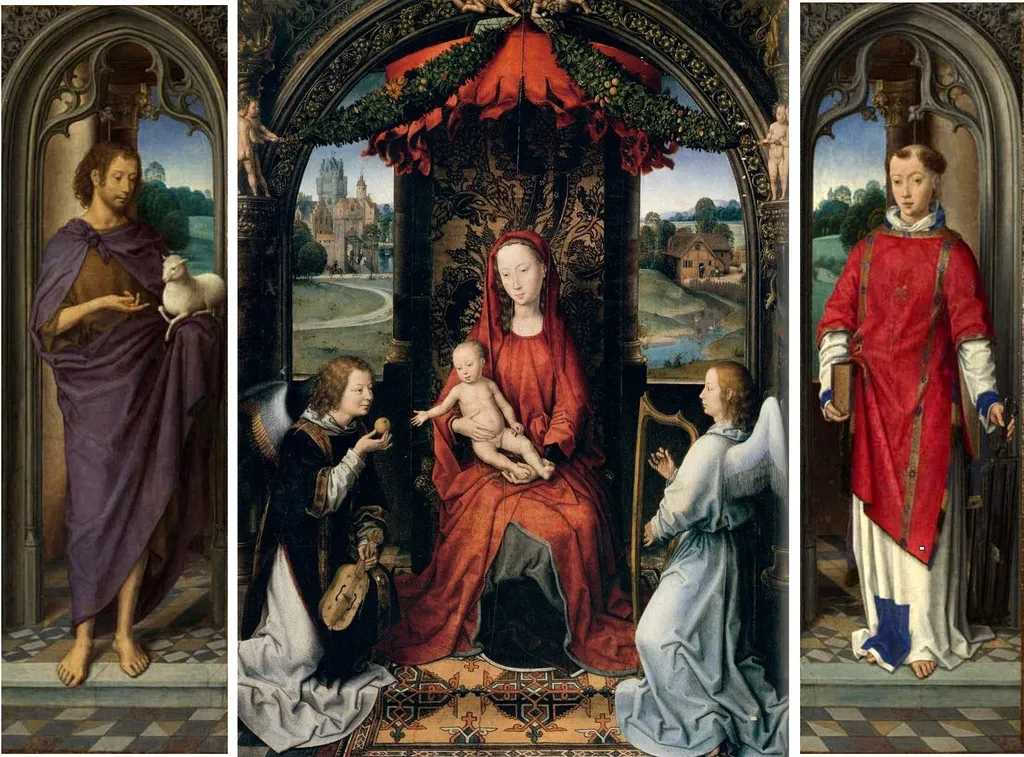
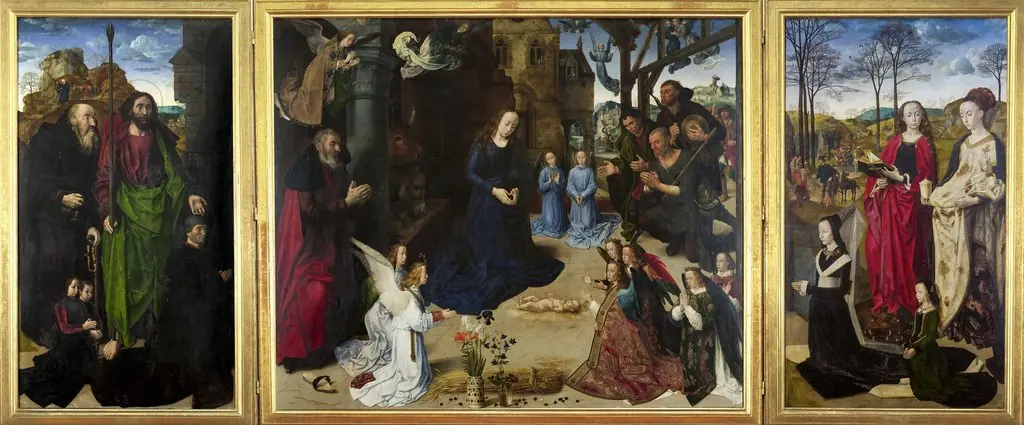
Pagagnotti Triptych is an oil painting by the Northern Renaissance artist Hans Memling. It dates from 1490 and is held in the collection of the Uffizi Gallery.
About this work
Overview
Created around 1480, the Pagagnotti Triptych is an oil-on-wood altarpiece by Hans Memling, blending Northern European techniques with Italian Renaissance sensibilities. Originally a single devotional work, it was later dismantled: the central panel resides in the Uffizi, while the two wings are held by the National Gallery in London. Each panel features figures framed by architectural elements, with detailed landscapes visible through open backdrops, reflecting a synthesis of Northern and Italian artistic traditions.
Subject & Meaning
The central panel portrays the Virgin Mary enthroned with the Christ Child, flanked by two angels—one holding a fruit, possibly symbolizing the Tree of Life.
The central panel portrays the Virgin Mary enthroned with the Christ Child, flanked by two angels—one holding a fruit, possibly symbolizing the Tree of Life. The left wing depicts Saint John the Baptist with a lamb, referencing his role as the precursor to Christ. The right wing shows Saint Lawrence, patron of the commissioning bishop, holding a book, signifying his scholarly devotion. Together, the figures form a devotional triad, reinforcing spiritual authority and personal piety tied to the patron’s identity.
Technique & Style
Memling employed fine glazing techniques to achieve luminous skin tones and rich fabric textures, a hallmark of Early Netherlandish painting. The figures are rendered with sculptural solidity, their drapery folded with precision reminiscent of classical statuary. Architectural frames and distant landscapes are rendered with meticulous detail, combining the spatial depth of van Eyck with the emotional restraint of van der Weyden, while Italianate motifs like festoons and putti reflect local Florentine tastes.
History & Provenance
Commissioned by Bishop Benedetto Pagagnotti of Florence, the triptych likely served as a private devotional object or funerary monument. After its creation, the panels were separated, possibly during the Napoleonic era or through later private sales. The reverse sides of the wings feature an unusual nocturnal scene of nine cranes beneath a heraldic shield, likely the Pagagnotti family crest, suggesting the work carried personal and dynastic significance beyond its religious function.
Context
In late 15th-century Florence, Northern European art was highly valued for its technical precision. Memling, though based in Bruges, responded to Italian patronage by incorporating classical architectural elements and decorative motifs familiar to Florentine audiences. This cross-cultural exchange is evident in the triptych’s fusion of Northern realism with Italianate idealism, positioning it as a bridge between artistic traditions during a period of intense visual dialogue between Flanders and Tuscany.
Legacy
The triptych’s compositional elements, particularly its architectural framing and atmospheric landscapes, influenced Florentine painters such as Fra Filippino Lippi and Fra Bartolomeo, who adopted similar spatial strategies in their own devotional works. Though fragmented, the panels remain key examples of how Northern artists adapted their style for Italian patrons, contributing to the broader evolution of Renaissance painting through technical innovation and cross-regional exchange.
Artist & collection
Artist
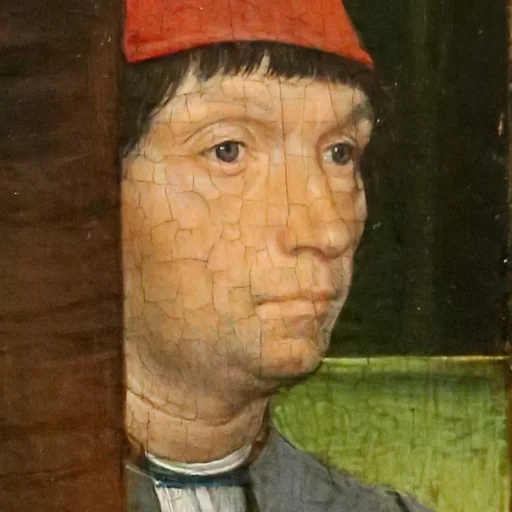
Hans Memling was a German-Flemish painter who worked in the tradition of Early Netherlandish painting.

![Saint Veronica [obverse], by Hans Memling](https://artifactworldgallery.com/img/hans-memling--saint-veronica-obverse--5a649fd8b09c96b9-w320.webp)