Artwork
Dresden Triptych
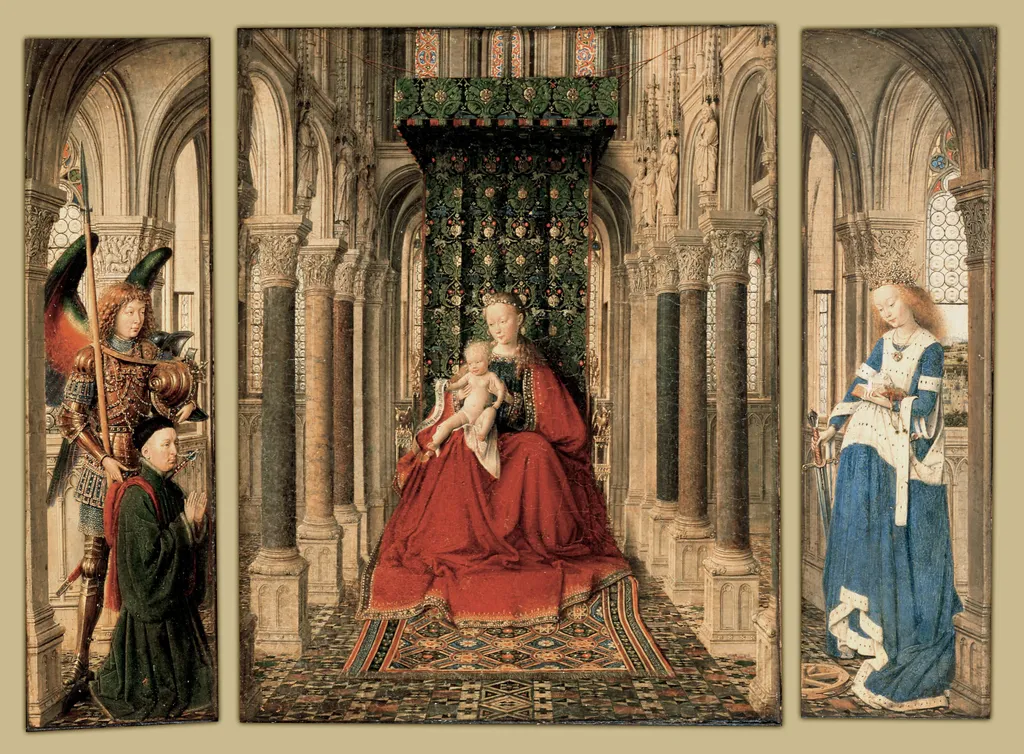
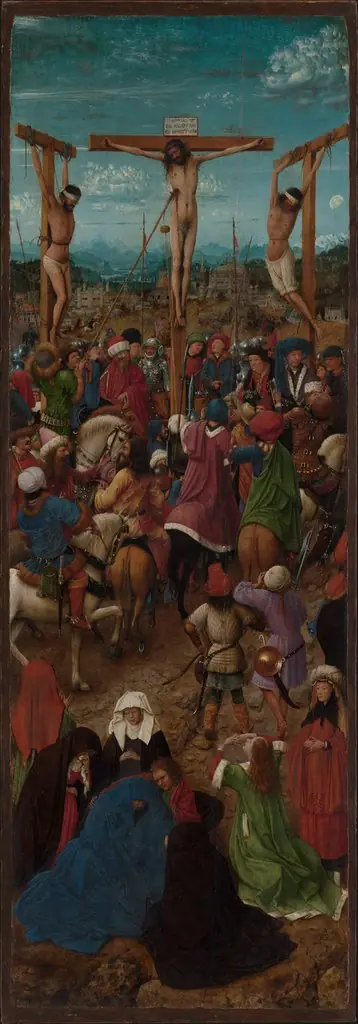
Dresden Triptych is an oil painting by the Northern Renaissance artist Jan van Eyck. It dates from 1437 and is held in the collection of the Staatliche Kunstsammlungen Dresden.
About this work
The work is signed and dated, making it the only surviving triptych attributed to van Eyck and the only non‑portrait bearing his personal motto.
The Dresden Triptych is a very small hinged‑triptych altarpiece painted in oil by Jan van Eyck in 1437. It has five panels – a central inner panel and two double‑sided wings – and stays in its original frame. The work is signed and dated, making it the only surviving triptych attributed to van Eyck and the only non‑portrait bearing his personal motto. It sits at the midpoint of his known output, echoing motifs from earlier paintings while showing a new skill in handling depth of space. Check out the Gemäldegalerie Alte Meister.
Overview
The Dresden Triptych, painted in oil in 1437, is a compact hinged altarpiece by Jan van Eyck. It comprises five painted surfaces: a central panel and two wings that are double‑sided, all retained within their original wooden frame. The work bears the artist’s signature and his motto, making it the sole surviving triptych and the only non‑portrait to display his personal inscription.
Subject & Meaning
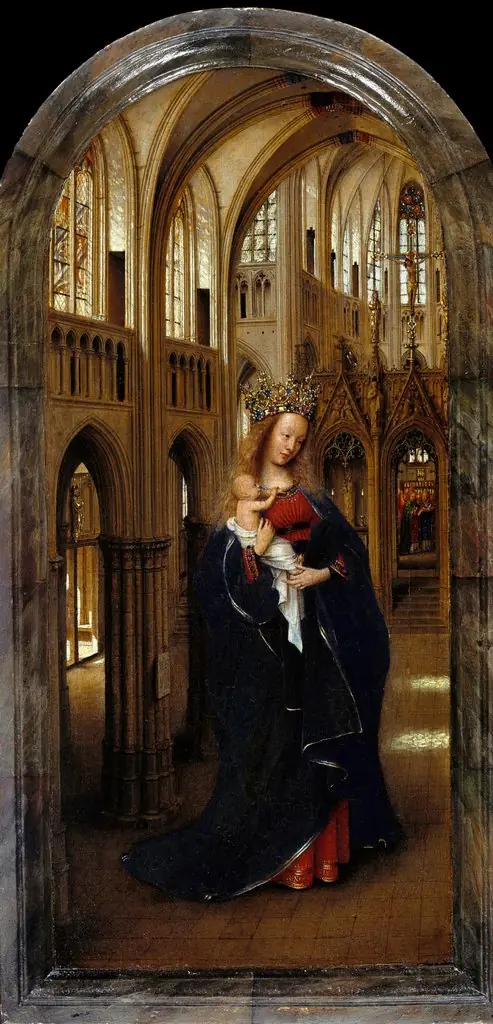
The central image presents a devotional scene centred on the Virgin Mary, establishing compositional and iconographic conventions that later influenced Marian portraiture across the Low Countries. The surrounding wing panels complement the central theme with related saints and symbolic elements, creating a cohesive theological narrative suitable for private worship.
Technique & Style
Van Eyck’s handling of spatial depth in the Dresden Triptych marks a notable development from his earlier oeuvre. The delicate modelling of figures, subtle gradations of light, and meticulous rendering of textures demonstrate his mature oil‑painting technique, while the compact scale required a refined, precise brushwork.
History & Provenance
Since its completion, the triptych has remained in its original frame and is now part of the permanent collection of the Gemäldegalerie Alte Meister in Dresden. The signed and dated panel provides a clear chronological anchor within van Eyck’s career, placing the work at the midpoint of his known production.
Context
Created during a period when van Eyck was consolidating his reputation, the Dresden Triptych revisits motifs from his earlier paintings while introducing new spatial arrangements. Its iconography reflects contemporary devotional practices and the growing emphasis on personal, intimate religious objects in the early 15th‑century Netherlandish context.
Artist & collection
Artist
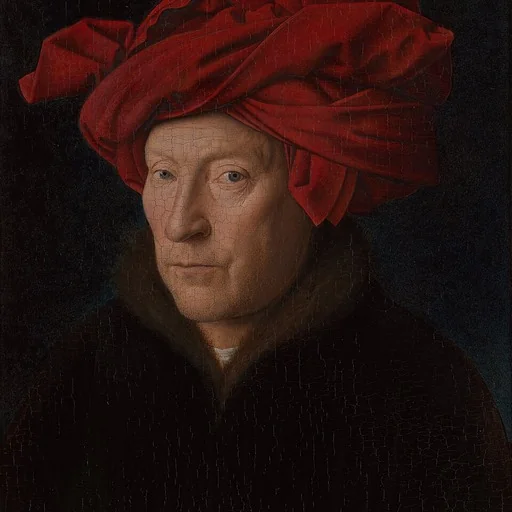
Jan van Eyck was a sharp-eyed observer who spent his life in the Low Countries, painting what he saw with almost eerie precision.

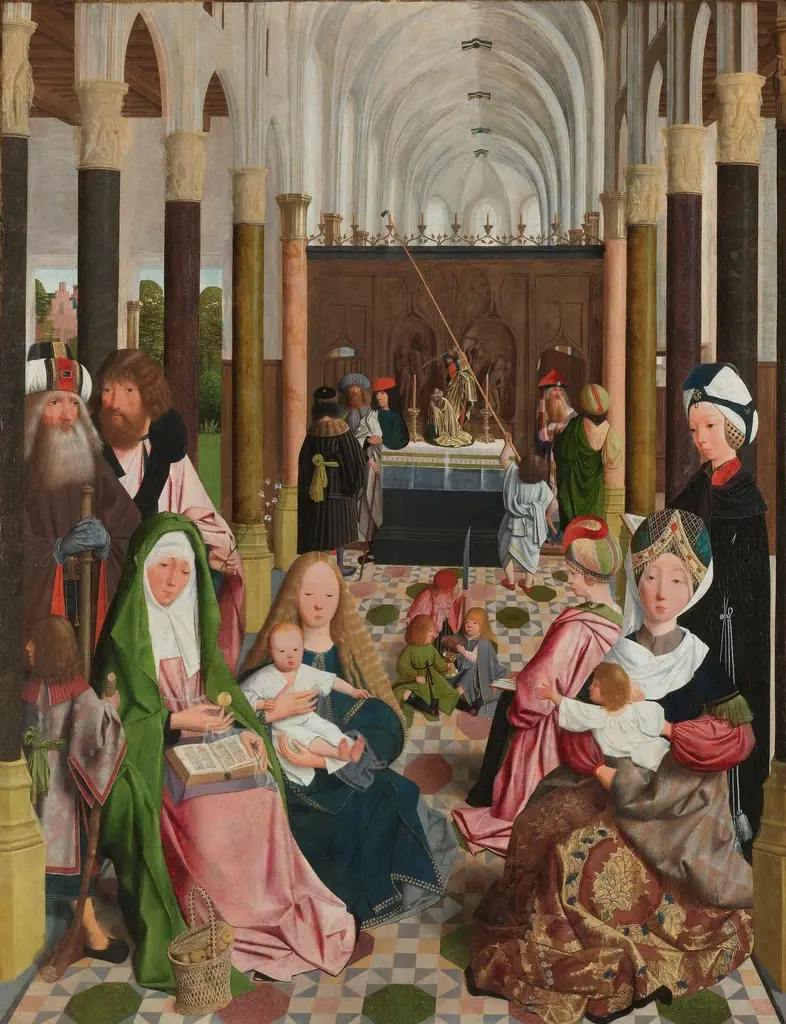 The Holy Kinship
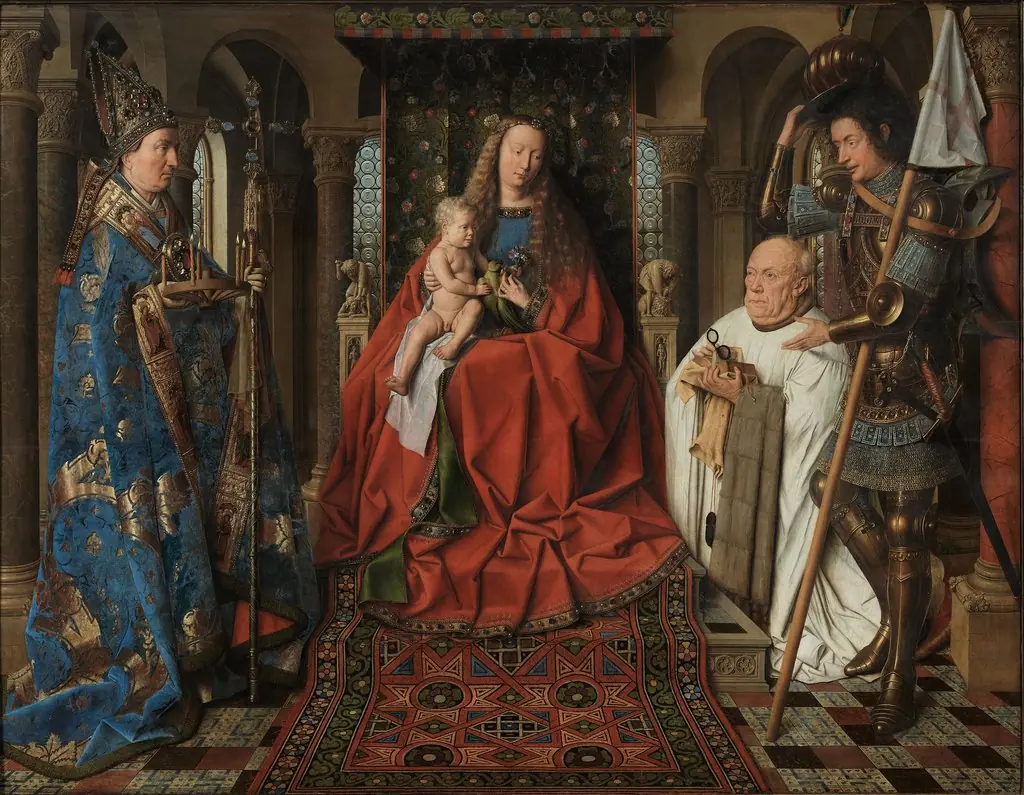
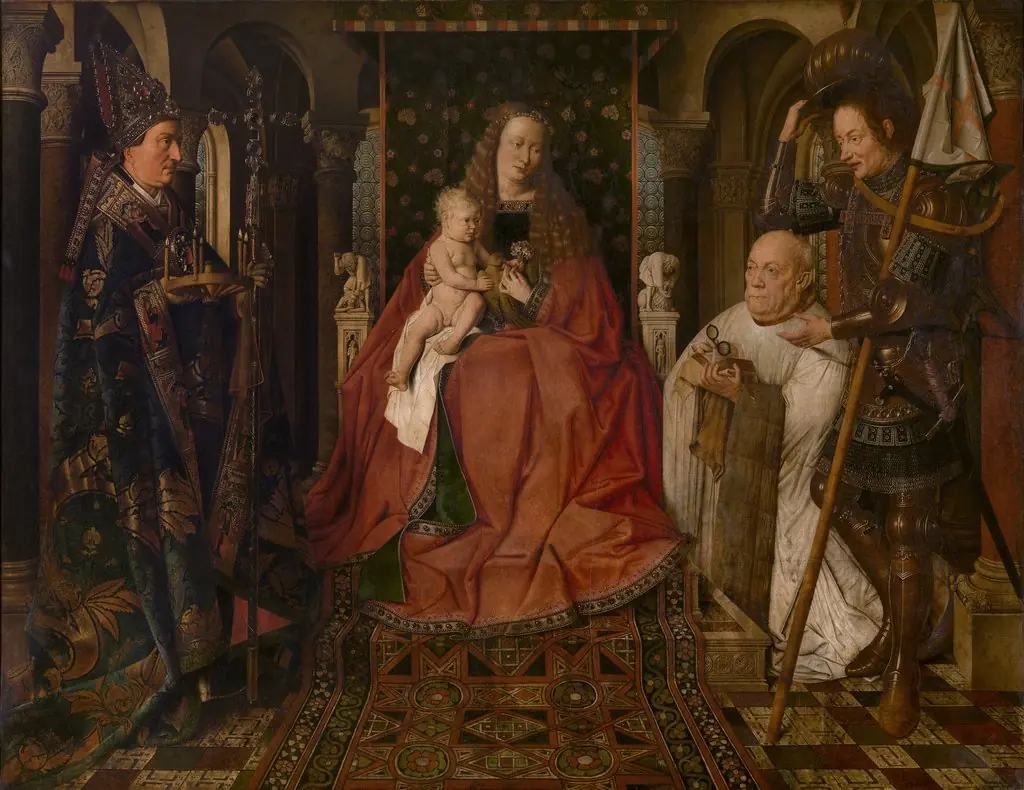 Madonna surrounded by Saint George, Saint Donatianus of Reims and the Donor Canon Van der Paele
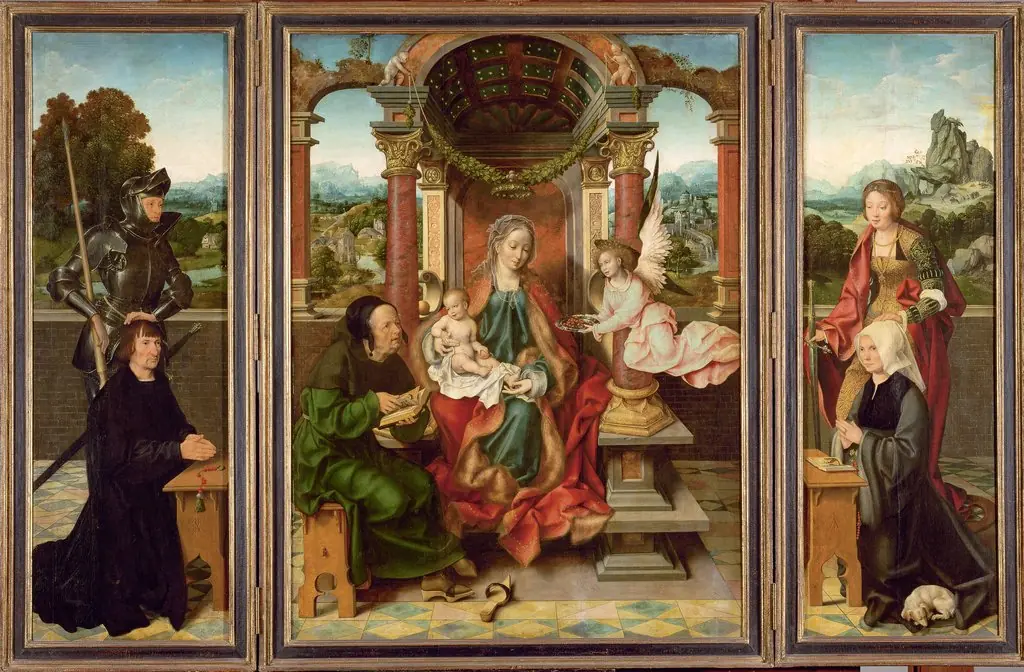 Winged Altar
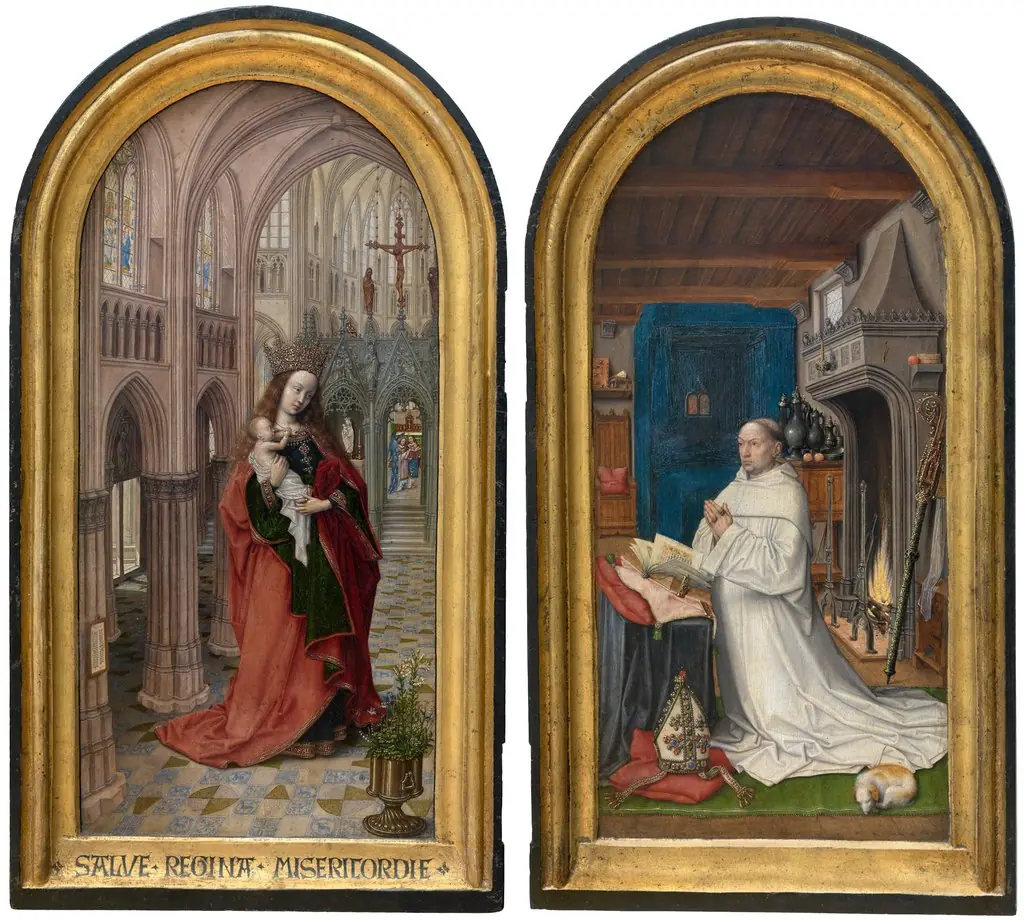 Diptych of Christiaan de Hondt, abbott at Ter Duinen
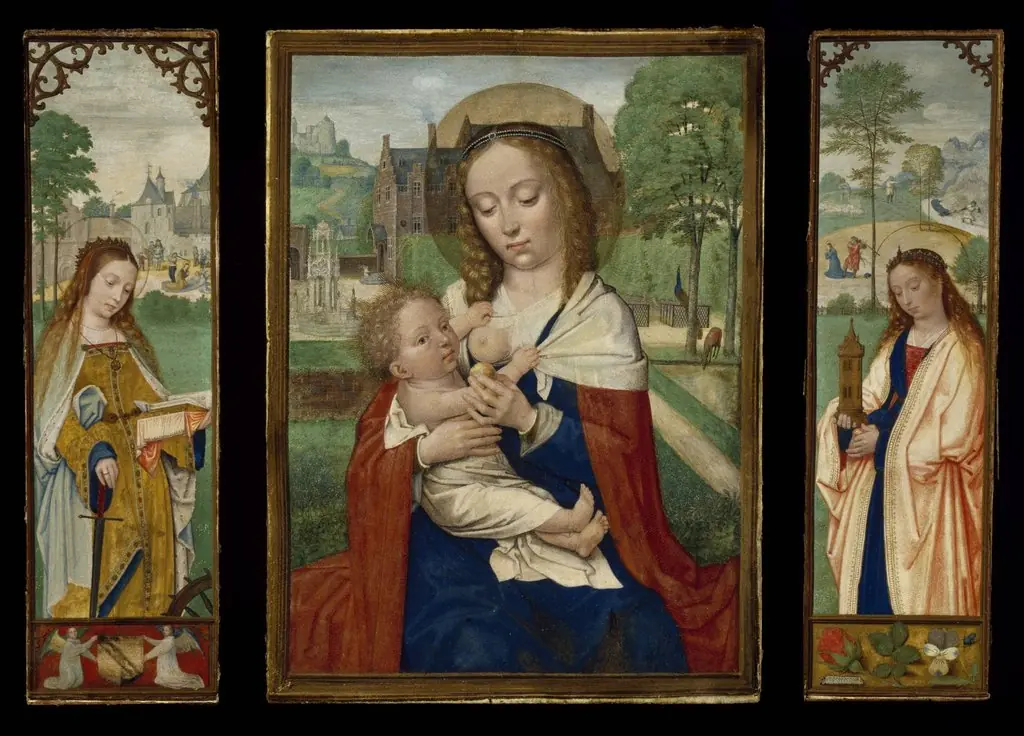 Triptych of Virgin and Child; Saints Catherine and Barbara
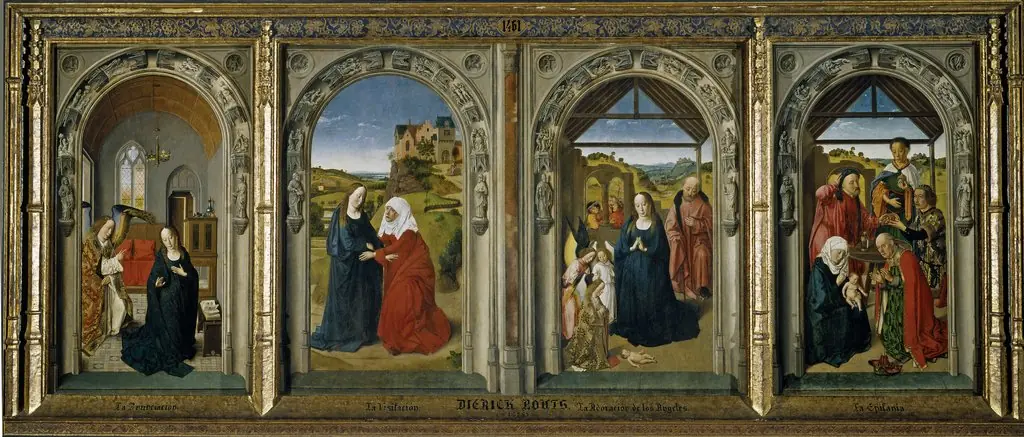 Triptych with Scenes from the Life of the Virgin
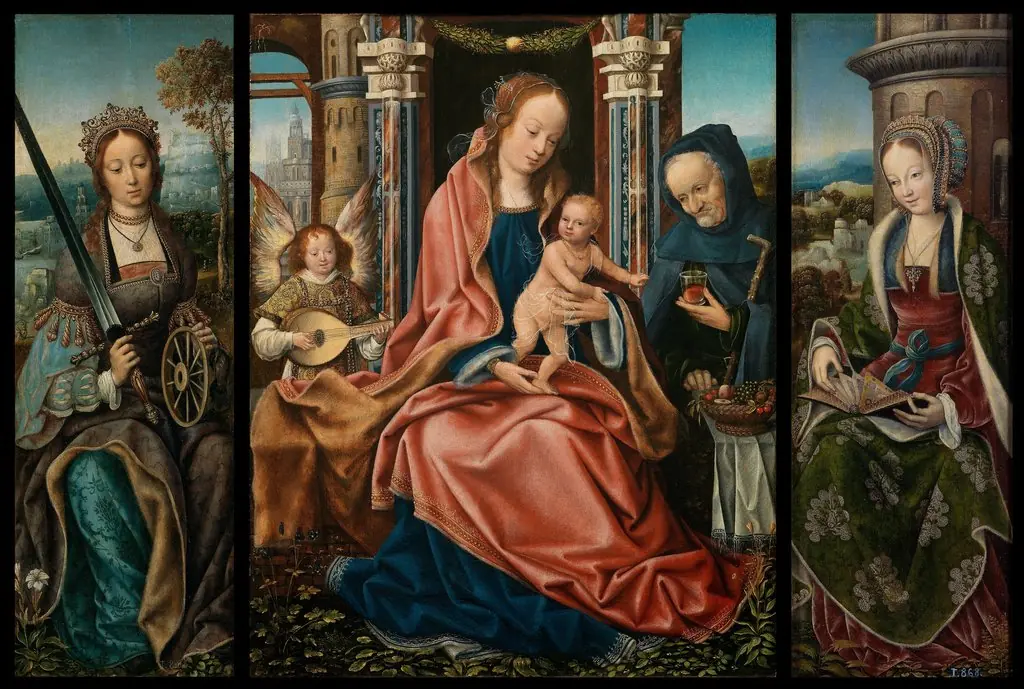 The Holy Family with a Musician Angel Saints Catherine and Barbara
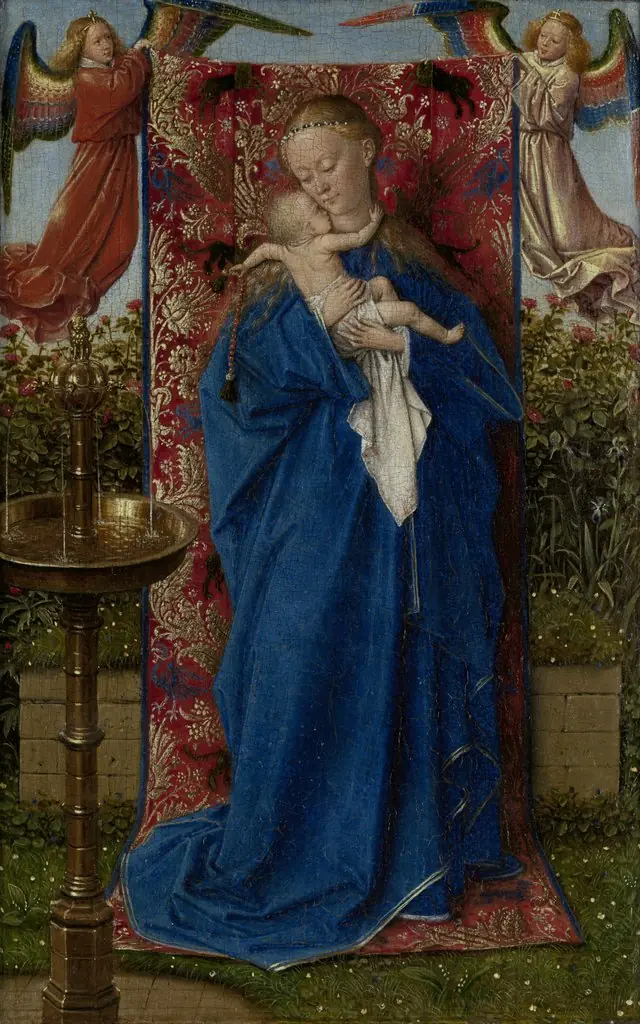
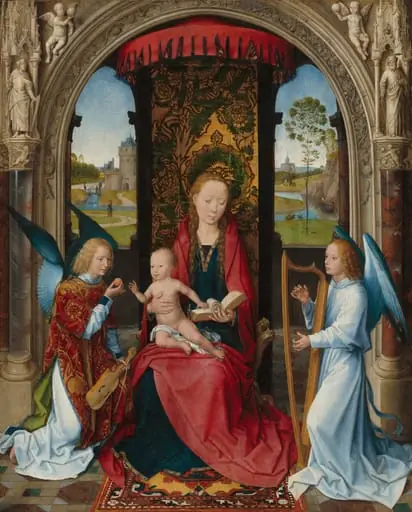 Madonna and Child with Angels