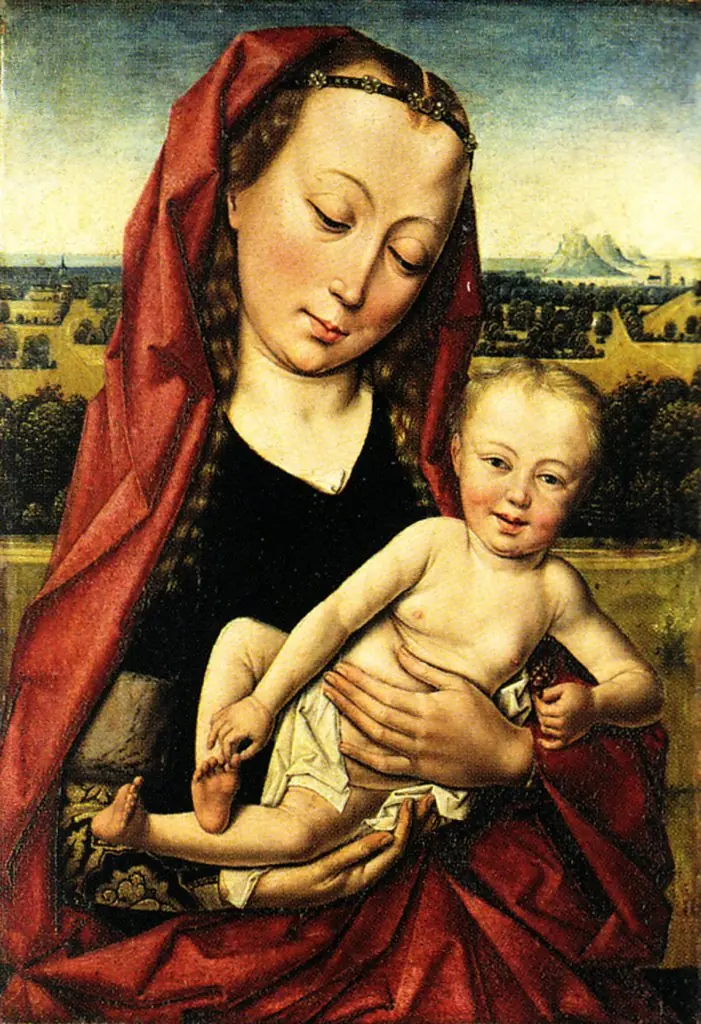
Artwork
Mare de Déu de la llet
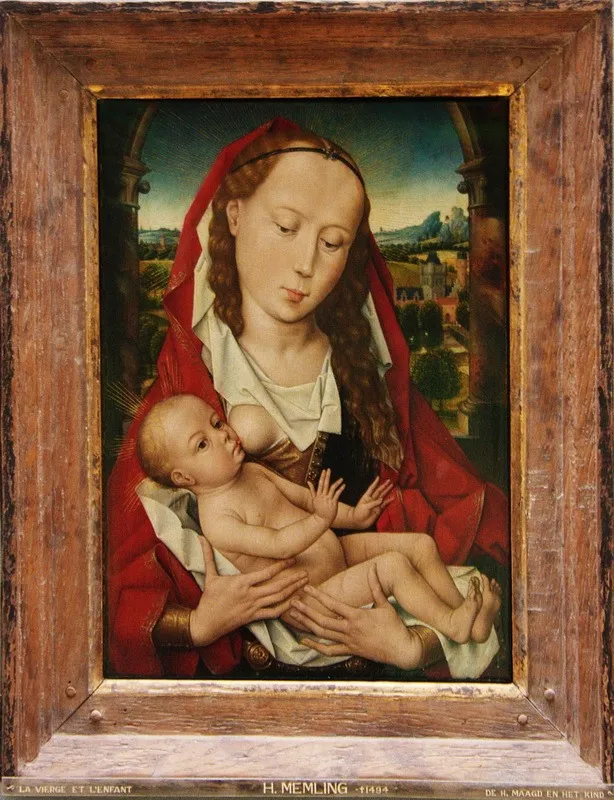
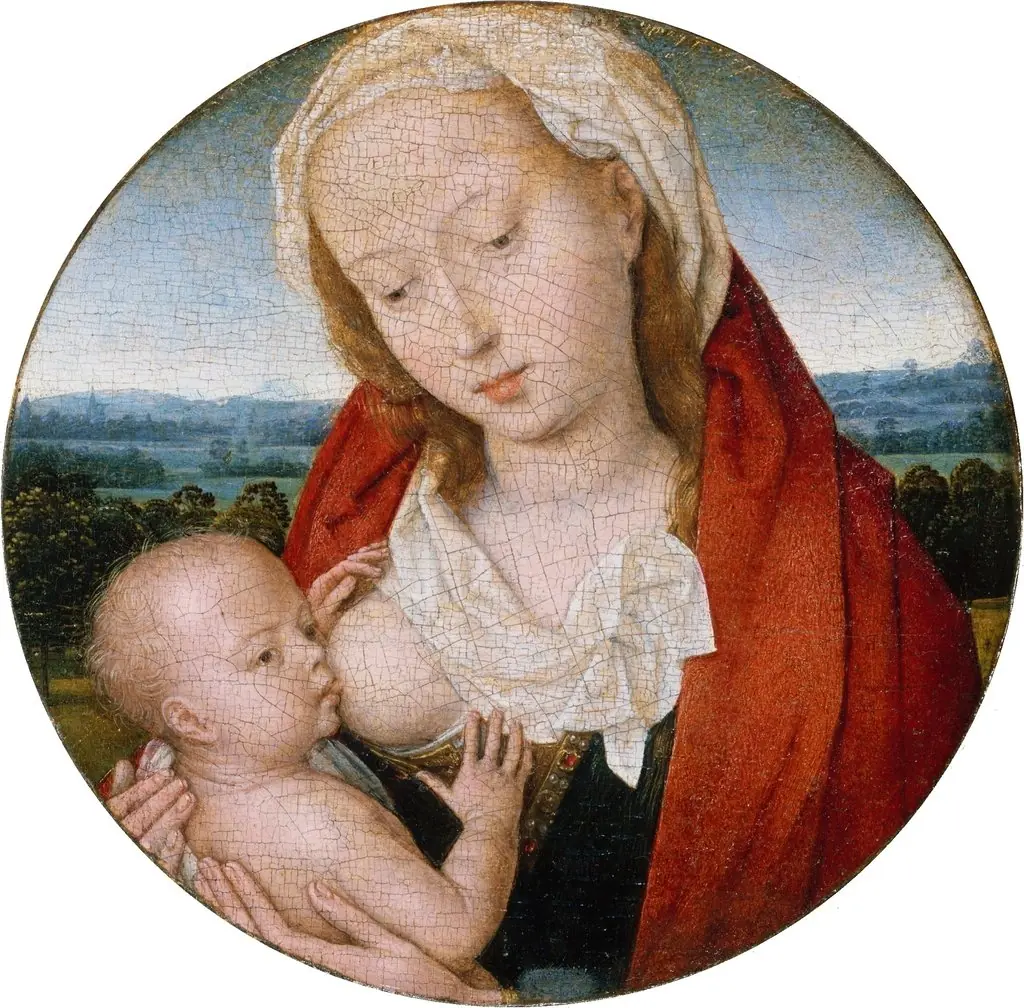
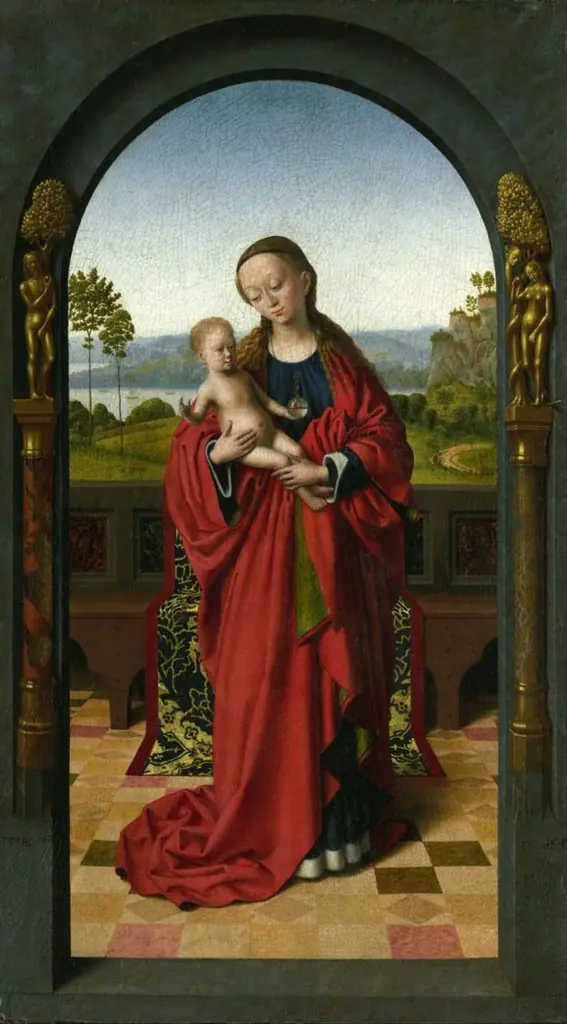
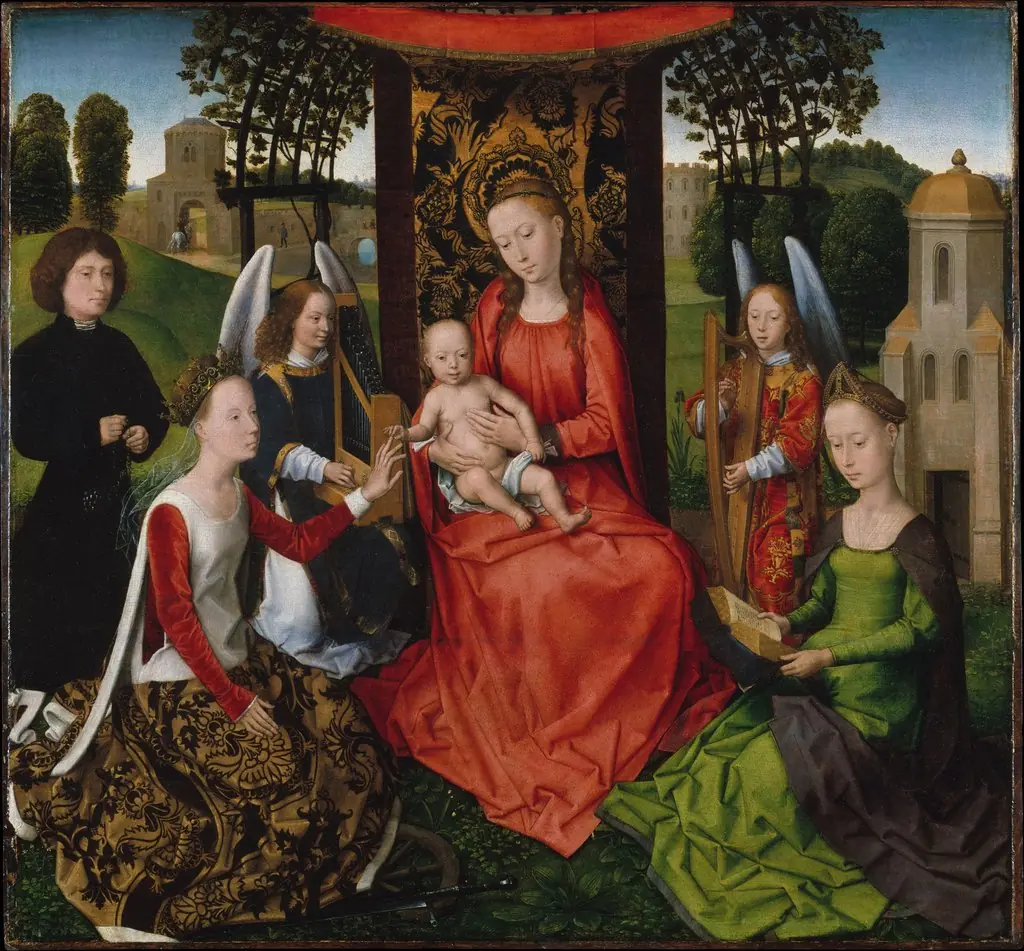
Mare de Déu de la llet is an oil painting by the Northern Renaissance artist Hans Memling. It dates from 1467 and is held in the collection of the Royal Museums of Fine Arts of Belgium.
About this work
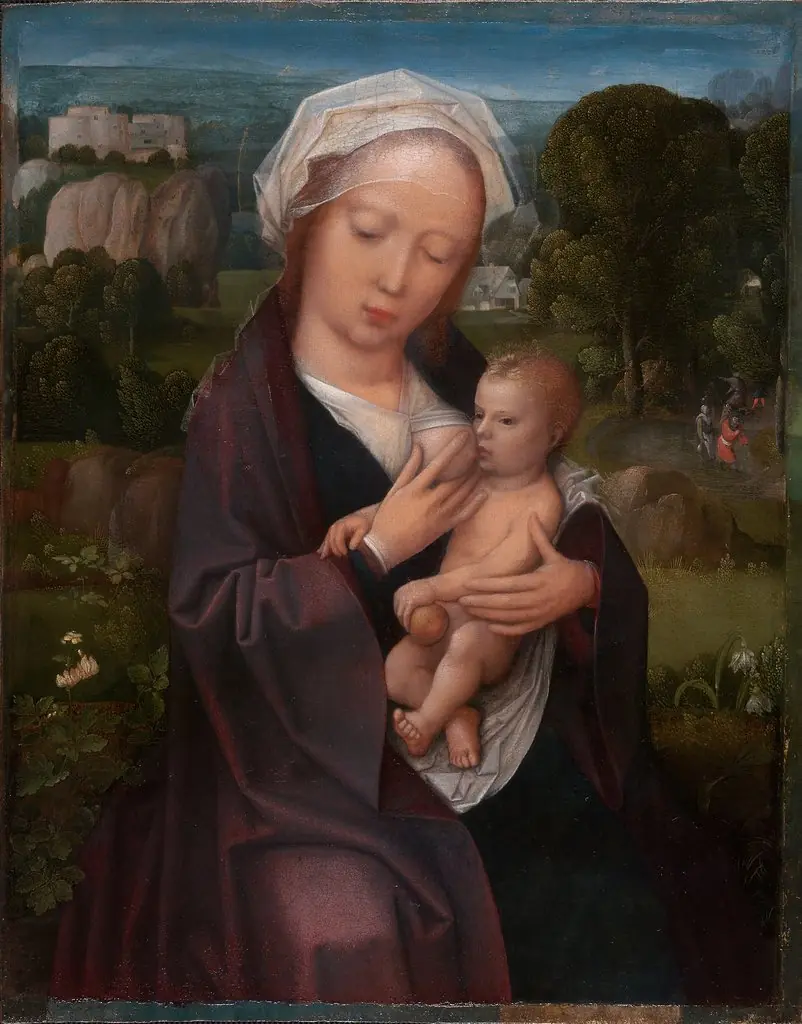
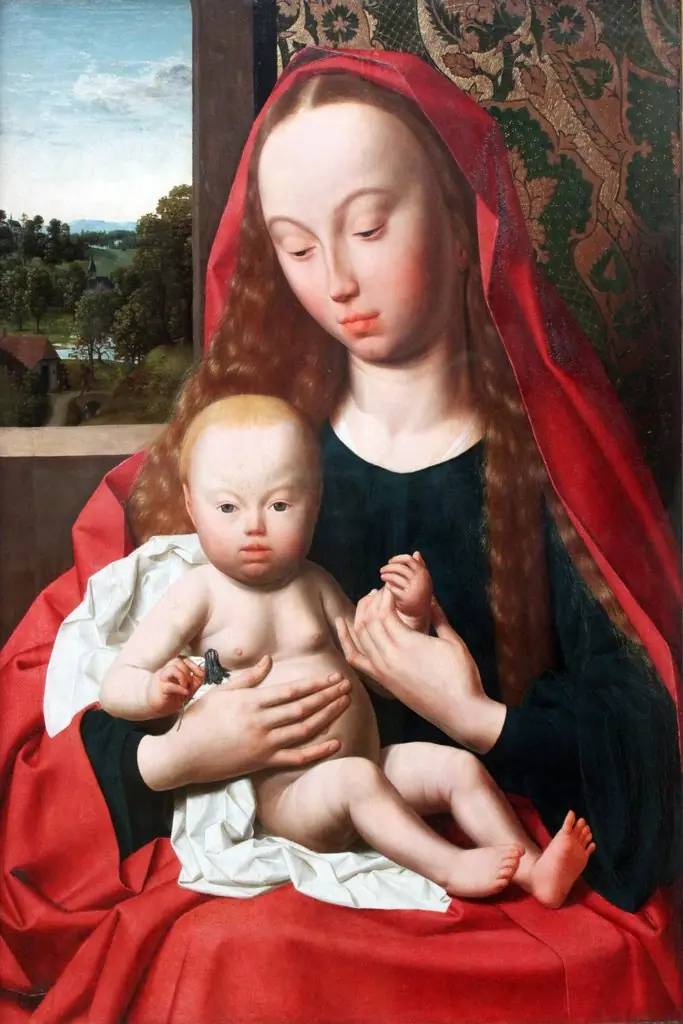
In the background, there's a landscape with trees, buildings, and a mountain.
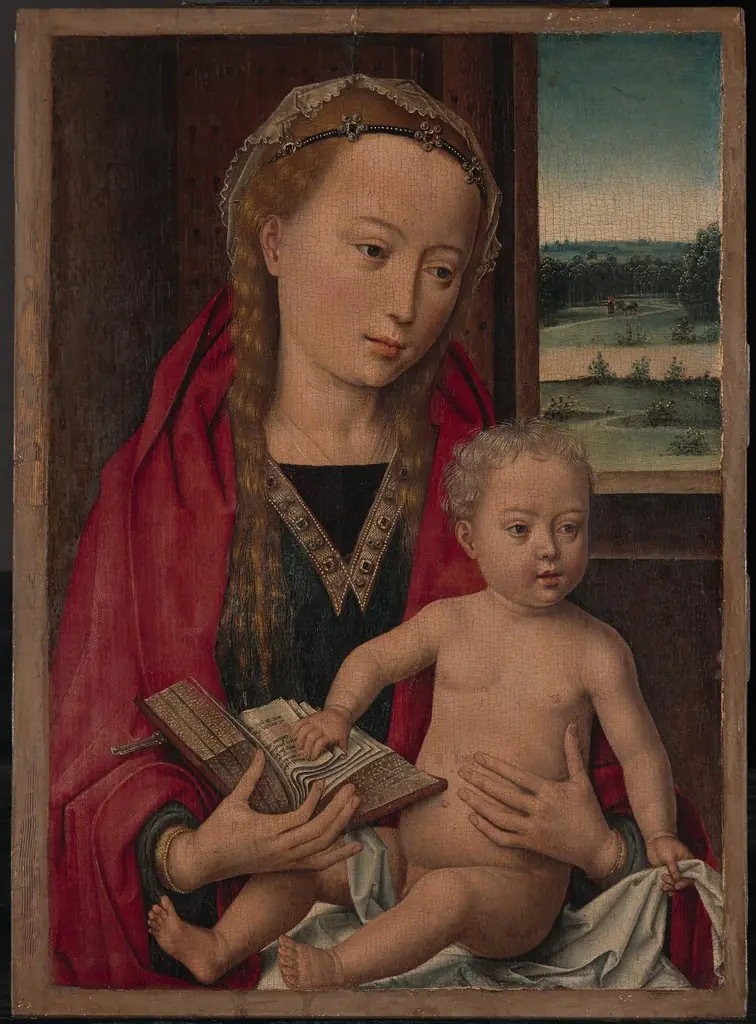
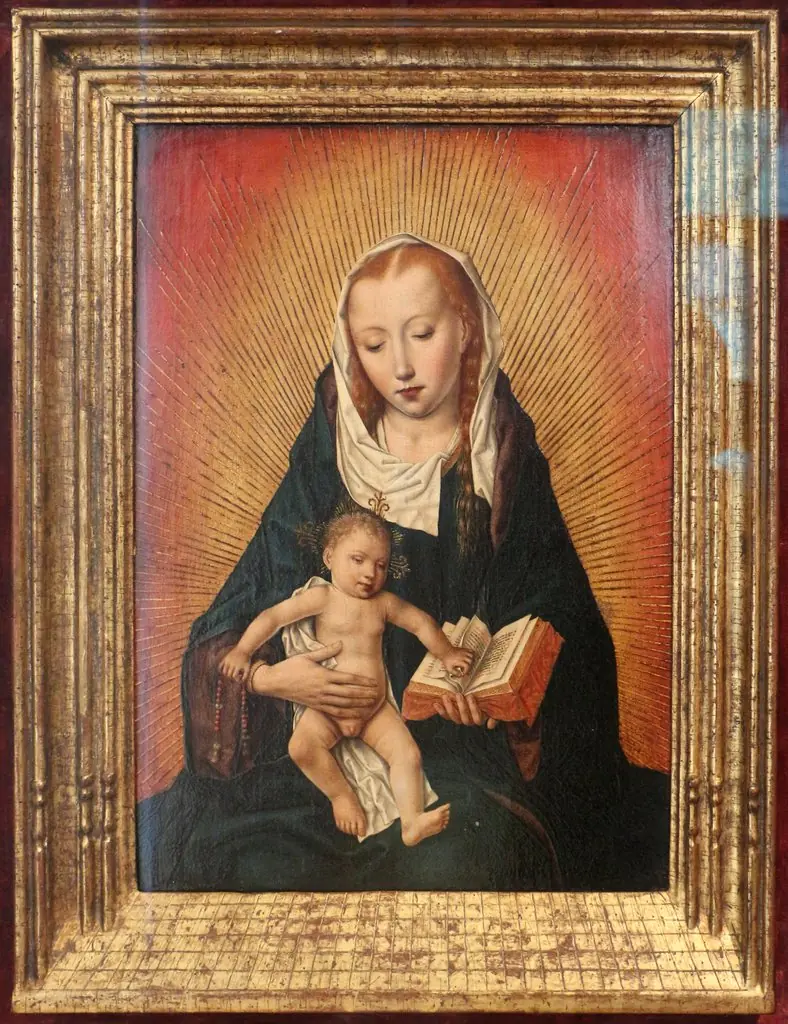
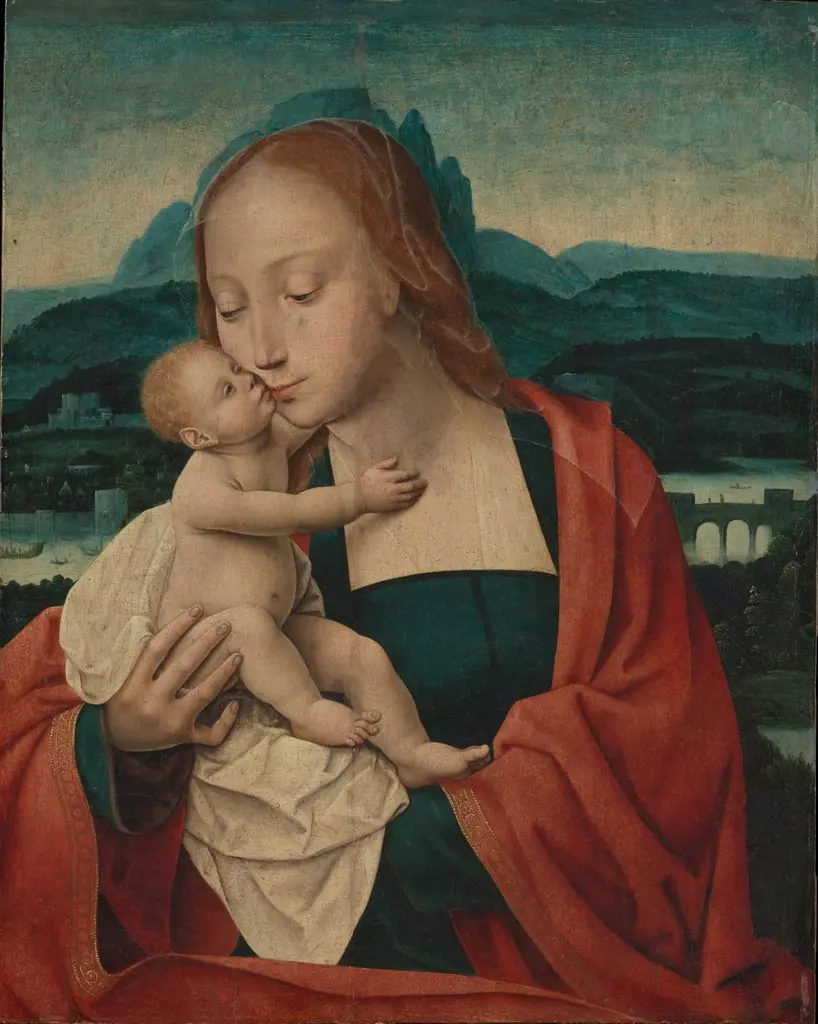
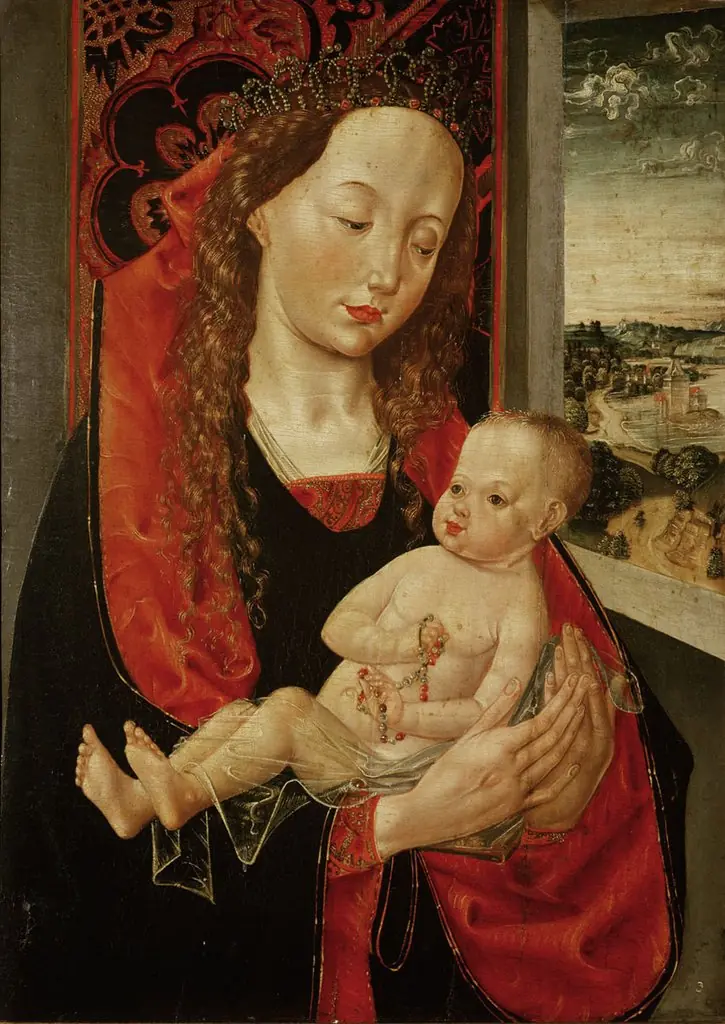
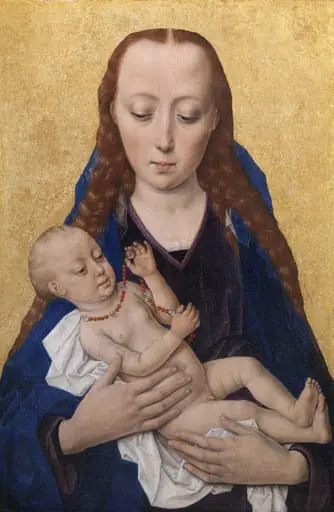
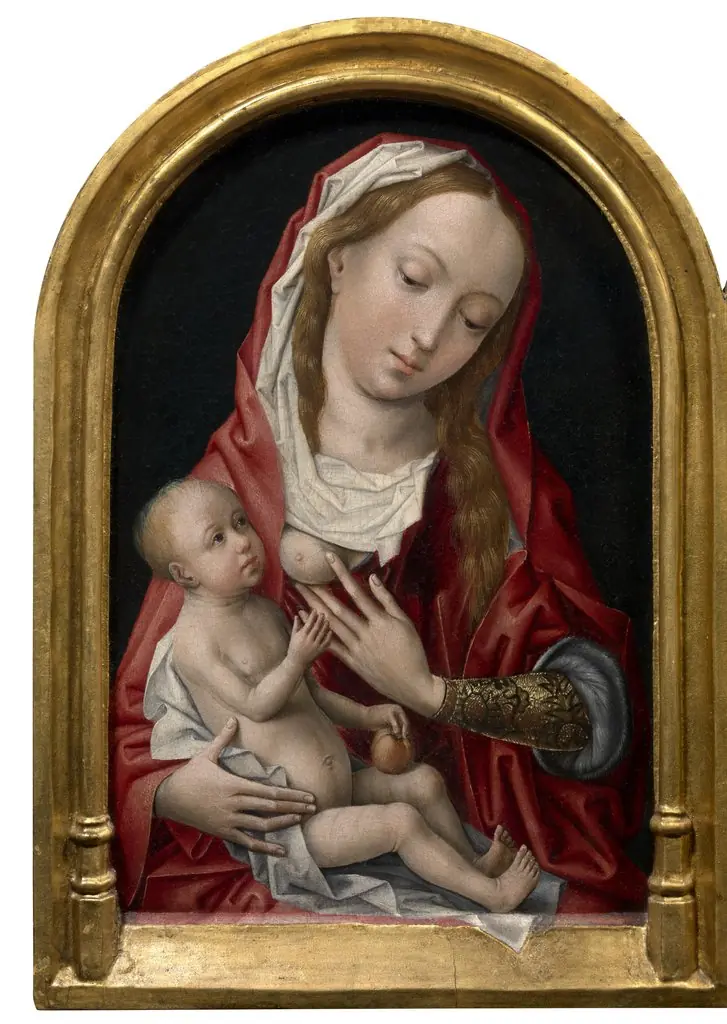
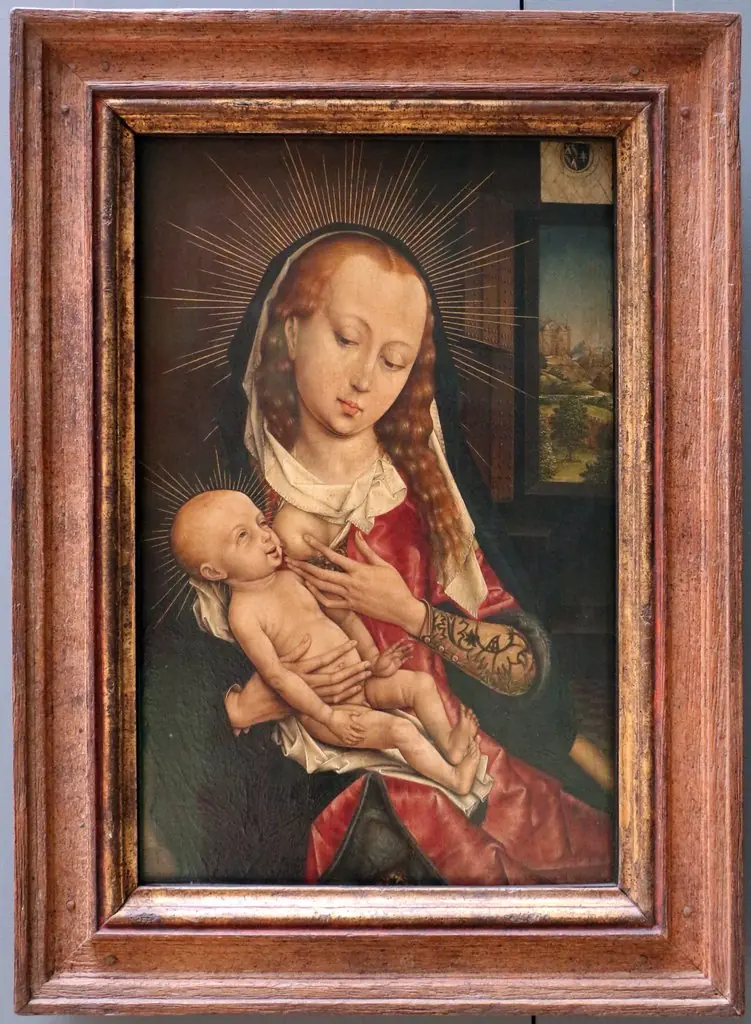
This painting shows a woman in a red cloak holding a naked baby. She's wearing a white shirt and a gold necklace, and has a black headband. The baby is looking at her, and she's looking down at him.
In the background, there's a landscape with trees, buildings, and a mountain. The sky is blue with a few clouds. The woman and the baby are in front of an archway.
The painting is very detailed, with lots of colors and textures. It's an example of oil painting from the 15th century. You can learn more about the artist, Hans Memling, who painted this.
Overview
Painted in 1467 by Hans Memling, this oil-on-panel work depicts the Virgin Mary with the infant Jesus. It belongs to the Northern Renaissance tradition, characterized by meticulous detail and devotional focus. The painting is part of the collection at the Royal Museums of Fine Arts of Belgium, where it has been preserved since the 19th century.
Subject & Meaning
The Virgin Mary, identified by her red cloak and gold necklace, holds the Christ Child, who gazes upward at her. Her downward glance conveys tenderness and contemplation, reinforcing the intimate bond between mother and child. The title, 'Mare de Déu de la llet'—Mother of God of the Milk—references a Marian devotion tied to nursing, symbolizing spiritual nourishment and divine compassion.
Technique & Style
Memling employs oil paint to achieve fine gradations of light and texture, particularly in the fabric of Mary’s garments and the softness of the child’s skin. The background features a detailed landscape with distant buildings and a mountain, rendered with atmospheric perspective. The archway frames the figures, drawing focus while suggesting a sacred threshold between earthly and divine realms.
History & Provenance
The painting was likely commissioned for private devotion in the Low Countries. It entered the Belgian royal collection in the 1800s, following the dissolution of religious institutions during the French Revolutionary period. Its survival through centuries of political and religious change reflects its enduring value as a devotional object and artistic achievement.
Context
In 15th-century Flanders, devotional images of the Virgin and Child were common in both public and private settings. Memling, working in Bruges, catered to a wealthy clientele seeking personal piety through finely crafted art. This painting aligns with regional trends favoring naturalism, rich color, and emotional restraint over dramatic expression.
Legacy
The work exemplifies Memling’s mastery of quiet intimacy within religious imagery. While not widely reproduced, it remains a key reference for understanding Northern Renaissance devotional painting. Its preservation in a major European museum ensures continued scholarly attention and public access to its subtle emotional depth.
Artist & collection
Artist
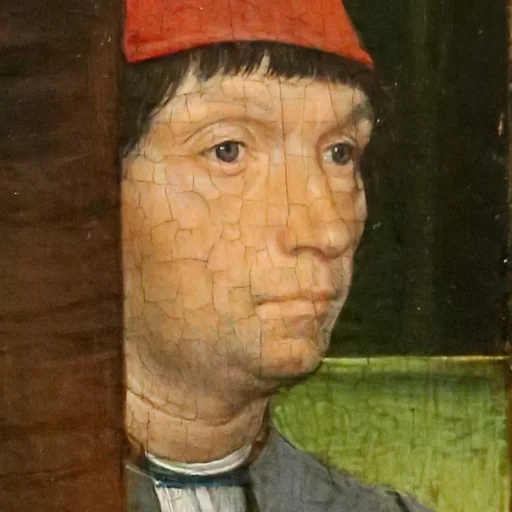
Hans Memling was a German-Flemish painter who worked in the tradition of Early Netherlandish painting.

Museum
Royal Museums of Fine Arts of Belgium
Continue through works from the same source collection.
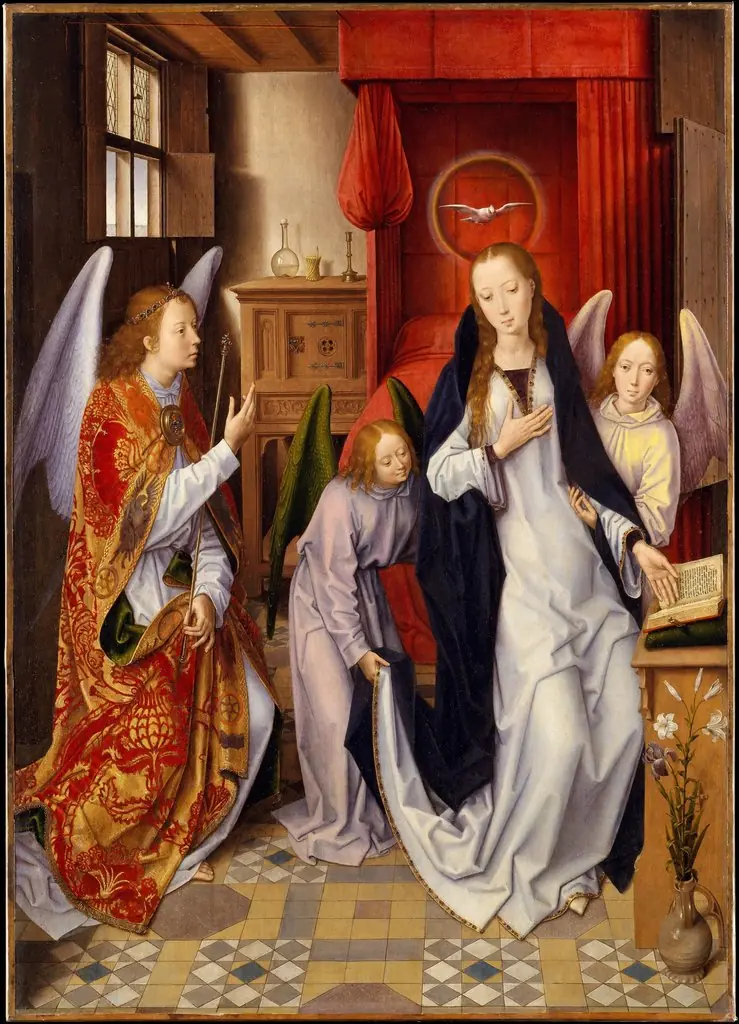
![Saint Veronica [obverse], by Hans Memling](https://artifactworldgallery.com/img/hans-memling--saint-veronica-obverse--5a649fd8b09c96b9-w320.webp)