Artwork
Virgin and Child
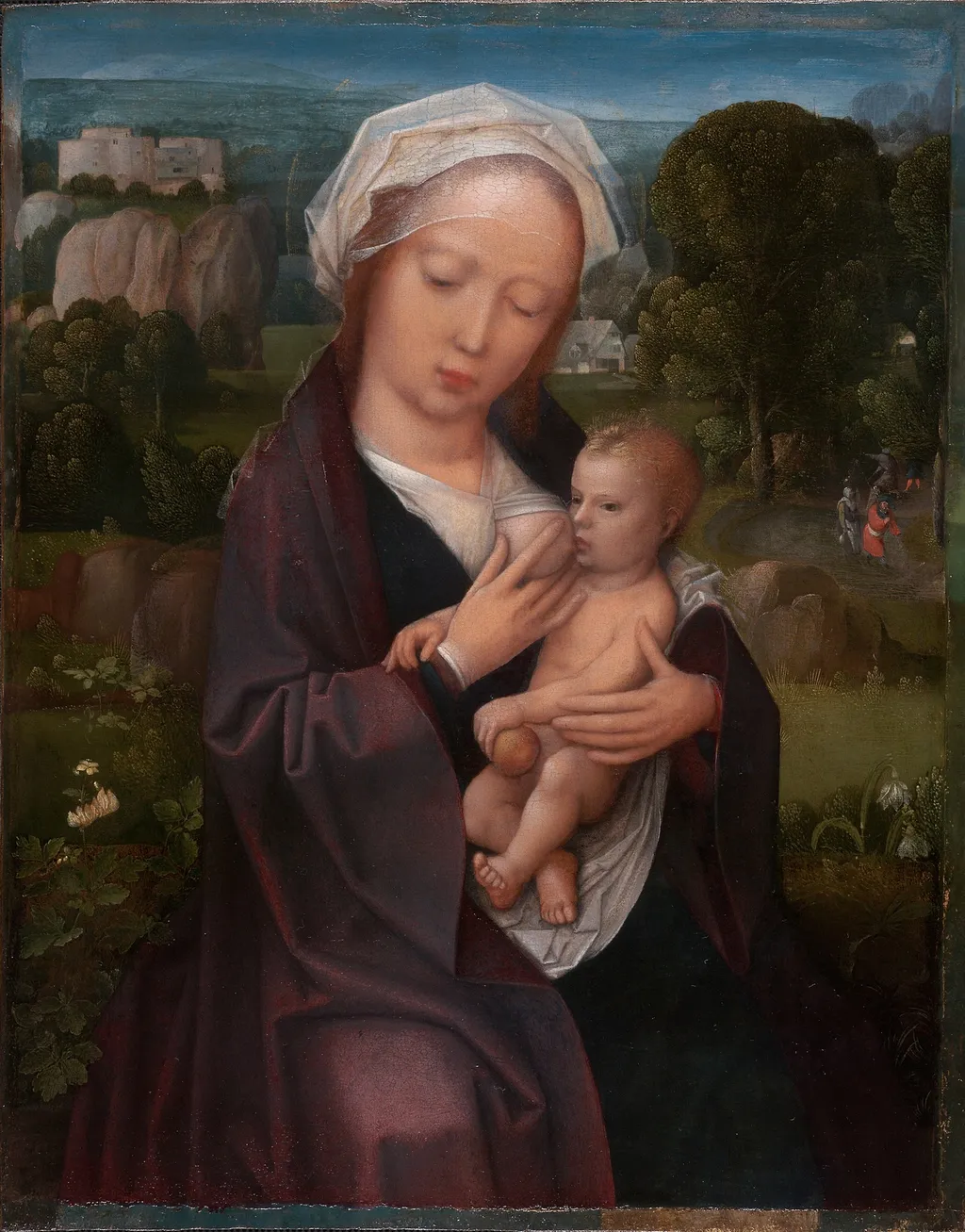
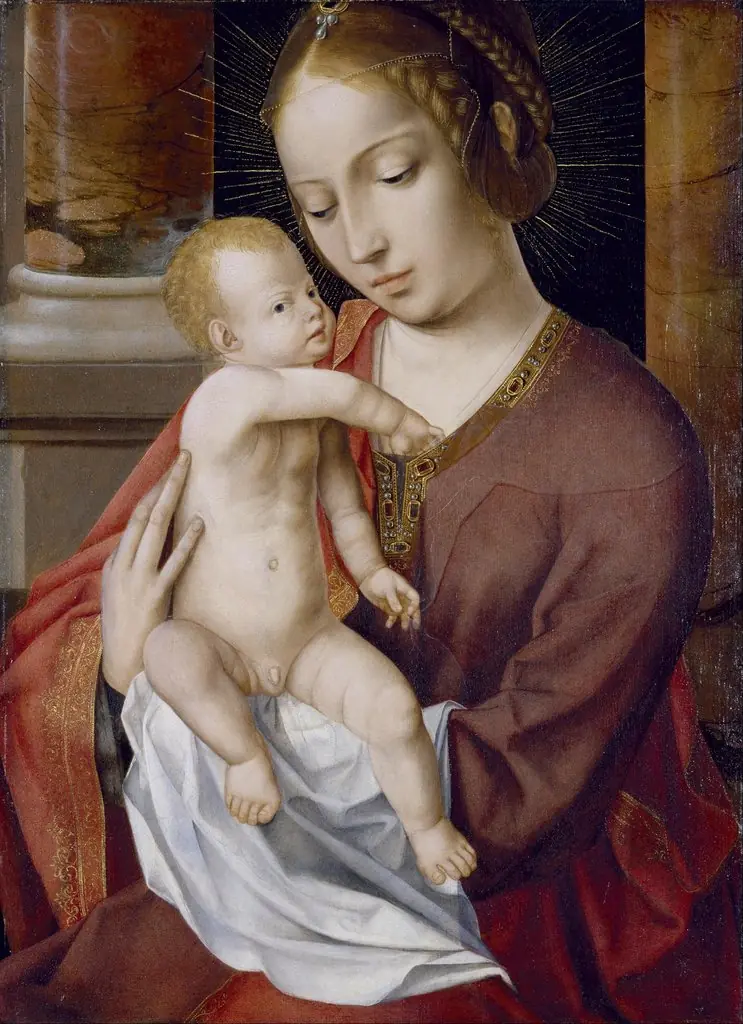
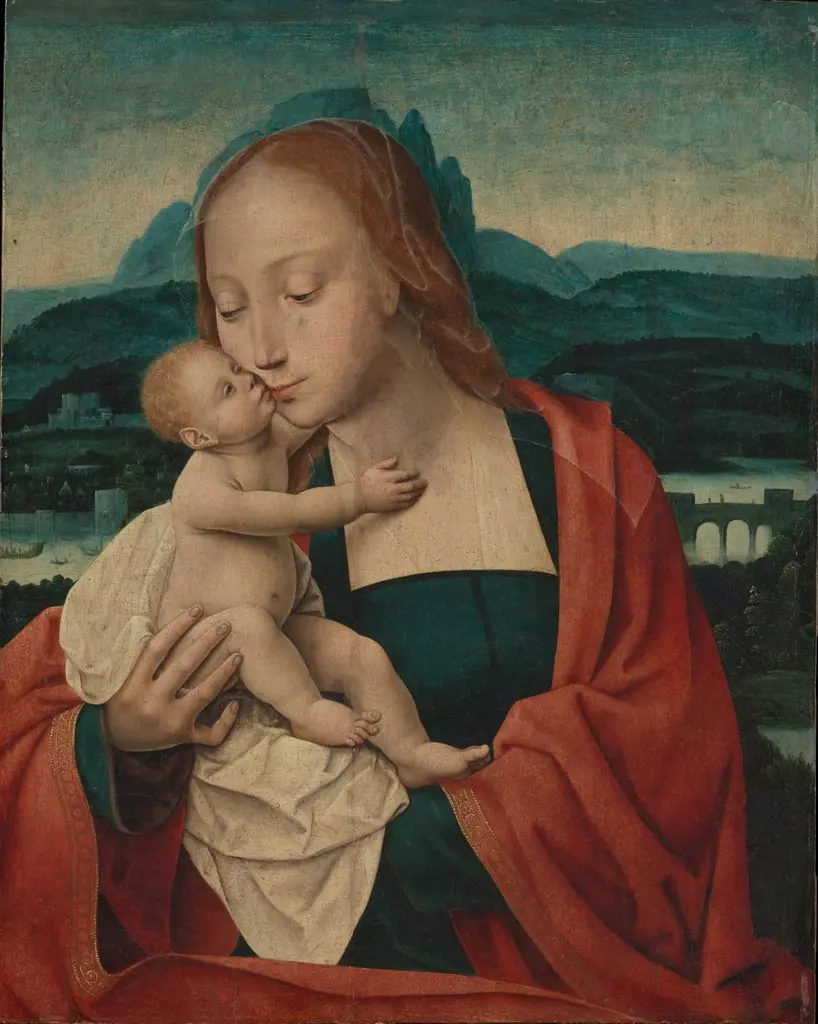
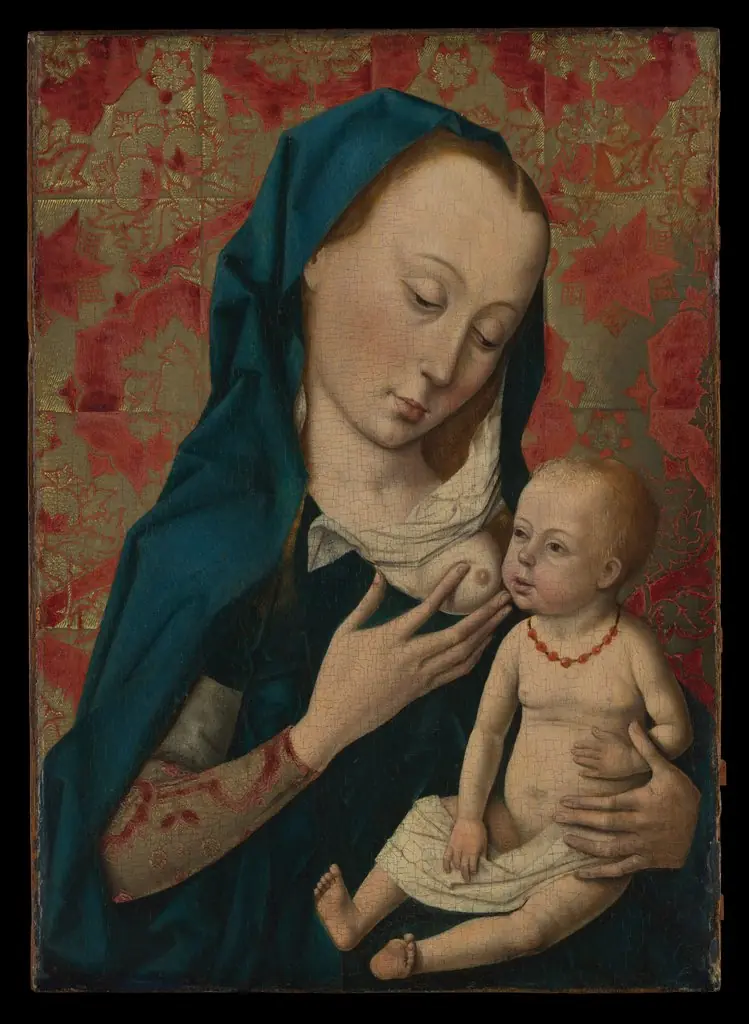
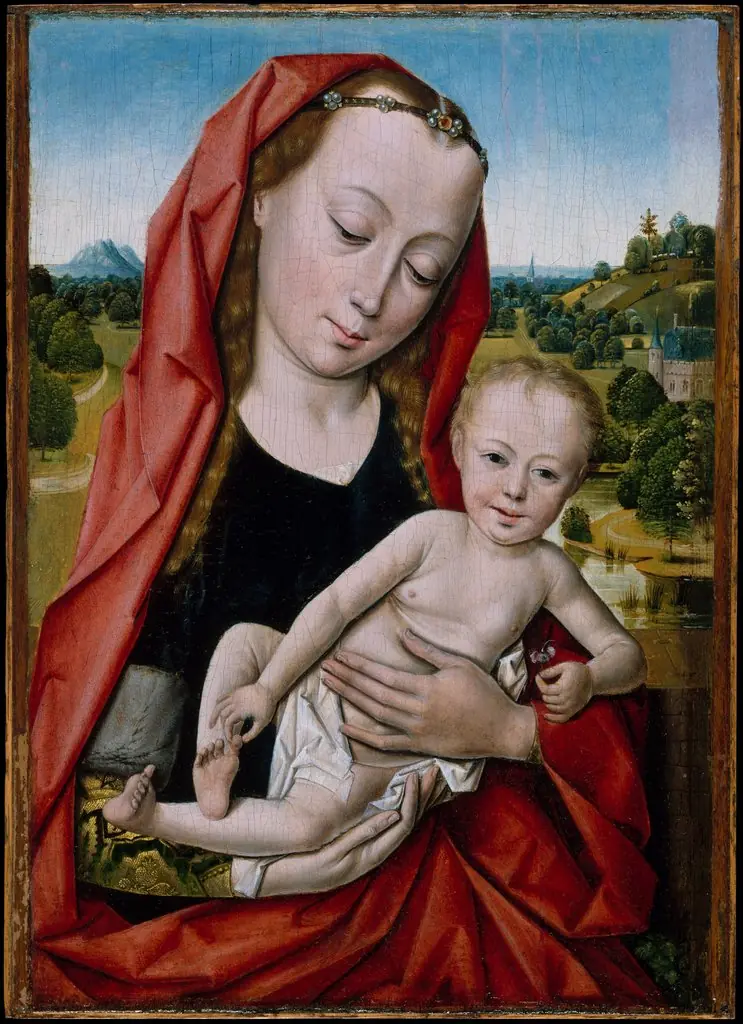
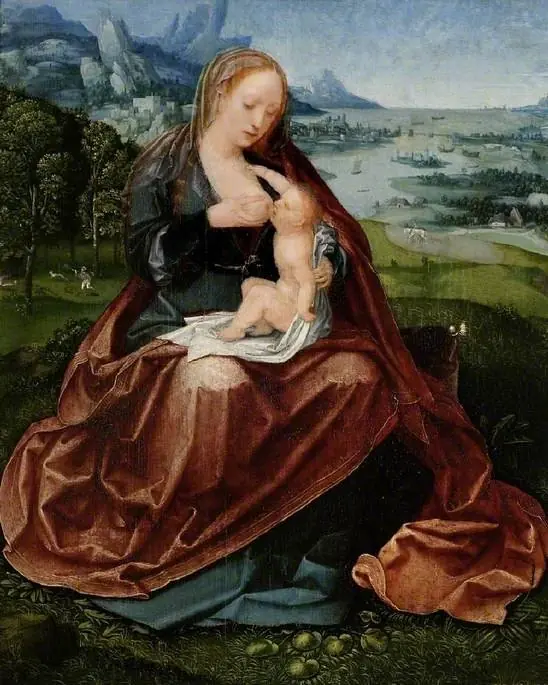
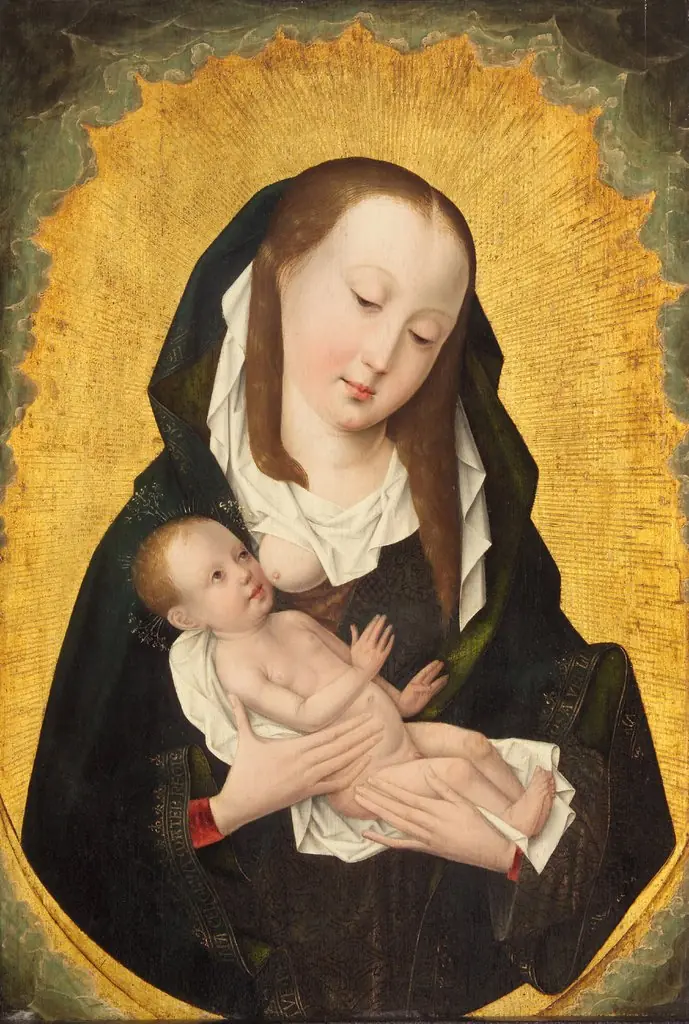
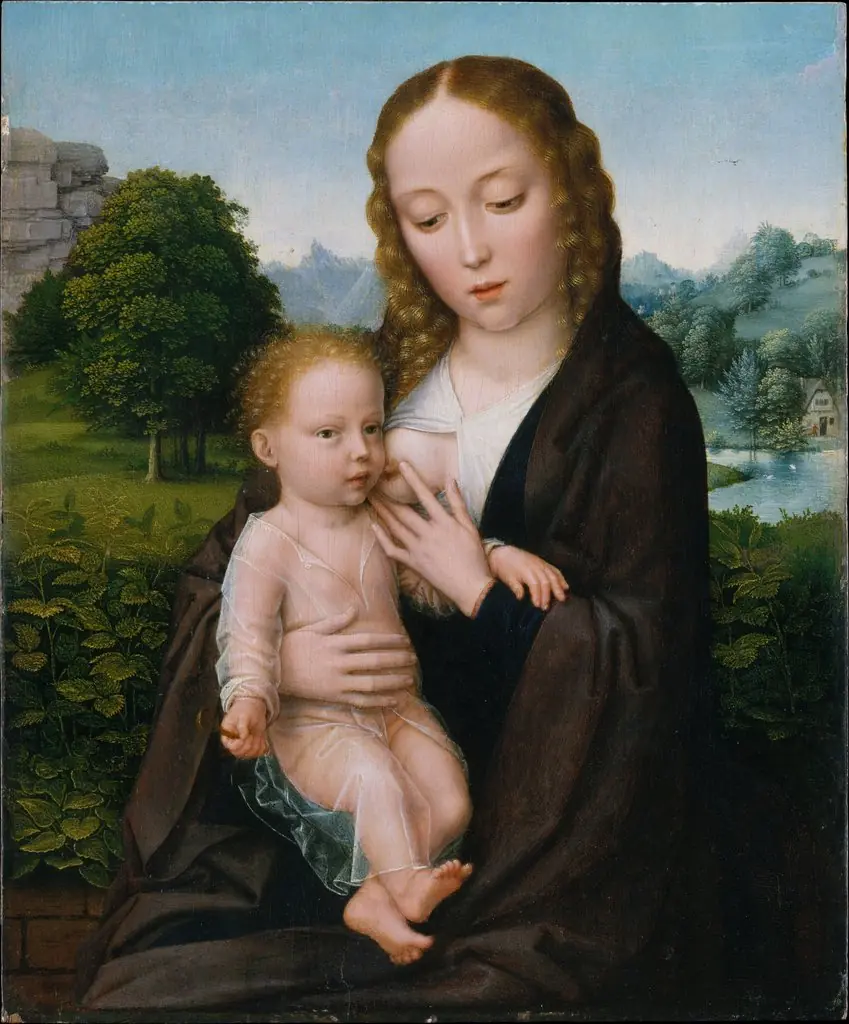
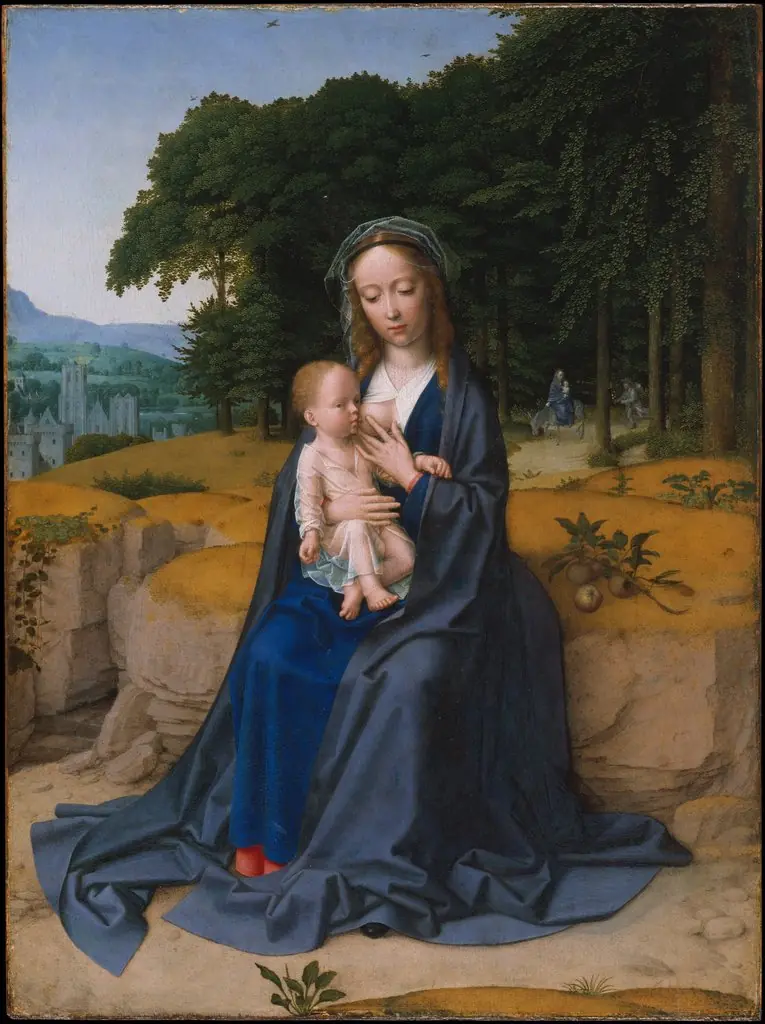
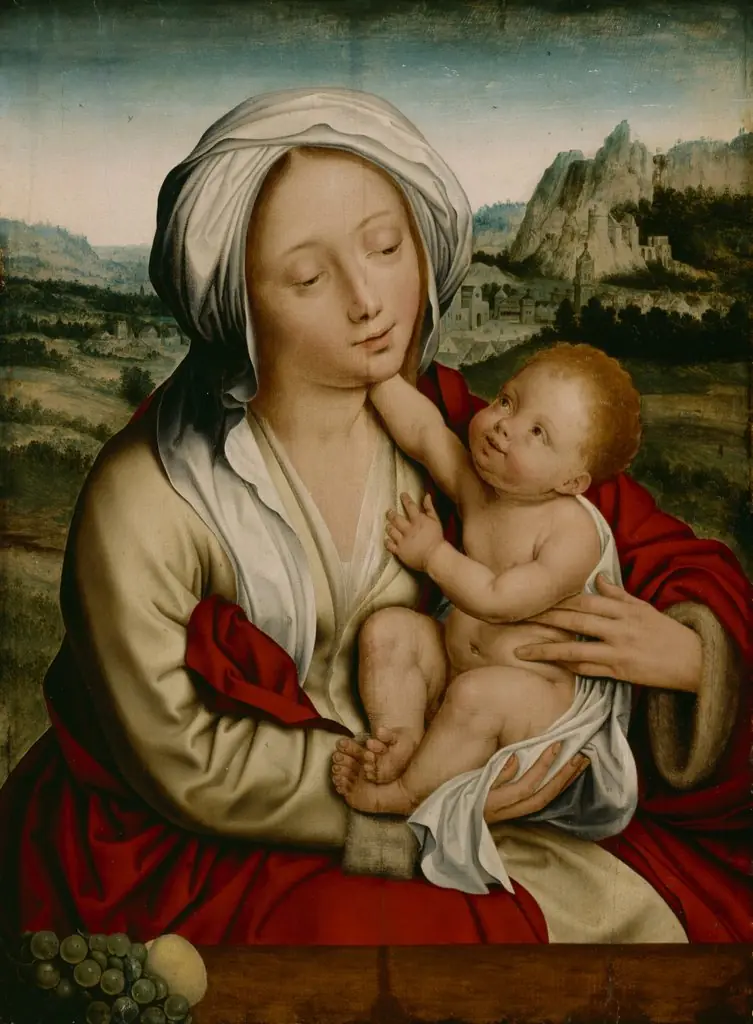
Virgin and Child is an oil painting by the Northern Renaissance artist Unknown. It dates from 1518 and is held in the collection of the Art Institute of Chicago. The work depicts a seated woman in a white head covering and a dark mantle, cradling a nude infant.
About this work
Overview
The work depicts a seated woman in a white head covering and a dark mantle, cradling a nude infant. The mother’s eyes are gently closed as she gazes downward, while the child, clutching an apple, looks back toward her. Behind them a broad landscape unfolds, featuring trees, rocky outcrops, distant structures, and small figures, all beneath a clear blue sky.
Subject & Meaning
The composition presents the traditional Christian theme of the Virgin and Child, with the apple serving as a symbolic reference to the fruit of the Fall, hinting at the infant’s future role in redemption. The tender interaction between mother and child emphasizes both maternal devotion and theological significance, inviting contemplation of innocence and sacrifice.
Technique & Style
Executed in oil on canvas, the painting employs a soft modeling of flesh tones and a muted palette for the garments, contrasting with the brighter, atmospheric background. The handling of light creates a gentle chiaroscuro that highlights the figures, while the distant landscape is rendered with looser brushwork, suggesting depth without detracting from the central scene.
History & Provenance
The piece belongs to a broader tradition of European devotional paintings that proliferated from the late medieval period through the Baroque. While specific details of its creation and ownership are not recorded, its subject matter and stylistic traits align it with works produced for private contemplation or small chapels.
Context
Set within a pastoral environment, the background reflects the Renaissance interest in integrating sacred narratives with naturalistic settings. The inclusion of everyday elements—trees, buildings, and distant figures—situates the holy figures within a recognizable world, a practice that aimed to make the divine more accessible to contemporary viewers.
Artist & collection

 Domestic Scene
 Giacomo and Cardinal Marco, investing Andrea, Abbot of San Zeno, with his Benefice
 The Nymph of Fontainebleau
 Portrait of a Woman
 Madonna and Child with Saints in the Enclosed Garden
 Venus and Minerva
 Family Group of Four on Sofa
 Wall painting from Room H of the Villa of P. Fannius Synistor at Boscoreale