Artwork
Bildnis der Benigna von Lamberg
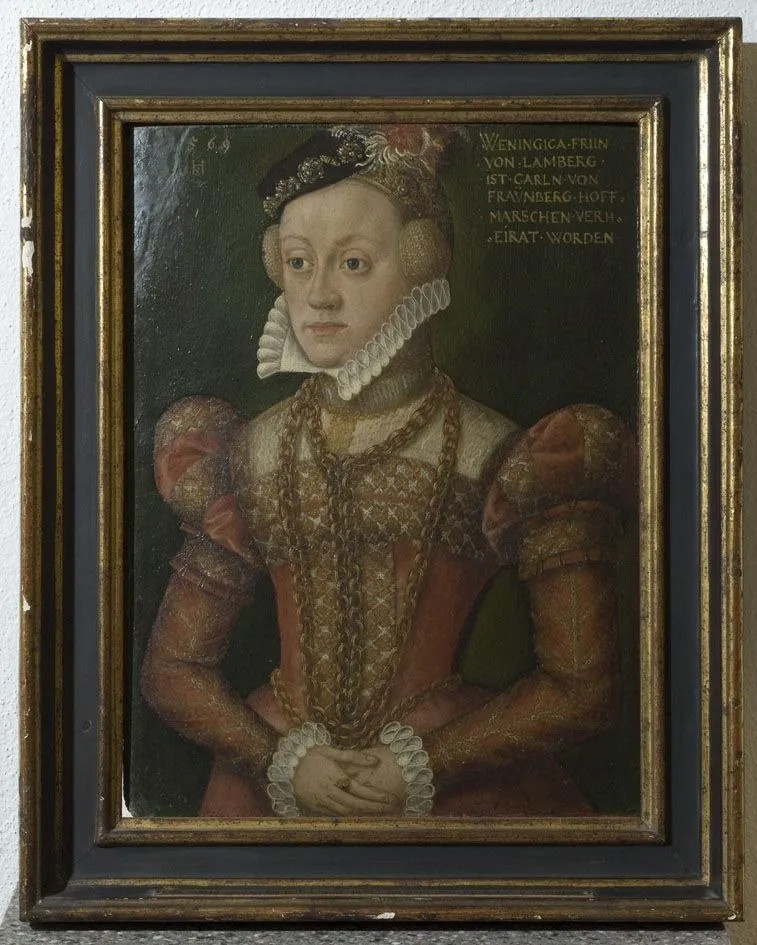
Bildnis der Benigna von Lamberg is an unspecified painting by the Northern Renaissance artist Hans Schöpfer. It dates from 1569 and is held in the collection of the Bavarian State Painting Collections.
About this work
Overview
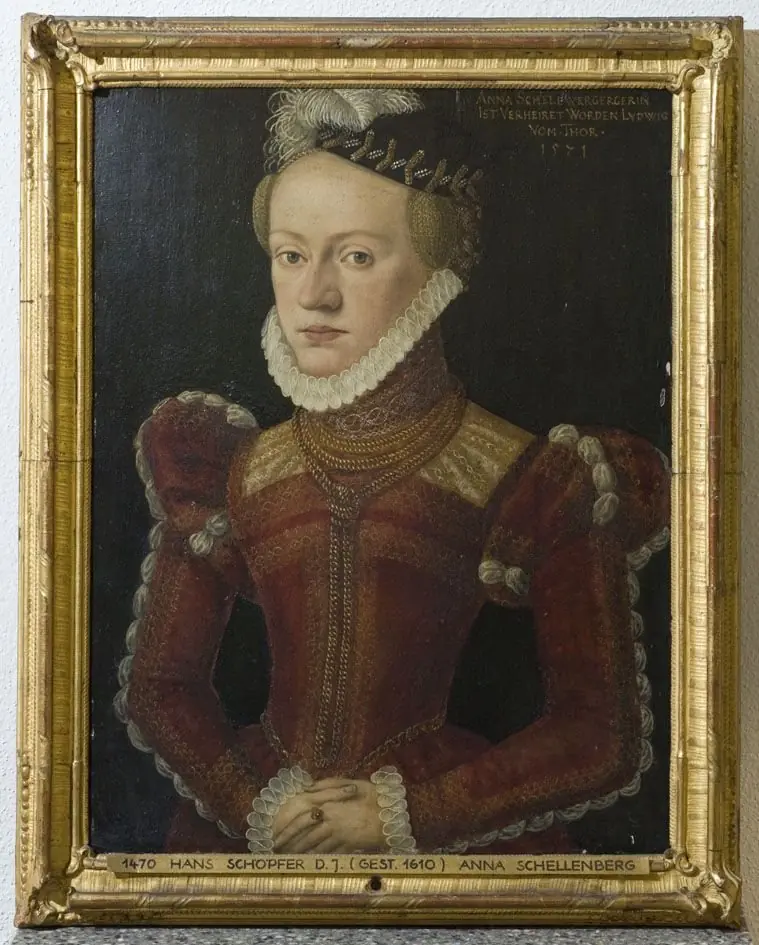
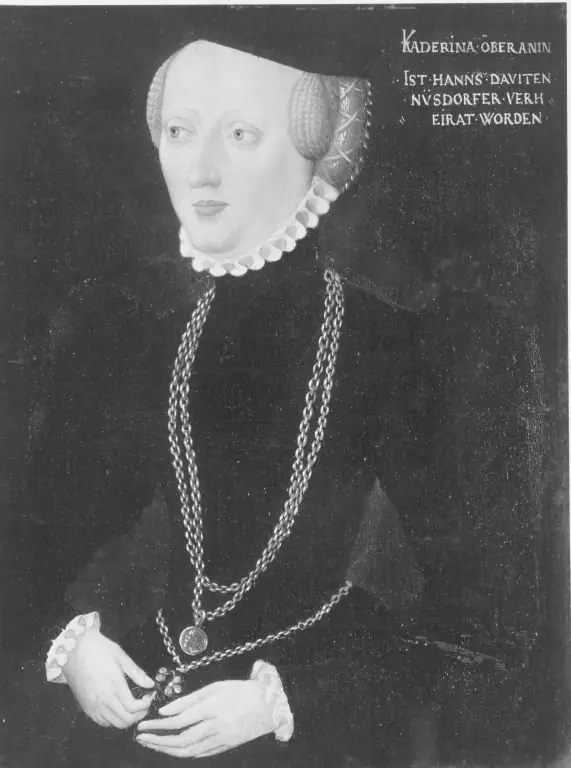
Hans Schöpfer’s 1569 portrait, titled *Bildnis der Benigna von Lamberg*, depicts a woman in elaborate sixteenth‑century attire. She wears a dark red gown edged with gold embroidery, a white ruff, and a matching red cap. Her hands are folded before her, and her expression is composed and solemn, framed by a brief German inscription that resembles a dedication or verse.
Subject & Meaning
The sitter is identified as Benigna von Lamberg, a member of the Austrian nobility. The dignified pose, restrained gesture, and modest smile convey both her social status and the period’s ideals of female virtue and decorum. The accompanying German text likely serves to honor her lineage or commemorate a particular event, reinforcing the portrait’s commemorative function.
Technique & Style
Schöpfer employs a restrained palette of muted reds, whites, and golds, allowing the subject’s features to emerge from a softly modeled background. The handling of light creates subtle chiaroscuro, giving volume to the folds of the dress and the delicate ruff. Brushwork is fine and controlled, typical of German court portraiture of the late Renaissance.
History & Provenance
Created in 1569, the painting entered the collection of Munich’s Alte Pinakothek, where it remains on display. Documentation traces its ownership through several noble families before its acquisition by the museum in the early twentieth century, reflecting the work’s continued relevance to regional artistic heritage.
Context
The portrait belongs to a broader tradition of Northern European court portraiture that emphasized status, attire, and moral virtue. Schöpfer, active in Bavaria, often painted members of the aristocracy, integrating contemporary fashion with a restrained, realistic approach that aligns with the cultural values of the Holy Roman Empire during the Reformation era.
Artist & collection

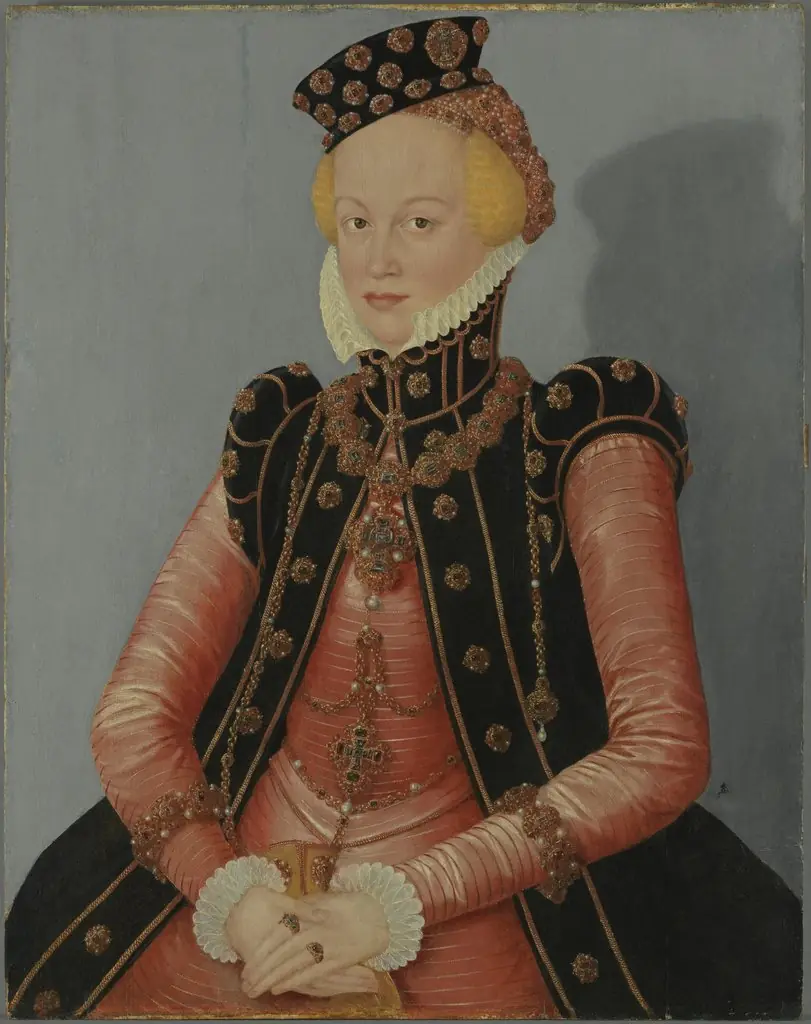 Portrait of a Lady (Margravine Elisabeth von Ansbach-Bayreuth?)
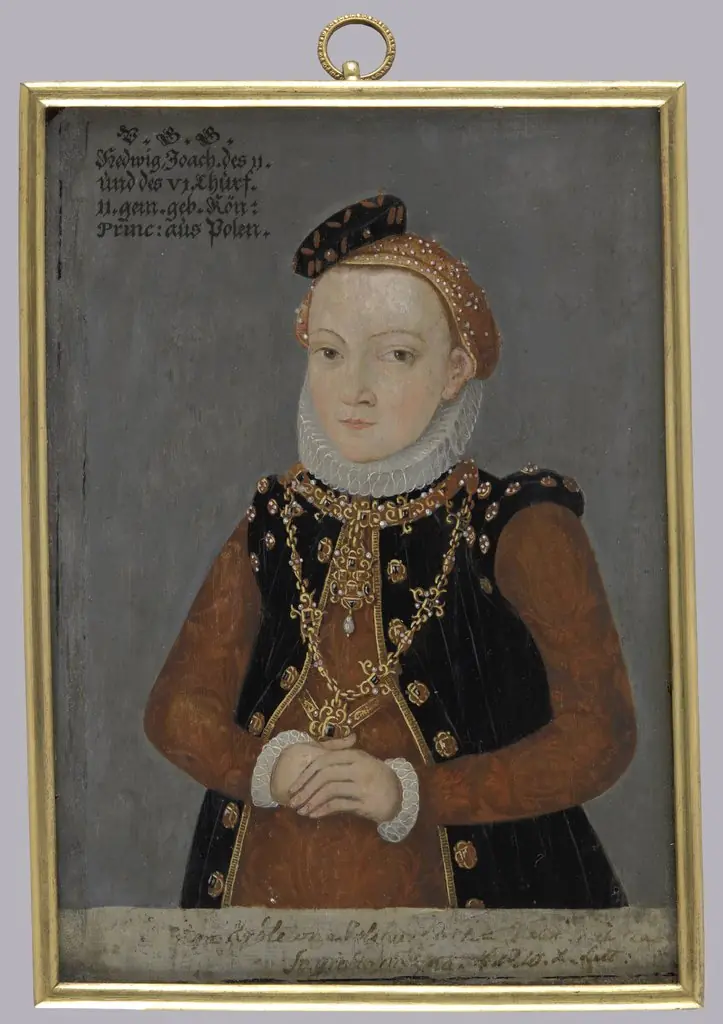 Portrait of Jadwiga Jagiellon (1513–1573), Daughter of Sigismund I (1467–1548)
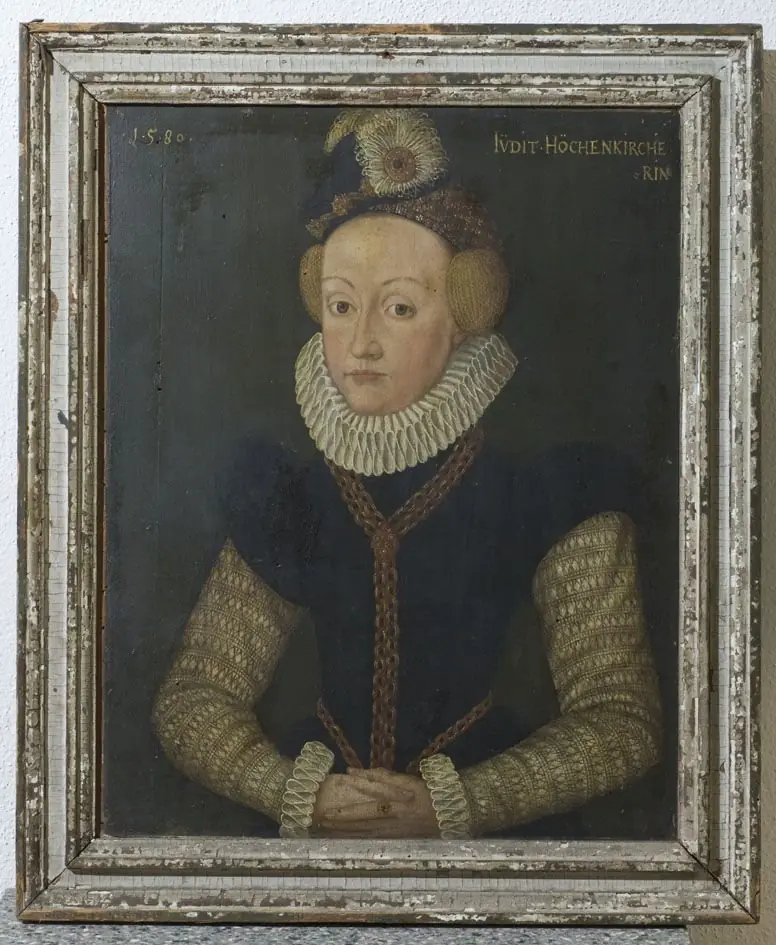 Bildnis der Judith Höchenkirchen
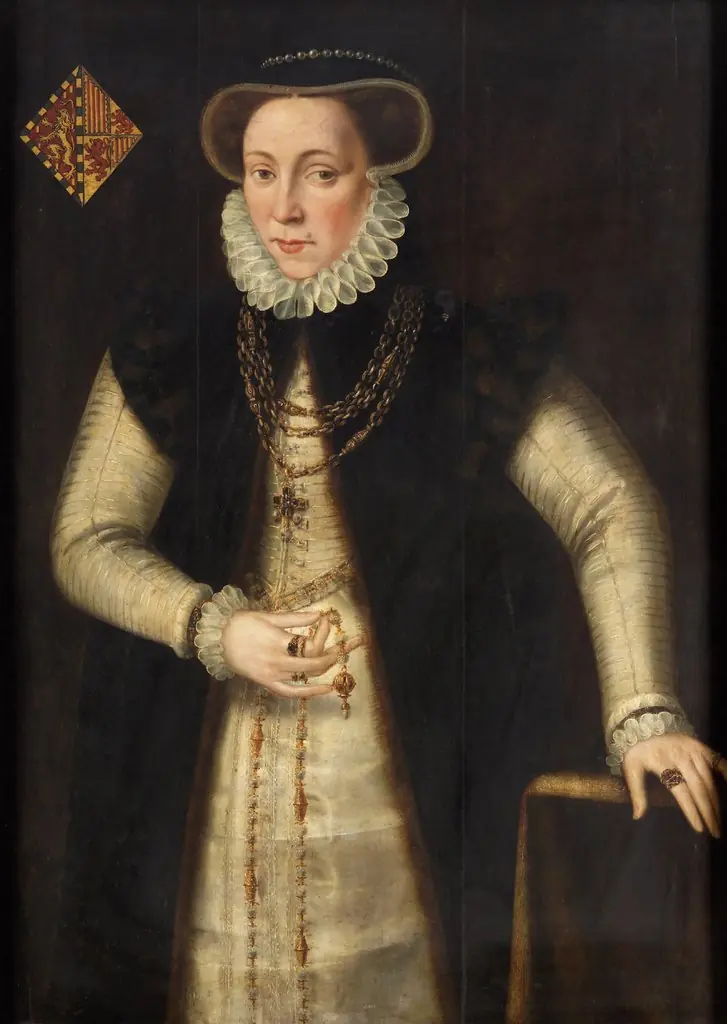 Gattin eines Offiziers der spanischen Truppen
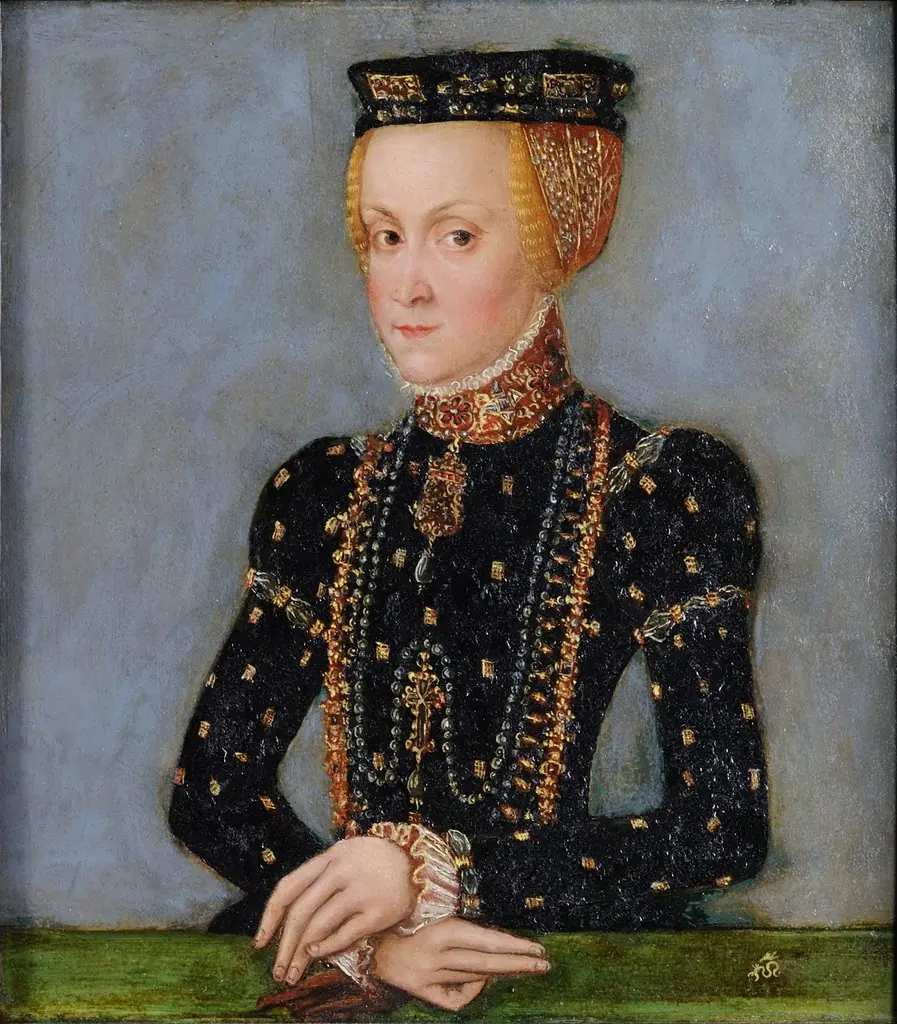 Anna Jagiellon
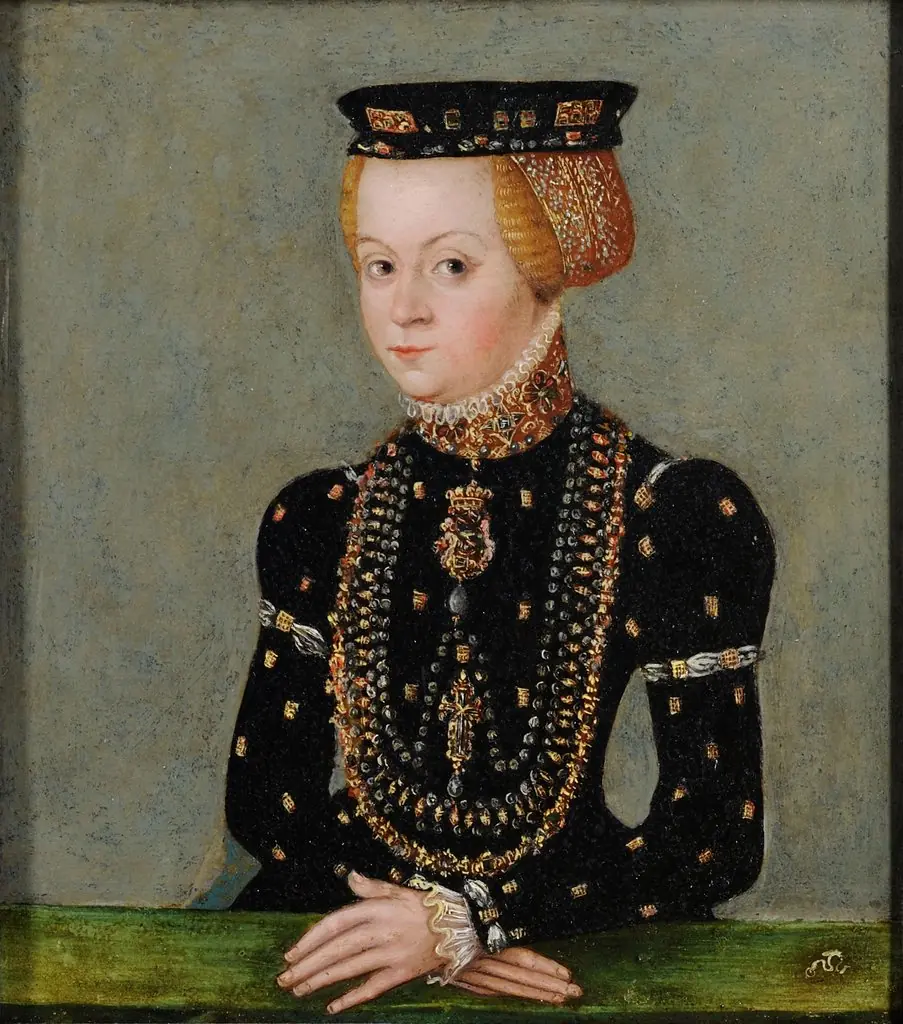 Sophia Jagiellon
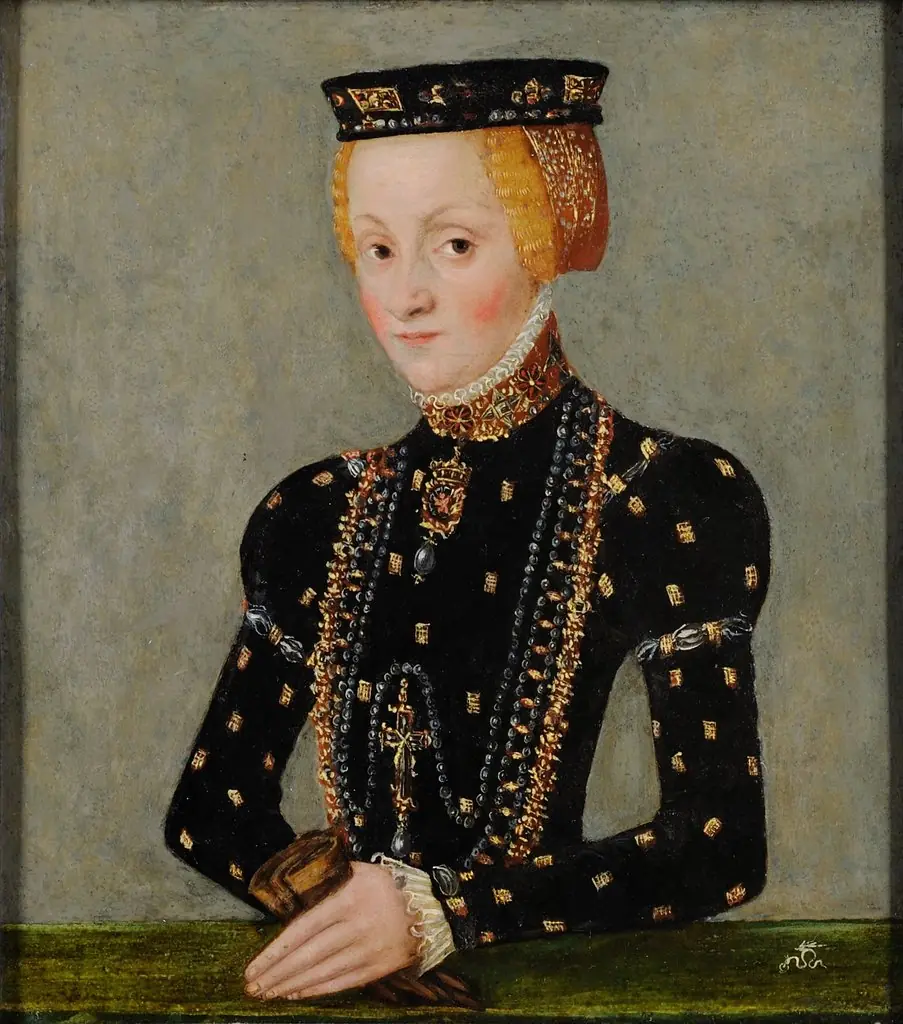 Catherine Jagellon
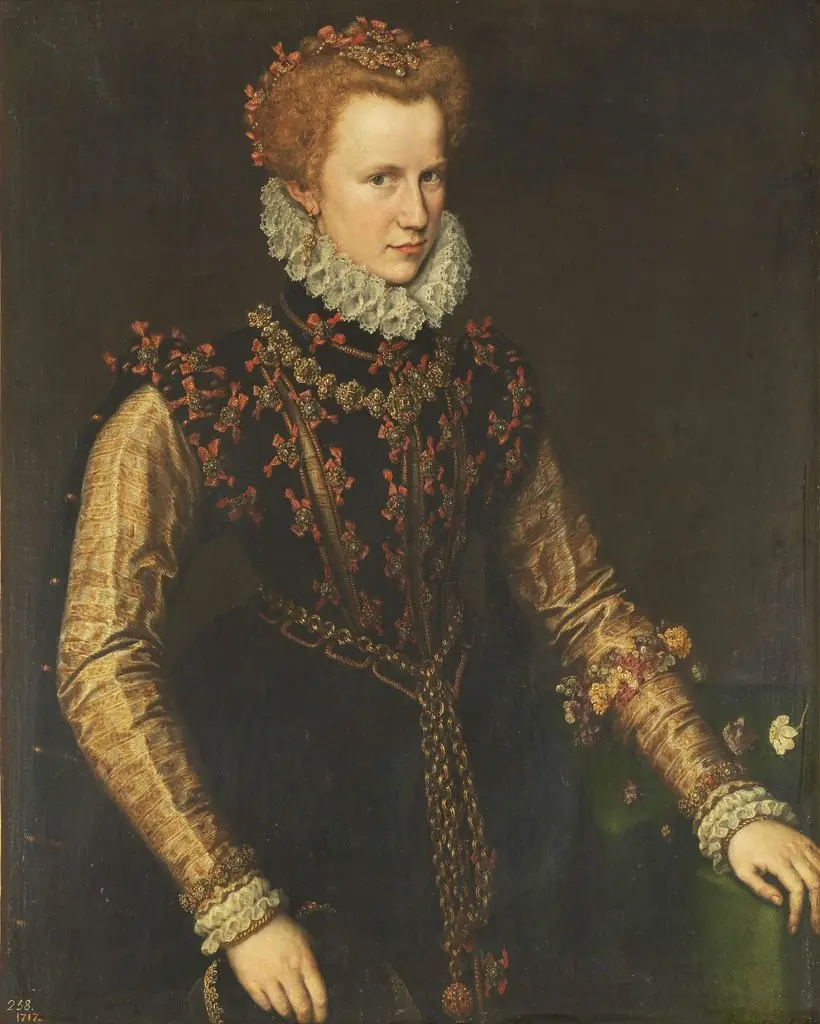 Jane Dormer, Duchess of Feria (?)
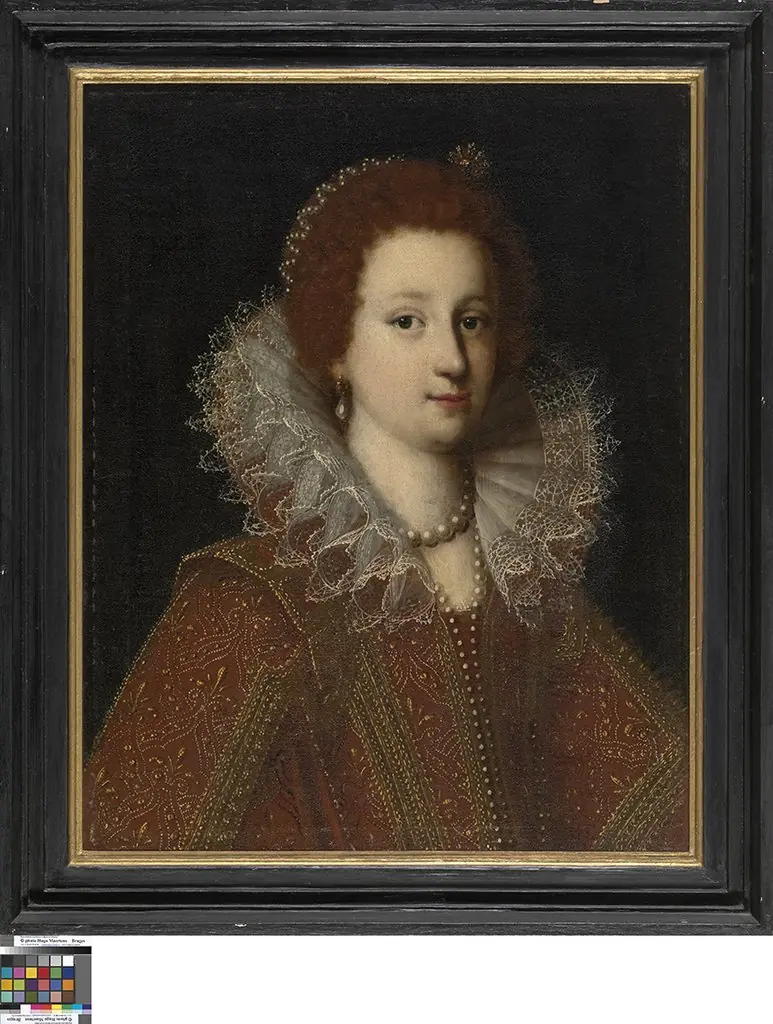 Portret van een vrouw