Artwork
Gattin eines Offiziers der spanischen Truppen
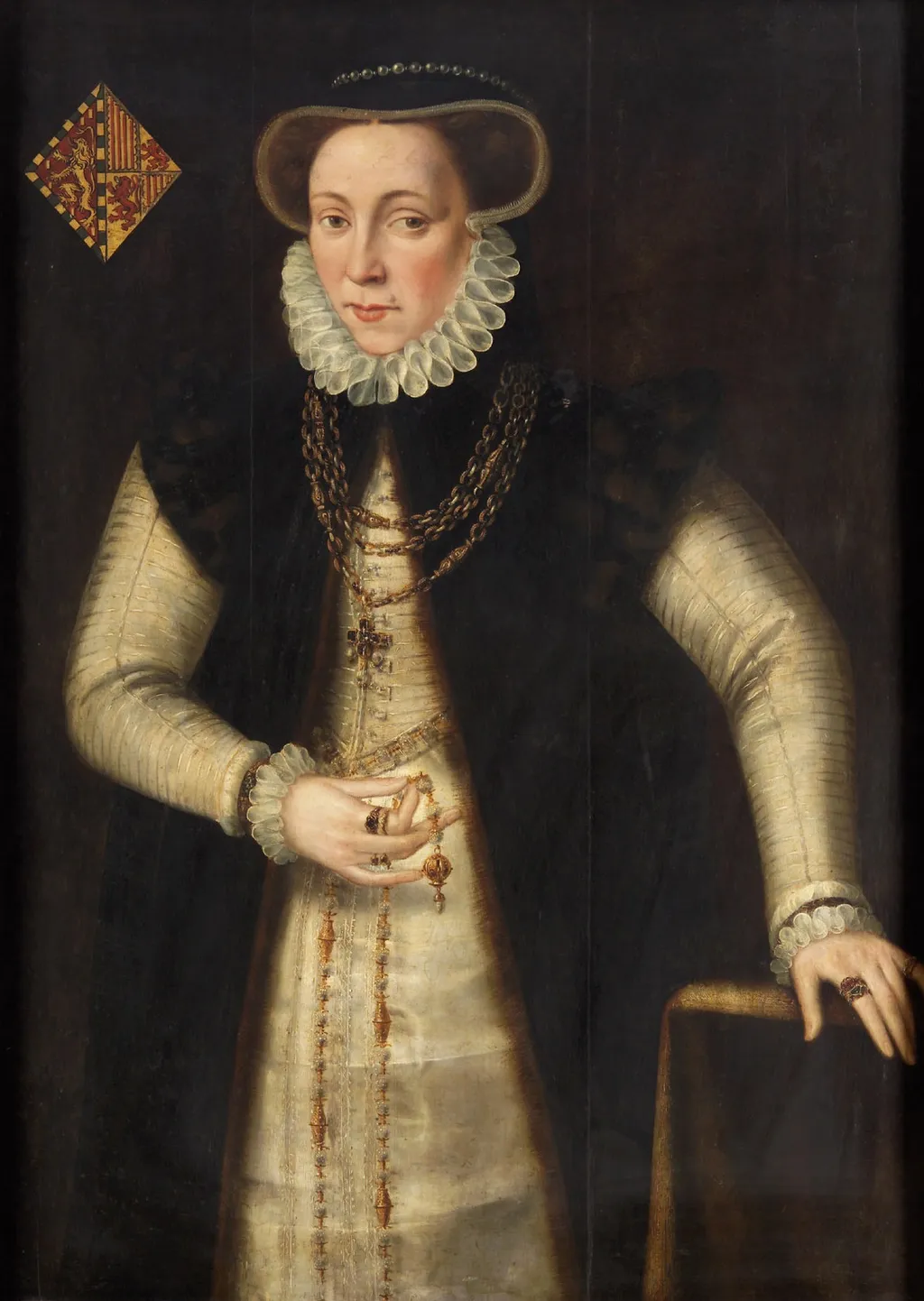
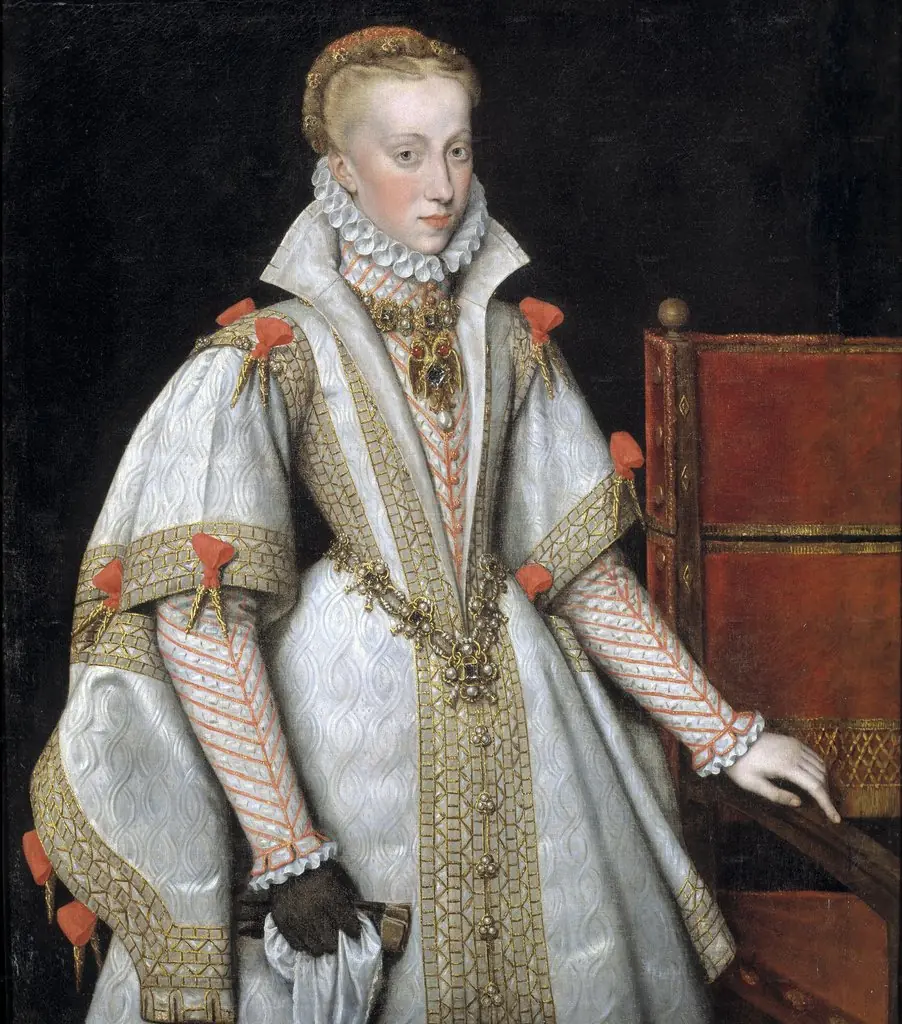
Gattin eines Offiziers der spanischen Truppen is an unspecified painting by the Mannerist artist Unknown. It dates from 1565 and is held in the collection of the Kunsthistorisches Museum. This portrait depicts a woman dressed in formal attire associated with Spanish nobility of the early 17th century.
About this work
Overview
This portrait depicts a woman dressed in formal attire associated with Spanish nobility of the early 17th century. Rendered with precise detail and dramatic lighting, the composition isolates her against a dark, unadorned background. The focus remains firmly on her expression and garments, suggesting a deliberate emphasis on status and dignity rather than environment or narrative.
Subject & Meaning
The woman is identified as the wife of a Spanish military officer, though her identity remains unrecorded. Her attire—high collar, ruff, padded gold sleeves, and chain necklace—signals aristocratic rank and adherence to courtly fashion. The small object she holds may be a token of personal or familial significance, subtly reinforcing her role within a military household without overt symbolism.
Technique & Style
The artist employs chiaroscuro to model the face and fabric with strong contrasts between light and shadow, enhancing three-dimensionality and emotional reserve. Fine brushwork captures the texture of lace, silk, and metal chain, while the dark background eliminates distraction. The pose is restrained, with one hand resting on a chair, conveying composure and quiet authority.
History & Provenance
The painting’s early ownership is undocumented, but its style aligns with Spanish portraiture of the 1620s–1640s. It likely originated in a noble household connected to the Spanish military administration. No records of exhibition or sale prior to the 20th century exist, and its current location reflects acquisition by a public collection in the modern era.
Context
During the early 1600s, Spanish elites used portraiture to assert social standing amid political and economic strain. Women of officer families were depicted in formal dress to reflect their connection to state power, even if not in public office. The rigid posture and somber palette mirror broader trends in Habsburg court aesthetics, favoring solemnity over ornament.
Legacy
This portrait contributes to the understanding of non-royal Spanish portraiture, illustrating how middle-tier nobility adapted courtly conventions. Its restrained elegance and technical precision reflect the influence of artists like Velázquez, though without his psychological depth. It remains a quiet example of how status was visually encoded in domestic settings.
Artist & collection

 Domestic Scene
 Giacomo and Cardinal Marco, investing Andrea, Abbot of San Zeno, with his Benefice
 The Nymph of Fontainebleau
 Portrait of a Woman
 Madonna and Child with Saints in the Enclosed Garden
 Venus and Minerva
 Family Group of Four on Sofa
 Wall painting from Room H of the Villa of P. Fannius Synistor at Boscoreale
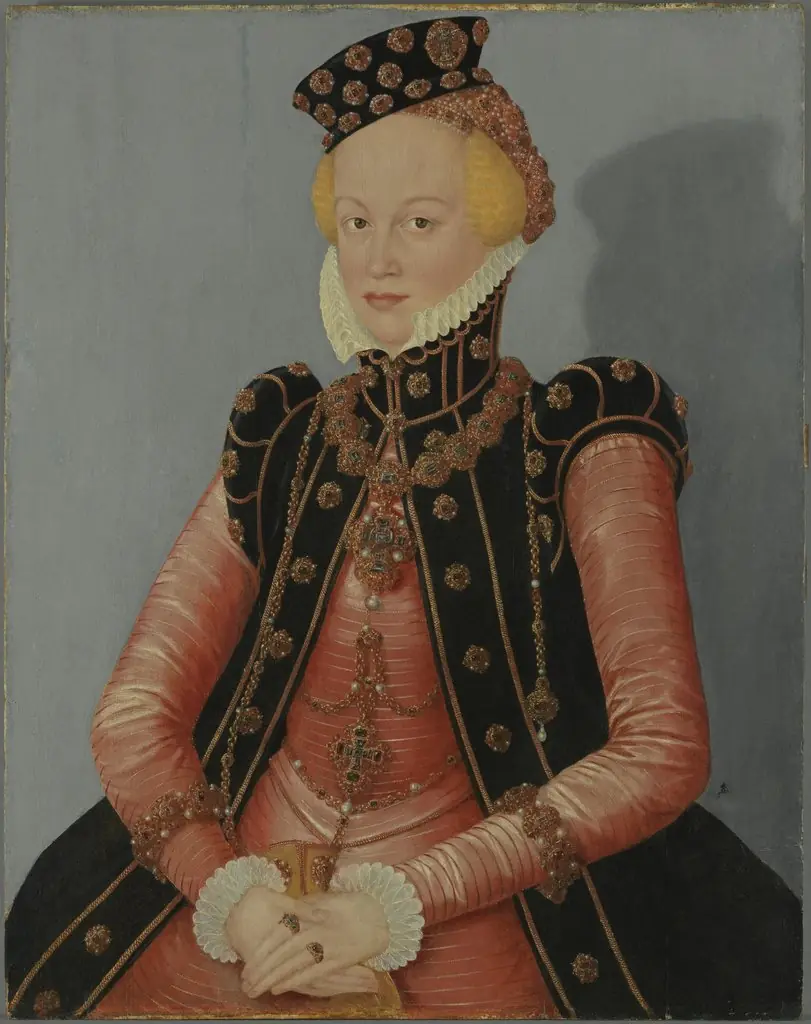 Portrait of a Lady (Margravine Elisabeth von Ansbach-Bayreuth?)
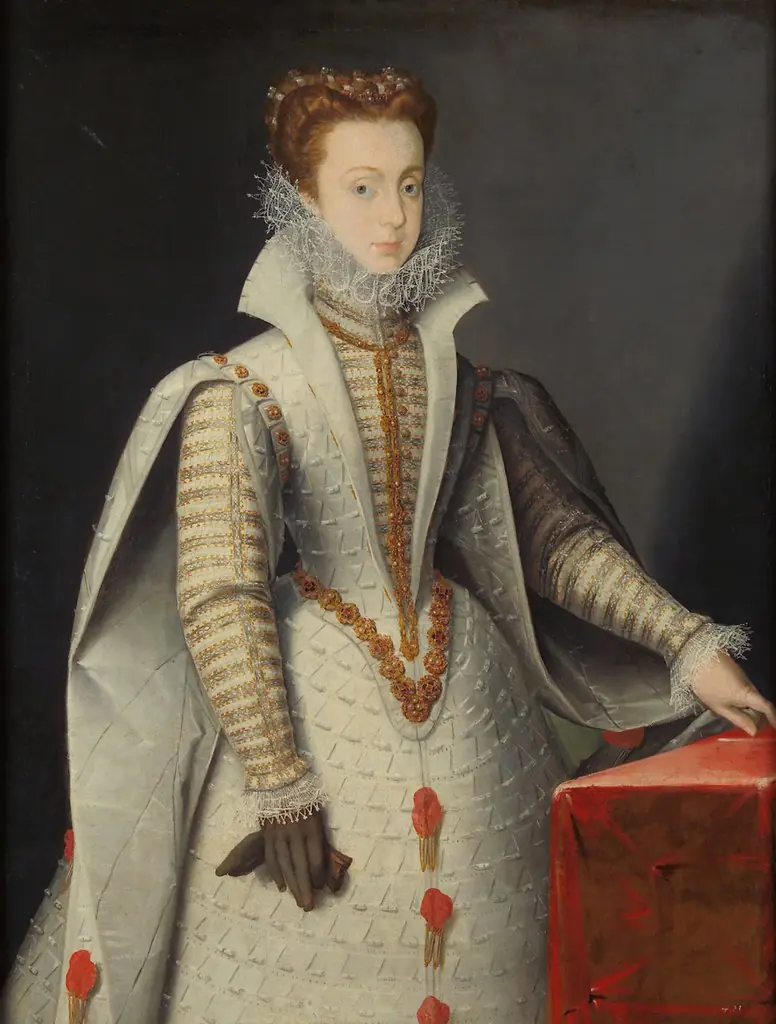 Herzogin Margarete von Joyeuse (1564-1625), Dreiviertelbildnis
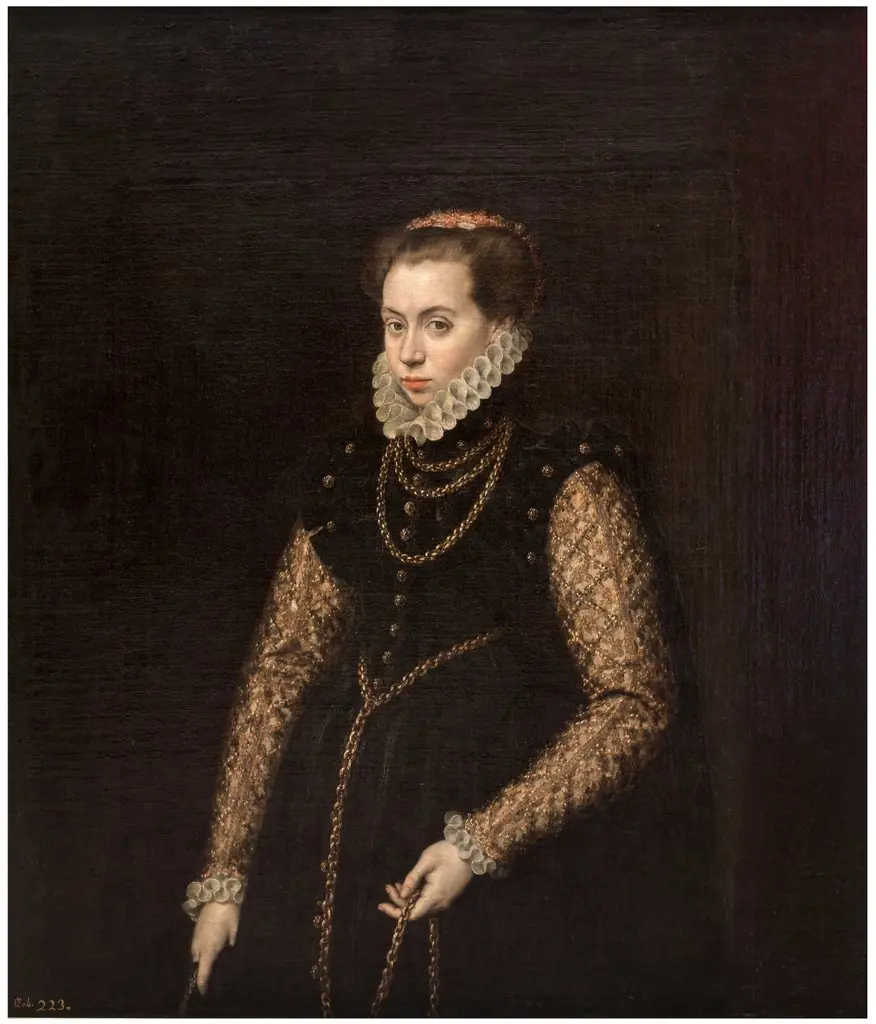 Lady with Gold Chains
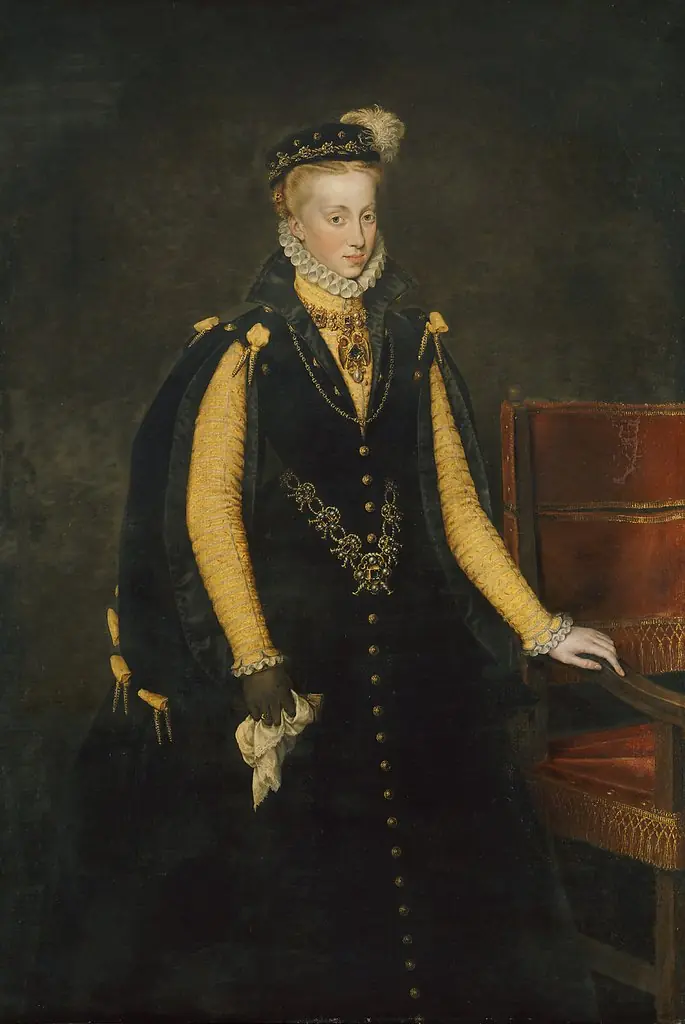 Anna von Österreich, Königin von Spanien
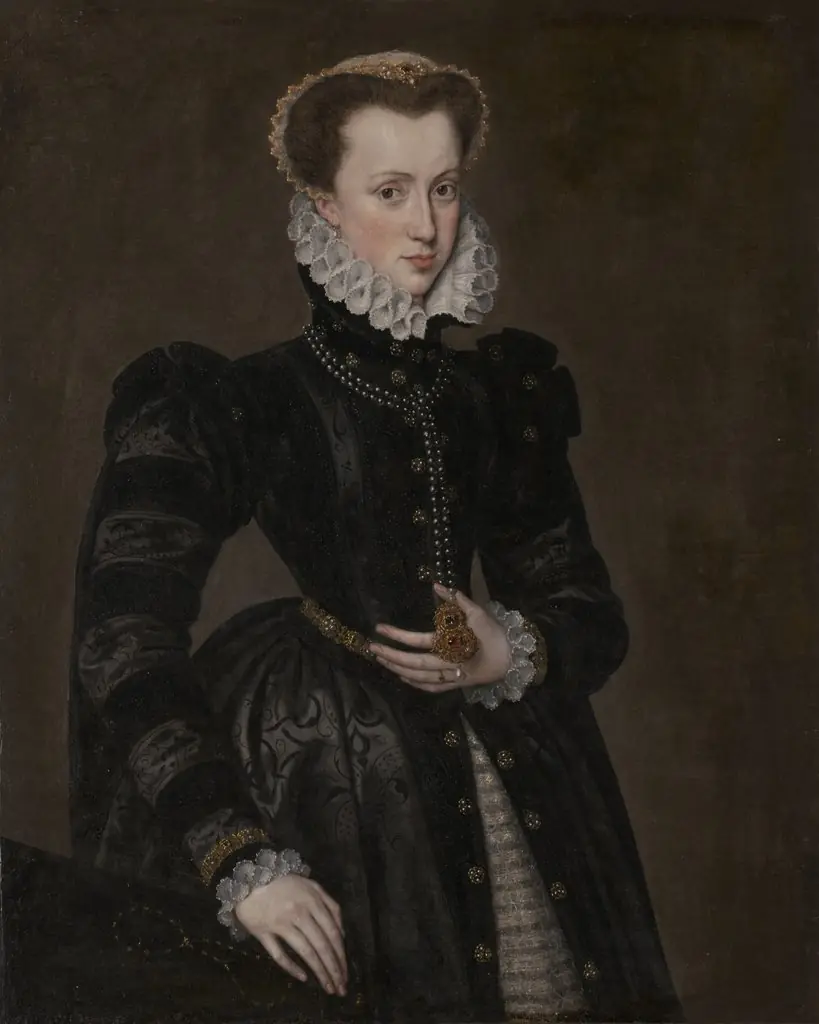 Portrait of a Court Lady
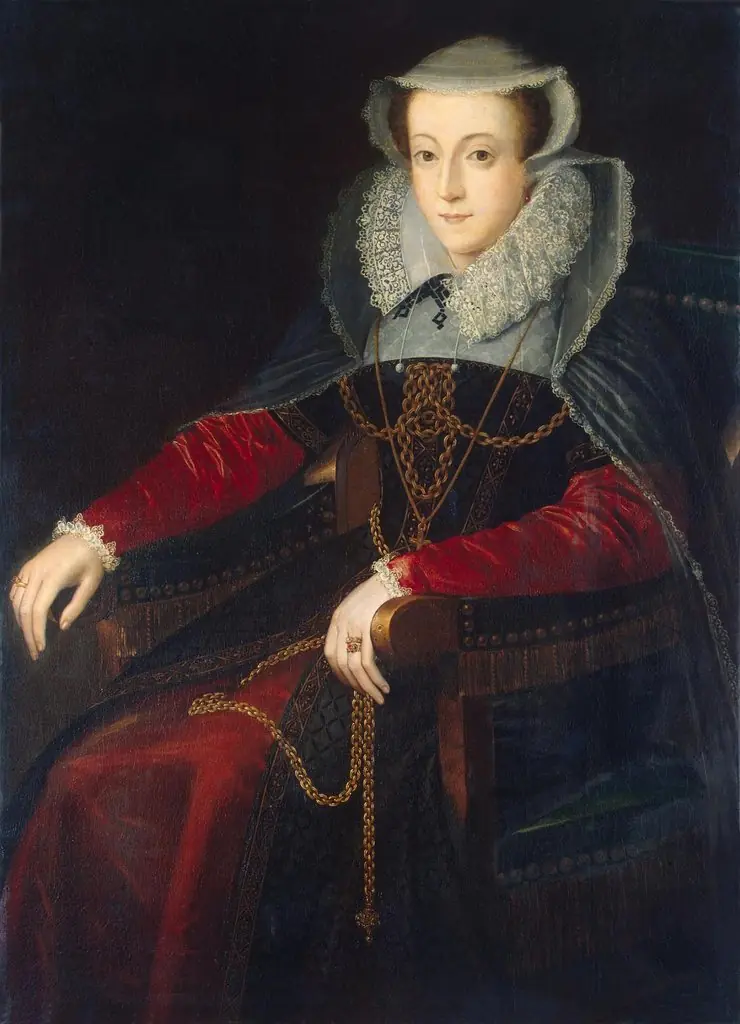 Portrait of Mary Stuart, Queen of Scots
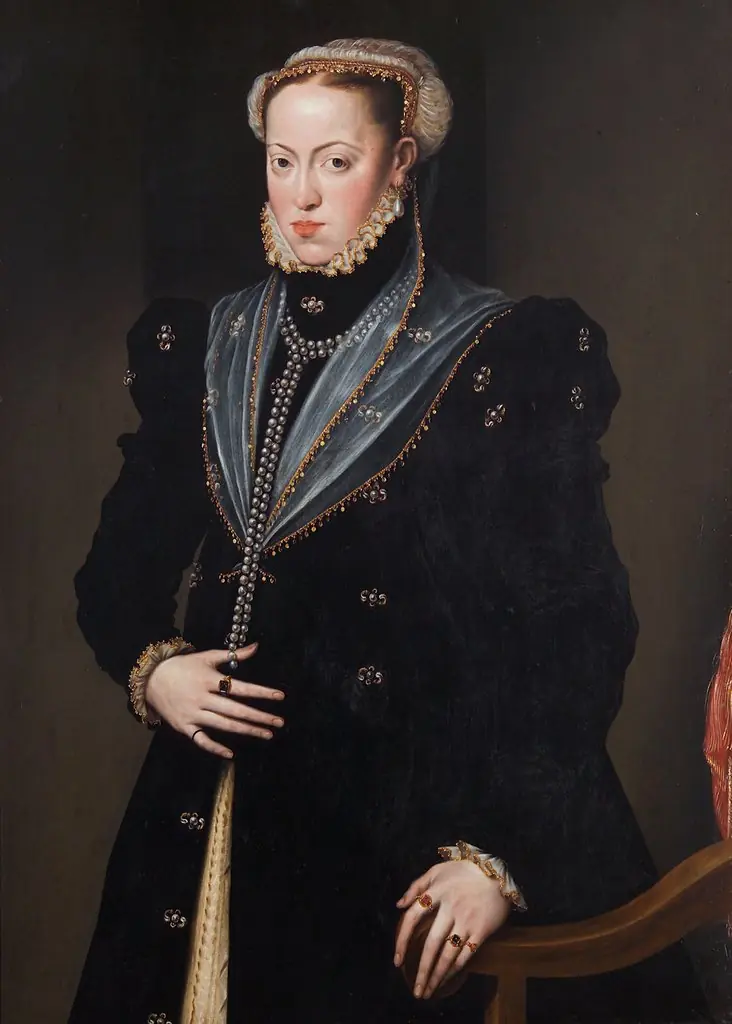 Infantin Maria (1528-1603), Kaiserin, Bildnis in halber Figur
 Portrait of a Court Lady
 Portrait of a Lady
 Portrait of a woman, pendant to portrait of a botanist
 Portrait of a lady
 Queen Anne of Austria, fourth Wife of Philip II