Artwork
St. Judas
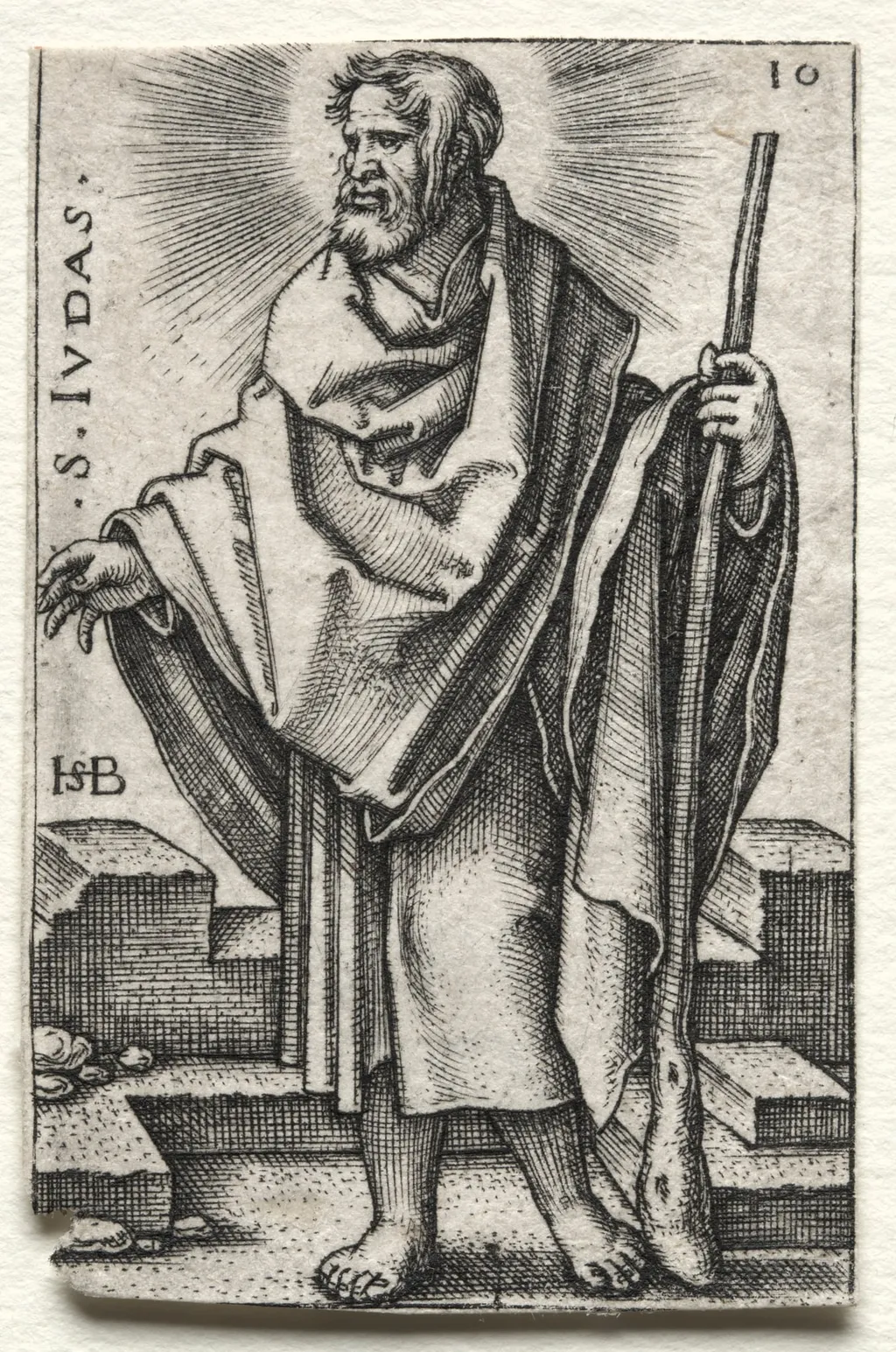
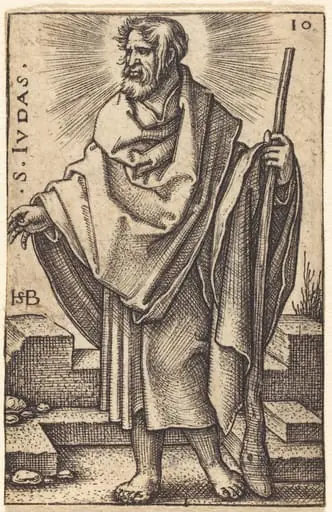
St. Judas is a print by the Renaissance artist Sebald Beham. It dates from 1546 and is held in the collection of the Cleveland Museum of Art.
About this work
Overview
Beham, a Nuremberg-born artist associated with the Little Masters, was known for his finely detailed small-scale prints.
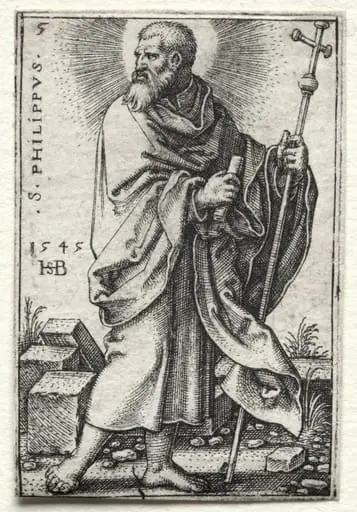
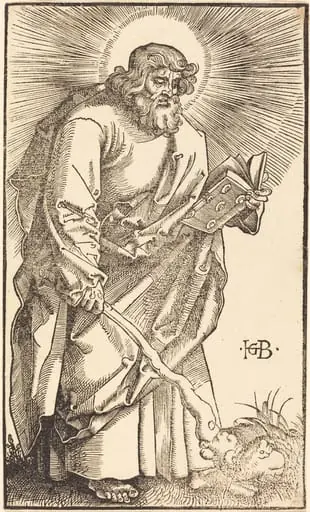
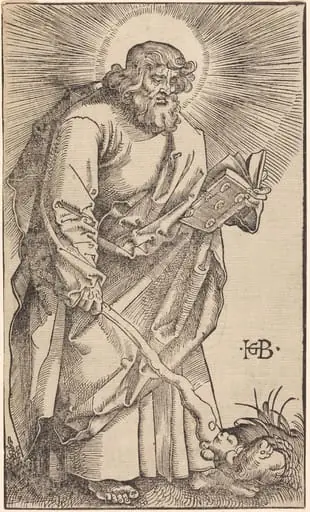
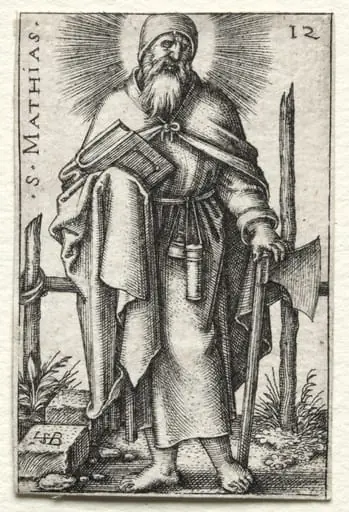
Created in 1546 by Hans Sebald Beham, this engraving depicts St. Judas as a solitary, contemplative figure. Beham, a Nuremberg-born artist associated with the Little Masters, was known for his finely detailed small-scale prints. The work reflects his mastery of line and texture, executed with precision typical of 16th-century German printmaking. It is held in the collection of the Cleveland Museum of Art.
Subject & Meaning
The figure, labeled 'S. IVDAS,' is portrayed as a bearded man in simple garments, barefoot and holding a staff, with one arm raised in gesture. His serious expression and unadorned surroundings suggest a life of ascetic devotion. Though traditionally associated with betrayal, this depiction avoids narrative drama, instead emphasizing quiet sanctity, possibly reflecting Reformation-era interest in individual piety over institutional symbolism.
Technique & Style
Executed in fine-line engraving, the work demonstrates Beham’s skill in rendering texture and spatial depth on a small scale. Delicate hatching defines the rough wall, the folds of fabric, and the scattered objects on the ledge. The absence of tone or color focuses attention on linear precision, a hallmark of the Little Masters. Each stroke is deliberate, contributing to a sense of stillness and introspection.
History & Provenance
Beham produced this print during his time in Frankfurt, following his earlier years in Nuremberg. His output included numerous religious and mythological subjects for a growing market of collectors and scholars. The engraving entered the Cleveland Museum of Art’s collection in the 20th century, where it remains as part of a broader holding of German Renaissance prints.
Context
In mid-16th-century Germany, printmaking flourished as a medium for disseminating religious imagery amid shifting theological landscapes. Beham’s work emerged alongside the Reformation, when depictions of saints were reevaluated. His focus on solitary, unidealized figures aligns with Protestant tendencies toward personal devotion, even as Catholic iconography persisted in artistic practice.
Legacy
Beham’s engravings, including this one, contributed to the refinement of printmaking as an independent art form. His small-scale, highly detailed works influenced later generations of Northern European artists. Though less celebrated than Dürer, his technical discipline and quiet iconography remain significant within the study of Renaissance graphic arts.
Artist & collection
Artist
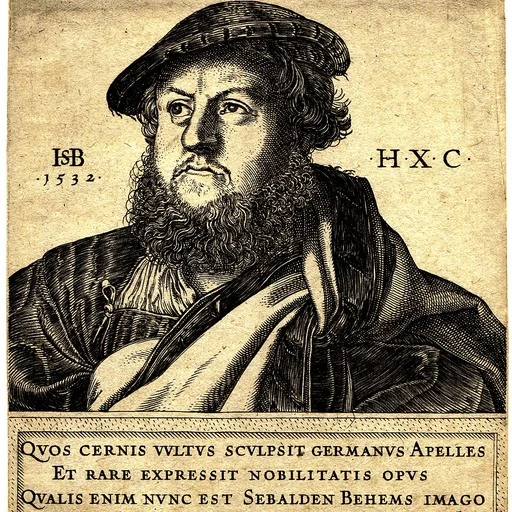
Sebald Beham (1500–1550) was a German painter and printmaker, mainly known for his very small engravings.