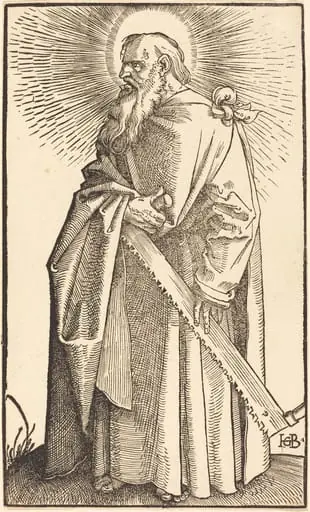
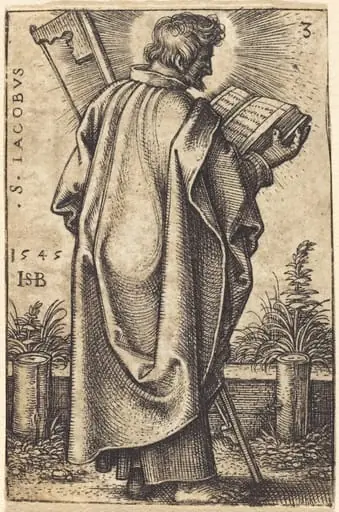
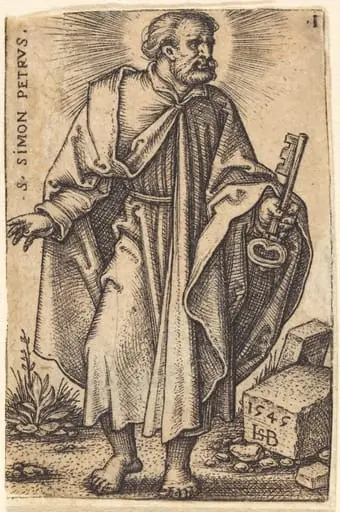
Artwork
Saint Judas Thaddaeus
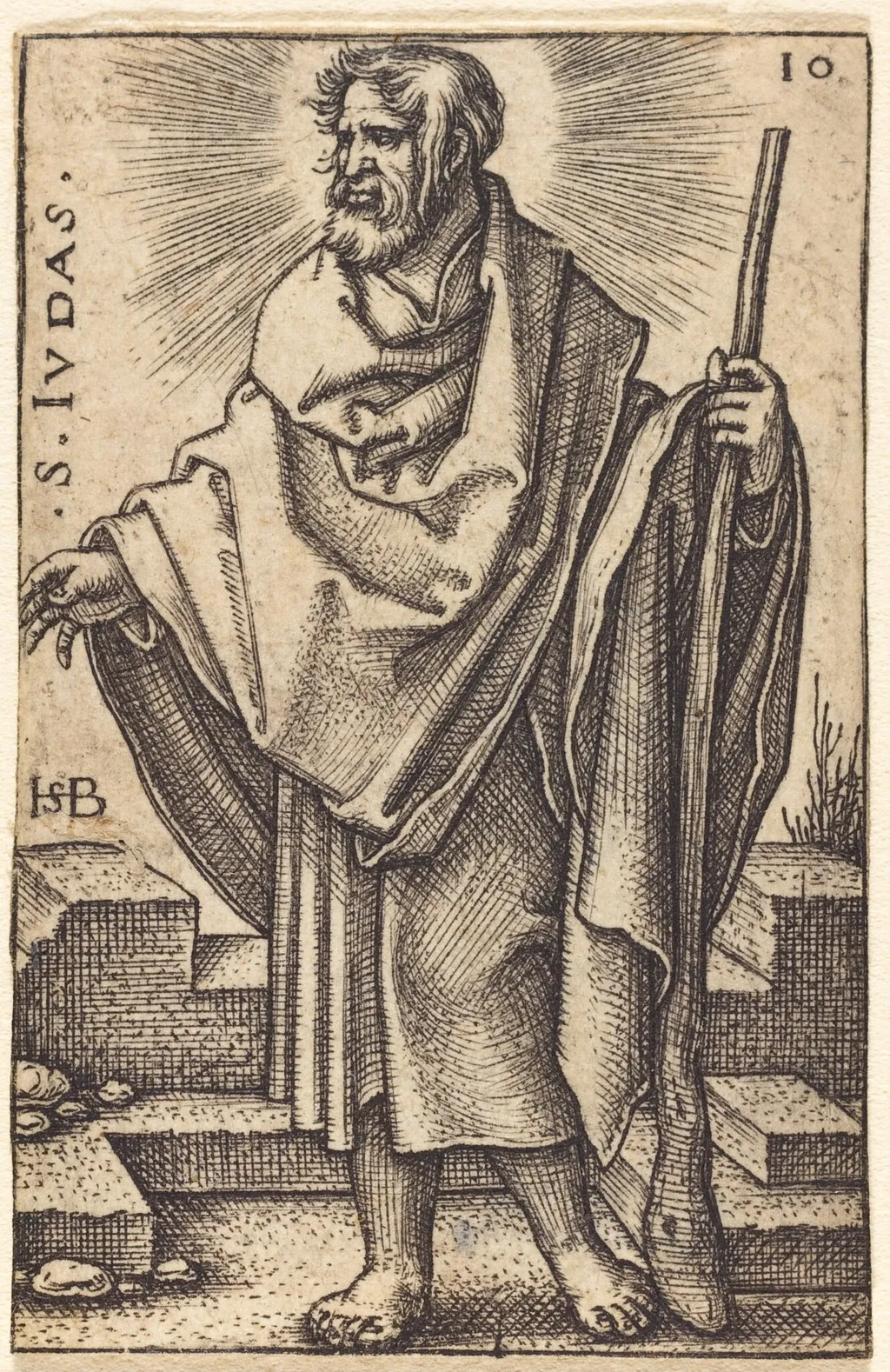
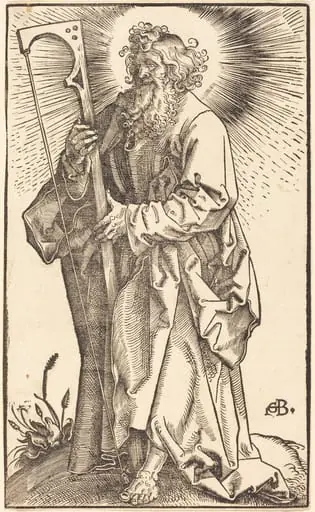
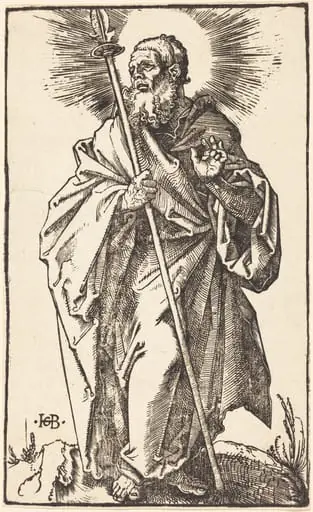
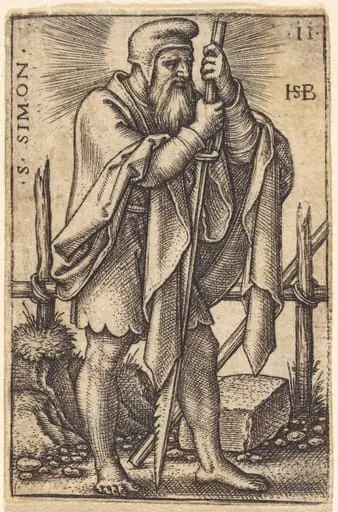
Saint Judas Thaddaeus is an ink print by the Renaissance artist Sebald Beham. It dates from 1546 and is held in the collection of the National Gallery of Art.
About this work
Overview
Created in 1546 by Sebald Beham, this engraving portrays Saint Judas Thaddaeus, one of the twelve apostles. Beham, a German artist active in Nuremberg, was known for his small-scale, finely detailed prints. This work belongs to a broader body of religious imagery produced during the Reformation era, reflecting both devotional needs and the technical precision favored by printmakers of the time.
Subject & Meaning
The barren terrain and modest architecture suggest a humble, earthly setting, reinforcing the saint’s role as a mediator between the human and the sacred.
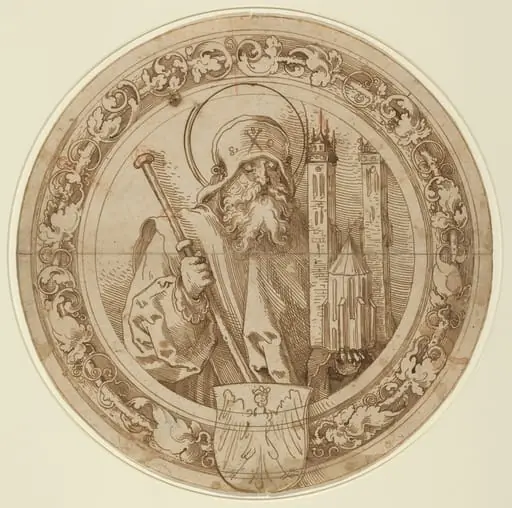
The figure of Judas Thaddaeus, often invoked for intercession in desperate circumstances, is depicted as a solitary man in a rugged landscape. He holds a staff, a traditional attribute of apostolic authority, while gesturing upward—signaling divine connection. The barren terrain and modest architecture suggest a humble, earthly setting, reinforcing the saint’s role as a mediator between the human and the sacred.
Technique & Style
Beham employed fine, controlled lines to model form and texture, characteristic of engraving’s precision. Shading is achieved through cross-hatching and delicate parallel strokes, giving volume to the robe and depth to the rocky ground. The composition’s clarity and tight detail reflect the influence of the Nuremberg printmaking tradition, where minute craftsmanship was highly valued.
History & Provenance
Beham produced this engraving during his time in Nuremberg, before moving to Frankfurt later in life. As part of the group known as the 'Little Masters,' he focused on small prints for collectors and clergy. While specific early ownership records are sparse, such works circulated widely in Protestant and Catholic regions alike, serving both devotional and artistic purposes.
Context
In mid-16th-century Germany, religious imagery remained in demand despite Reformation debates over iconography. Engravings like this one offered accessible, portable representations of saints for private devotion. Beham’s work bridges late medieval traditions and emerging Renaissance sensibilities, adapting classical composition to Protestant audiences without abandoning symbolic clarity.
Legacy
Beham’s engravings, including this depiction of Saint Judas, contributed to the standardization of apostolic iconography in Northern European print culture. His technical rigor influenced later generations of printmakers, and his ability to convey spiritual presence through minute detail ensured his works remained in circulation well beyond his lifetime.
Artist & collection
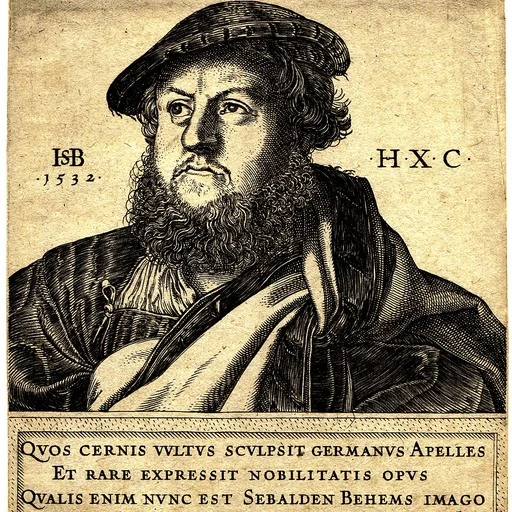
Artist
Sebald Beham (1500–1550) was a German painter and printmaker, mainly known for his very small engravings.