Artwork
St. Simon
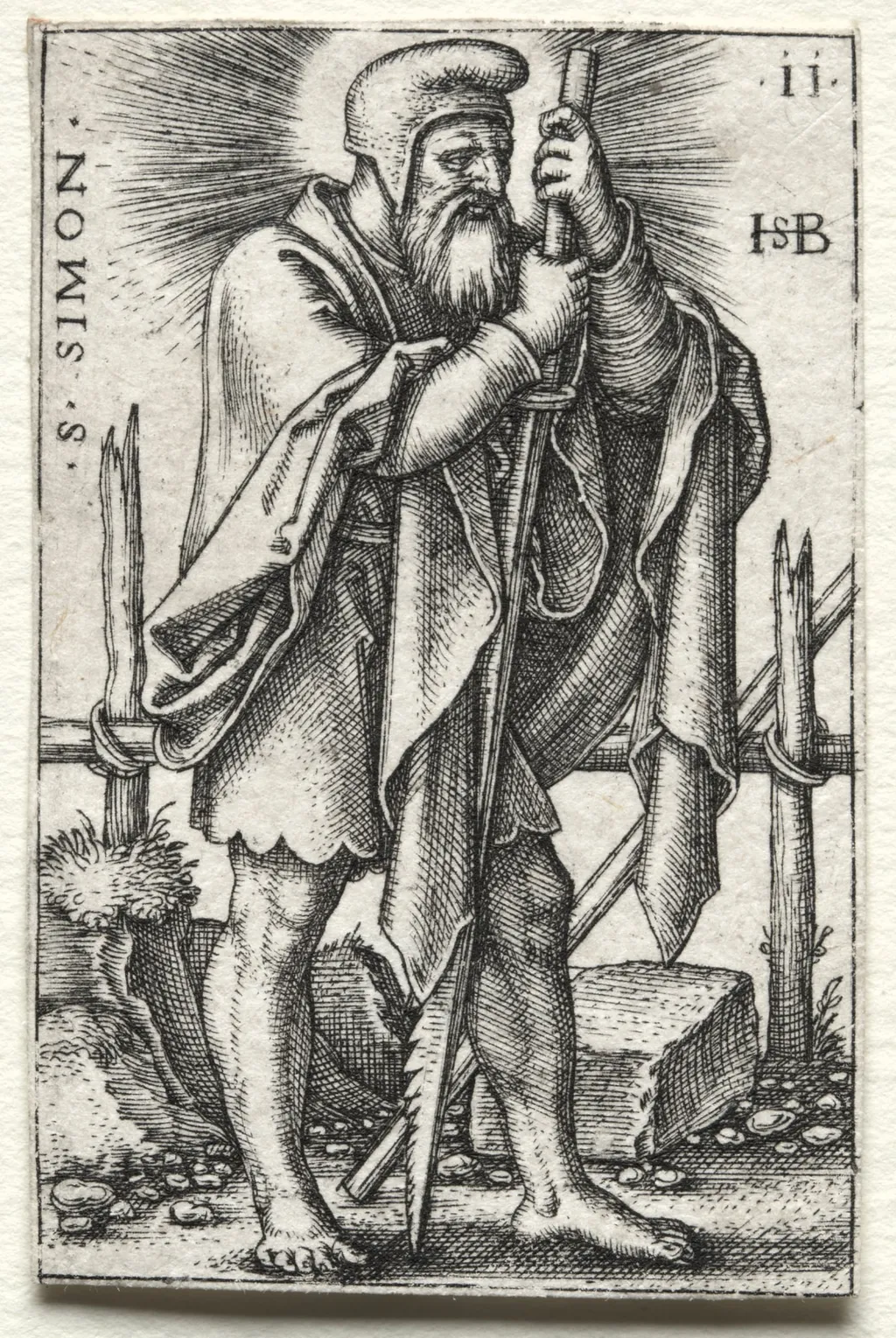
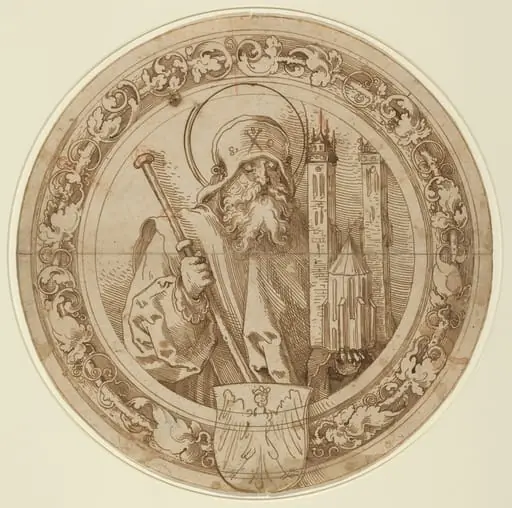
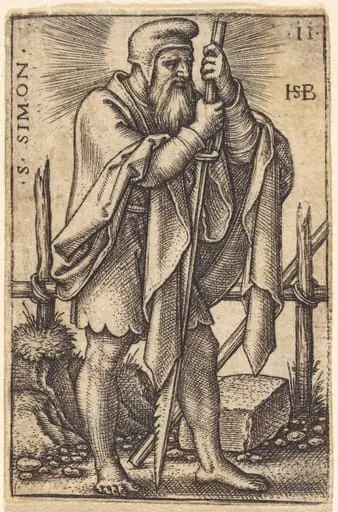
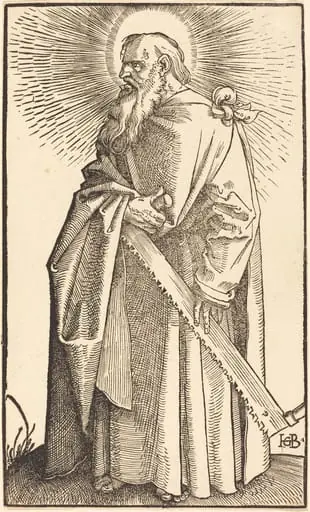
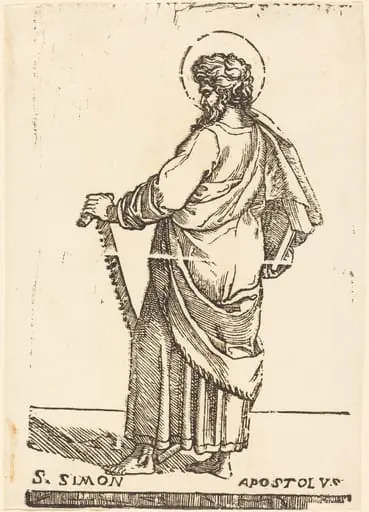
St. Simon is a print by the Renaissance artist Sebald Beham. It dates from 1546 and is held in the collection of the Cleveland Museum of Art.
About this work
Overview
Hans Sebald Beham, a German printmaker active in the mid‑16th century, produced the engraving titled *St. Simon* in 1546. The work exemplifies the small‑scale, meticulously rendered prints for which Beham, a member of the so‑called “Little Masters,” is renowned. It is presently held by the Cleveland Museum of Art.
Subject & Meaning
The image shows a solitary figure standing before a wooden fence, clothed in a simple tunic and cloak. He holds a staff in his right hand and a diminutive object in his left, his gaze directed inwardly, suggesting contemplation. The composition functions as an allegorical study, inviting reflection on the symbolic significance of the staff and the held object.
Technique & Style
Executed as an engraving, the piece demonstrates Beham’s characteristic precision, with fine lines that delineate the texture of the fence, the folds of the clothing, and the subtle gradations of the background. The tight, controlled incisions create a delicate tonal range, typical of the “Little Masters” approach to intimate, highly detailed prints.
History & Provenance
Born in Nuremberg, Beham later worked in Frankfurt, where he produced a prolific output of roughly 252 engravings and 1,500 woodcuts. *St. Simon* entered the Cleveland Museum of Art’s collection through acquisition in the 20th century, joining a broader assemblage of Northern Renaissance prints.
Context
The engraving belongs to a period when German artists frequently explored religious and moral themes through small, portable prints. Beham’s work reflects the era’s interest in personal piety and didactic imagery, aligning with contemporary devotional practices that favored intimate, contemplative objects.
Artist & collection
Artist
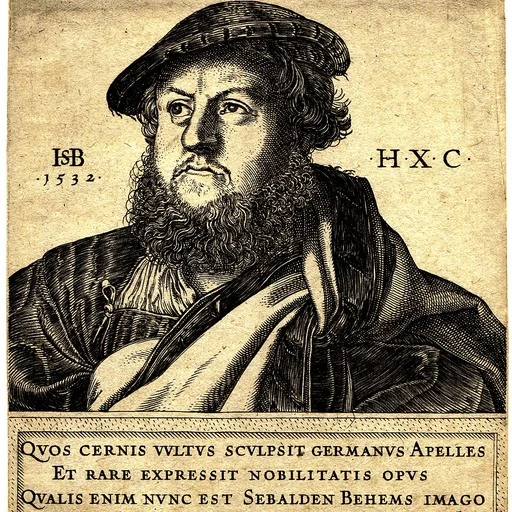
Sebald Beham (1500–1550) was a German painter and printmaker, mainly known for his very small engravings.