Artwork
Saint Simon
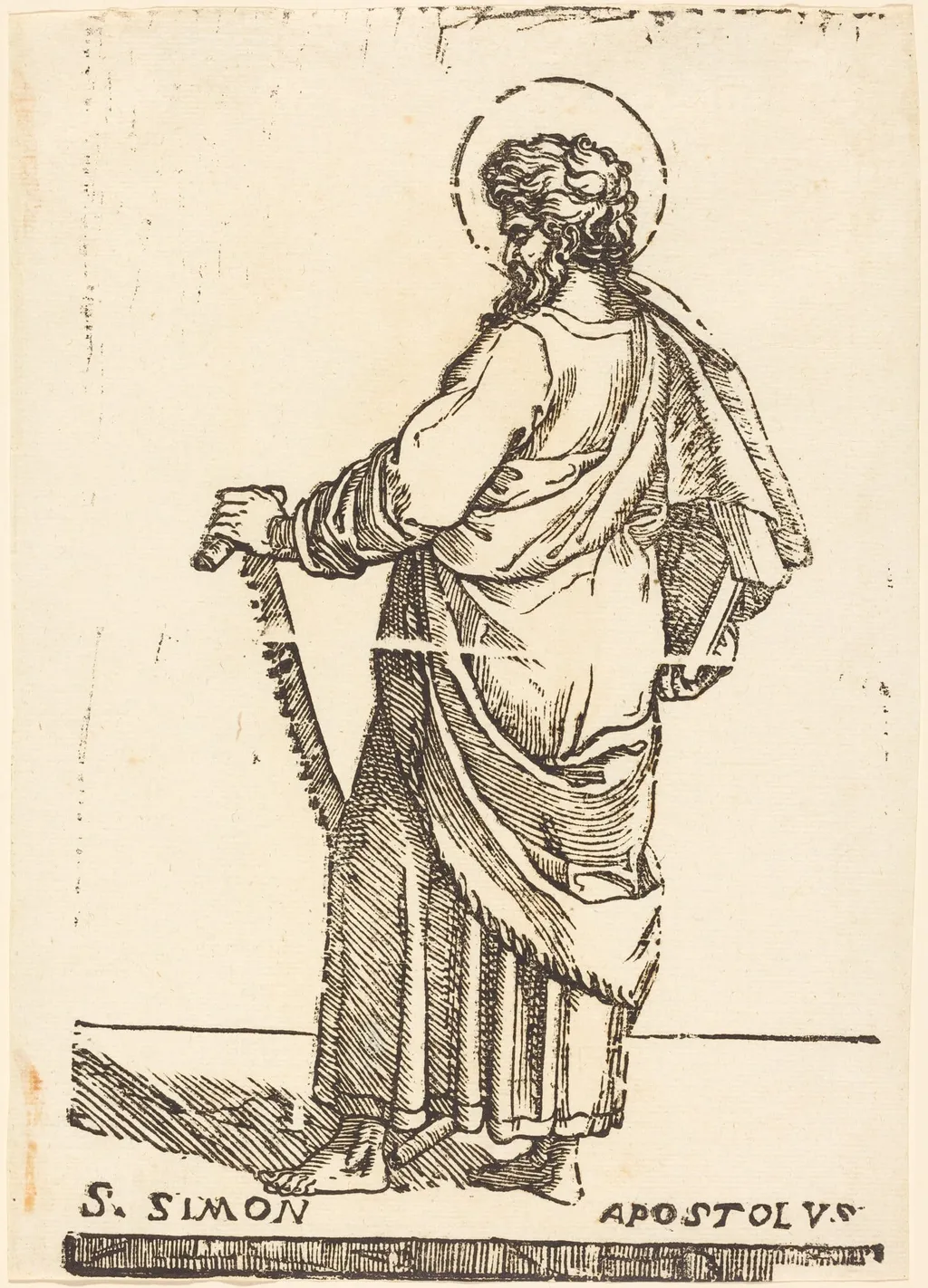
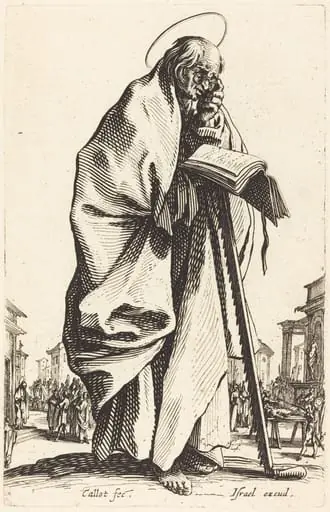
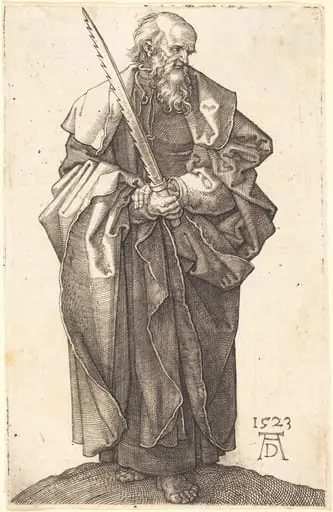
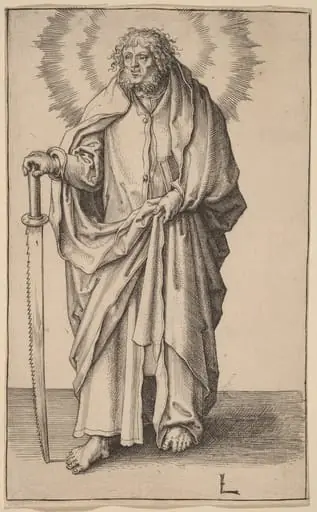
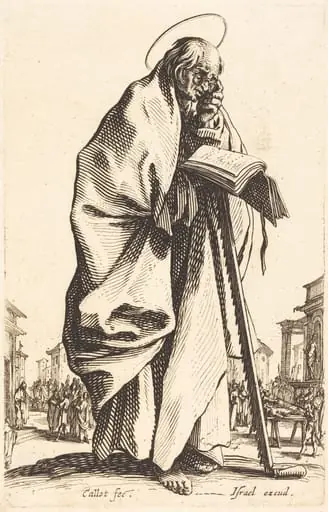
Saint Simon is an ink print by the Renaissance artist Italian 16th Century. It dates from 1626 and is held in the collection of the National Gallery of Art.
About this work
To learn more about the Renaissance movement, explore the works of artists from this period, such as Italian 16th Century.
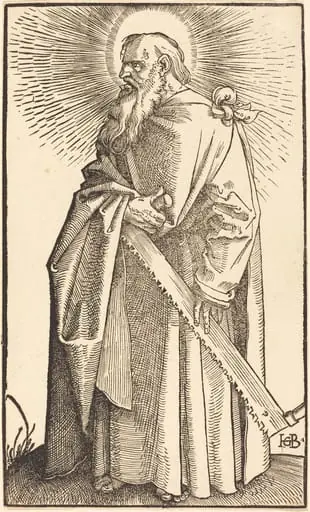
This image depicts a woodcut of Saint Simon, an apostle of Jesus Christ. The saint is shown standing, wearing a robe with his right arm bent at the elbow and his left arm hanging at his side. He has a halo around his head and is barefoot.
The woodcut is rendered in black ink on laid paper, with visible texture and lines that suggest the artist's hand. The overall effect is one of simplicity and devotion.
To learn more about the Renaissance movement, explore the works of artists from this period, such as Italian 16th Century.
Overview
The work is a woodcut print portraying Saint Simon, one of the twelve apostles. Executed in black ink on laid paper, the image presents the figure standing, robed, with a halo indicating sanctity. His right arm is bent at the elbow, while his left arm hangs loosely, and he is depicted barefoot, emphasizing humility.
Subject & Meaning
Saint Simon is identified by his traditional attributes: the halo and simple attire, signifying his role as a devoted follower of Christ. The composition’s restrained pose and lack of elaborate background focus attention on his spiritual presence, reflecting the devotional intent typical of religious prints intended for personal contemplation.
Technique & Style
The print employs the woodcut method, where the artist carved the image in relief on a wooden block, then inked the raised surfaces. The black ink on the textured laid paper reveals the characteristic line work and cross‑hatching of the medium, while the visible grain of the paper adds a tactile quality to the otherwise stark image.
Context
Woodcut prints like this were common in the Renaissance for disseminating religious imagery to a broad audience. Produced in the 16th‑century Italian tradition, such works served both as devotional objects and as a means of illustrating biblical narratives for those who could not access painted altarpieces.
Artist & collection

Artist
A 16th-century Italian sculptor left us small bronze works in dark brown and gold.