Artwork
Sardis, One of the Seven Churches
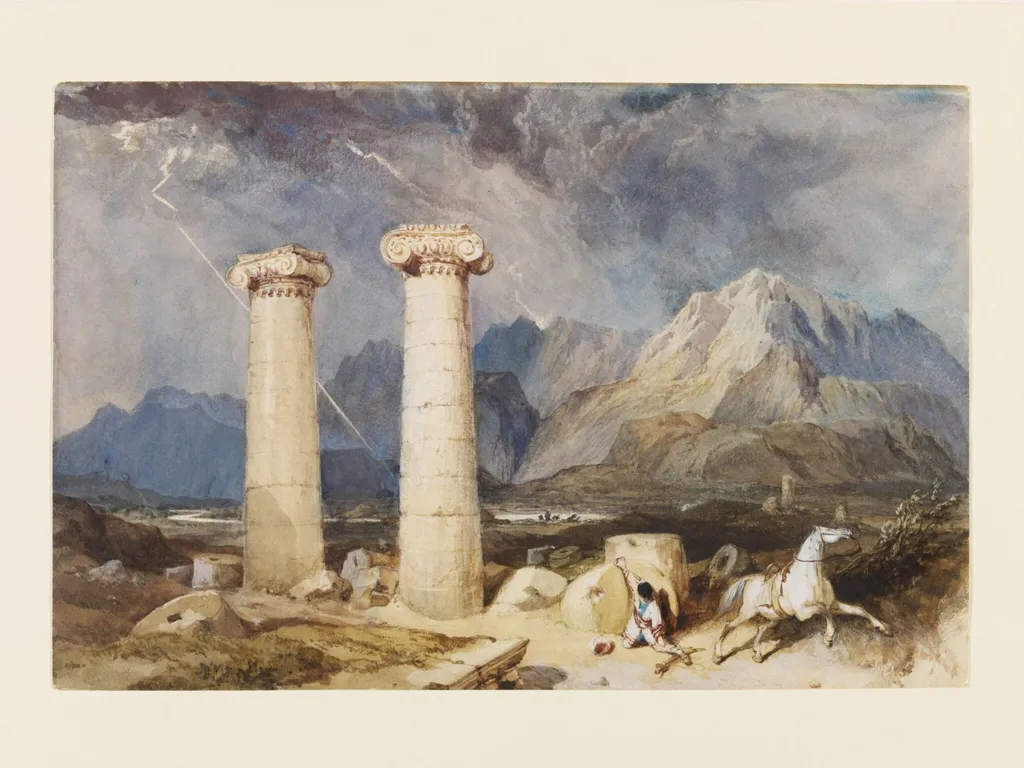
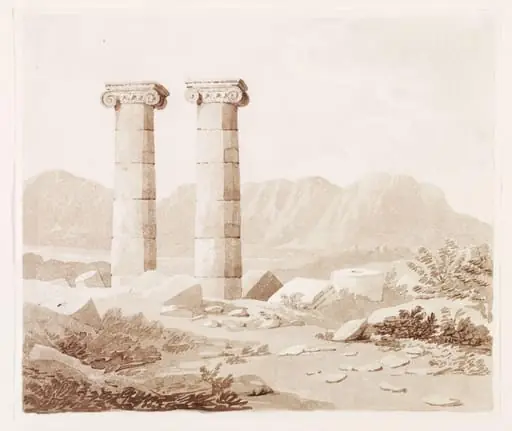
Sardis, One of the Seven Churches is a watercolor work on paper by the Romanticist artist Clarkson RA Stanfield. It dates from 1834 and is held in the collection of the Victoria and Albert Museum.
About this work
This watercolor shows ruins from the Temple of Artemis at Sardis. It was made for a 1836 book of Bible scenery. The artist painted real ruins in a once-rich place now left empty.
The work was part of a project by publisher John Murray. He hired top artists to draw Biblical sites. Some scenes were imagined, but this one came from what Stanfield actually saw.
Look up the Victoria and Albert Museum.
Overview
Clarkson Stanfield rendered the ruins of the Temple of Artemis at Sardis, a site once famed for its wealth and now reduced to scattered remnants.
Created in 1832–33, this watercolour was produced for John Murray’s Landscape Illustrations of The Bible, a project commissioning leading artists to depict biblical landscapes. Clarkson Stanfield rendered the ruins of the Temple of Artemis at Sardis, a site once famed for its wealth and now reduced to scattered remnants. Though the series included imaginative reconstructions, this work was grounded in observed architecture, reflecting a growing 19th-century interest in documenting ancient sites with accuracy.
Subject & Meaning
The watercolour portrays the decaying remains of the Temple of Artemis in Sardis, an ancient city mentioned in the Book of Revelation as one of the Seven Churches of Asia. Its desolation in the 1830s mirrored the prophetic warnings of divine judgment. By focusing on the solitary columns and fragmented stonework, the image evokes the passage of time and the decline of once-great civilizations, aligning the physical ruins with their biblical narrative of ruin and abandonment.
Technique & Style
Stanfield employed precise watercolour techniques to capture the weathered textures of marble fragments and the subtle gradations of light across the ruins. His composition emphasizes architectural detail over dramatic effect, avoiding romanticized embellishment. The rendering of the two standing columns and scattered debris reflects a documentary intent, prioritizing structural clarity and spatial accuracy over emotional atmosphere.
History & Provenance
Though initially assumed to derive from a sketch by Mr. Maude, the watercolour’s fidelity to the actual ruins suggests a different source. Evidence points to C.R. Cockerell’s 1812 drawings, made during his archaeological tour of Asia Minor, as a more likely reference. Stanfield, who never visited Sardis, relied on existing records to produce a more complete and correct depiction than earlier sketches, demonstrating his engagement with scholarly materials.
Context
The project emerged during a period of heightened European interest in biblical archaeology and classical antiquity. Publishers and artists collaborated to visualize sacred geography for a public increasingly curious about the physical settings of scripture. Sardis, though remote and largely abandoned, held symbolic weight as a site of prophetic fulfillment, making it a compelling subject for inclusion in a visually driven religious publication.
Legacy
The watercolour contributes to a broader 19th-century effort to link textual tradition with material remains. Its inclusion in Murray’s publication helped shape contemporary perceptions of biblical landscapes as tangible, decaying places rather than abstract concepts. Today, it serves as a historical record of Sardis’s condition before modern excavation, preserving a moment when ruins were still largely untouched by systematic archaeology.
Artist & collection
Artist
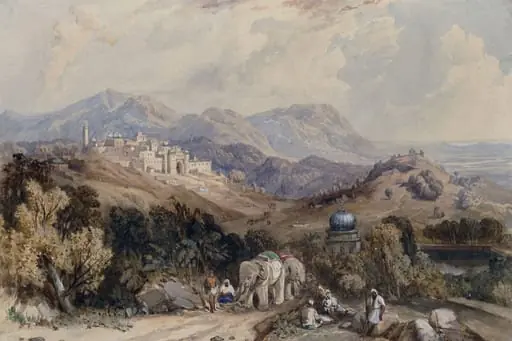
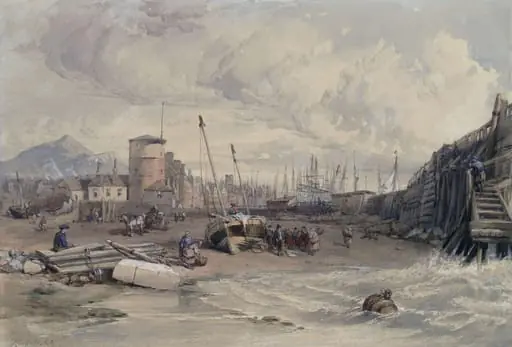
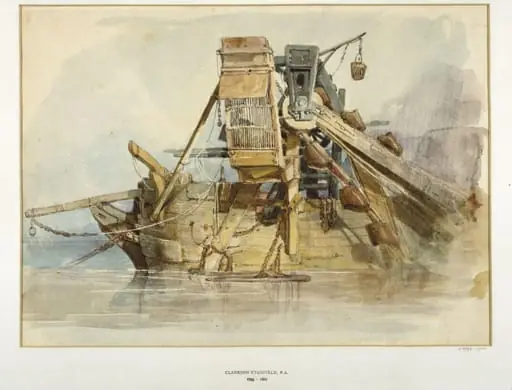
Stanfield painted watercolors and drawings of 19th-century harbors and coastlines, from British docks to Indian shores.

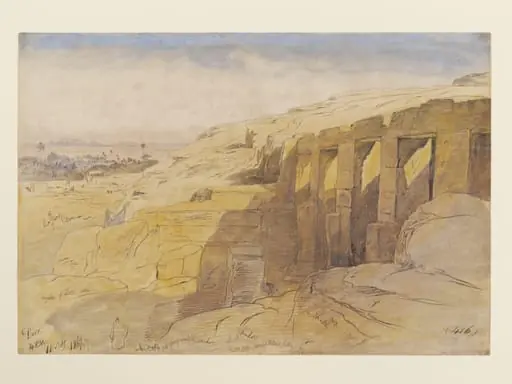 Temple at Derr, Nubia, Egypt
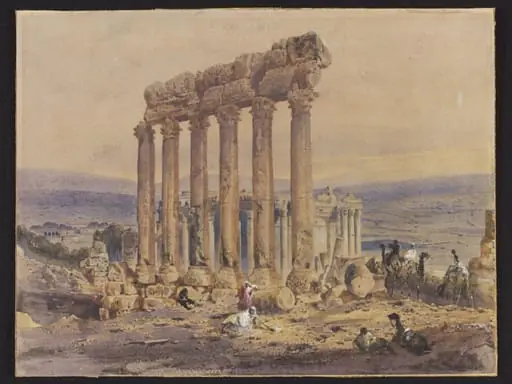 The Temple of Jupiter, Baalbek
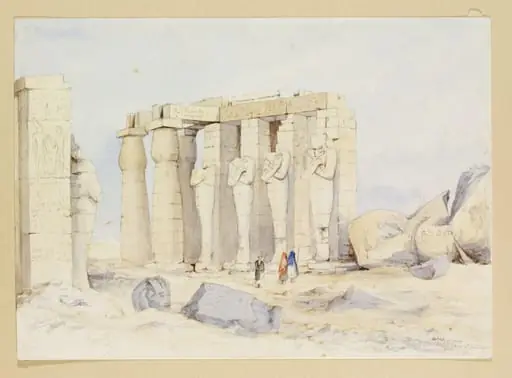 Osiride columns broken statue of Rameses II Memnonium Thebes
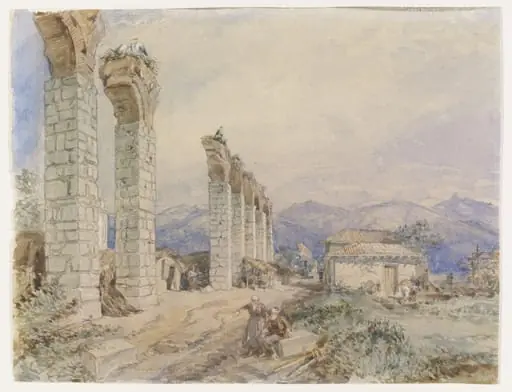 The Aqueduct - Ephesus
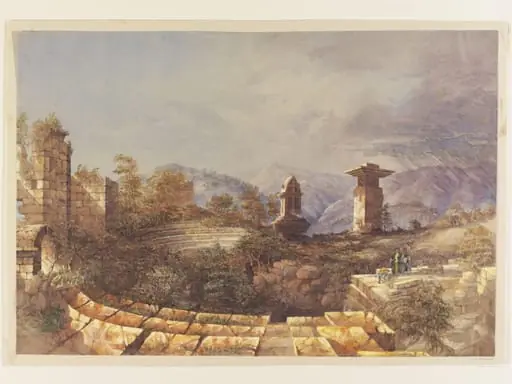 Theatre, with the Sarcophagus and Harpy Tombs, Xanthus
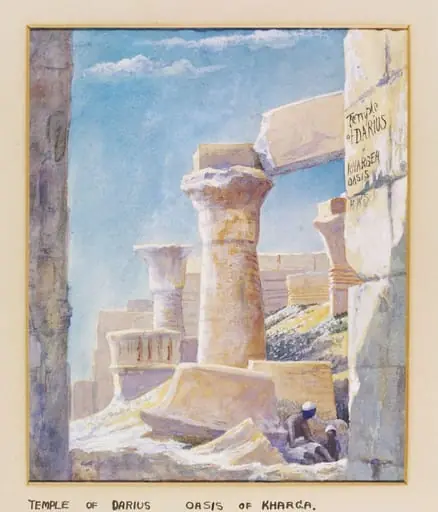 Temple of Darius Khargeh Oasis
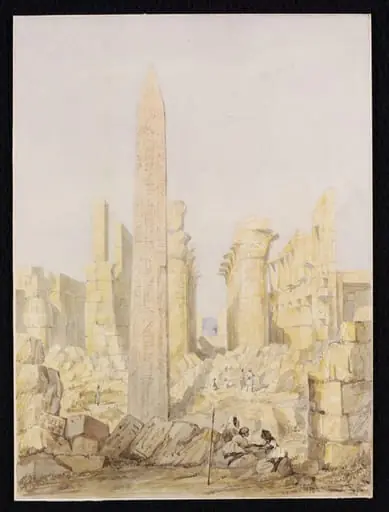 Great Temple. Karnac. Thebes
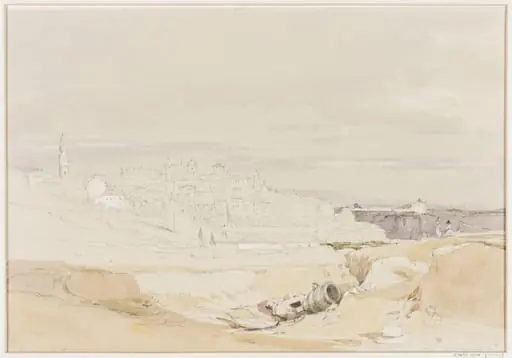 Sketch in Portugal
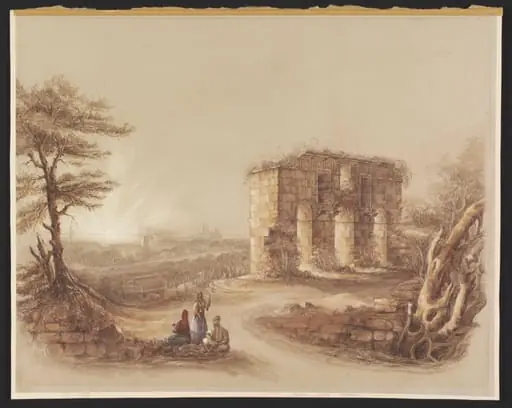 Monumental Gateway, Patara, Turkey
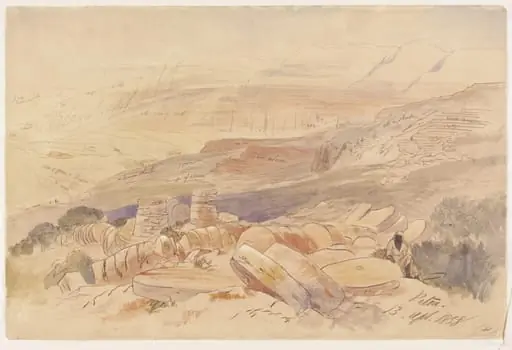 Petra
Petra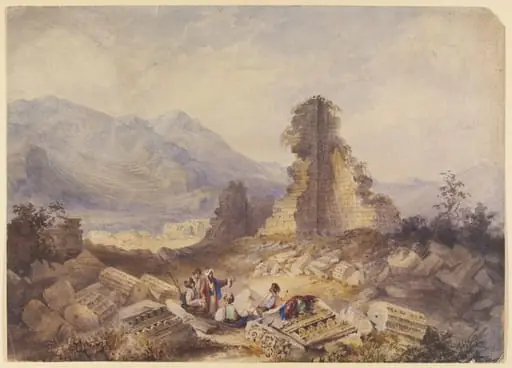 Ephesus (Ruins of the Temple of Diana)
 Sardis