Artwork
East Hanningfield Church, Essex
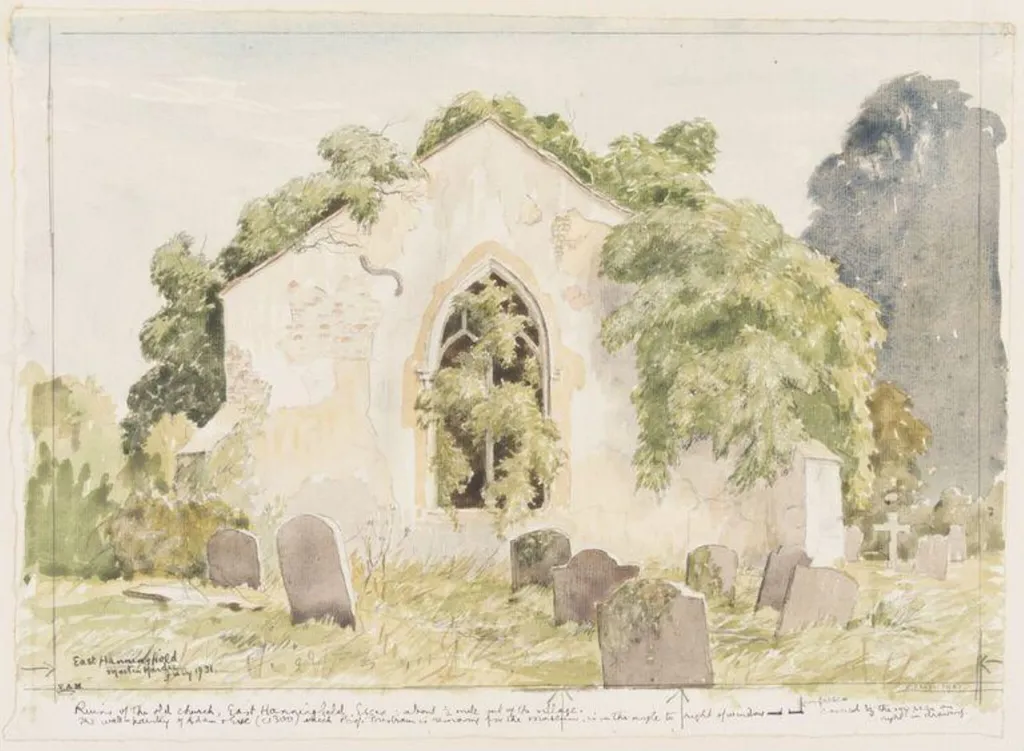
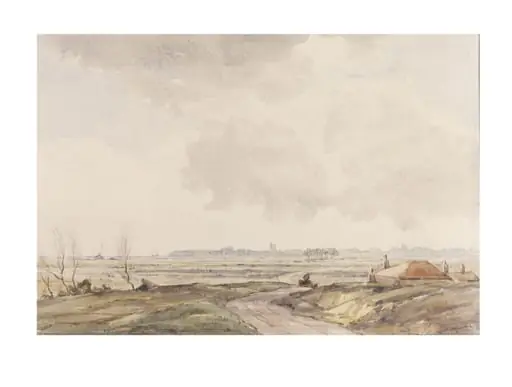
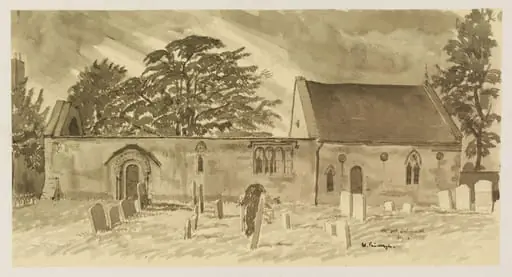
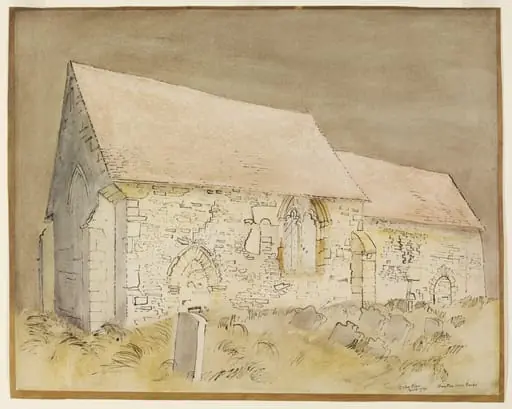
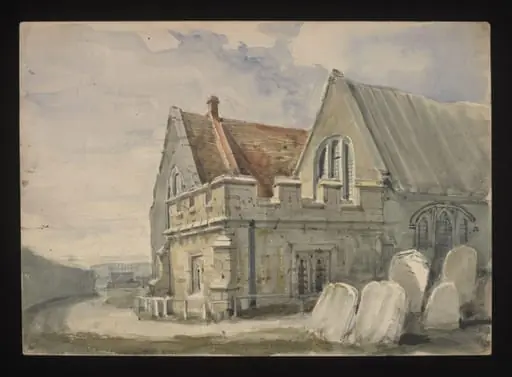
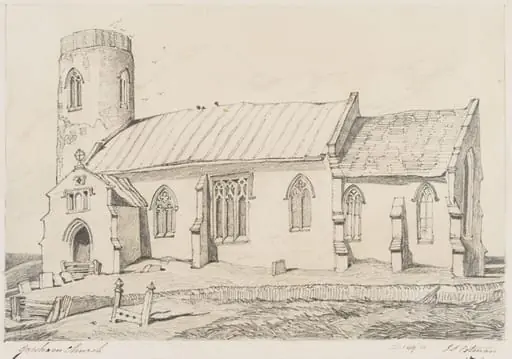
East Hanningfield Church, Essex is a watercolor work on paper by Martin Hardie. It dates from 1931 and is held in the collection of the Victoria and Albert Museum. The work is a watercolour portraying the ruined church of East Hanningfield in Essex, England.
About this work
Overview
The work is a watercolour portraying the ruined church of East Hanningfield in Essex, England. The composition includes the dilapidated structure, a tall arched window, surrounding trees, and a foreground of grass dotted with several weathered gravestones. The palette is muted, dominated by soft greens and browns, giving the scene a faded, tranquil quality.
Subject & Meaning
The painting captures a moment of quiet decay, emphasizing the passage of time as nature reclaims a once‑active place of worship. The presence of gravestones foregrounds themes of memory and mortality, while the overgrown setting suggests a lingering connection between the village’s history and its landscape.
Technique & Style
Executed in transparent watercolour, the artist employs delicate washes to render the sky, foliage, and stone surfaces. Fine brushwork defines the arched window and the texture of the gravestones, while broader, softer strokes convey the surrounding grass and trees, creating a subtle atmospheric depth.
History & Provenance
The piece bears the inscription “East Hanningfield” in the lower corner, identifying the location. It is part of the Victoria and Albert Museum’s collection, where it is displayed as an example of 19th‑century English rural watercolour.
Context
Ruined churches were a common motif in British landscape art, reflecting Romantic interest in the sublime and the melancholy of abandoned architecture. This work aligns with that tradition, situating a specific Essex site within broader cultural fascinations with decay and the English countryside.
Artist & collection

Artist
Martin Hardie (1875–1952) was a painter in watercolour, printmaker, art historian and museum curator.