Artwork
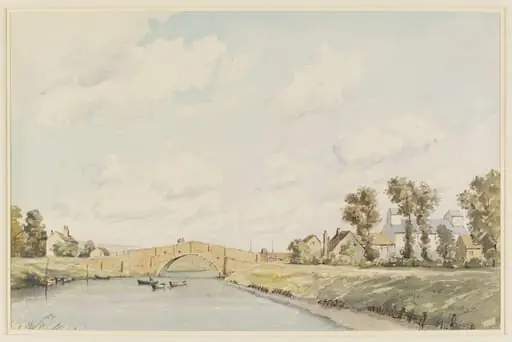
Brockweir, near Tintern, Monmouthshire
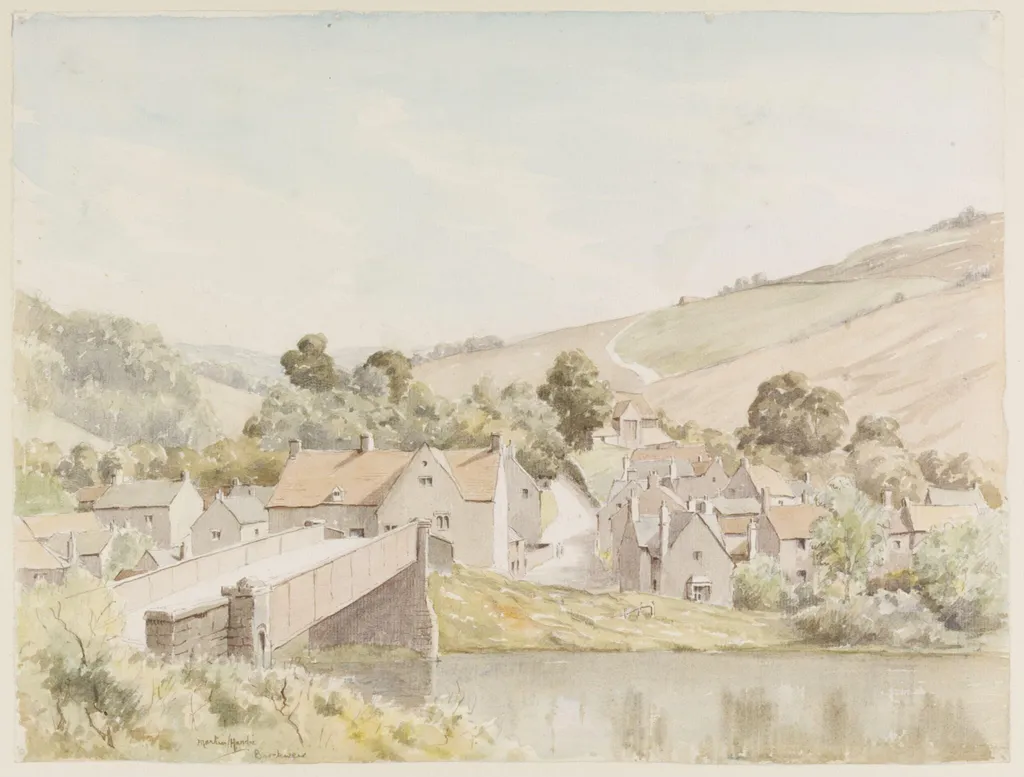
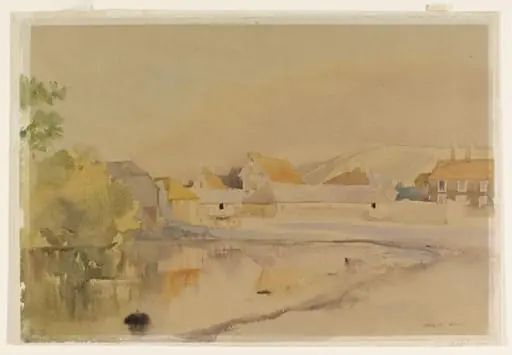
Brockweir, near Tintern, Monmouthshire is a watercolor work on paper by Martin Hardie. It dates from 1940 and is held in the collection of the Victoria and Albert Museum. This watercolour, created in 1940, captures the village of Brockweir in Monmouthshire, positioned along the River Wye.
About this work
Overview
This watercolour, created in 1940, captures the village of Brockweir in Monmouthshire, positioned along the River Wye.
This watercolour, created in 1940, captures the village of Brockweir in Monmouthshire, positioned along the River Wye. It was produced as part of the *Recording Britain* initiative, a government-backed effort to visually document rural and historic landscapes during the Second World War. The project aimed to preserve imagery of places deemed vulnerable to wartime disruption or irreversible change. The work is one of more than 1,500 contributions to this archive, now held by the Victoria and Albert Museum.
Subject & Meaning
The scene portrays Brockweir as a quiet, unassuming settlement, its buildings clustered along the riverbank with a bridge crossing the water. The composition emphasizes stillness and continuity, contrasting with the turbulence of the war years. By focusing on modest architecture and natural topography, the artist underscores the cultural value of ordinary places, suggesting that their preservation was as vital as protecting monuments or cities.
Technique & Style
The artist employed delicate watercolour washes, allowing the paper to show through in places to suggest light and air. Soft, translucent layers build the hills and sky, while the stone walls and red-tiled roofs are rendered with restrained detail. The brushwork is quiet and observational, avoiding dramatic contrasts. The winding path and river guide the viewer’s eye gently through the scene, reinforcing the calm, contemplative tone of the image.
History & Provenance
Commissioned by the Committee for the Employment of Artists in Wartime, this work was made under the *Recording Britain* project, which sought to employ artists while creating a visual record of threatened landscapes. The painting entered the Victoria and Albert Museum’s collection as part of the project’s archive. Its survival and preservation reflect the initiative’s success in safeguarding a national visual heritage during a period of uncertainty.
Context
During the early 1940s, fears of aerial bombing and postwar development prompted efforts to document Britain’s rural character. The *Recording Britain* project targeted villages, churches, and landscapes seen as emblematic of national identity. Brockweir, though small, represented the enduring quality of such places. The initiative was not propaganda but a quiet act of cultural preservation, responding to the fragility of the built environment in wartime.
Legacy
The *Recording Britain* collection remains a key resource for understanding the British landscape during the Second World War. Brockweir’s watercolour, like others in the series, offers a sober, unsentimental record of place. These works continue to inform historical and architectural studies, serving as both artistic documents and evidence of a society’s attempt to hold onto its visual memory amid upheaval.
Artist & collection

Artist
Martin Hardie (1875–1952) was a painter in watercolour, printmaker, art historian and museum curator.

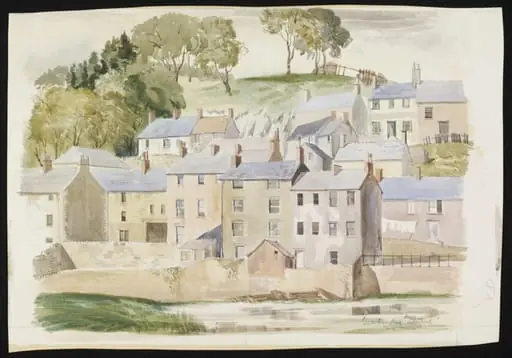 "Scarthin Nick" Cromford
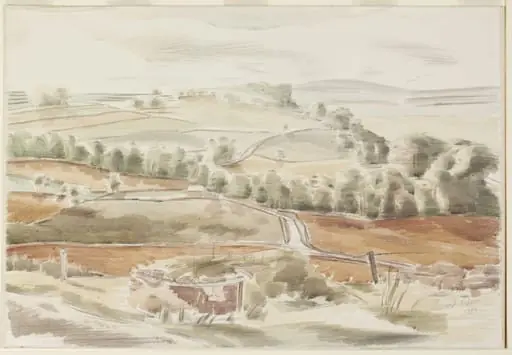 The Porter Valley, No.1
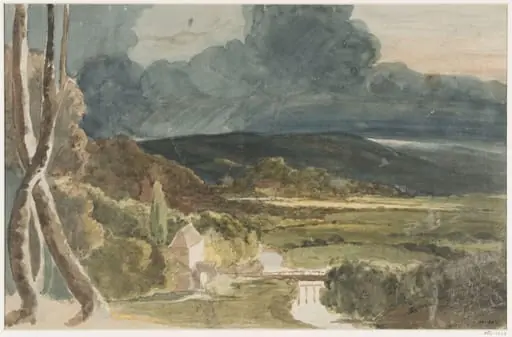 Landscape with river and mountains
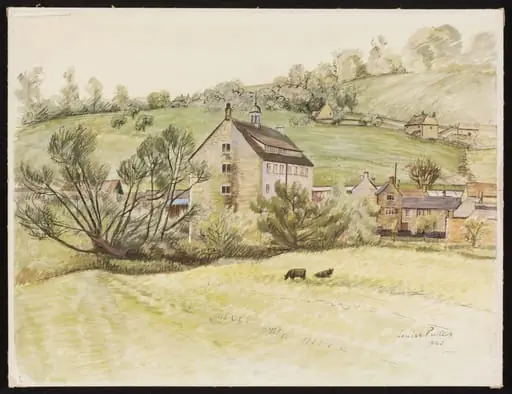 Brimscombe Factory, Nr. Stroud
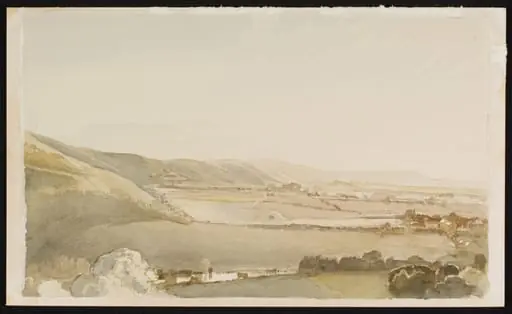 The Southdown, Underhill Road: Westwards from Poynings
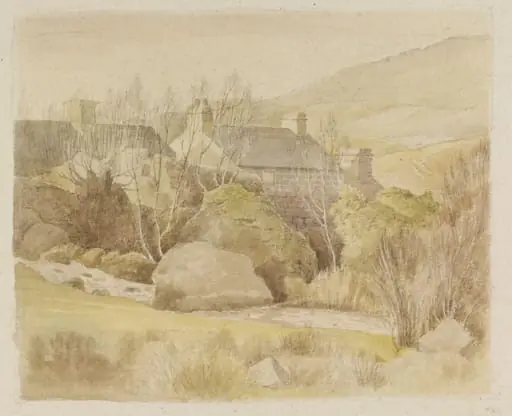 Cerrig-y-Pryfraid Garn, Caernarvonshire
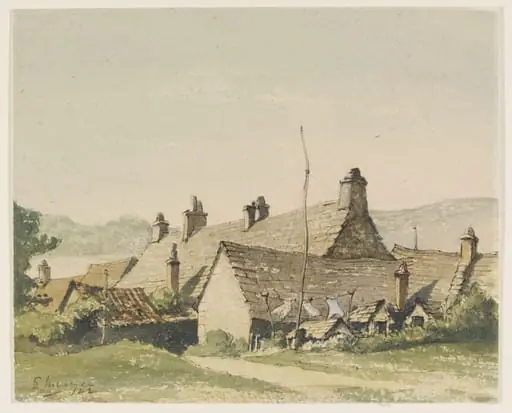 Cottages, Corfe
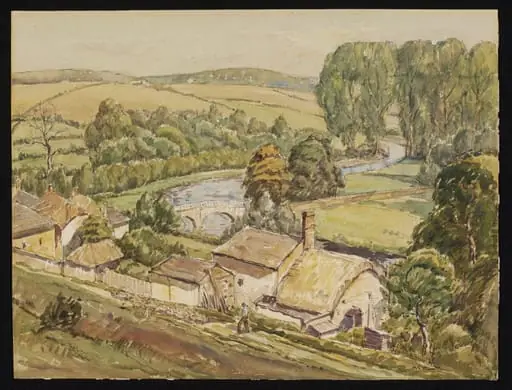 Woodford Bridge in the Avon Valley
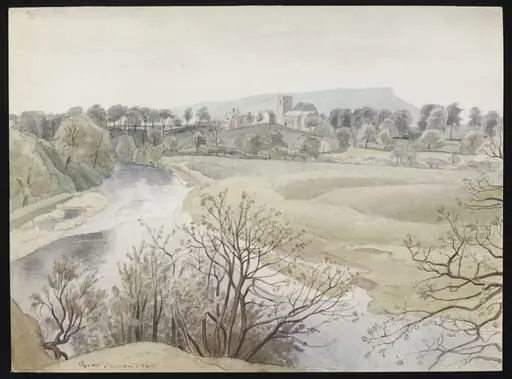 The Ribble at Great Mitton near Clitheroe
 Untitled
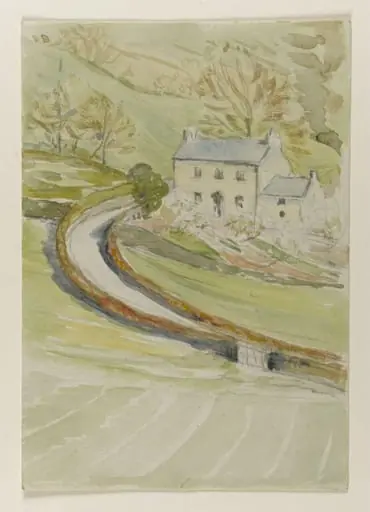 House in a steep-sided valley with a winding road
 The Pond, Ditchling